The Hidden Muscle That May Be Wrecking Your Sleep (And How to Release It in 5 Minutes)
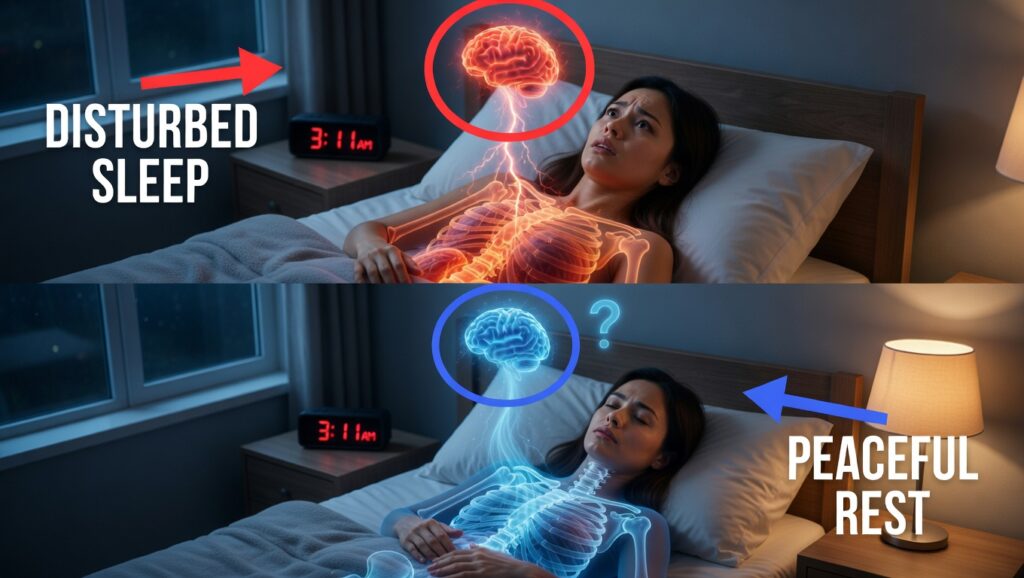
If you regularly find yourself wide awake at 2 or 3 in the morning, staring at the ceiling and wondering what’s wrong, you’re not alone. Many people blame their age, hormones, or that extra glass of water before bed. But there’s growing evidence that a single deep core muscle may be keeping your body stuck in “high alert” mode when it should be winding down.
When this muscle relaxes, your nervous system finally gets the signal that it’s safe to rest—and deep, uninterrupted sleep becomes possible again.
This idea isn’t guesswork. It’s based on how your nervous system and muscles actually work together, and draws on the insights of metabolic health expert Ben Azadi. Most sleep advice focuses on melatonin, supplements, blue light blocking, or strict sleep routines. All of these can help, but they often ignore the real control center of your sleep: your nervous system.
There’s a powerful muscle that’s directly wired into your stress response. When it’s tight, it keeps your body stuck in a shallow, easily disturbed sleep state, even when you feel exhausted. That muscle is called the psoas (pronounced “SO-az”). Learning how to relax it may be the missing link in turning your sleep “back on” for good.
Key Takeaways
- Your nervous system—not just age or hormones—drives your sleep quality.
- The deep psoas muscle is closely tied to your body’s fight-or-flight response.
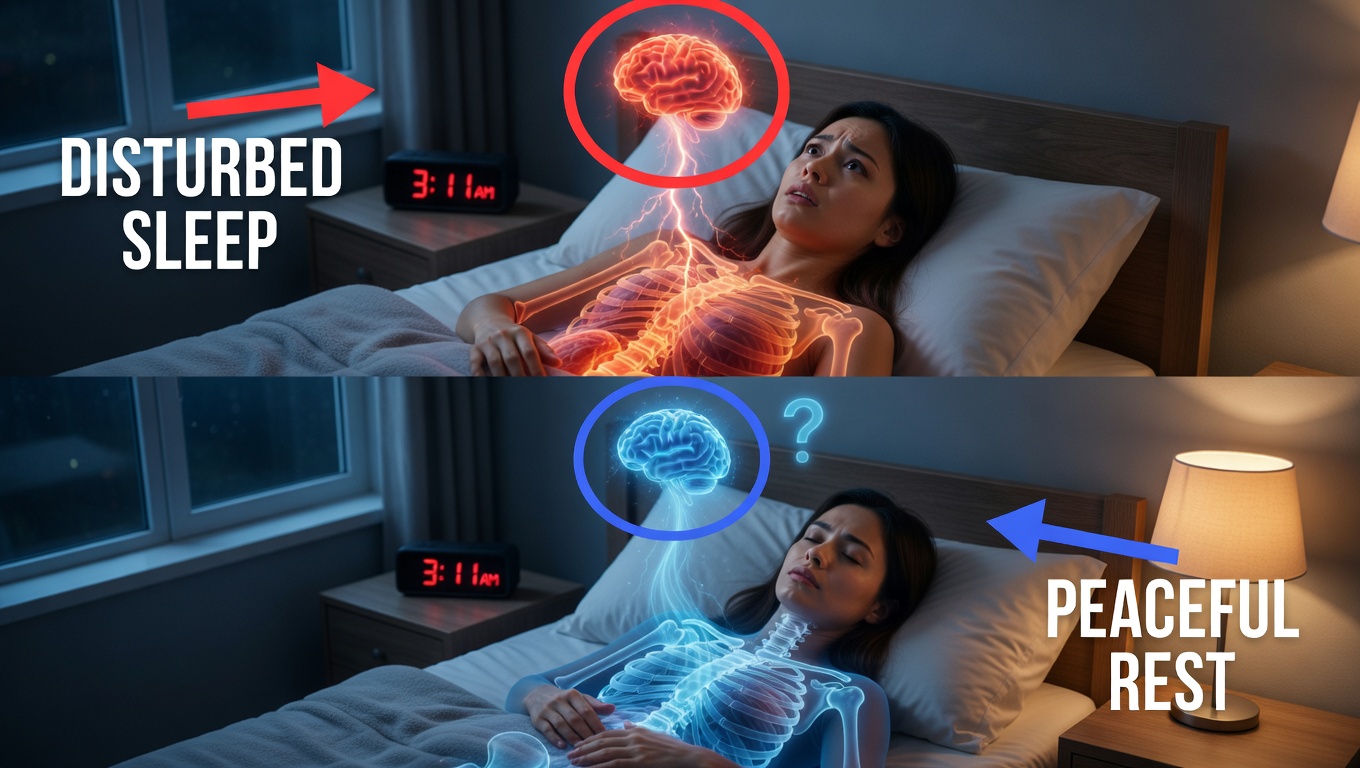
- A tight psoas tells your brain you’re in danger, blocking deep, restorative sleep.
- A simple 5-minute nightly routine can relax the psoas, calm your nervous system, and help you sleep through the night.
The Psoas: Your Body’s Hidden “Stress Switch”
So what exactly is the psoas?
The psoas is a deep muscle that runs from your lower spine, through your pelvis, and attaches to your upper thighs. It helps stabilize your spine and allows you to lift and flex your hips—like when you walk, climb stairs, or sit.
But its most important role for sleep is its relationship with your nervous system.
The psoas is strongly linked to your sympathetic nervous system, the “fight-or-flight” side that prepares you to deal with danger. When this system is active, your body releases stress hormones like cortisol and adrenaline. Your heart rate goes up, your muscles tense, and your body gets ready for action—not for sleep.
Here’s the problem:
- Sitting for long periods (at a desk, in a car, on a couch) keeps your hips flexed.
- That constant hip flexion shortens and tightens the psoas.
- A tight psoas sends a continuous “threat” signal to the brain.
- The brain responds with ongoing low-level stress.
- Cortisol stays elevated, and it becomes very hard to switch into the parasympathetic mode—your “rest, digest, and repair” state that you must be in for deep sleep.
In simple terms:
Tight psoas = body on alert.
Relaxed psoas = body feels safe enough to sleep.
The good news is that you can begin to reset this signal in just a few minutes every night.
A 5-Minute Nightly Ritual for Deeper, Unbroken Sleep
This routine is not about pushing your flexibility or forcing a big stretch. It’s about sending a clear message of safety to your nervous system.
Do these five steps in bed, right before you want to fall asleep.
1. Reclined Butterfly: Gentle Psoas and Hip Release
Start by easing tension in your hips and psoas.
- Lie on your back in bed.
- Bring the soles of your feet together, letting your knees drop out to the sides toward the mattress.
- If you’re over 45 or feel any pulling or discomfort, slide pillows or cushions under your knees for support.
Important:
- You should not feel an intense stretch.
- The goal is comfort and support, not forcing your muscles to lengthen.
- Let gravity slowly open the hips while your body relaxes into the position.
Passive hip-opening like this has been shown to reduce sympathetic (fight-or-flight) activity and improve heart rate variability (HRV)—a key indicator of nervous system recovery and resilience.
Stay here and move on to the next step.
2. Vagus Nerve Breathing: Turning On the “Calm” Switch
While you’re in the reclined butterfly position, you’ll activate your vagus nerve, the main pathway of the parasympathetic nervous system. This tells your body it’s safe to slow down.
Use the following breathing pattern:
- Inhale slowly through your nose for 4 seconds.
- Hold your breath gently at the top for 2 seconds.
- Exhale slowly and fully through your nose for 6 seconds.
That longer exhale is what really stimulates the vagus nerve.
Research in humans shows that this kind of breathing can:
- Lower nighttime cortisol
- Increase parasympathetic (relaxed) dominance
- Improve sleep efficiency and extend REM sleep duration
As you breathe, mentally send your body a clear message. You can repeat silently or whisper:
- “I am safe now.”
- “There is nothing to fix.”
- “I can power down.”
Continue this breathing for 1–2 minutes.
3. Ankle Pumps: Boosting Circulation and Reducing Nighttime Urination
Next, bring your knees back up and gently extend your legs. You can place a pillow under your knees if that feels better for your lower back.
This step is especially helpful if you regularly wake up needing to use the bathroom.
During the day, especially if you sit or stand a lot, fluid tends to pool in your lower legs. When you lie down at night, that fluid shifts back into circulation. Your kidneys process it, your bladder fills, and you wake up to pee.
To help prevent this:
- With legs extended, gently flex your feet, pulling your toes toward your shins.
- Then point your feet, like you’re slowly pressing a gas pedal.
- Continue alternating between flexing and pointing for 1–2 minutes.
These ankle pumps support better circulation and venous return, helping reduce nocturia (waking at night to urinate).
4. Knee-to-Chest: Resetting the Lower Back and Pelvic Nerves
Now you’ll relieve pressure on the nerves in your lower back that connect to your pelvic floor and bladder. When these nerves are irritated, your body can stay partly “on guard,” even in bed.
- Lying on your back, gently draw one knee toward your chest.
- Hold it there for about 30 seconds.
- If it’s uncomfortable to hold your shin, hold behind your thigh instead.
- Release slowly and switch to the other leg, holding for another 30 seconds.
- Repeat this sequence once more on each leg, for a total of about 2 minutes.
Guidelines:
- There should be no sharp or intense pain.
- Aim for a feeling of relief, ease, and lightness—not strain.
This simple move helps decompress the lower spine and calm the nerves that influence the bladder and pelvic region.
5. Legs Elevated in Stillness: Sending the Final “Day Is Done” Signal
To finish, you’ll give your nervous system one last, powerful signal that the “threat” has passed and it’s time to rest.
- Place a pillow or folded blanket sideways under your ankles so your legs are slightly elevated.
- Let your arms relax, and rest your hands gently on your belly.
- Return to slow, calm breathing—similar to the pattern from Step 2, if that feels good.
Think of stillness here as an active choice, not just doing nothing. You’re deliberately telling your body:
- “The day is over.”
- “The threat is gone.”
- “You are safe.”
As you breathe, silently repeat:
“I am letting go.”
To deepen the effect, add a dose of what we can call “Vitamin G” — Gratitude:
- On each exhale, think of one specific thing you’re grateful for.
- “I’m grateful for this clean, safe bed.”
- “I’m grateful my body knows how to heal.”
- “I’m grateful I’m about to get a restful night of sleep.”
Stay in this position for at least 2 minutes.
This combination of gentle elevation, slow breathing, and gratitude can:
- Lower cortisol levels
- Turn up parasympathetic activity
- Ease pelvic and lower back tension
- Normalize bladder signaling
- Deepen your overall sleep quality
Common Questions About This Sleep Routine
“Is waking up at night just part of getting older?”
It’s very common—but that doesn’t mean it’s inevitable or “normal.”
Fragmented sleep is often a sign that your nervous system is too active at night. When your body learns to feel safe and stay regulated, you can still enjoy deep, continuous sleep well into older age. You don’t have to accept poor sleep as a natural consequence of aging.
“I’ve tried breathing exercises before, and they didn’t help. Why would this be different?”
Many people say breathing techniques don’t work for them, and there’s a good reason:
If your body is still physically tense—especially around the psoas and hips—then your nervous system is getting mixed signals.
You can’t convincingly tell your brain “We’re safe” with your breath while your muscles are sending a “We’re in danger” message.
By first releasing physical tension with positions like reclined butterfly, knee-to-chest, and ankle pumps, your vagus nerve becomes more receptive. Then the breathing actually has a chance to work.
“What if I already have back or hip pain?”
This routine may be particularly valuable for you.
Chronic pain is one of the strongest “danger signals” the nervous system receives. It can keep your body on constant alert, making deep sleep harder to achieve.
Key guidelines if you have pain:
- Move gently and slowly.
- Avoid any position that increases sharp or intense pain.
- Use pillows generously—under your knees, between your thighs, under your hips, or behind your lower back—to find a comfortable, supported position.
The goal is to create a sense of ease and safety in your body. Even small reductions in tension can help calm your nervous system and improve your sleep over time.
By combining gentle psoas release, targeted breathing, improved circulation, and a state of gratitude, you give your body exactly what it needs to shift out of survival mode and into deep, restorative sleep—night after night.