Morning Stretches to Help Ease Low Back Pain
Back pain is incredibly common today, and if you have dealt with it, you already know how limiting and exhausting it can feel.
Low back pain and stiffness can make even simple daily activities harder than they should be. The good news is that lumbago can often be managed with a short routine of simple stretches done each morning.
This guide covers four exercises that may help reduce low back stiffness and discomfort.
Why Low Back Pain and Stiffness Happen
A quick search online will bring up thousands of stretches for the lower back. Some may work well for you, while others may not be the right fit.
Part of the challenge is that the back is affected by several areas of the body. Tight muscles and reduced spinal movement can both play a role in how your low back feels.
For example:
- Tight lats can limit movement through the spine
- Rotation in the spine often becomes restricted in daily life
- Stiff tissues through the back and shoulders can add to discomfort
Even though the stretches below offer a general way to loosen the low back, they are not guaranteed to completely cure pain.
If your back pain continues after trying these movements, make sure you visit a qualified healthcare professional for an evaluation.
A 4-Exercise Morning Routine for Low Back Pain
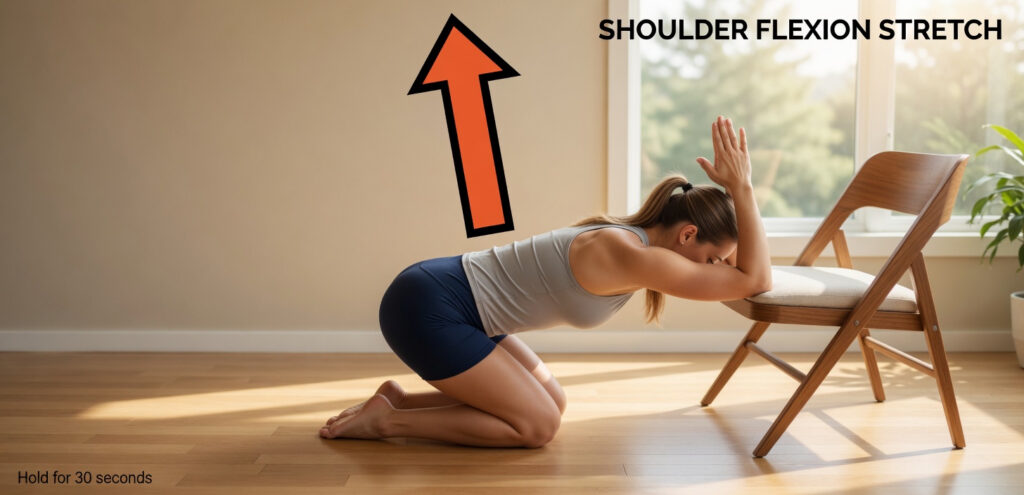
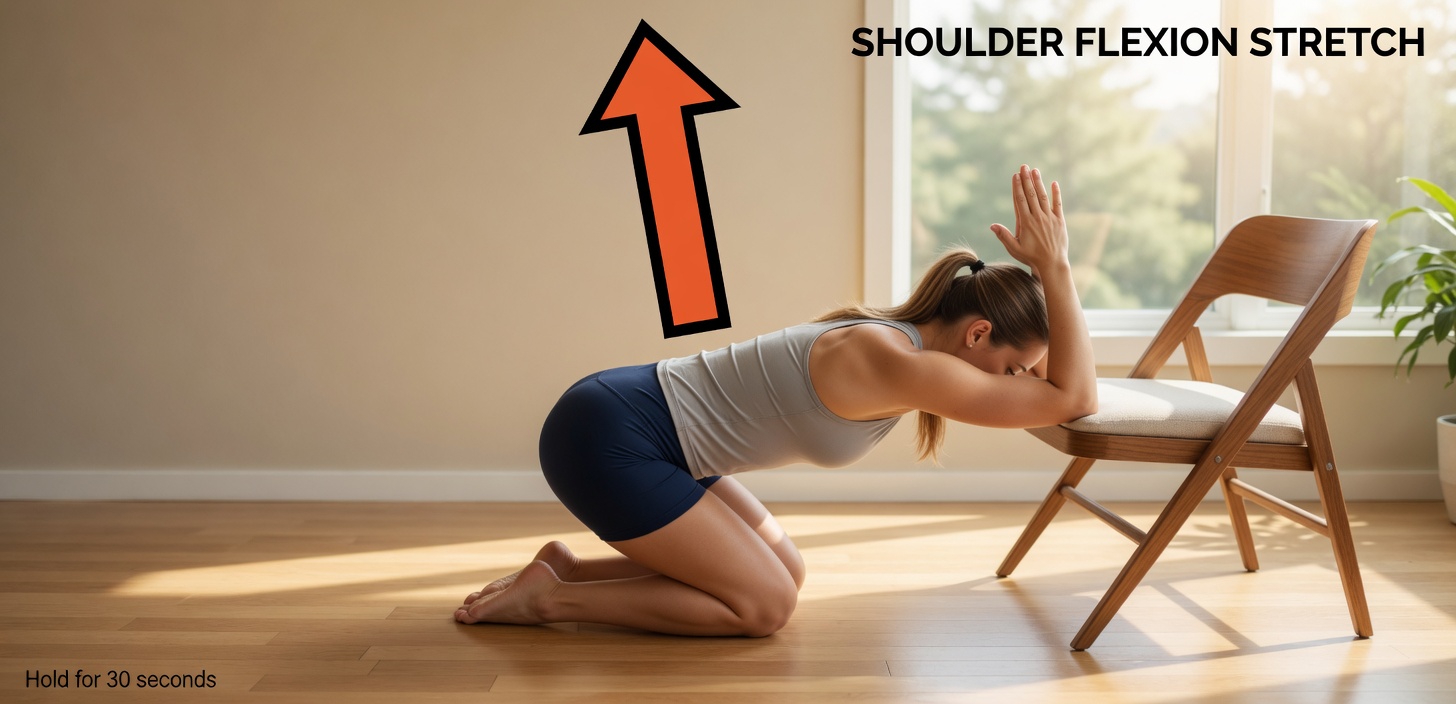
1. Kneeling Lat Stretch
The lat muscles are among the largest muscles in the body. They run along the back and help with strong lifting movements. When they become tight, they can create noticeable restriction throughout the spine.
How to do it
- Kneel beside a bed or chair
- Place both elbows on the surface
- Slowly lean forward and bring your head between your arms
- You should feel a deep stretch through the lats, triceps, and surrounding muscles
- Hold for 30 seconds
- Complete 4 reps per day
2. Lower Trunk Rotations
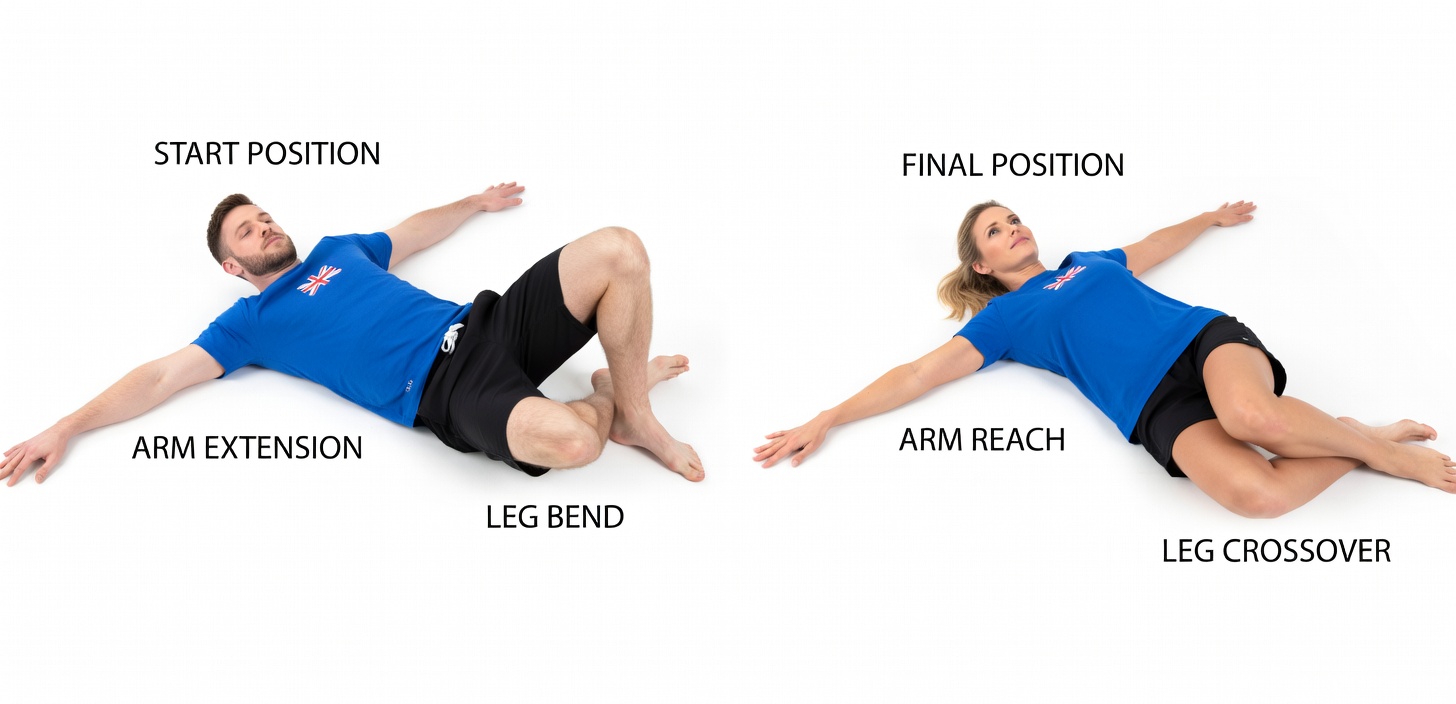
The spine is designed to move in several directions, and rotation is one movement that often becomes stiff from everyday habits.
Lower trunk rotations, often called LTR, can help improve motion in this direction. One of the best parts is that you can even do them in bed.
How to do it
- Lie on your back
- Bend your knees and keep your feet flat on the floor or bed
- Keep your shoulders in contact with the surface
- Gently rotate both knees to the right until you feel a stretch
- Hold the stretch for 30 seconds
- Repeat for 4 reps on each side, once per day
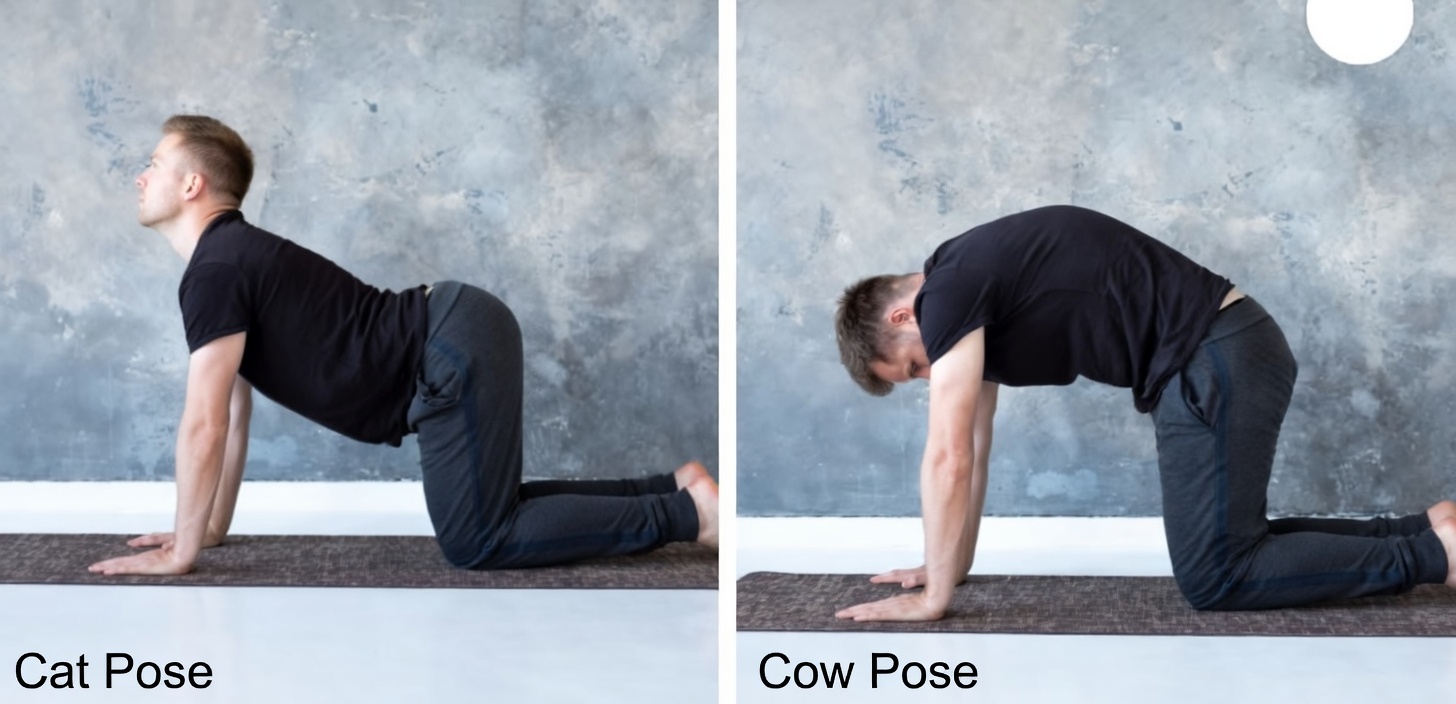
3. Cat-Cow
Yoga has become very popular over the past few decades because it supports both physical and mental well-being. Many yoga stretches help loosen tight tissues while also encouraging concentration and breath control.
Among spinal stretches, cat-cow stands out as one of the best-known and most effective.
How to do it
- Begin on your hands and knees
- Let your low back sag while lifting your head and neck upward
- Hold for 30 seconds
- Then reverse the movement by arching your back and tucking your chin toward your chest
- Hold again for 30 seconds
- Continue until you have completed 4 reps in each direction
- Perform this series once per day
4. Child’s Pose
Like cat-cow, child’s pose is a basic movement in many yoga classes.
This stretch helps open the shoulders and back while placing traction through the spine. It can also be a comfortable position for meditation, which makes it a helpful addition to a morning routine.
How to do it
- Start on your hands and knees
- Slowly sit back, aiming to bring your buttocks toward your ankles
- At the same time, reach your hands forward
- Hold for 30 seconds
- Repeat 4 times per session, once per day

A Simple Way to Start Feeling Better
If you have never had back pain, you are fortunate. Many people experience this difficult condition at least once in their lives.
Low back discomfort and stiffness can be frustrating, but a simple daily routine like this one may help address many cases in an easy and manageable way. These four stretches focus on common problem areas and can be a practical way to start your morning.
There is no guarantee that these exercises will completely cure your pain. If symptoms continue, seek evaluation from a qualified healthcare professional.
Consult a healthcare professional before making changes.