Circuit Training: A Fast, Effective Full-Body Workout You Can Do Anywhere
You have probably heard of circuit training, and there is a good chance you have even tried it before. If not, this is a great time to start. The routine in this guide is simple, effective, and requires no equipment at all.
Circuit training is one of the most efficient ways to improve cardiovascular fitness, build strength, and support weight loss. One of its biggest advantages is that it does not take much time, which makes it ideal for people with busy schedules.
In this article, you will find:
- A clear explanation of what circuit training is
- The key benefits of circuit workouts
- A 9-minute full-body circuit you can do almost anywhere without equipment
Let’s get started.
What Is Circuit Training?
Circuit training can overlap with several other training styles, so definitions may vary. In simple terms, it is a workout format where you move from one exercise to the next with minimal rest in between.
Circuit Training Definition
A circuit workout is made up of a series of exercises performed one after another. These routines often combine movements that challenge both muscular strength and cardiovascular endurance.
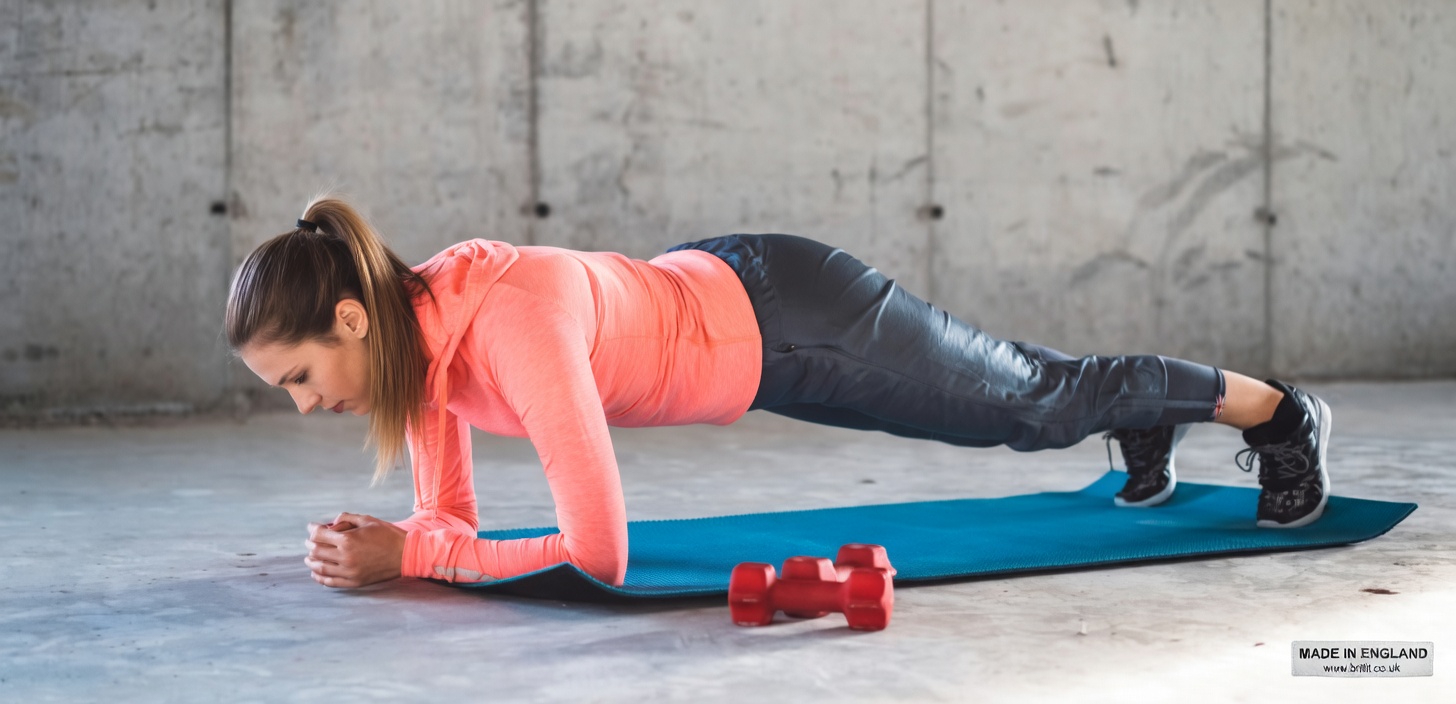
The workout featured in this article uses only bodyweight exercises, so you do not need any gear. That said, circuit training can also include dumbbells, resistance bands, kettlebells, or machines, which makes it one of the most flexible training methods available.
Because no equipment is required for this routine, all you need is a small open area. That means you can easily complete it at home, while traveling, or anywhere you have enough room to move safely.
Benefits of Circuit Training
Circuit training is popular for good reason. It offers several major fitness benefits in a short amount of time.
1. Supports Weight Loss
Weight loss happens when you burn more calories than you consume. While nutrition plays a major role, physical activity is also an important part of the equation.
Circuit workouts can be especially useful for weight management because they keep your body working hard with very little downtime. This can help you burn a significant number of calories in a relatively short session.
2. Improves Cardiovascular Endurance
During exercise, your heart and blood vessels work to deliver oxygen-rich blood to your muscles. In a full-body circuit, many muscle groups are active at once, which increases the demand on your cardiovascular system.
As you repeat this type of training over time, your body becomes more efficient, helping you build better stamina and endurance.
3. Increases Strength
A well-designed circuit can also help you get stronger. Movements like squats, pushups, lunges, and planks challenge your muscles and encourage them to adapt over time.
As a result, circuit training can improve functional strength, making everyday activities easier while also supporting overall fitness.
Of course, circuit training offers even more advantages than those listed above, but these are among the most important reasons people choose this training style.
9-Minute Full-Body Circuit Workout
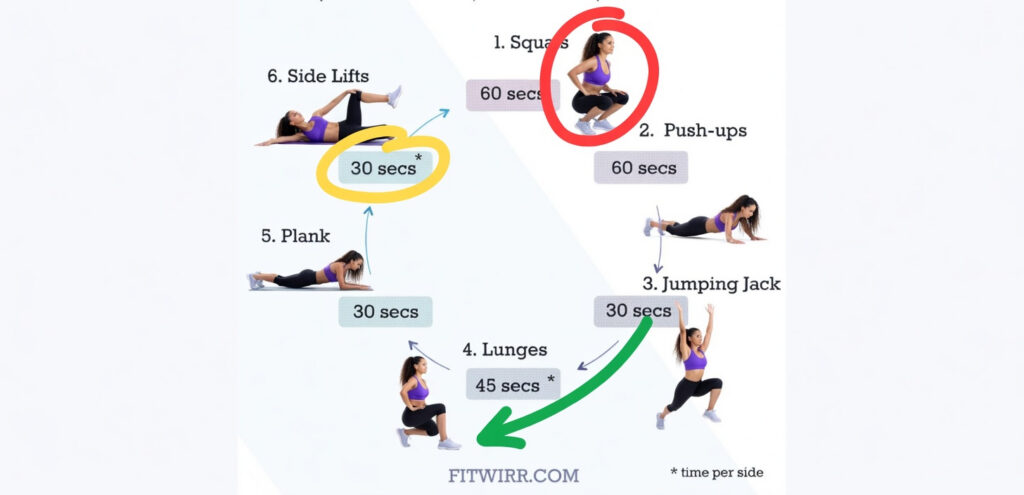
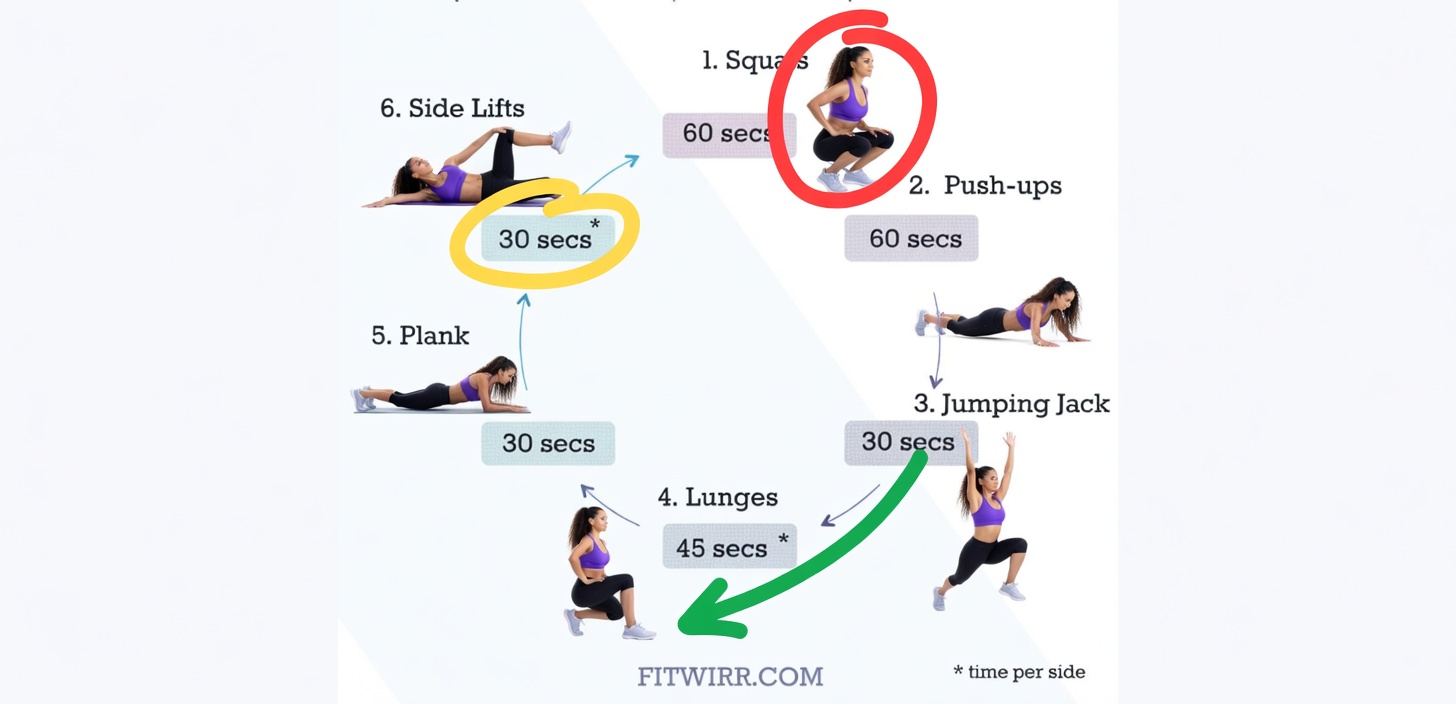
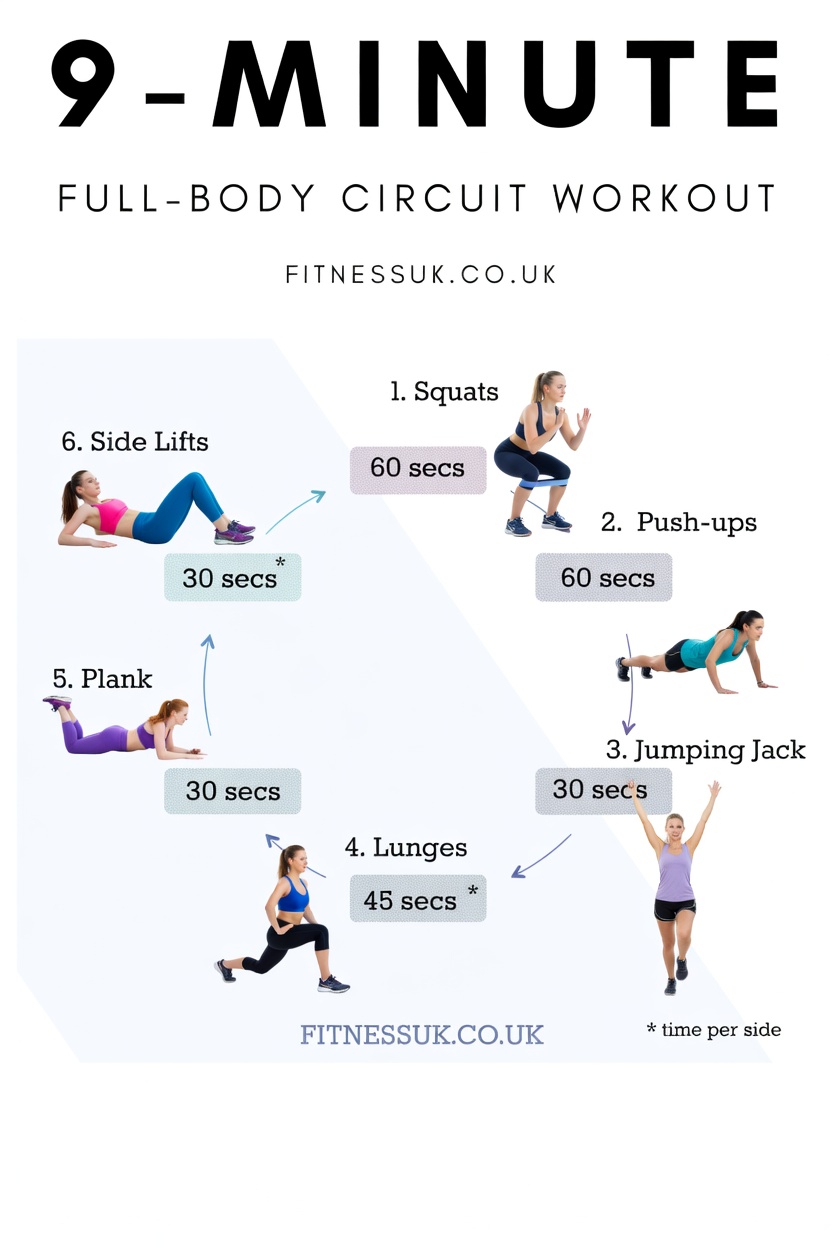
The workout below is a timed circuit. For each exercise, perform as many quality repetitions as you can within the assigned time.
Always focus on proper form. Do not rush through reps just to increase the number.
How to Follow the Circuit
Use this pattern for the full workout:
- Complete the first exercise for the listed time.
- Rest for 15 seconds.
- Move straight into the next exercise.
- Continue until you finish all exercises.
- Repeat the entire circuit twice.
Now let’s begin.
Exercise 1: Squats — 60 Seconds
Squats are one of the most practical and effective lower-body exercises. They train multiple muscle groups at once and mirror movements we use in everyday life.
Target muscles:
- Quadriceps
- Glutes
- Calves
- Core and trunk stabilizers
How to Do Squats
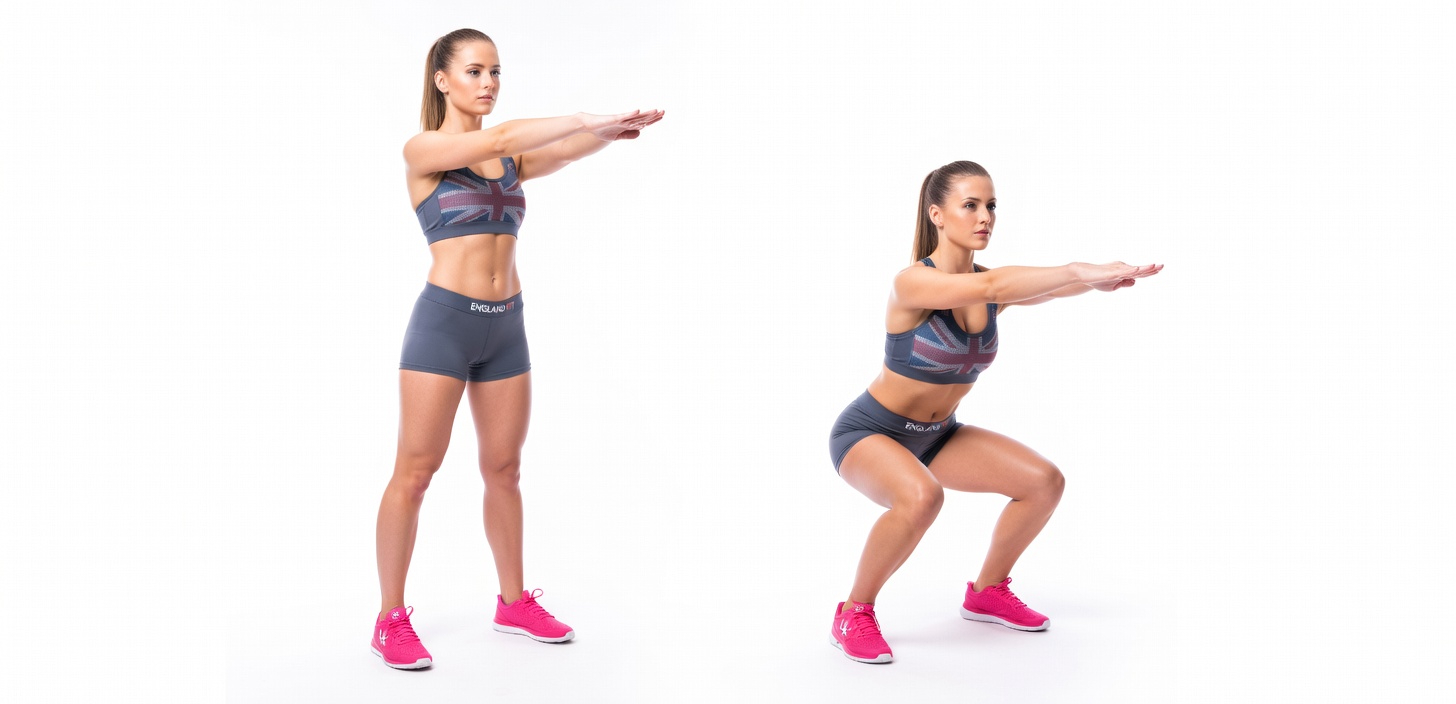
Stand with your feet about hip-width apart. Slowly bend your knees and lower your hips toward the floor. Keep your chest lifted and your back straight throughout the movement. Then press through your feet to return to standing.
Exercise 2: Pushups — 60 Seconds
Pushups are an excellent upper-body exercise that also engage the core. They help develop strength that carries over well into daily activities.
Target muscles:
- Chest
- Triceps
- Shoulders
- Core
How to Do Pushups
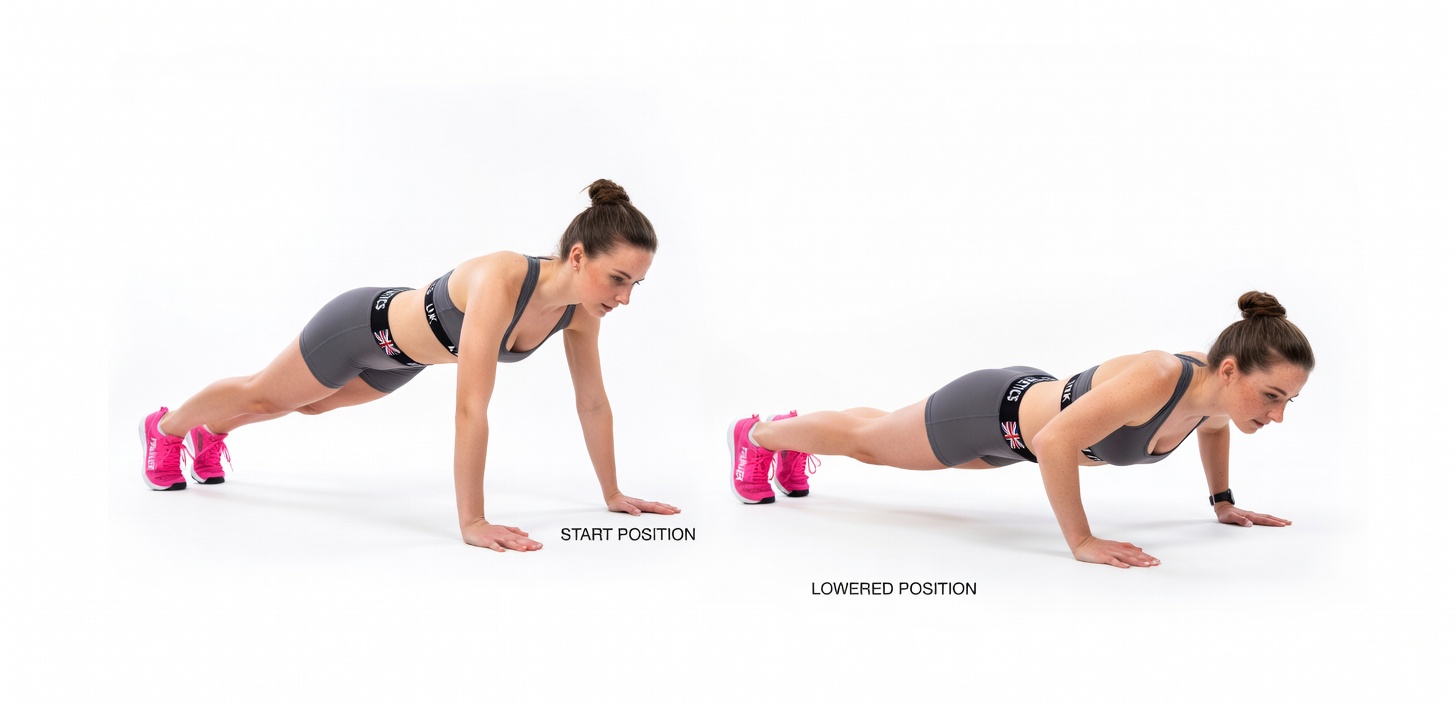
Place your hands on the floor directly under your shoulders. Keep your feet close together or about hip-width apart, with your toes planted on the ground. Maintain a straight line from head to heels as you lower your chest toward the floor. Once your chest lightly nears the ground, push yourself back up.
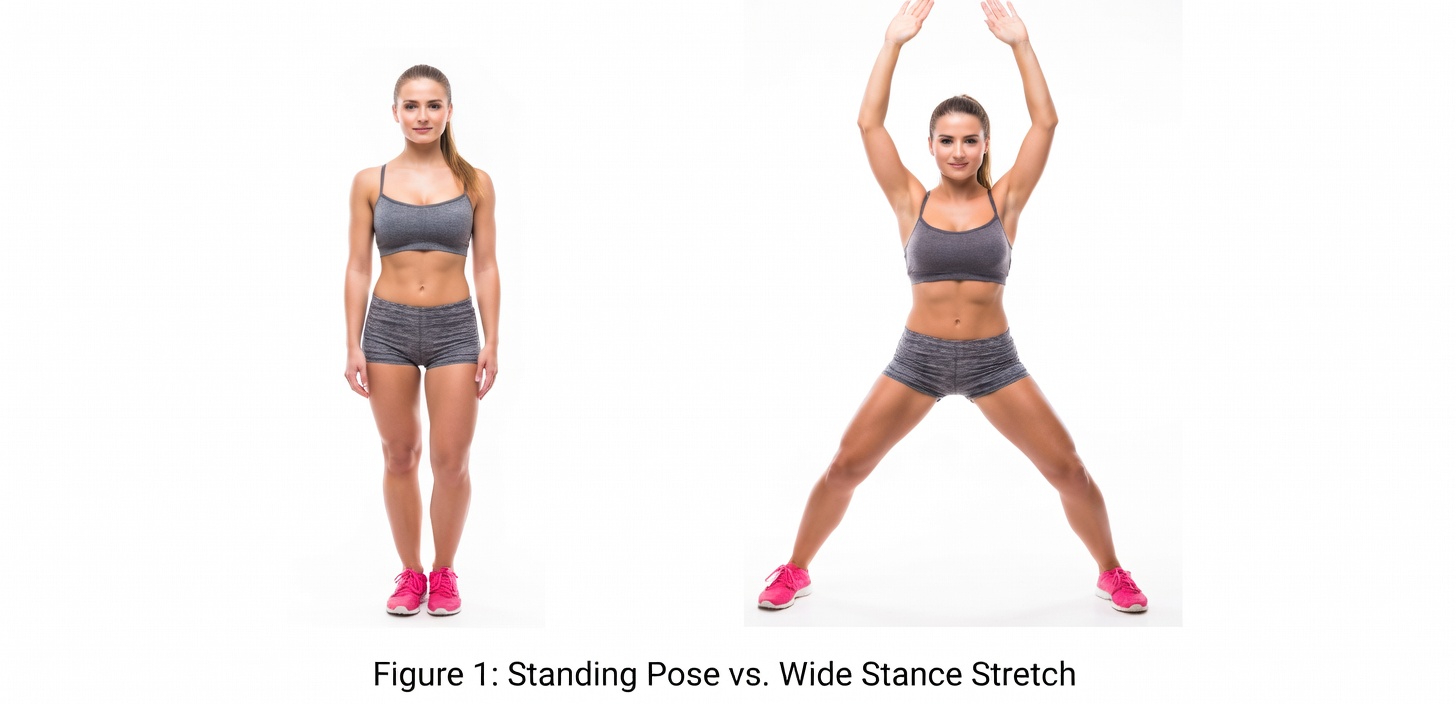
Exercise 3: Jumping Jacks — 30 Seconds
Jumping jacks are a classic bodyweight cardio move. They quickly raise your heart rate and require no equipment.
Target muscles:
- Various arm and leg muscles
- Primarily focused on cardiovascular conditioning
How to Do Jumping Jacks
Start standing tall. Jump your feet out to the sides while sweeping your arms up and overhead. As you jump again, bring your feet back together and return your arms to your sides. Continue this steady rhythm for 30 seconds.
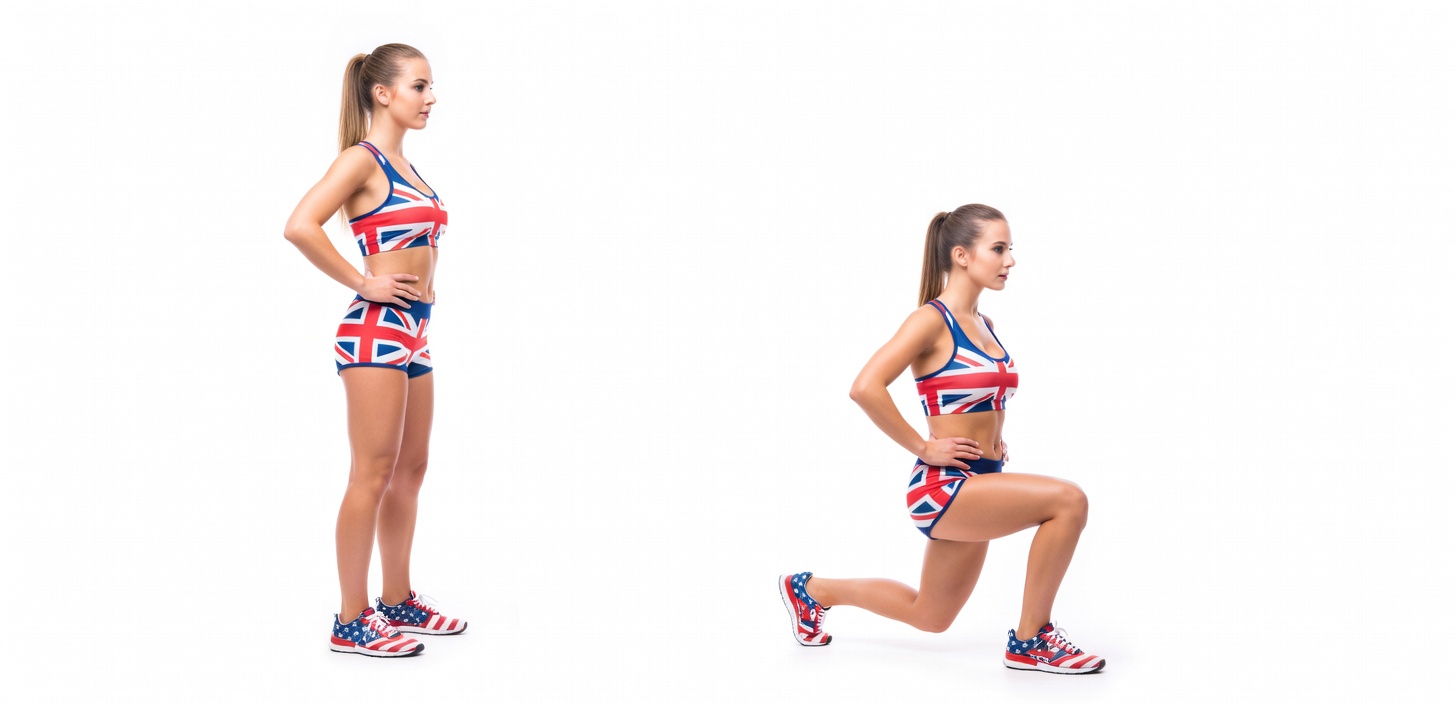
Exercise 4: Lunges — 45 Seconds
Like squats, lunges are excellent for lower-body strength. They also add a balance challenge, which can improve coordination and stability.
Target muscles:
- Quadriceps
- Glutes
- Calves
- Lower-body stabilizing muscles
How to Do Lunges
Step one foot forward and lower your body until your back knee comes close to the floor. Push back up to standing, then switch sides and repeat. Continue alternating legs for the full set.
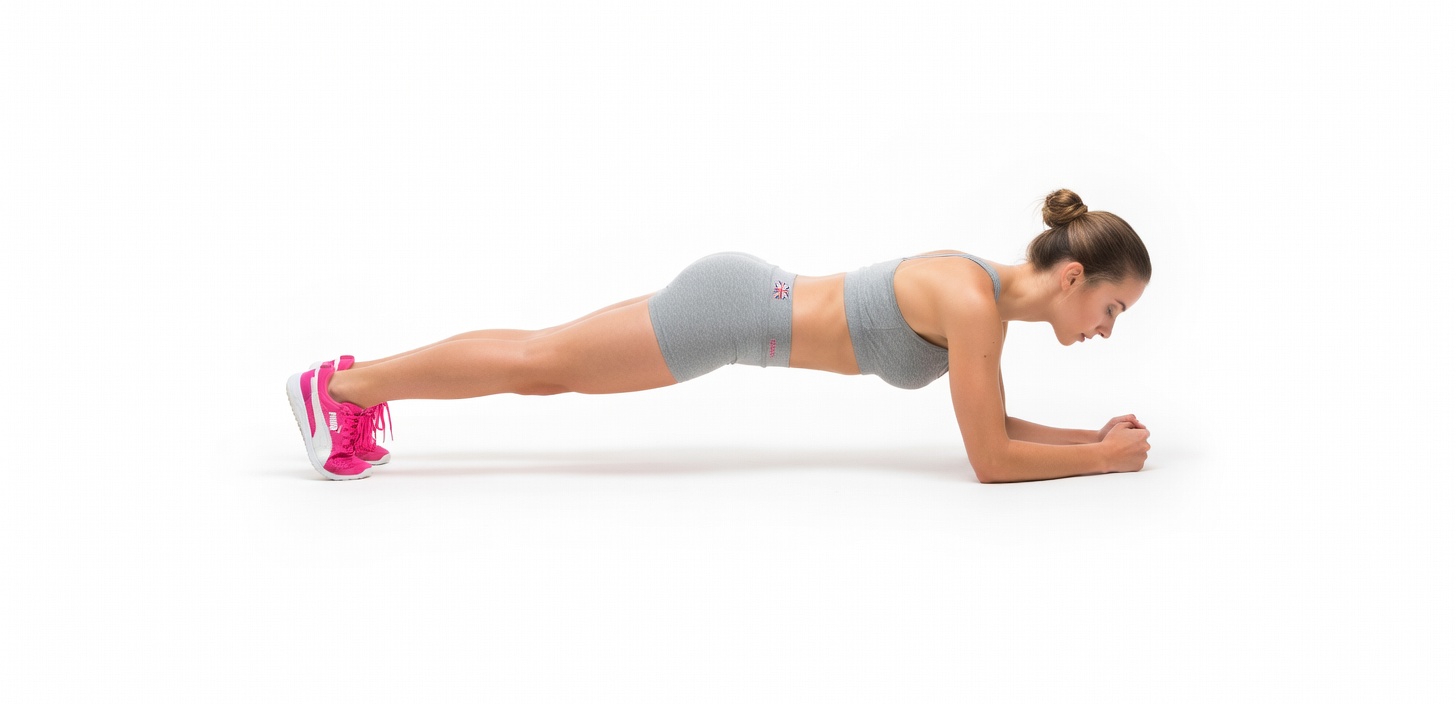
Exercise 5: Plank — 30 Seconds
So far, this workout has focused on dynamic movement and cardio-based exercises. The plank adds an isometric challenge, meaning you hold muscle tension without moving.
Isometric exercises are often overlooked, but they are highly valuable for core strength and total-body control.
Target muscles:
- Rectus abdominis
- Obliques
- Shoulders
- Chest
How to Do a Plank
Place your forearms and toes on the floor. Tighten your abdominal muscles and keep your back flat. Hold the position without letting your hips sag or rise too high.
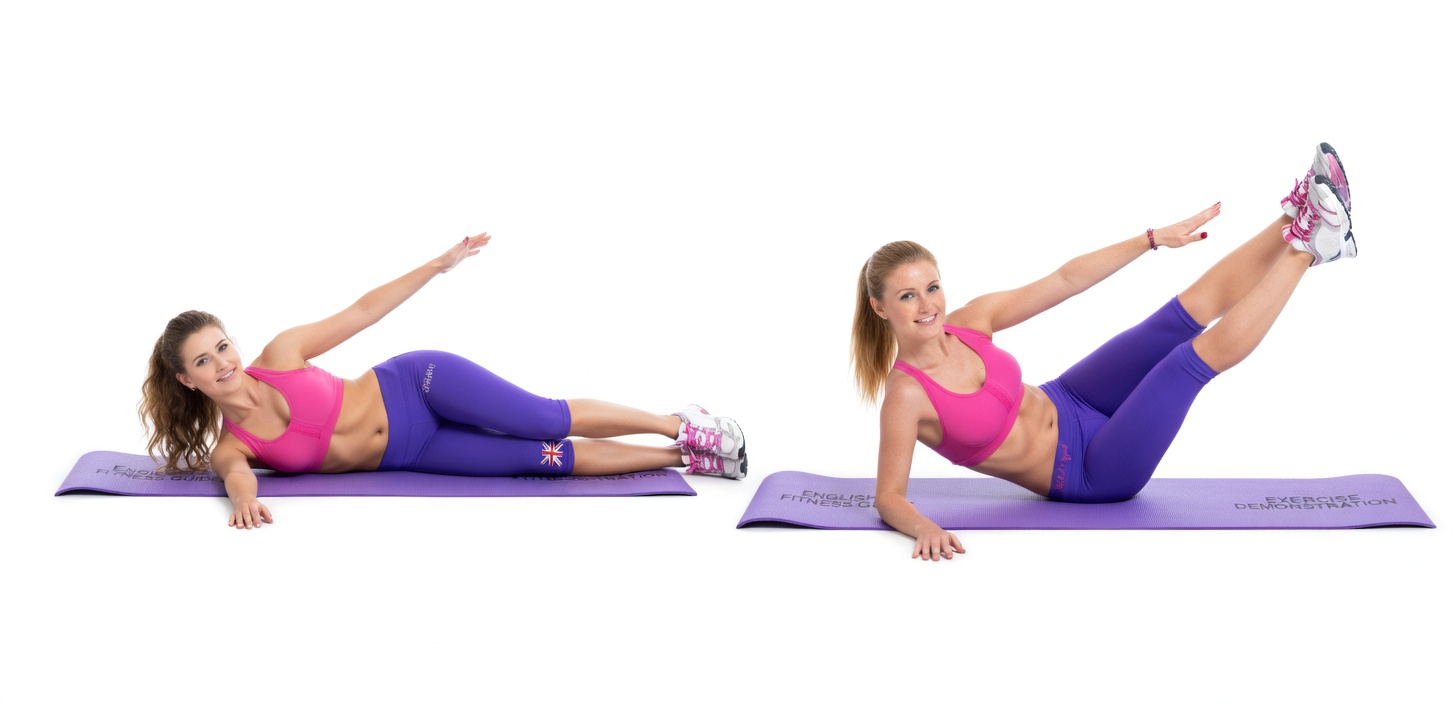
Exercise 6: Side Lifts — 30 Seconds
Side lifts are a strong choice for training the obliques and improving side-body stability. They also require balance and coordination.
Target muscles:
- Obliques
- Hip abductors
- Supporting stabilizer muscles
How to Do Side Lifts
Lie on your right side. Lift both legs toward the ceiling while performing a side crunch, bringing your upper and lower body toward each other. Lower back down with control and repeat for the full interval. During the second round of the circuit, perform the movement on the left side.
Other Types of Circuit Training Workouts
The routine above is a low-impact, equipment-free circuit that works well for many people. However, circuit training can be adapted in many ways depending on your goals.
Below are a few common variations.
Circuit Training With Weights
If your goal is to build more strength or make your workouts more challenging, you can add weights to your circuit routine.
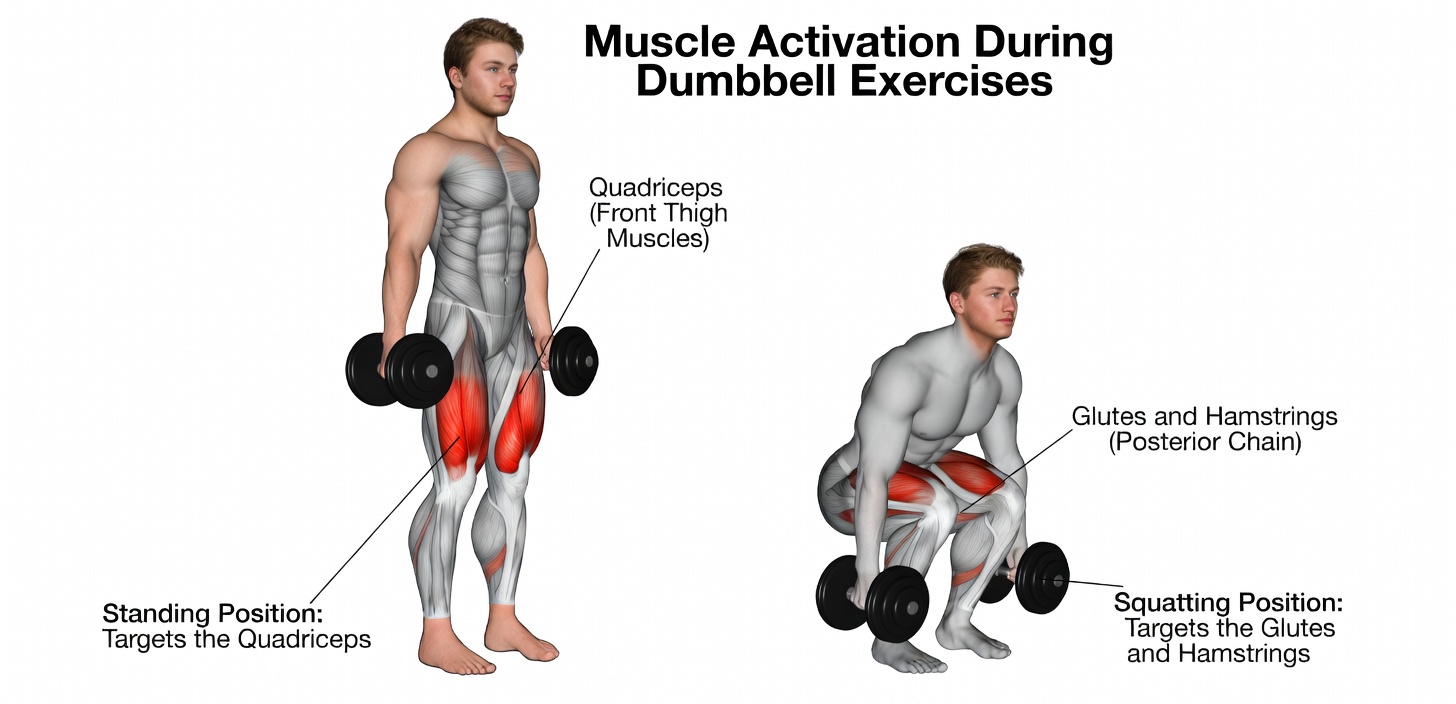
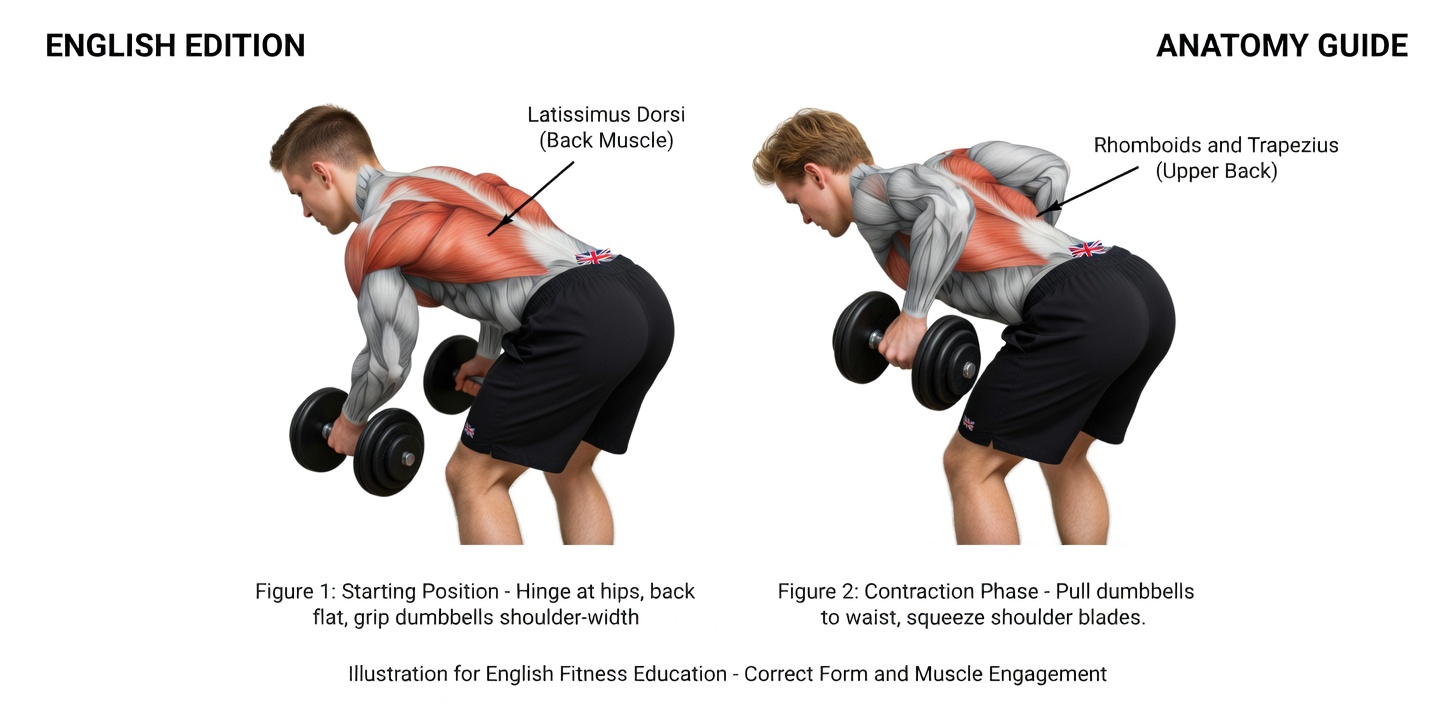
For example, bodyweight squats can become goblet squats, lunges can be performed with dumbbells, and pushups can be paired with resistance-based movements such as rows or shoulder presses. Adding external resistance increases the workload on your muscles and can help accelerate strength gains.
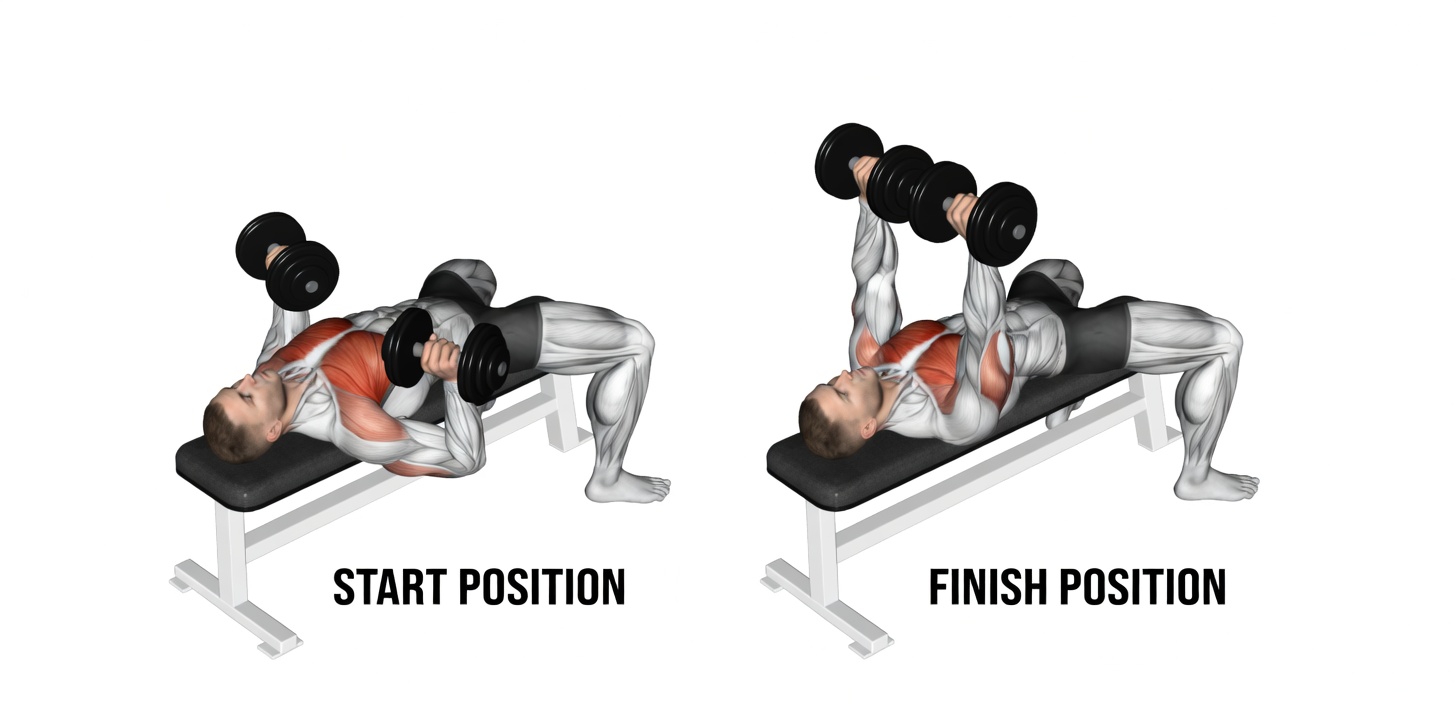
Weighted circuit training is a great option for people who want to combine strength training and conditioning into one time-efficient session.
Why Circuit Training Is So Versatile
One reason circuit training remains so popular is its flexibility. You can make it:
- Short or long
- Low impact or high intensity
- Bodyweight-based or equipment-focused
- Beginner-friendly or highly advanced
This makes circuit training suitable for a wide range of fitness levels and training goals.
Final Thoughts
Circuit training is an efficient and highly practical way to improve overall fitness. It can help you burn calories, strengthen your muscles, and improve endurance, all within a short workout.
If you need a simple routine that fits into a busy day, the 9-minute full-body circuit above is a great place to begin. Since it requires no equipment and very little space, it is easy to start right away.