Could You Be Misdiagnosed With High Blood Pressure?
You can be told you have a lifelong illness you don’t actually suffer from—and with blood pressure, this happens far more often than people realize. A quick five‑minute test is all it takes for an inaccurate reading to label you “hypertensive” and potentially put you on daily medication for years. The cause is often simple, preventable mistakes, sometimes even in busy medical offices.
Learning how to check your blood pressure properly is one of the most powerful skills you can gain for your long‑term health. It helps you avoid unnecessary worry, reduces the risk of a false diagnosis, and ensures that if you truly do have high blood pressure, you and your doctor can manage it correctly.
In this guide, we’ll look at the most common errors people make when measuring blood pressure, then walk through the right way to do it step by step. You’ll also see how hypertension is actually diagnosed and what the first line of treatment usually involves—and it isn’t always medication.
(Based on the insights of Dr. Juan Veller)
Key Takeaways
-
Small mistakes make a big difference: Talking, sitting the wrong way, or drinking caffeine beforehand can push your blood pressure up by 10–20 mmHg or more.
-
Technique matters: Correct posture, proper cuff size and placement, and a quiet rest period are essential for an accurate blood pressure reading.
-
Hypertension isn’t diagnosed from one reading: Doctors usually need several elevated readings over time—either in the clinic or with structured home monitoring—before confirming high blood pressure.
-
White coat hypertension is real: Many people show higher readings only in medical settings due to stress. Home blood pressure monitoring often gives a truer picture of your usual levels.
-
Lifestyle comes first: For mild high blood pressure, most doctors start with 3–6 months of lifestyle changes—diet, exercise, sleep, and weight management—before prescribing medication.
1. Your Preparation Is Skewing the Result
One of the biggest sources of error happens before the cuff is even on your arm. Think about the previous hour:
- Did you drink coffee, tea, an energy drink, or a cola?
- Did you rush up the stairs, drive in traffic, or have an argument?
Your immediate physical and emotional state has a major influence on blood pressure.
Caffeine—found in coffee, tea, soda, and many energy drinks—is a stimulant that can temporarily raise blood pressure significantly. To improve accuracy, avoid caffeinated drinks for at least one hour before taking a reading.
Likewise, measuring right after exercise, rushing around, or a stressful event captures your agitated state, not your true resting blood pressure. Many people get a headache, assume their pressure is high, and measure it on the spot. The reading is elevated, and they conclude the headache must be from high blood pressure. In reality, the same stress or tension causing the headache is also causing a short‑term blood pressure spike.
Don’t reach for blood pressure tablets to treat a bad day or a tension headache. Instead, address the underlying cause: rest, hydrate, relax, or use a simple pain reliever if appropriate.
2. Your Sitting Position Is Incorrect
Body position during measurement is critical. Yet people commonly:
- Slouch on a sofa
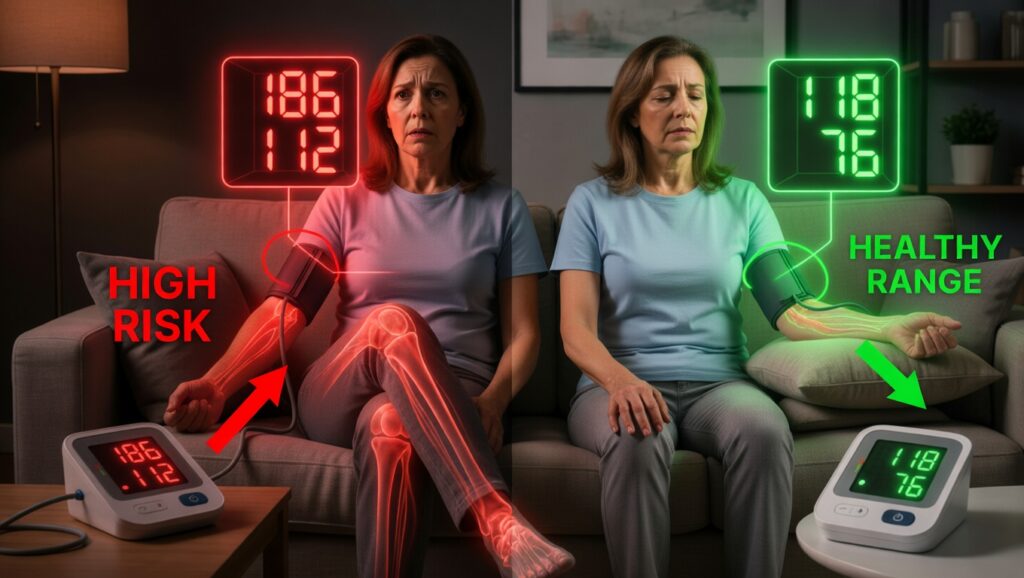
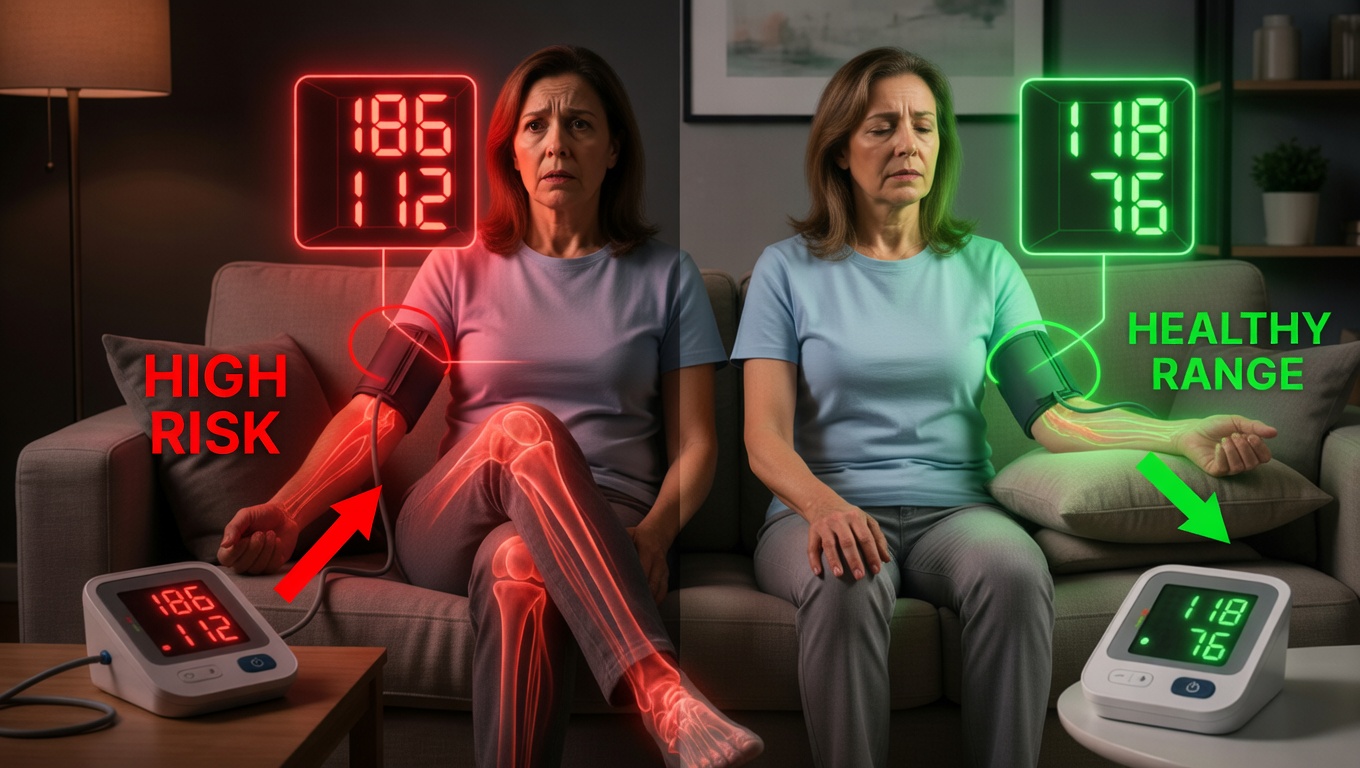
- Cross their legs
- Let their arm hang unsupported at their side
Each of these posture mistakes can push your blood pressure reading higher than it really is.
Use this checklist for correct posture:
- Sit in a chair with back support. Your back should be straight and fully supported, not leaning forward or slumping.
- Feet flat on the floor. Do not cross your legs or ankles. Leg crossing can restrict blood flow and raise pressure.
- Arm supported at heart level. Rest your arm on a table or armrest so that your upper arm is level with the middle of your chest. It usually doesn’t matter whether you use the left or right arm unless your doctor has a preference.
- Muscles relaxed. If your arm is unsupported or you hold it up yourself, your muscles tense and can influence the reading.
- Hand open and relaxed. Many people clench their fist when the cuff tightens because it feels uncomfortable. That simple tension can increase the measured pressure. Keep your hand open, fingers relaxed.
3. Your Cuff Size and Placement Are Wrong
The blood pressure cuff itself is a frequent source of inaccurate readings. Three factors really matter: cuff size, placement, and device type.
Cuff size
The inflatable part of the cuff (the bladder) should cover about 60–70% of the circumference of your upper arm.
- Too small: The cuff has to squeeze harder to cut off blood flow, often giving falsely high readings.
- Too large: If the cuff wraps too far around the arm, it can underestimate your blood pressure.
If you have a larger or very small arm, you may need a special cuff size. Using the wrong size routinely can lead to long‑term misclassification of your blood pressure.
Cuff placement
- Place the cuff on your bare upper arm, not over clothing.
- Position it about two finger‑widths above the elbow crease.
- You should be able to bend your elbow comfortably without the cuff digging in.
- The tube or hose should run down the inside of your arm, aligning the sensor with the brachial artery.
Many people mistakenly rotate the cuff so the hose points outward. This misalignment can reduce accuracy.
Upper arm vs wrist monitors
Wrist blood pressure monitors are convenient and portable, but most medical guidelines do not recommend them for routine use. The arteries at the wrist are smaller and surrounded by bone, making consistent, accurate measurements more difficult. Whenever possible, use a validated upper arm monitor for the most reliable results.
4. You’re Ignoring the “No Talking” Rule
The “rule of silence” is one of the most ignored steps—often even in healthcare settings. A common scenario:
You’re called from the waiting room, walk to the exam room, sit down, and immediately the cuff goes on. While the machine is inflating, the nurse or doctor starts asking questions like, “How are you feeling?” or “Are you taking your medications?” The reading taken in that moment is unlikely to reflect your true resting blood pressure.
Your cardiovascular system needs a short period to settle. For an accurate measurement:
-
Rest quietly for 3–5 minutes before taking a reading.
- Sit in the correct position.
- Do not talk, scroll on your phone, or read. Just sit calmly and breathe.
-
Stay silent during the measurement itself.
Talking changes your breathing pattern and alters pressure in your chest, which affects how your heart pumps. This can easily raise systolic blood pressure by 10 mmHg or more—enough to move a normal reading into the “high” range.
Silence and stillness are not optional; they are essential parts of proper blood pressure measurement.
5. You’re Trusting a Single Clinic Reading
Many people experience white coat hypertension—blood pressure that rises in medical environments due to anxiety or stress. Simply being in a clinic, anticipating results, or worrying about what the doctor might say can trigger a stress response, increasing adrenaline and cortisol. The result is a temporary spike in blood pressure.
You might have normal readings at home but consistently high values at your doctor’s office. That’s why a proper diagnosis of hypertension should never rely on just one reading.
There are three main approaches to diagnosing high blood pressure:
1. In‑office measurements
Your doctor measures your blood pressure correctly on at least two separate visits (for example, one week apart). If readings on both occasions are consistently at or above 140/90 mmHg, a diagnosis of hypertension may be made.
2. Home Blood Pressure Monitoring (HBPM)
This is often the preferred method for many patients:
- Use a validated home blood pressure monitor.
- Measure your pressure twice a day—once in the morning and once in the evening—for 5–7 days.
- Record every reading.
- Your doctor will typically discard the first day’s values, as they can be artificially high while you’re getting used to the process.
- The remaining readings are averaged. If the average is above 135/85 mmHg, this supports a diagnosis of hypertension.
Home monitoring reduces the impact of white coat hypertension and gives a more accurate picture of your usual blood pressure.
3. Ambulatory Blood Pressure Monitoring (ABPM)
ABPM is considered the gold standard for diagnosing hypertension. You wear a small device connected to a cuff that automatically measures and records your blood pressure at regular intervals—typically over 24 hours—while you go about your normal daily activities and sleep. This provides a detailed profile of your blood pressure throughout the day and night and helps distinguish true hypertension from white coat or masked hypertension.
Using the correct technique, avoiding common mistakes, and understanding how hypertension is really diagnosed can protect you from unnecessary treatment and ensure you receive appropriate care if you genuinely have high blood pressure.