Why You’re Suddenly Awake at 3–5 AM
You go to bed feeling virtuous after what seems like a light, healthy dinner—some yogurt with fruit, maybe a slice of toast. You fall asleep without trouble. Then, out of nowhere, it’s 3, 4, or 5 in the morning and you’re wide awake.
Your heart is pounding, you’re sweating, and your brain feels switched on, as if an internal alarm just blared. You were technically asleep, but you don’t feel rested at all.
Your thoughts start spinning:
“Is this stress?”
“Is it my age?”
“If I’m a man, is it my prostate?”
“Do I have some kind of infection?”
Often, it’s none of these. A very common cause is a hidden metabolic cycle set in motion by what you ate in the evening. Drawing on insights from Dr. Alberto Sanagustín, we’ll break down what’s really going on—and walk through three simple dinner rules that can start helping you tonight.
Before anything else, drop the guilt. We’ve all been told that a light meal of fruit and yogurt is “the healthy option.” It can indeed help with weight control—but for many people, especially after midlife, that same “healthy” pattern can quietly sabotage sleep.
Key Takeaways
- The Problem: Waking abruptly between 3–5 AM with a racing heart and anxiety is often a sign of reactive nocturnal hypoglycemia—a sudden drop in blood sugar while you sleep.
- The Cause: Eating a high-carb dinner (fruit, yogurt, bread, pasta, sugary snacks) can cause a sharp rise in blood glucose, followed by a steep crash that your body treats like an emergency.
- The Solution: Stabilize your nighttime blood sugar by basing your evening meal on protein and healthy fats, not just carbohydrates.
- The Action Plan: Apply three simple dinner rules and test them for three nights in a row to see if your sleep improves dramatically.
The 3 AM Alarm: What Is Reactive Nocturnal Hypoglycemia?
Let’s look at a real-life example.
One of my patients—we’ll call him Carlos—was 58 and very committed to “eating clean.” Every night he finished his day with a bowl of fruit and oatmeal, convinced he was protecting his heart. In many ways, it was a heart-healthy habit.
But he had a problem:
“I wake up every single night at 3:30 AM like someone hit a panic button. My heart is racing, and once I’m awake, I can’t fall back asleep.”
He assumed it was anxiety. In reality, he was experiencing reactive nocturnal hypoglycemia—a blood sugar crash during sleep.
Think of your body as a hybrid car. When you have a dinner loaded with quick carbohydrates—sweet fruit, sugary yogurt, white bread or pasta—you’re filling the tank with fast-burning fuel. Your blood sugar spikes quickly.
Your pancreas responds by releasing a big dose of insulin to pull that sugar out of your bloodstream.
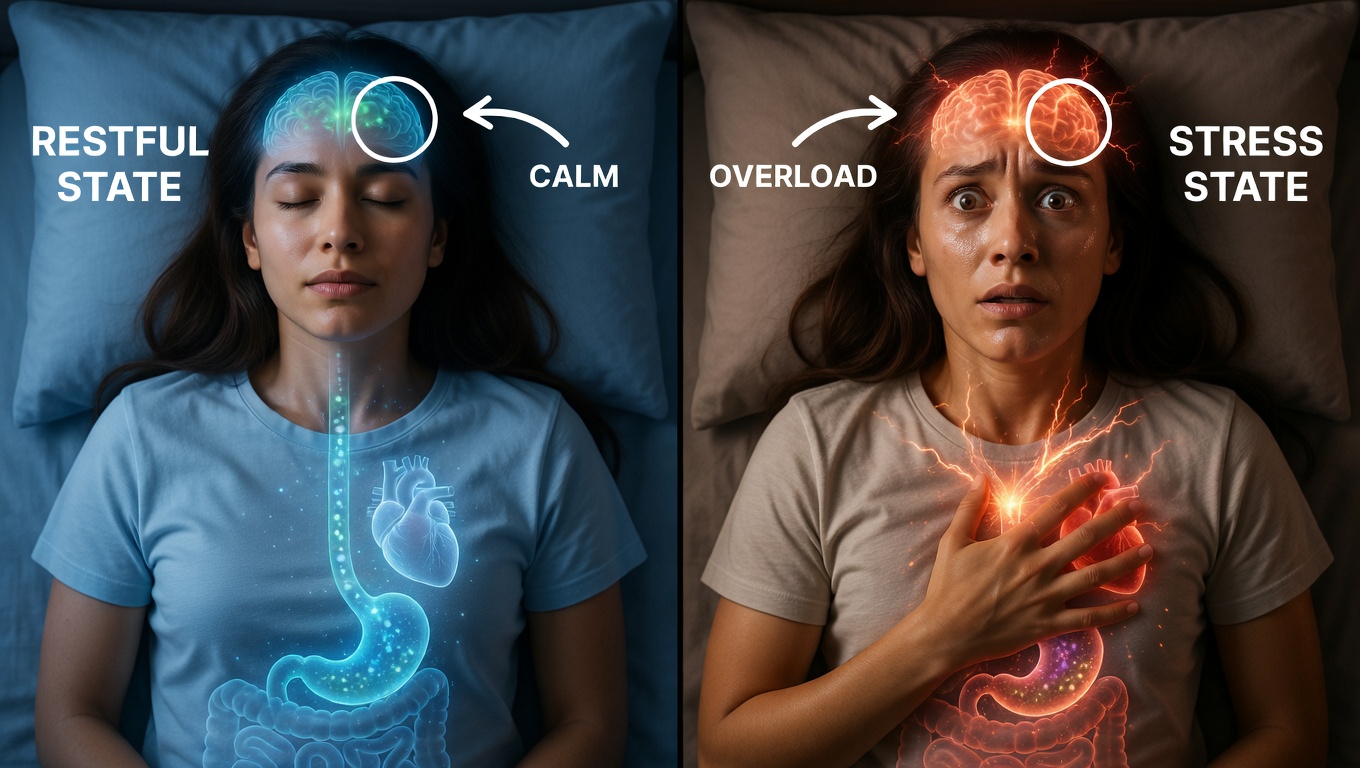
While you’re asleep, that glucose level may drop too far, too fast. Your brain constantly monitors your energy supply. When it senses that fuel is falling sharply, it interprets it as a threat:
“Danger—energy running out!”
To protect you, your body triggers a surge of adrenaline and cortisol (stress hormones). These:
- Push blood sugar back up fast
- Jolt you awake
- Cause a racing heart, sweating, and a feeling of fear or restlessness
This isn’t “all in your head.” It’s a built-in survival response to low blood sugar—your body acting as if it needs to wake you to keep you alive.
Is This You? A Simple Self-Check
Ask yourself:
- Do you regularly wake up between 3:00 and 5:00 AM?
- When you wake, do you notice palpitations, sudden warmth or sweating, or a rush of anxiety and racing thoughts?
- Do you feel exhausted in the morning, as if you were hit by a truck, even though you were in bed for many hours?
If you’re nodding “yes” to these questions, your night-time awakenings may be driven by blood sugar swings, not just stress or aging.
Important:
If you have diabetes, take insulin, or use medications that affect blood sugar, talk to your doctor before changing your diet. Any adjustments must be coordinated with your healthcare provider to keep you safe.
Now let’s go through the three rules that can transform your dinner—and your sleep.
Rule #1: Anchor Dinner with Protein and Healthy Fats
Think of protein and healthy fats as the handbrake for your blood sugar.
When you include them in your evening meal, they:
- Slow down digestion
- Reduce how quickly carbohydrates are absorbed
- Prevent big spikes and crashes in blood glucose
What you want to avoid at night is the “carbs only” dinner:
- Toast with jam
- A bowl of cereal or plain oats with fruit
- Pasta with a tiny bit of sauce and no protein
- Fruit and yogurt with added sugar
These are classic setups for a 3–4 AM wake-up call.
Instead, build your dinner around protein + healthy fats, and then add vegetables or modest amounts of slower carbs if you tolerate them well.
Examples of sleep-friendly dinners:
- Egg-based dinner:
- 2–3 scrambled eggs with spinach, cooked in olive oil or butter
- Fish or poultry with healthy fats:
- Grilled salmon or chicken breast with a large green salad, olive oil dressing, and avocado
- Legume-based option:
- Lentil or bean soup with a side of steamed non-starchy vegetables like broccoli, cauliflower, or green beans
- Simple protein plate:
- A piece of baked tofu or lean meat with roasted vegetables and a drizzle of olive oil
When you eat this way, your “fuel tank” empties slowly and steadily throughout the night. Your brain stays calm, stress hormones don’t spike, and you’re much more likely to sleep through until morning.
Rule #2: Give Your Body Time to “Cool Down” Before Bed
Your second rule is about timing. Try to finish dinner 2–3 hours before you go to sleep.
If you eat a big meal and then lie down immediately, your body has to:
- Work hard to digest food
- Manage blood sugar changes
- Attempt deep, restorative sleep—all at the same time
Digestion and deep sleep compete with each other. Your body should be focusing on:
- Repairing tissues
- Balancing hormones
- Consolidating memories
—not struggling with a heavy, late-night meal. This conflict can keep you from reaching the deepest stages of sleep and may contribute to night-time awakenings.
What if you get home late and you’re very hungry?
Avoid a large, carb-heavy dinner right before bed. Instead, choose a small, protein-centered snack, such as:
- A handful of nuts
- A small piece of cheese
- A spoonful or two of plain Greek yogurt (without added sugar or sweet fruit)
This can take the edge off your hunger without sending your blood sugar on a roller coaster.
Rule #3: Watch Out for Night-Time “False Friends”
Some things look harmless—or even helpful—for sleep but actually undermine your night. Two common saboteurs:
- Alcohol
- “Healthy” sweet treats before bed
Alcohol: The Sleep Impostor
A glass of wine or beer may help you fall asleep faster, but it nearly always worsens sleep quality, especially in the second half of the night. Alcohol:
- Disrupts normal sleep architecture
- Reduces REM sleep
- Increases the likelihood of waking up frequently
So even though you might drift off more easily, your overall rest is lighter and more fragmented.
Sweet Desserts and “Little Treats”
Even small amounts of sugar at night can be enough to ignite the spike-and-crash cycle:
- A square or two of dark chocolate
- A “digestive” or “light” cookie
- A sweetened yogurt
- A piece of fruit right before bed
For someone sensitive to blood sugar swings, this can be just enough to trigger that 4 AM adrenaline surge. If you’re waking up in the early hours, treat these “harmless” snacks as potential triggers.
Your 3-Night Sleep Reset Challenge
Here’s a simple experiment to see whether your sleep issues are metabolic:
For three nights in a row:
- Eat a dinner built around protein, vegetables, and healthy fats.
- Avoid:
- Alcohol
- Sweet desserts (including “healthy” ones like fruit or dark chocolate)
- Carb-only meals
- Finish eating 2–3 hours before bed whenever possible.
Then observe:
- Do your 3–5 AM awakenings disappear or improve significantly?
- Is your heart quieter and your mind calmer at night?
- Do you feel more rested in the morning?
If your middle-of-the-night wake-ups fade or stop, it’s a strong sign that the problem was largely metabolic, not psychological—and that your evening routine is a powerful lever you can control.
Conclusion: When It’s Something More
By:
- Centering your dinner on protein and healthy fats
- Allowing 2–3 hours between your last meal and bedtime
- Avoiding alcohol and sugary foods in the evening
you give your body a stable fuel supply overnight and drastically reduce the chance of a blood sugar crash that jolts you awake.
If, despite applying these rules consistently, you still:
- Wake up with severe palpitations
- Have chest pain, breathing difficulty, or intense anxiety
- Notice other symptoms like weight loss, frequent urination, or extreme thirst
then it’s important to see a healthcare professional to rule out other conditions such as sleep apnea, heart problems, thyroid issues, or diabetes.
For many people, though, adjusting that seemingly “perfect” light dinner is enough to stop those jarring early-morning awakenings and restore truly restorative sleep.