4 Essential Strength Exercises to Help You Age Better After 50
Growing older is unavoidable, but maintaining your health, strength, and independence as you age is something you can actively influence.
As the years pass, metabolism naturally becomes slower, and hormone levels, including testosterone, gradually decline. Aging also tends to bring a reduction in muscle mass, which can lead to less strength, reduced power, and limited mobility.
Stiff joints and decreased flexibility often become part of the picture as well.
The good news is that many of these age-related changes can be managed. With the right approach, you can slow physical decline, support longevity, and stay active well beyond 50. Preserving muscle and building strength is one of the most important ways to maintain a high quality of life as you get older.
One of the most effective strategies for protecting muscle mass, supporting metabolism, and staying strong is strength training.
However, the most valuable exercises are not just random resistance moves. The best options are compound, dynamic, and functional exercises that train multiple muscle groups at once and mirror the movement patterns you use in everyday life.
The following four exercises are especially useful because they reflect daily activities that help you remain mobile, capable, and independent.
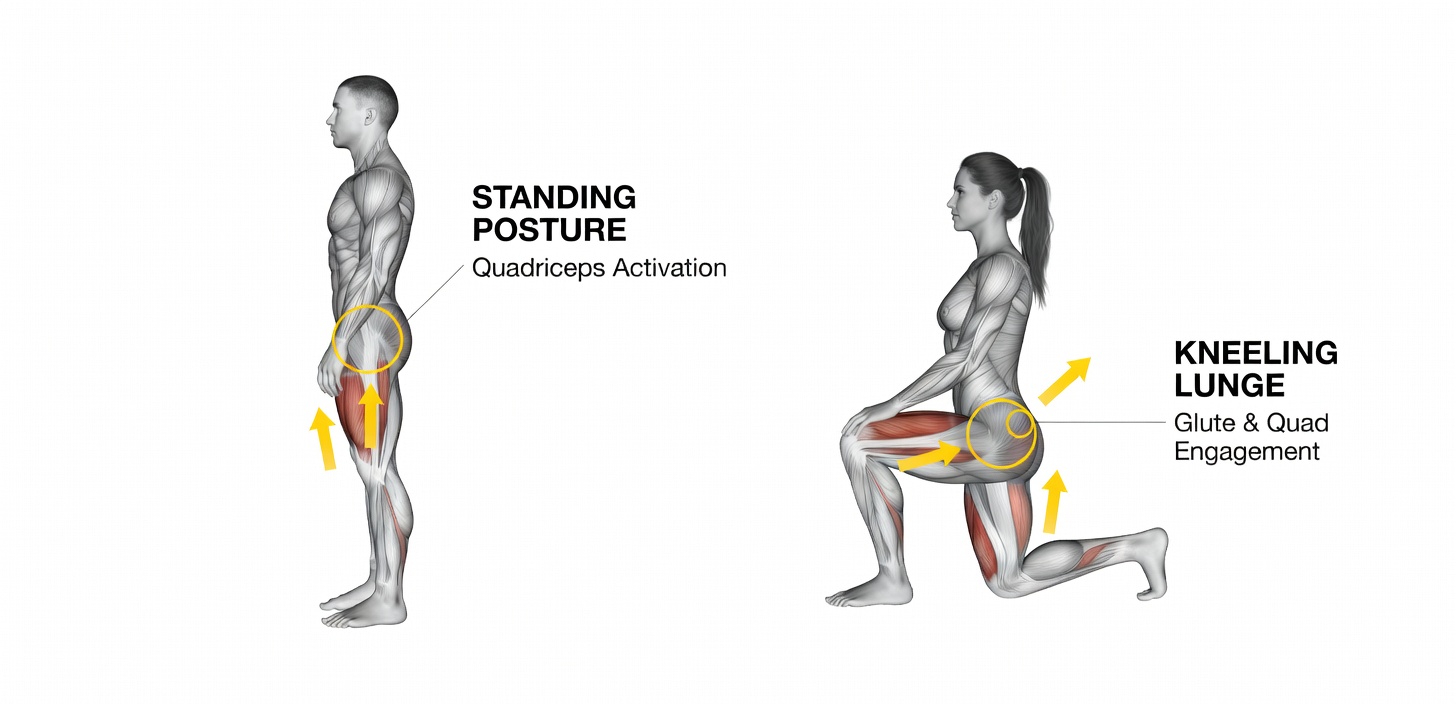
You can include these movements in your current workout routine to help improve the areas most affected by aging, including muscle mass, strength, flexibility, balance, and mobility.
Even better, these exercises can make common daily tasks feel easier and more comfortable.
1. Push-Ups
Push-ups are an excellent exercise to keep doing in your 50s and beyond. They work many of the major muscles in the upper body, including the chest, shoulders, arms, back, and core.
They are also highly functional. Push-ups train the body for real-world pushing actions, whether you are opening a heavy door, pushing a lawn mower, or bracing yourself during daily movement.
By practicing push-ups regularly, you can build upper-body strength while also improving core stability and mobility.
How to Do a Floor Push-Up
- Start on the floor with your hands and feet planted.
- Position your hands slightly wider than shoulder-width apart.
- Extend your legs behind you, keeping your feet a little narrower than hip-width.
- Tighten your abdominal muscles and squeeze your glutes.
- Keep your body in a straight line from your shoulders to your heels.
- Support your weight on your hands and toes.
- Slowly lower your chest toward the floor with control.
- Pause briefly at the bottom.
- Push through your palms to return to the starting position.
Recommended volume:
- Perform 2 to 3 sets of 10 reps
2. Lunges
Walking is a basic part of everyday life, but it can become more difficult with age if you do not maintain lower-body strength, balance, and joint stability.
That is why lunges are so valuable.
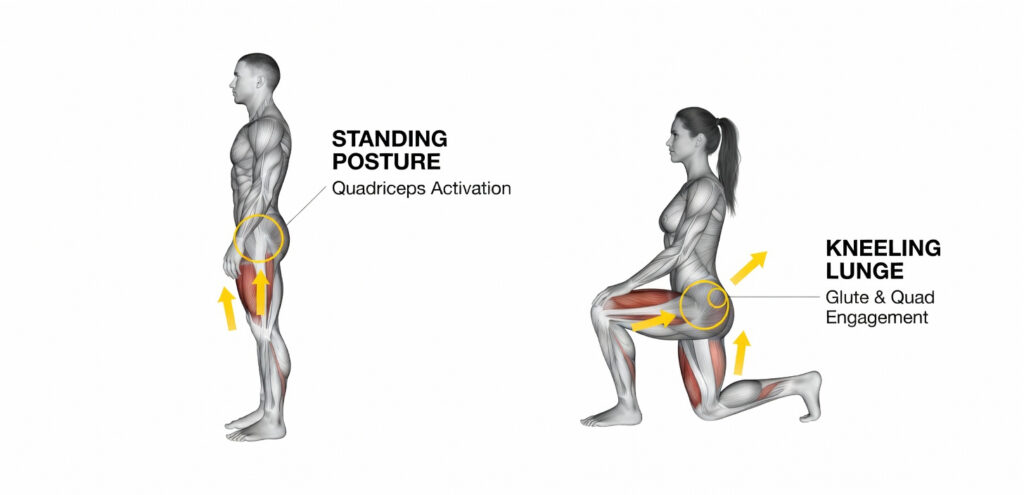
This movement closely resembles the walking pattern by placing one foot in front of the other, while also strengthening the legs and improving control through the knees and ankles. Lunges are especially helpful for maintaining mobility and coordination.
How to Do Lunges
- Stand tall with your feet hip-width apart.
- Engage your core.
- Step forward with one foot, placing your heel down first.
- Keep the opposite foot grounded and stable.
- Lower your body until your front thigh is close to parallel with the floor.
- If your mobility allows, gently tap your back knee to the ground.
- Keep your chest lifted and your head facing forward.
- Push through the heel of your front foot to return to standing.
Recommended volume:
- Do 8 to 12 reps with the right leg forward
- Switch sides and repeat with the left leg
- Complete 3 to 4 sets
3. Squats
The squat is a foundational lower-body exercise and an essential part of any strength routine for adults over 50.
It mimics one of the most common daily actions: sitting down and standing back up. If getting out of a chair or rising from bed starts to feel harder, squats can make a meaningful difference.
This compound movement targets the hamstrings, quadriceps, glutes, hips, and core. It also supports knee strength, improves lower-body stability, and encourages better posture.
How to Do a Squat
- Stand with your feet about shoulder-width apart.
- Turn your toes slightly outward.
- Extend your arms straight in front of you at chest height.
- Begin the movement by bending your knees and hinging at the hips.
- Keep your chest lifted and your back straight.
- Pull your shoulder blades back and brace your core.
- Lower yourself until your thighs are roughly parallel to the floor.
- Make sure your knees stay aligned and do not travel too far past your toes.
- Press firmly through your feet to stand back up.
That counts as one repetition.
4. Squat Jumps
If your knees and joints are healthy, squat jumps can be a great addition to your program.
This exercise is a form of plyometric training, which uses speed and force to improve strength and power. While plyometrics may not be the first method many people associate with older adults, research suggests it can play an important role in reducing age-related muscle loss.
According to findings highlighted by ACE, plyometric training can improve muscle mass, power, and fast-twitch muscle fiber development. These benefits may help counteract sarcopenia, the gradual loss of muscle that often comes with aging.
In simple terms, plyometrics can help fight one of the most challenging physical effects of getting older.
How to Do a Squat Jump
- Start in a squat stance with your feet shoulder-width apart.
- Keep your knees slightly bent.
- Brace your core and lower into a squat.
- Swing your arms back as you descend.
- As soon as you reach the bottom of the squat, explode upward into a jump.
- Swing your arms forward and upward to help generate momentum.
- Land softly on both feet.
- Absorb the landing by returning to a half-squat position.
Recommended volume:
- Perform 8 to 10 reps
Final Thoughts
Staying strong after 50 is one of the best ways to protect your mobility, independence, and long-term health. Functional strength exercises like push-ups, lunges, squats, and squat jumps can help preserve muscle, support joint health, and improve the way you move every day.
Adding these exercises to your fitness routine can make daily activities easier while also helping you stay active, capable, and resilient as you age.