5 Core Exercises for Adults Over 60 That Are Better Than Sit-Ups
Want a stronger core after 60, but find that sit-ups put too much stress on your neck or lower back? The good news is that you do not need sit-ups to build a strong, stable midsection.
In fact, skipping sit-ups may be the safer choice.
Sit-ups have long been seen as a classic ab exercise, but they are not always the best option, especially for older adults. While they can strengthen the abdominal muscles, they often place unnecessary pressure on the spine, neck, and hips.
If your goal is to improve core strength, tone your abs, and stay active as you age, there are more effective and safer alternatives. The right exercises can strengthen your core without straining your back, while also improving balance, posture, and stability.
Below are five core exercises that can help you stay fit and strong without relying on sit-ups.
1. Bird Dog
If you want one simple bodyweight movement that supports several areas of fitness at once, the bird dog is an excellent choice.
This exercise strengthens the core, improves balance, supports spinal stability, and helps keep the back strong. It is especially useful for adults over 60 because it also promotes mobility, coordination, and flexibility.
By activating the muscles that stabilize the spine, the bird dog can help reduce back discomfort, encourage better posture, and lower the risk of injury. It works well for most fitness levels, although it does require some control and balance.
If lifting one arm and the opposite leg at the same time feels difficult, begin with only one arm or one leg at a time. As your strength improves, you can progress to the full movement.
How to do the bird dog
- Start on all fours on a mat.
- Position your knees directly under your hips and your hands under your shoulders.
- Tighten your core and keep your spine neutral.
- Extend your right arm forward until it reaches shoulder height.
- At the same time, extend your left leg straight back until it reaches hip height.
- Hold for 2 seconds.
- Return to the starting position.
- Repeat on the other side.
Recommended: 8 to 10 repetitions per side for 2 to 3 sets.
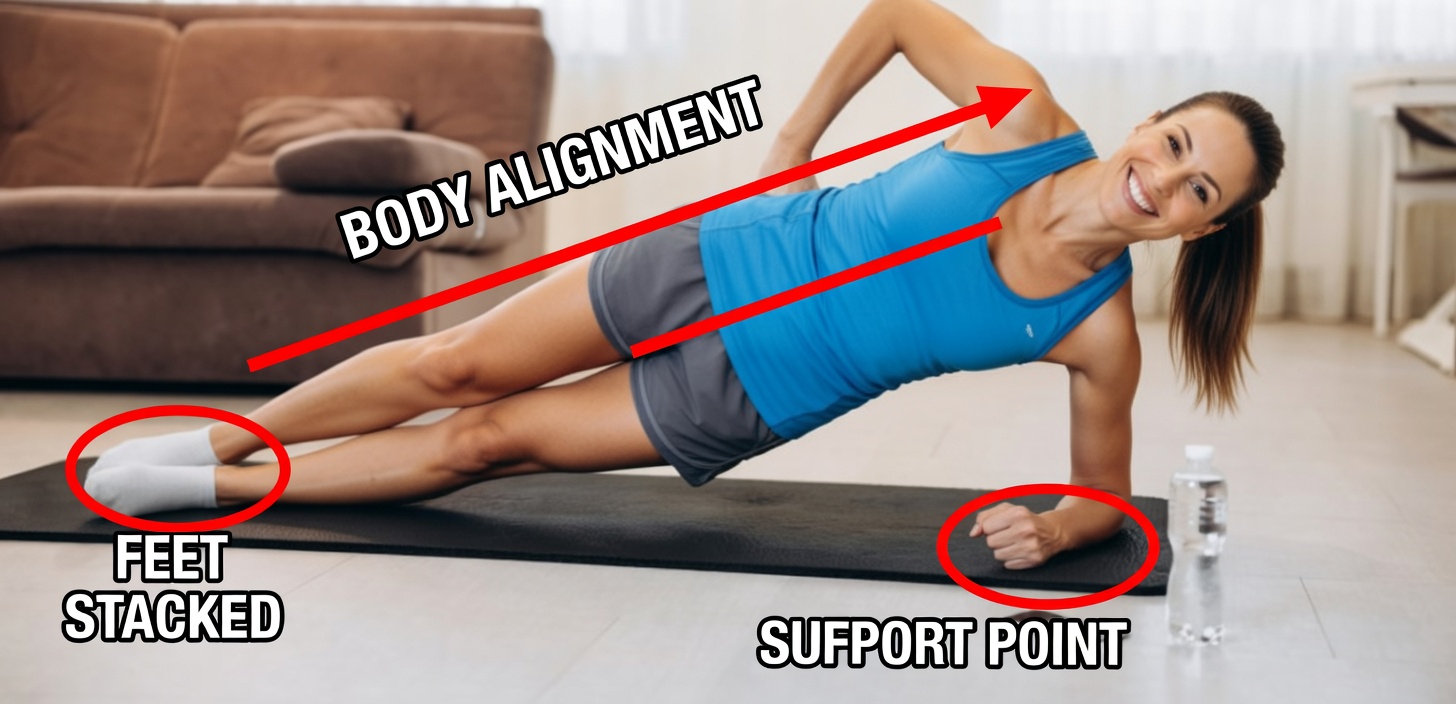
2. Side Plank
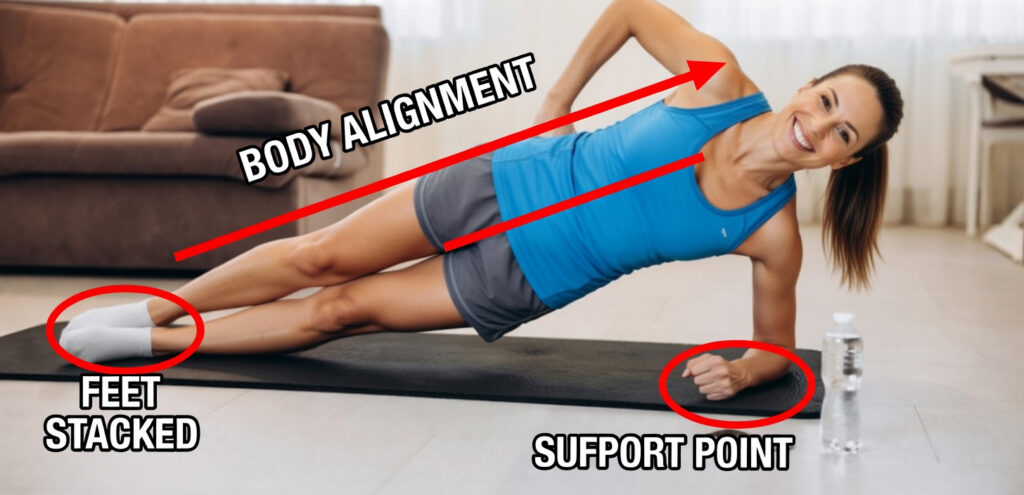
The side plank is often overlooked, but it is one of the best ways to strengthen the obliques, the muscles along the sides of your abdomen.
These muscles play an important role in everyday movements such as twisting, reaching, and turning. When the obliques are weak or stiff, mobility and range of motion can become limited.
A side plank also activates other important muscles in the core and back because your body must work to stay stable in the position. This makes it a great exercise for posture and spinal support.
If the full version feels too challenging, you can begin with a kneeling side plank.
How to do the side plank
- Lie on your left side on a mat.
- Support your upper body on your left forearm.
- Extend your legs and stack your feet.
- Keep your elbow directly under your shoulder.
- Lift your hips so your body forms a straight line from head to feet.
- Tighten your core and glutes.
- Avoid letting your hips drop.
- Hold for 10 to 30 seconds, then switch sides.
3. Plank
The plank is a simple but highly effective core exercise that does not involve bending or repeated movement. Because of that, it is often easier on the back than sit-ups.
This move targets the abdominal muscles while also training the shoulders, back, and glutes. It is beginner-friendly and can be adjusted to match your current ability.
If a standard plank feels too difficult, try placing your forearms on an elevated surface for an incline plank. You can also perform the movement from your knees instead of your toes to reduce the load.
How to do a plank hold
- Begin on all fours.
- Place your hands about shoulder-width apart.
- Step your feet back so your body forms a straight line.
- Keep your core engaged and your spine neutral.
- Do not let your hips sag or your lower back arch.
- Hold the position for 10 to 30 seconds.
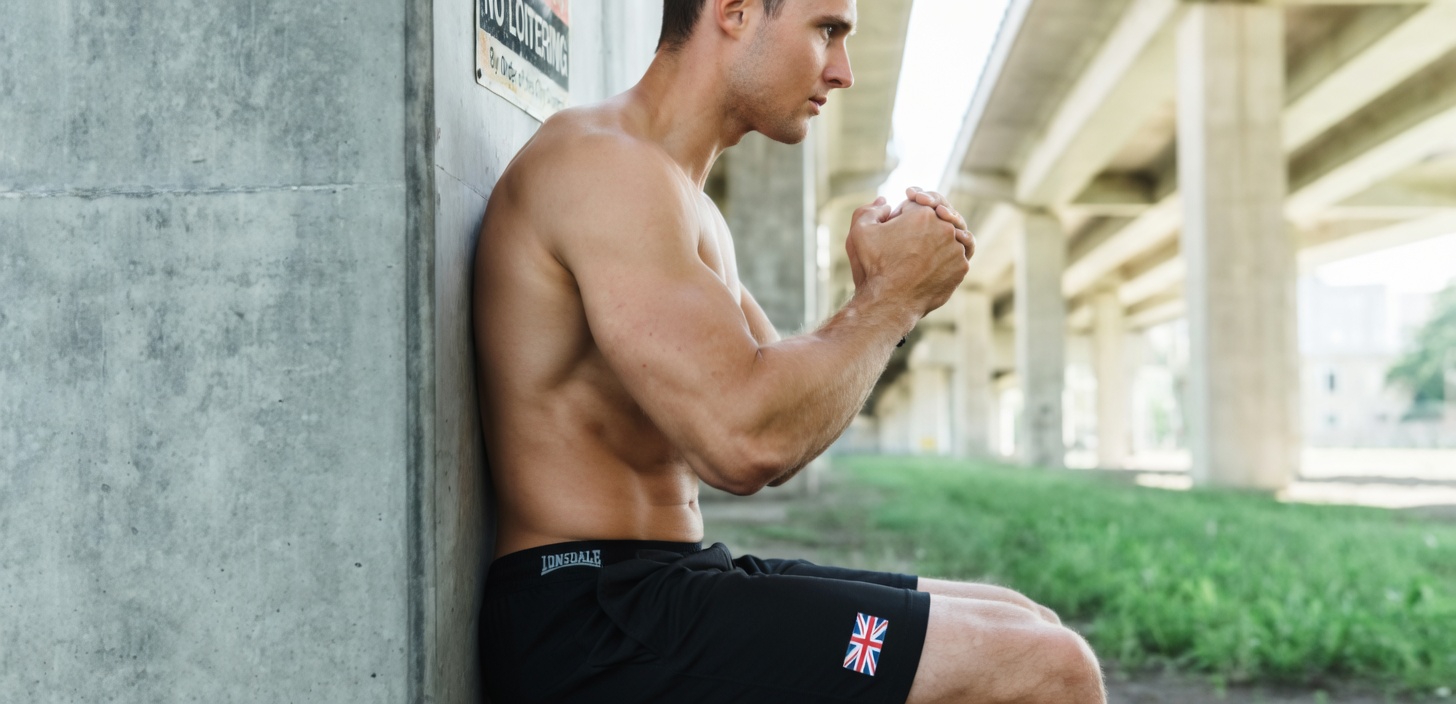
4. Wall Squat
The wall squat, often called a wall sit, is an excellent exercise for older adults who want to build both core and lower-body strength.
It is gentle on the neck and back, requires no equipment, and can easily be done at home. While traditional squats mainly work the glutes, hamstrings, and hips, wall squats add a strong stability component because you hold the position rather than move through repetitions.
That static hold increases core involvement and can help strengthen posture as well.
This exercise is also easy to modify. If a full squat is too difficult, start with a half squat. As you get stronger, work toward lowering yourself until your thighs are parallel to the floor.
How to do a wall squat
- Stand with your back against a flat wall.
- Place your feet about shoulder-width apart.
- Tighten your core.
- Slowly slide your back down the wall.
- Stop when your thighs are parallel to the floor, or higher if needed.
- Keep your knees behind your toes.
- Press your back gently into the wall and avoid arching your spine.
- Hold for 20 to 30 seconds, then return to standing.
5. Resistance Band Pallof Press
One common mistake in fitness is doing the same routine for too long without adding variety.
Repeating familiar exercises can be helpful for learning technique and building confidence, but if you never introduce new challenges, progress can slow down. Changing your routine from time to time helps you work muscles in different ways and can lead to better overall strength.
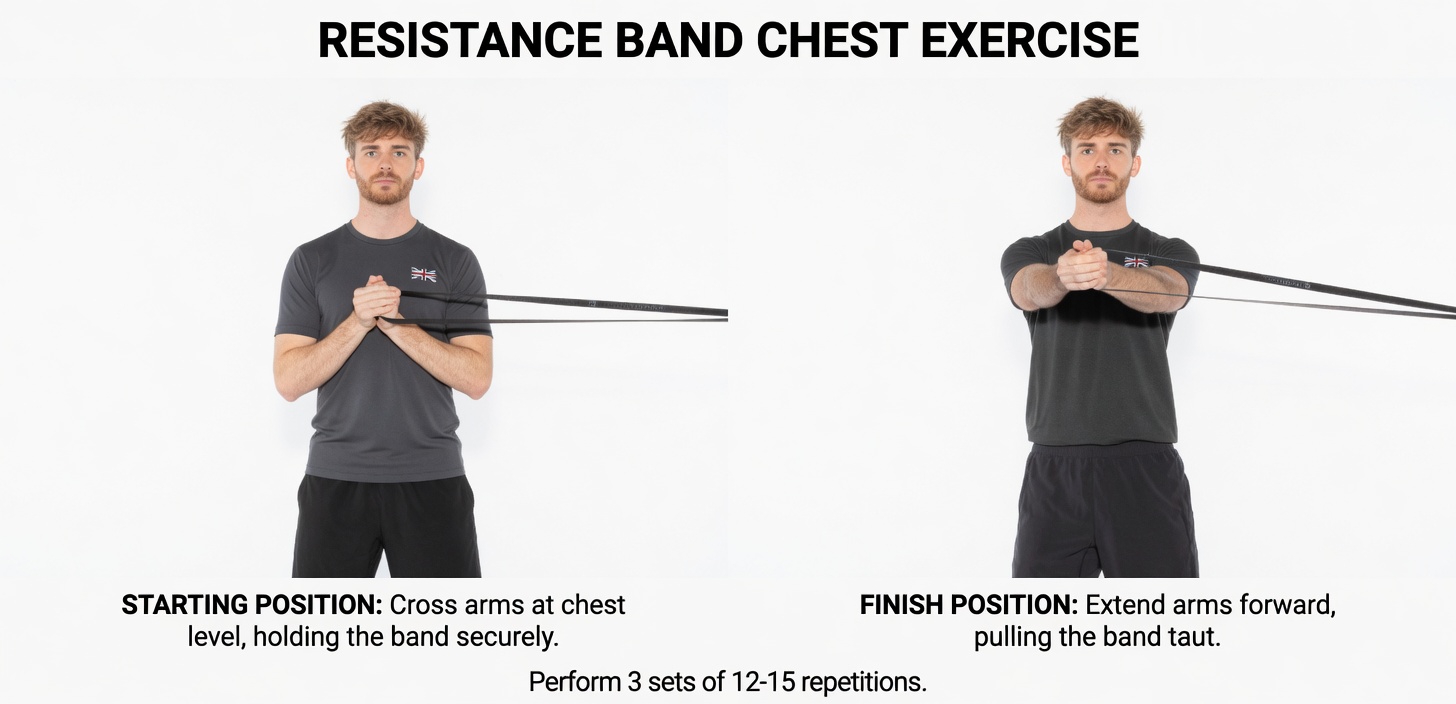
The resistance band Pallof press is a great core exercise to add to your workouts because it trains your body to resist rotation. That is a different kind of core challenge than you get from planks or squats.
The band creates tension, and your core must stay braced as your arms press forward. This improves stability and strengthens the muscles that support your spine.
How to do a resistance band Pallof press
- Attach a resistance band to a sturdy anchor at chest height.
- Stand sideways to the anchor with your feet shoulder-width apart.
- Hold the band with both hands in front of your chest.
- Step out until there is light tension in the band.
- Slightly bend your knees and hinge your hips back a little.
- Brace your core and glutes.
- Press your hands straight out in front of your chest.
- Do not allow your torso or hips to twist.
- Pause for 1 to 2 seconds.
- Bring your hands back to your chest.
Recommended: 8 to 10 repetitions, then switch sides for the next set.
Why These Exercises Are Better Than Sit-Ups After 60
These core exercises offer more than just stronger abs. They can help you:
- Improve balance and coordination
- Support better posture
- Strengthen the muscles that protect the spine
- Reduce stress on the neck and lower back
- Build functional strength for everyday movement
For adults over 60, that combination is especially valuable. A strong core is not just about appearance. It helps with standing taller, moving more confidently, and reducing the risk of falls and injuries.
Final Thoughts
You do not need sit-ups to build a stronger core after 60. In many cases, safer exercises such as bird dogs, planks, side planks, wall squats, and Pallof presses can deliver better results with less strain on your body.
By choosing core exercises that improve stability, balance, and posture, you can strengthen your midsection in a way that supports long-term health and everyday function.