3 Mini Band Exercises to Build Lower Body Strength After 60
Dumbbells and kettlebells have their place, but for simple and effective home workouts, a mini resistance band is hard to beat.
Lower body strength plays a major role in healthy aging, and it becomes even more important in your 60s and beyond. Strong legs, hips, and glutes support the way you move every day. They influence your mobility, flexibility, balance, and overall range of motion.
When your lower body stays strong and functional, everyday tasks like walking, sitting down, standing up, and driving become easier. These muscles also help stabilize your upper body and support good posture and spinal health.
That is why lower body training should never be overlooked as you get older, especially if your goal is to stay active and independent in retirement.
A mini band is one of the most convenient tools for training the legs and glutes at home. This small looped band fits around the feet, knees, or thighs and adds resistance without the need for bulky equipment. It is lightweight, easy to use, and an excellent way to make bodyweight exercises more challenging and effective.
For lower body training, three mini band exercises stand out in particular. These movements are functional compound exercises, meaning they work several muscle groups at the same time. That makes them highly effective for improving strength, stability, and muscle tone throughout the lower body.
1. Glute Bridge
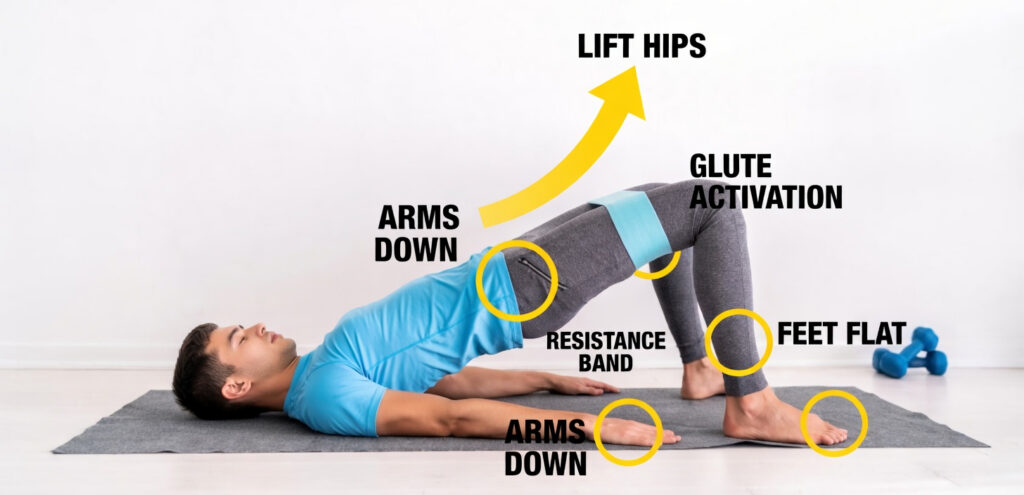
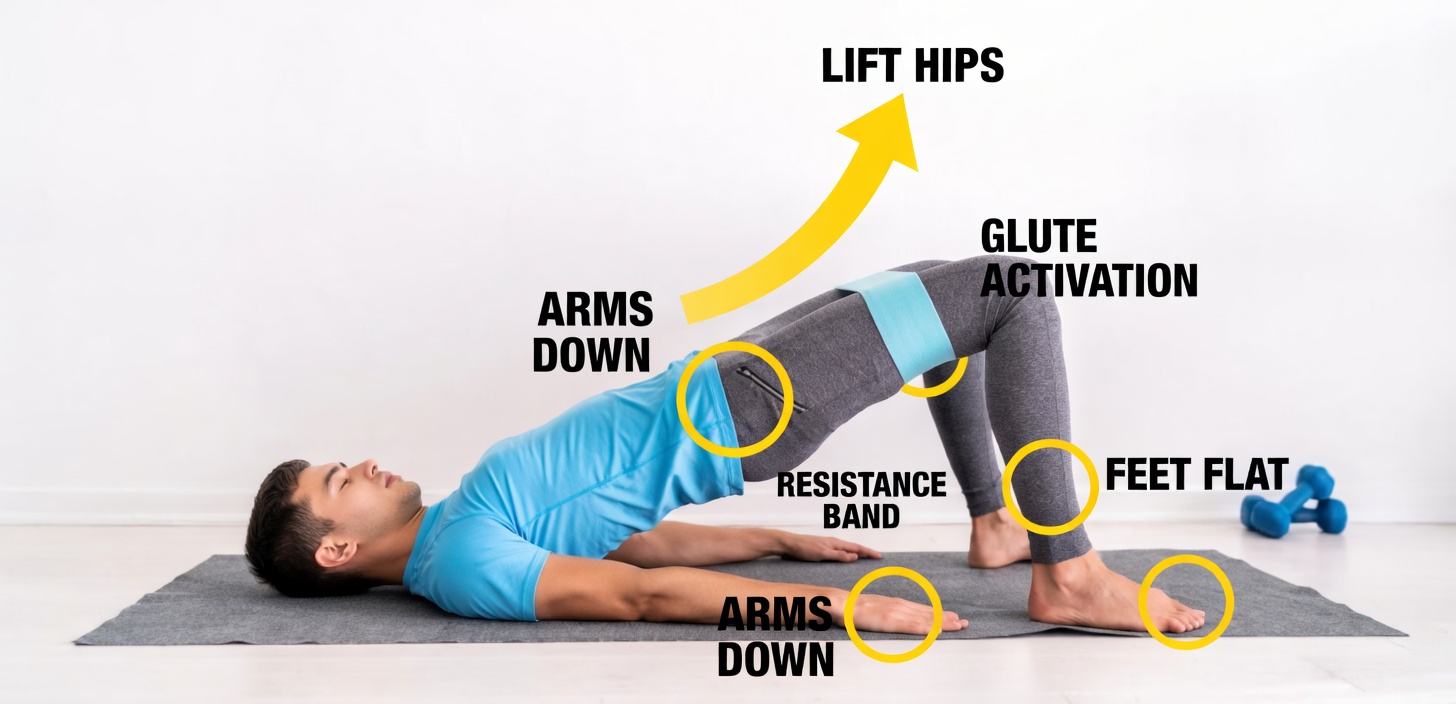
The glute bridge is a floor-based exercise that primarily targets the glutes and hamstrings. It also helps stretch tight hip flexors, which can contribute to lower back discomfort.
These muscles are essential for maintaining posture and supporting the lower back. Strengthening them can improve spinal support, enhance upper body control, and reduce strain during daily movement.
For beginners, adding a mini band is especially helpful because it encourages better form. The band keeps the knees from collapsing inward and increases resistance during the exercise. By pressing the knees outward against the band, you also activate the thighs and quadriceps more effectively.
How to do a mini-band glute bridge
- Place a mini band around your legs just above your knees.
- Lie on your back with your arms by your sides and your palms facing up.
- Bend your knees to about 90 degrees and keep your feet flat on the floor.
- Maintain slight outward pressure on the band so your knees stay aligned.
- Squeeze your glutes and lift your hips until your knees, hips, and shoulders form a straight line.
- Hold the top position for 1 to 2 seconds.
- Lower back down with control.
- Perform 12 to 15 repetitions for 2 to 3 sets.
2. Mini-Band Clamshell
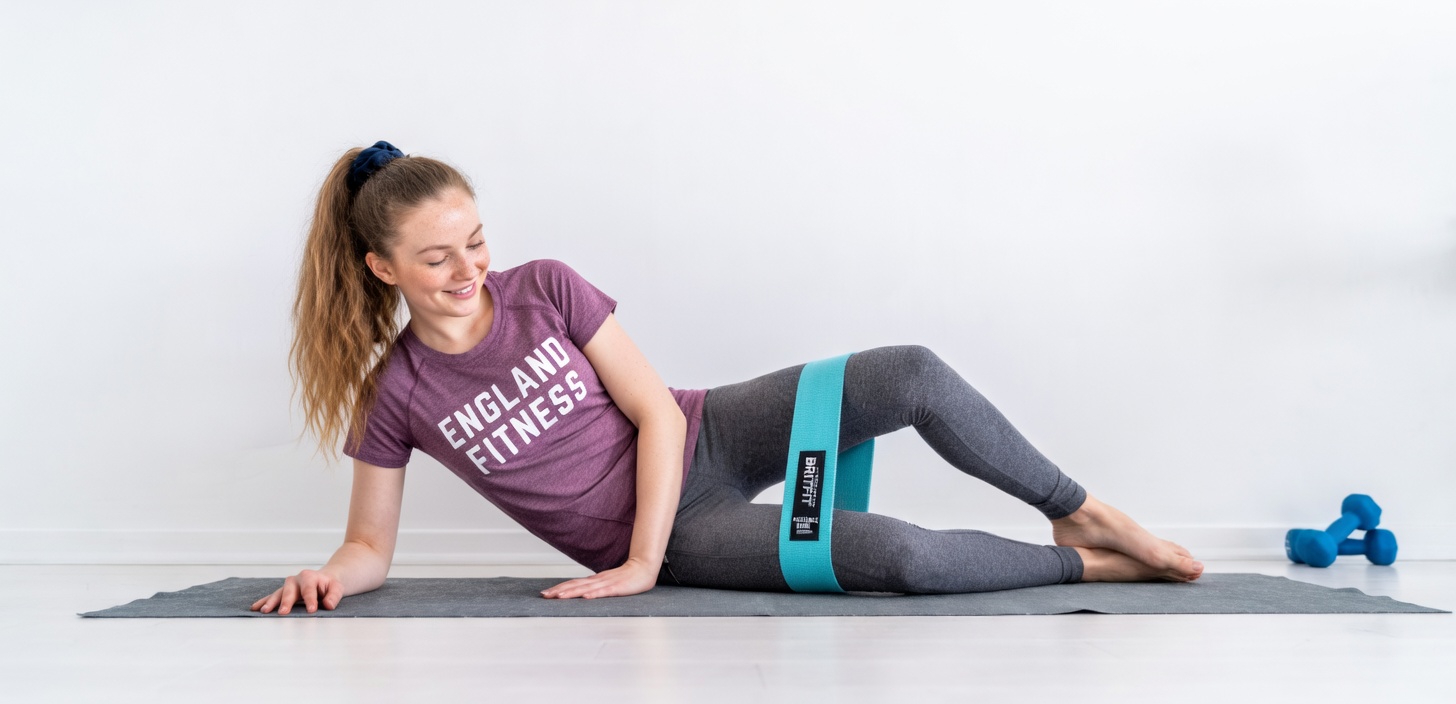
The mini-band clamshell is another highly effective lower body exercise. It works the glutes, hips, and both the inner and outer thighs.
Adding a loop band increases the challenge and helps strengthen the muscles that stabilize the hips. As an added bonus, this move also requires your core to stay engaged, so you train more than just your legs.
If you spend long hours sitting, clamshells can also help open up the hips and relieve tension in tight hip flexors.
How to do a mini-band clamshell
- Wrap a loop band just above your knees.
- Lie on your side with your hips and knees bent to roughly a 45-degree angle.
- Stack your legs and feet on top of each other.
- Tighten your abs to keep your torso stable.
- Lift your top knee as high as possible without rotating your pelvis.
- Keep your feet together and your bottom leg in contact with the floor.
- Pause briefly at the top, then return to the starting position.
- Complete 10 to 12 repetitions for 2 to 3 sets on each side.
3. Squat
The squat is often considered the most important lower body exercise, and for good reason. It is one of the most functional movements you can do because it closely matches the way you sit, stand, and lift in everyday life.
Although squats can be done without equipment, using a mini band increases the difficulty and improves muscle activation. The band helps prevent the knees from falling inward and encourages proper use of the legs and hips. It can also be a useful tool for learning correct squat form.
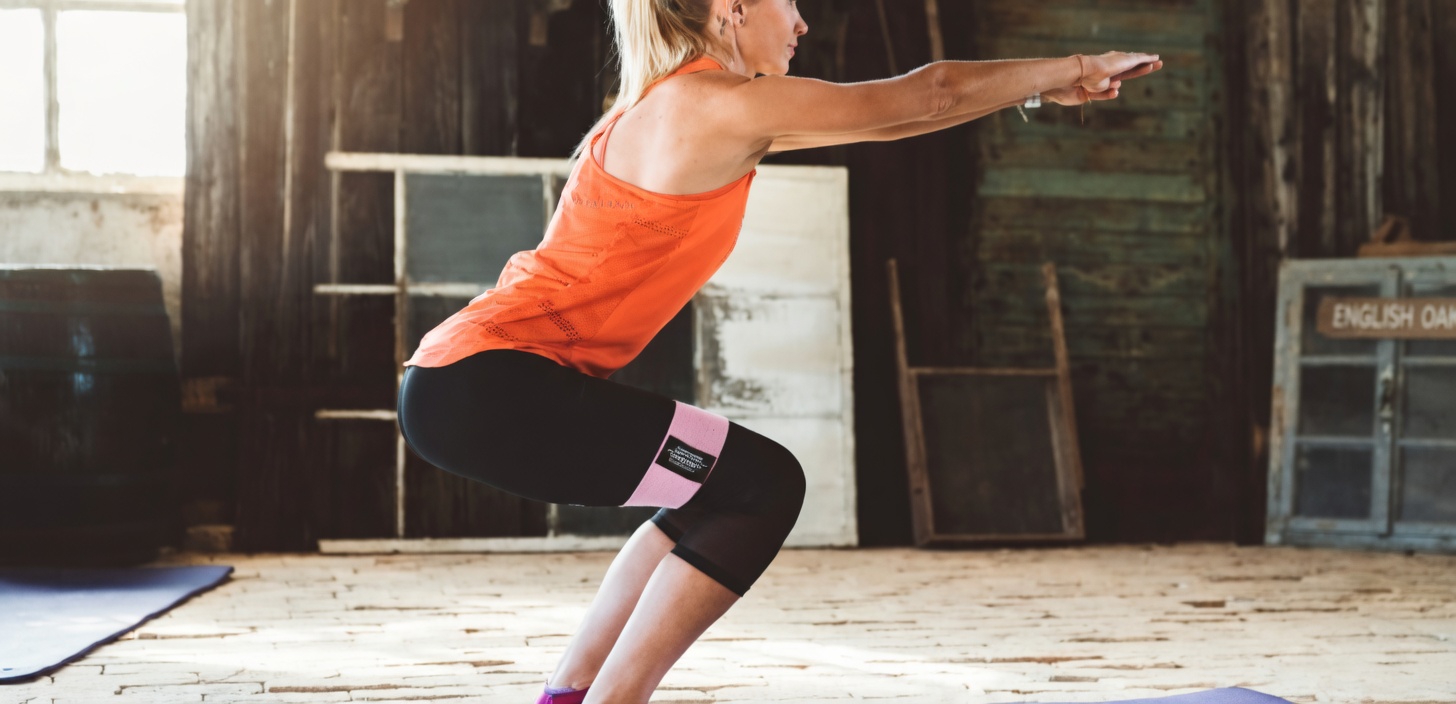
How to do a mini-band squat
- Stand with a mini band around your legs just above the knees.
- Place your feet about shoulder-width apart and let your arms rest at your sides.
- Push your hips back and begin lowering into a squat.
- Continue until your thighs are parallel to the floor, or as low as you can go with good form.
- Press through your feet and hips to stand back up.
- That counts as one repetition.
- Perform 12 to 15 repetitions for 2 to 3 sets.
Why These Mini Band Exercises Matter
Keeping your legs and glutes strong as you age is essential for balance, movement, and everyday performance. These muscles are involved in nearly every major activity, from walking and sitting to driving and running.
These three loop band exercises help train the major lower body muscles, including:
- Glutes
- Hamstrings
- Quadriceps
- Hip flexors
- Adductors
- Outer hips and thighs
They also activate the abs, core, and back, giving you added support for better posture and a stronger upper body.
Final Thoughts
If you are over 60, adding mini band exercises to your routine is a smart and practical way to strengthen your lower body at home. Glute bridges, clamshells, and squats can help improve leg strength, hip stability, and overall mobility.
As these moves become easier, you can increase the challenge by switching to a band with more resistance. Over time, this simple tool can help you maintain strength, movement, and independence as you age.