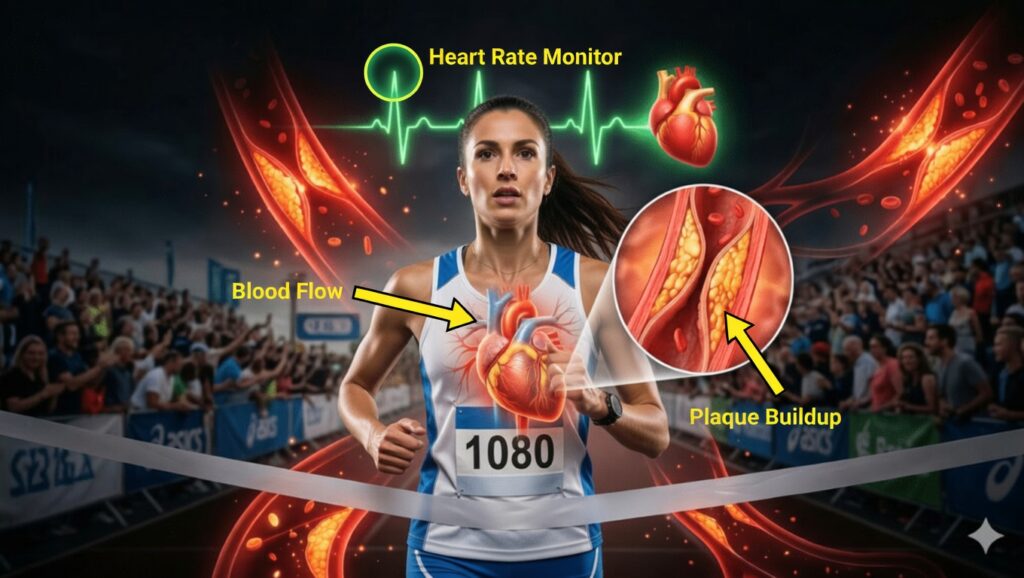
When Extreme Fitness Meets Heart Health: The Plaque Paradox
Imagine hearing that the most committed endurance athletes—those logging hours of tough training every week—are almost six times more likely to develop plaque in their arteries than people who exercise the least. It sounds upside down. We’ve long been told that “more exercise = healthier heart.”
Yet newer research paints a more complex picture. For a small subset of lifelong, high-volume endurance athletes, especially those doing a lot of very intense training, artery plaque seems to be more common than we once believed.
This does not mean exercise is bad for you. Instead, it suggests that the relationship between intense endurance training and cardiovascular health is more nuanced than the simple “more is always better” message. In this article, we’ll unpack what the latest science actually shows, what might be happening inside the arteries of veteran endurance athletes, and what this means for your own training and long-term heart health.
You’ll see where the data is clear, where it’s still evolving, and how to use these insights to protect your heart without giving up the powerful benefits of exercise.
Key Points in Plain Language
-
Unexpected Connection: High-quality studies have found that lifelong, high-volume endurance athletes can have more coronary artery plaque than people who exercise at moderate levels.
-
Intensity Plus Volume is the Issue: Using wearable devices instead of memory-based questionnaires, newer research points to large amounts of high-intensity training combined with high overall volume as the main factor linked to increased plaque.
-
Plaque ≠ More Heart Attacks (So Far): Even though these athletes often show higher plaque scores, they do not appear to experience more heart attacks or higher rates of death from heart disease. The broad benefits of being very fit seem to offer strong protection.
-
Fitness Isn’t a Force Field: Being in top shape is fantastic for your health, but it does not make you immune to cardiovascular risk. Even elite or lifelong athletes still need to watch things like cholesterol, blood pressure, and family history.
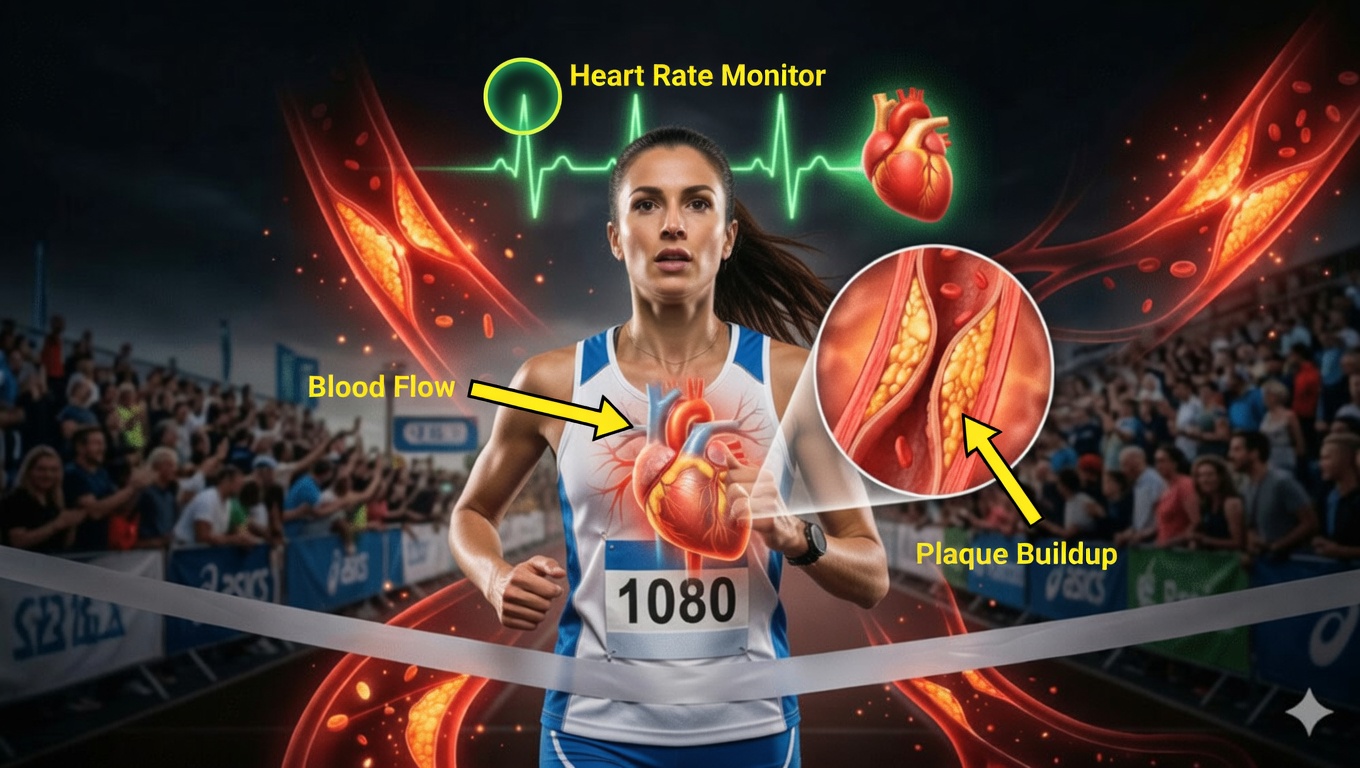
1. The Finding That Shocked Researchers: More Training, More Plaque?
The conversation began in 2008, when a group of German researchers studied 108 apparently healthy male marathon runners over age 50. These were not occasional joggers—they had completed at least five marathons in the preceding three years.
The scientists compared them to a control group with similar overall heart disease risk profiles: similar ages, blood pressure, cholesterol levels, and so on. The big difference between the groups was the marathon running.
The outcome surprised nearly everyone. The marathoners showed significantly higher levels of calcified (hard) plaque in their coronary arteries than the controls. The authors suggested we may have made an “unwarranted assumption” that being a marathon runner automatically equals cleaner, healthier arteries.
Over time, this pattern kept reappearing:
- In 2017, two influential studies published in the journal Circulation reported similar findings.
- One study of older UK endurance athletes (“masters” athletes) found more plaque despite these athletes having fewer traditional risk factors such as high blood pressure or smoking.
- Another study that examined lifelong exercise habits in men around age 55 found that 77% of those in the highest weekly exercise group had plaque, compared with 56% in the lowest exercise group.
By this point, it was clear that a real signal existed. The pressing question shifted from “Is this happening?” to “What exactly is causing it?”
2. Volume vs. Intensity: What New Technology Revealed
For years, experts debated what was driving the higher plaque levels in some endurance athletes:
- Was it lifetime training volume—the total hours and miles accumulated over decades?
- Or was it training intensity—the repeated bouts of near-maximal effort that push the heart and circulatory system to their limits?
Earlier research couldn’t definitively separate these factors. A major limitation was that most studies relied on self-reported training history: participants were asked to recall how much and how hard they’d exercised over many years. Human memory, especially about detailed training volume and intensity, is famously unreliable.
A breakthrough came in 2023 with a study from the Masters at Heart Consortium. This time, instead of asking athletes to remember their training, researchers used wearable devices to objectively track:
- Duration of workouts
- Intensity, measured via heart rate and training zones
When they analyzed these more accurate data, the picture became much clearer:
- Athletes who spent the most time at high intensities had nearly six times the risk of having coronary artery plaque compared with lower-intensity peers.
- Yet when the same data were analyzed as if they had been self-reported (the old way), the strong association disappeared.
This showed how crucial accurate measurement is. The study also highlighted a key nuance: intensity by itself was not the sole culprit. Instead, the combination of high overall training volume plus large amounts of high-intensity work was the strongest predictor of increased plaque.
3. Does This Plaque Actually Increase Risk?
Finding more plaque is one thing. Understanding what it means for actual health outcomes—like heart attacks and death—is another.
Across these studies, researchers discovered more coronary plaque in high-volume endurance athletes. However, they did not find a corresponding increase in:
- Heart attacks
- Other serious cardiovascular events
- Death from heart disease
The plaque was found because researchers looked for it using imaging tests such as CT scans; most athletes were asymptomatic, with no chest pain, shortness of breath, or other warning signs.
Earlier work suggested a potential “bright side”: the plaque in athletes often appeared more calcified and stable, theoretically less likely to rupture and trigger a heart attack. But the 2023 Masters at Heart study complicated this picture. It reported that lifelong endurance athletes did not consistently have a less dangerous type of plaque than healthy non-athletes.
So why aren’t these athletes having more heart attacks if they have more plaque?
To answer that, consider a huge long-term study that followed over 21,000 people for 17 years. It found:
- High-volume exercisers were more likely to have elevated plaque scores.
- Yet they were not more likely to die from heart disease or from any cause.
- In fact, the group doing the most exercise still had better overall survival than less active groups.
The most likely explanation: the massive overall benefits of regular exercise—better blood pressure control, improved blood vessel function, reduced inflammation, and healthier metabolism—seem to counterbalance or outweigh the potential risk that comes with extra plaque.
In other words, the “plaque signal” and the “health outcome signal” point in different directions: more plaque, but equal or better long-term health and longevity.
4. Zooming Out: Why Exercise Remains Powerful “Medicine”
Context is everything. These studies typically compare very high-volume endurance athletes to people who are reasonably active, not to sedentary individuals who rarely move.
If you compared high-volume athletes to people who almost never exercise, the differences in health outcomes would be dramatic—and not in favor of the sedentary group. Nothing in this newer research overturns the overwhelming evidence that:
- Regular physical activity reduces the risk of heart disease, stroke, diabetes, certain cancers, and premature death.
- Even modest amounts of exercise are far better than no exercise at all.
- More activity, up to fairly high levels, is generally associated with better health and longevity.
This is a classic example of why it’s useful to distinguish between:
- Markers (such as plaque or calcium scores)
- Hard outcomes (such as heart attacks, heart failure, or death)
Plaque is a marker—an important one—but still just a marker. In the case of high-volume endurance athletes, the “marker story” (more plaque) does not match the “outcomes story” (no increase in heart attacks or mortality, and often lower overall death rates).
The bottom line from the current evidence: exercise, including quite high training loads, remains associated with a lower overall risk of dying.
5. How to Use This Information: Practical Heart-Health Advice
What should you actually do with all of this?
The takeaway is not to abandon your training or fear vigorous exercise. Instead, this research is a reminder that:
- Fitness is a powerful advantage, not a guarantee.
- You can’t completely cancel out other risk factors—like high LDL cholesterol, smoking, or uncontrolled blood pressure—just by exercising more.
Here’s how to apply these findings sensibly:
5.1 If You’re a Recreational or Moderately Active Person
- Aim to meet or exceed standard guidelines:
- About 150–300 minutes per week of moderate-intensity activity (like brisk walking, easy cycling), or
- 75–150 minutes per week of vigorous activity (like running, fast cycling), plus resistance training.
- Don’t be afraid of higher-intensity sessions if you enjoy them and have no medical contraindications; they’re safe and beneficial for most people.
- The main risk lies in too little activity, not too much, for the vast majority of adults.
5.2 If You’re a High-Volume Endurance Athlete
If you’re logging large weekly training volumes or have been training hard for many years, consider the following:
-
Don’t assume you’re untouchable.
Exceptional fitness does not erase:- High LDL (“bad”) cholesterol
- High blood pressure
- Family history of early heart disease
- Diabetes, smoking, or chronic high stress
-
Know your numbers.
Work with a healthcare professional to monitor:- Blood pressure
- Lipid profile (especially LDL cholesterol, HDL, triglycerides)
- Blood sugar or HbA1c if appropriate
- Weight and waist circumference, if relevant
-
Consider heart imaging if you’re at higher risk.
For some long-term, high-volume athletes—especially men over 40–45 or anyone with multiple risk factors—it may be reasonable (in discussion with a doctor) to:- Consider a coronary artery calcium (CAC) scan or other imaging to better understand plaque burden.
- Use these results to guide decisions on lifestyle, medications (such as statins), and training intensity.
-
Balance intensity and recovery.
The data suggest that the combination of very high volume and lots of high-intensity work is most strongly linked with increased plaque. Practical strategies include:- Limiting the number of all-out or near-maximal sessions per week.
- Ensuring plenty of easy or low-intensity training to complement harder efforts.
- Building in rest days and lighter weeks to allow full recovery.
-
Pay attention to warning signs.
Seek medical evaluation promptly if you notice:- Chest pain, pressure, or discomfort (especially with exertion)
- Unusual shortness of breath
- Palpitations or irregular heartbeat
- Declining performance with no clear training explanation
- Dizziness or unexplained fatigue on workouts that used to feel easy
-
Support your training with lifestyle, not just miles.
Protect your heart with:- A nutrient-dense diet that supports healthy cholesterol and blood pressure
- Adequate sleep and stress management
- Avoidance of smoking and careful management of alcohol intake
The Take-Home Message
The emerging research on lifelong, high-volume endurance training and coronary plaque is both surprising and instructive:
- Yes, some very dedicated endurance athletes seem to develop more plaque than moderately active peers, especially if they combine high volume with frequent high-intensity sessions.
- No, this has not translated into more heart attacks or higher death rates in the studies we have so far.
- The comprehensive benefits of physical activity still appear to outweigh the potential risks, even at high training loads.
For most people, the priority remains clear: move more, sit less, and build consistent activity into your life. If you’re a serious endurance athlete, think of this research as a nudge to take your overall cardiovascular risk seriously, not as a reason to quit the sport you love.
Exercise is still one of the most powerful tools for a longer, healthier life—just remember that even the fittest hearts deserve thoughtful care.