Rosemary for Hair: A Natural Way to Support Growth, Reduce Hair Loss, and Blend Gray Hair
Rosemary has earned a strong reputation in natural hair care for helping reduce hair shedding, encourage thicker-looking growth, and gradually deepen the appearance of gray strands. Thanks to its antioxidant and soothing plant compounds, rosemary can support scalp health and create a better environment for stronger, healthier hair over time.
Why Rosemary Is Good for Hair
1) Helps Gray Hair Look Darker Over Time
Rosemary is often used to enhance the look of natural hair pigment, which can make gray strands appear more blended and less noticeable with consistent use.
2) Supports the Scalp to Reduce Hair Loss
By helping stimulate blood flow to the scalp, rosemary may strengthen the look and feel of hair at the roots and support follicles so hair appears less prone to breakage and shedding.
3) Encourages Healthy Hair Growth
Rosemary contains beneficial compounds (including ursolic acid) that may help wake up sluggish follicles and support the appearance of fuller, more active growth.
4) Improves Scalp Comfort and Cleanliness
With antimicrobial and anti-inflammatory properties, rosemary can help calm irritation and may reduce the look of flakes and itchiness associated with an unhappy scalp.
DIY Rosemary Hair Rinse (Simple Homemade Recipe)
Ingredients
- 2 cups water
- 2–3 sprigs fresh rosemary or 2 tablespoons dried rosemary
- 1 tablespoon apple cider vinegar (optional, for shine and pH balance)
- A few drops rosemary essential oil (optional, for extra strength)
Step-by-Step Instructions
-
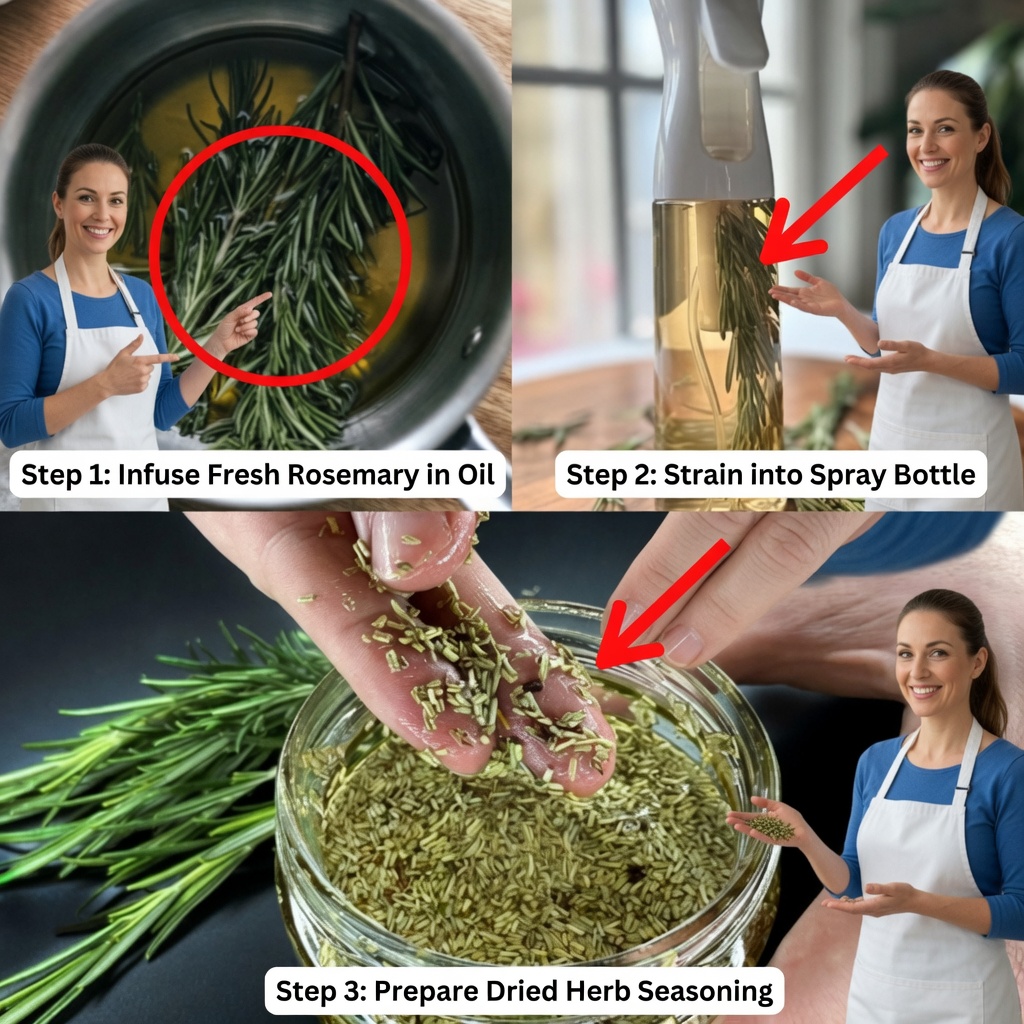
Boil the water
Bring 2 cups of water to a boil in a small saucepan. -
Simmer with rosemary
Add the fresh or dried rosemary. Lower the heat and simmer for 10–15 minutes. -
Cool and strain
Take the pot off the heat and let the mixture cool completely. Strain into a spray bottle or clean jar. -
Add optional boosters
Mix in apple cider vinegar for added shine, or add a few drops of rosemary essential oil for a more concentrated blend.
How to Use Rosemary Water on Hair
1) Scalp Massage Treatment
- Spray or apply the rosemary water directly onto the scalp.
- Massage gently in circular motions for 5–10 minutes to support circulation.
2) Post-Shampoo Hair Rinse
- After washing, use rosemary water as a final rinse.
- Let it sit briefly, then rinse lightly (or leave it in, if your hair tolerates it well).
3) Overnight Leave-In Option
- Mist the rosemary water onto your scalp and hair before bed.
- Leave overnight for longer contact time and deeper conditioning support.
Best Use Schedule (Based on Your Goal)
- For hair loss support: 3–4 times per week
- For gray hair blending: daily for gradual, noticeable change over time
- For general maintenance: 1–2 times per week
Tips to Get Better Results
- Be consistent: Natural hair care takes time—use regularly for 4–8 weeks to evaluate progress.
- Support hair from within: Focus on nutrients like iron, omega-3 fatty acids, and biotin to promote overall hair strength.
- Limit heat styling: Reducing hot tools helps prevent dryness and breakage.
- Use high-quality rosemary: Fresh or organic rosemary can provide stronger plant benefits.
Precautions and Safety Notes
- Patch test first to check for sensitivity or allergy.
- Keep the mixture away from the eyes; rinse thoroughly if contact occurs.
- If you are pregnant or nursing, speak with a healthcare professional before using essential oils.
Final Thoughts
This rosemary hair rinse is an affordable, natural approach to supporting scalp health, stronger hair, and gradual gray blending. With patience and routine use, many people notice hair that looks darker, healthier, and more resilient over time.