Chronic Fatigue Syndrome and Electrolytes: A New Way to Understand Your Exhaustion
What if chronic fatigue syndrome (CFS) is not primarily an immune disorder, a brain malfunction, or just the result of stress, as you may have been told? What if the intense, disabling tiredness you live with is driven by something far more specific and measurable: a disruption in electrolytes that sabotages energy production directly inside your muscles?
It sounds almost overly straightforward—which is exactly why this explanation has been dismissed or ignored. Yet emerging research is pointing squarely in this direction, focusing not on vague symptoms or routine lab work, but on what is actually happening inside the muscle tissue of people with chronic fatigue.
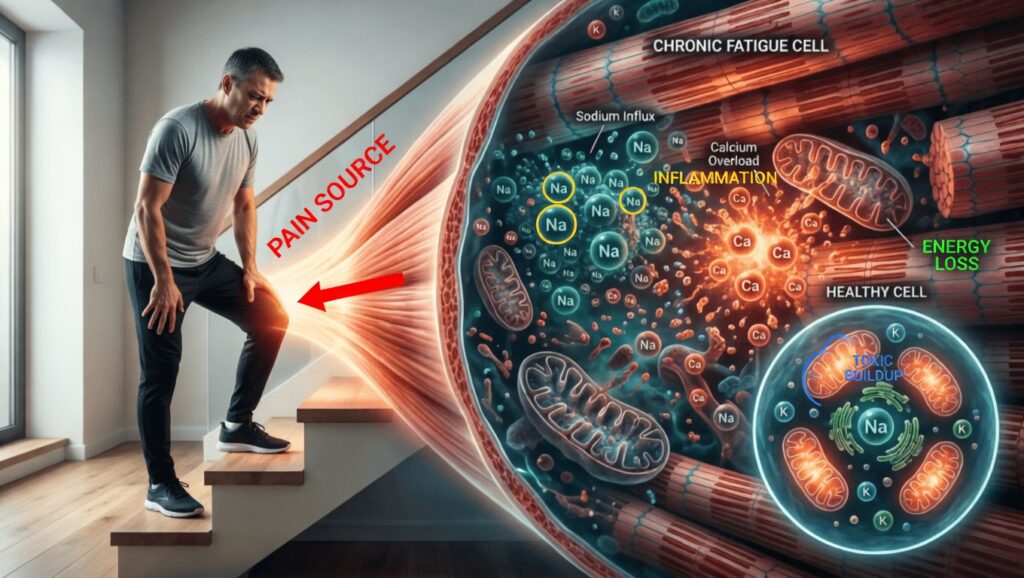
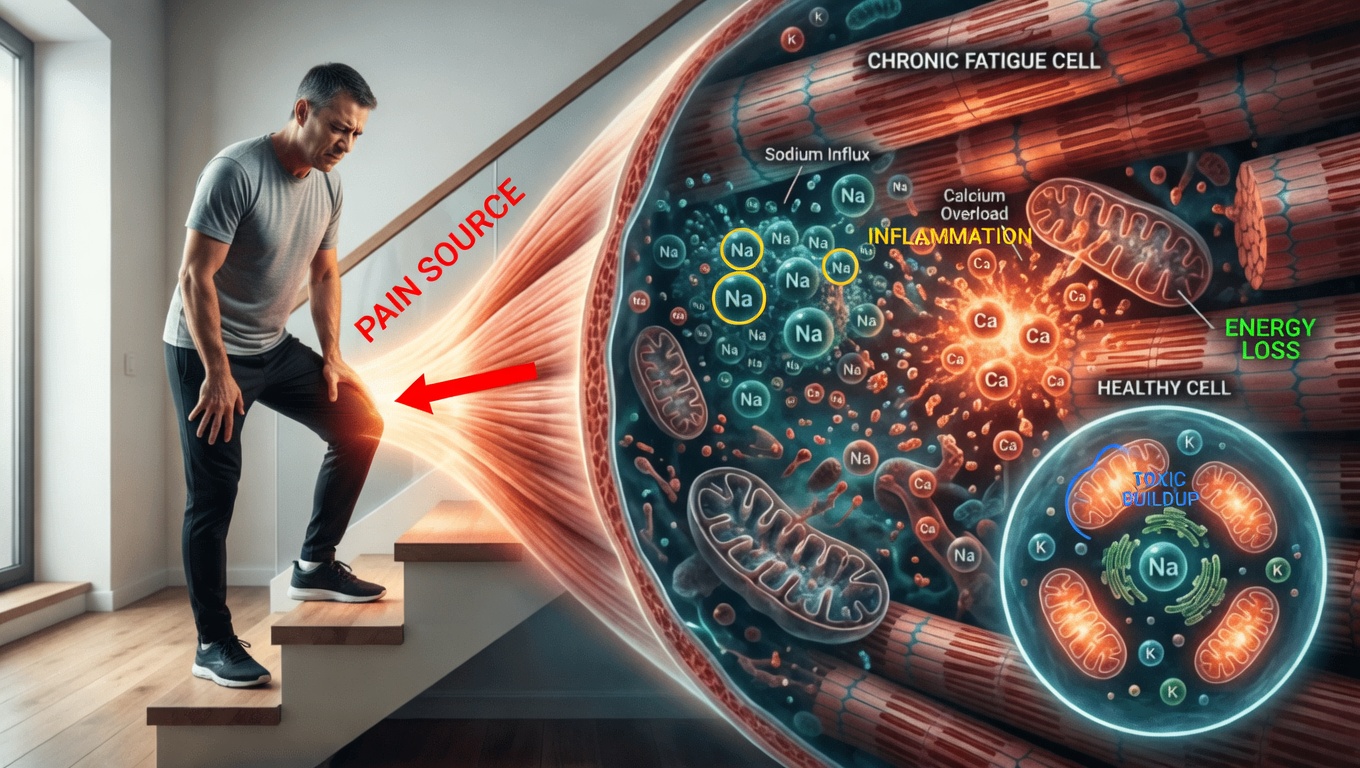
This new model proposes that in many patients with CFS, and in some cases of long COVID, the root problem sits within the muscle cells themselves. These cells become overloaded with sodium and calcium, while systems that depend on magnesium and potassium start to fail. This imbalance poisons the mitochondria—the tiny “engines” in your cells responsible for making energy. Once mitochondria are damaged, energy production drops dramatically. At that point, even small amounts of physical or mental effort can feel like you are being pushed beyond your limits. This is not speculation; it is a biochemical explanation that matches the overwhelming fatigue, muscle pain, and post-exertional crashes that millions experience.
Key Takeaways
- A Different Root Cause: New findings suggest that, for many people, chronic fatigue is driven by a specific electrolyte imbalance inside muscle cells, not just a general systemic issue.
- Toxic Cellular Overload: In CFS, muscle cells can accumulate excess sodium and calcium, damaging mitochondria and shutting down normal energy production.
- The Downward Spiral: Any exertion can trigger more cellular injury, further distorting electrolyte levels and intensifying fatigue over time.
- Why Tests Look “Normal”: Standard blood electrolyte panels don’t reflect what’s happening inside your cells, where magnesium and potassium depletion may be severe.
- Balance Matters, Not Just More Electrolytes: Generic sports drinks and typical electrolyte mixes—heavy on sodium and light on magnesium and potassium—can worsen the underlying problem. The real solution lies in carefully rebalancing magnesium, potassium, sodium, and calcium through targeted nutrition and supplementation.
1. Inside Your Muscles: What the Groundbreaking Research Shows
Instead of simply asking, “Do you feel tired?” scientists started asking a much more precise question: “What exactly happens inside your muscles when you try to move or exercise?”
By pulling together data from muscle biopsies, advanced MRI techniques, and exercise testing, researchers uncovered a consistent pattern. When someone with CFS attempts to be active, their muscles switch into an emergency energy mode far too quickly. Oxygen use drops, and the body shifts into anaerobic metabolism—producing energy without enough oxygen—which leads to a buildup of acid (mainly lactic acid) inside muscle cells.
This acid overload is dangerous, and the body attempts to neutralize it. One way it compensates is by pulling sodium into the cells to buffer the acidity. But this creates a second, more serious problem: increased sodium inside the cell tends to drag calcium in with it.
Calcium is vital for normal muscle contraction in controlled, short bursts. However, chronically elevated calcium inside muscle cells is toxic. This calcium overload directly attacks mitochondria, impairing their structure and function.
Specialized MRI scans that can track sodium have confirmed that people with CFS often have significantly elevated sodium levels in their muscles. Muscle biopsies taken after exertion show real structural damage to both muscle fibers and mitochondria. So this is not just about “feeling worn out”—it is physical, measurable damage triggered when the electrolyte balance inside your muscle cells collapses under even modest stress.
2. The Vicious Cycle: Why Every Effort Feels Worse Than the Last
Once this process begins, it sets up a destructive feedback loop.
You start with muscles that already have a reduced capacity to make energy. When you push yourself—whether that’s walking a bit farther, concentrating on a task, or doing light exercise—your muscles cannot keep up. Acid builds up quickly, prompting sodium to rush into the cells. Sodium brings calcium with it, and the calcium overload damages more mitochondria.
With fewer healthy mitochondria available, your energy-producing capacity shrinks even further. The next time you exert yourself, your muscles reach that emergency state even faster and with less activity. Damage accumulates more quickly, and recovery takes longer.
This is the underlying mechanism behind post-exertional malaise (PEM)—the signature symptom of CFS where even minor activity can trigger a severe flare in fatigue and other symptoms that may last days or weeks. This is not about being “deconditioned” or lazy. You are pushing a broken system, and each push can cause additional cellular injury.
This also helps explain:
- Persistent muscle pain and tenderness
- Tight, stiff muscles and cramps
- The “wired but tired” feeling—wired from stress chemistry and excess calcium in the muscle, yet utterly exhausted
Because excess calcium keeps muscles in a state of partial contraction and promotes inflammation, your muscles never fully relax or recover properly.
3. How Electrolytes Really Work: More Than Just Hydration
To understand why this imbalance is so devastating, it helps to rethink what electrolytes actually do. They are not just about hydration; their main job is to create electrical gradients that power your entire body.
Each of your cells works like a tiny battery. Under normal conditions:
- Sodium and calcium are kept mostly outside the cell.
- Potassium and magnesium are concentrated inside the cell.
This separation is maintained by a microscopic engine in the cell membrane called the sodium–potassium pump.
This pump constantly moves sodium out of the cell and brings potassium in. By doing so, it maintains an electrical charge across the cell membrane, which is essential for:
- Nerve signals to fire
- Muscles to contract and relax
- Mitochondria to produce ATP, your body’s usable energy currency
Here is the crucial detail: the sodium–potassium pump depends on two key resources:
- Magnesium
- Energy (ATP)
If your magnesium stores are low—or if your mitochondria are already underperforming and cannot produce enough ATP—the pump slows down. Once it slows, it cannot keep sodium out of the cell effectively, and sodium begins to leak in.
As sodium accumulates inside the cell, it raises intracellular calcium as well, triggering the destructive chain reaction that injures mitochondria and further drains your energy. This is how an electrolyte problem turns into a full-blown energy crisis at the cellular level.
4. Why Standard Blood Tests Miss the Real Problem
Many people with chronic fatigue have had the maddening experience of hearing, “Your labs are normal,” especially when it comes to electrolyte panels. The issue is not that the symptoms are “in your head”—it’s that routine blood tests are the wrong tool for detecting what’s going on.
Your body keeps electrolyte levels in the blood within a very narrow range because even small deviations can be life-threatening. For example, a significant drop in blood potassium can trigger a fatal heart rhythm disturbance.
To protect blood levels, your body will pull minerals from muscles, bones, and other tissues. As a result:
- Your blood can look normal
- While your cells, especially muscle cells, are deeply depleted of magnesium and potassium
Less than 1% of your body’s magnesium and only about 2% of its potassium are found in the bloodstream. The vast majority is stored inside tissues and cells—precisely where standard lab tests do not look.
This is why:
- You can feel exhausted, weak, and “drained” and still be told your electrolytes are “within range.”
- Many clinical studies on electrolyte supplementation seem to show no effect, because they only measure changes in blood levels, not what’s happening inside your muscle cells.
The real imbalance in CFS is intracellular—and conventional tests are largely blind to it.
5. Why Most Electrolyte Drinks Can Make Things Worse
Knowing all this, you might assume the obvious fix is to drink more sports drinks or take generic electrolyte powders. Unfortunately, for many people with CFS, this can backfire.
Most commercial electrolyte products are essentially flavored salt water. They are heavily loaded with sodium, provide only a token amount of potassium, and often contain little to no magnesium.
If your core problem is that your cells are already struggling to pump sodium out, flooding your system with even more sodium—without enough magnesium and potassium to support the pumps—can worsen the sodium and calcium overload inside your cells.
You might feel a short-lived lift in how you feel because extra sodium can increase blood volume and temporarily raise blood pressure, giving a brief sense of improved alertness or energy. But at the cellular level, you may be feeding the very imbalance that is damaging your muscles and mitochondria over time.
The key is not simply “more electrolytes,” but the right balance of magnesium, potassium, sodium, and calcium, delivered in a way that supports cellular health rather than undermining it.