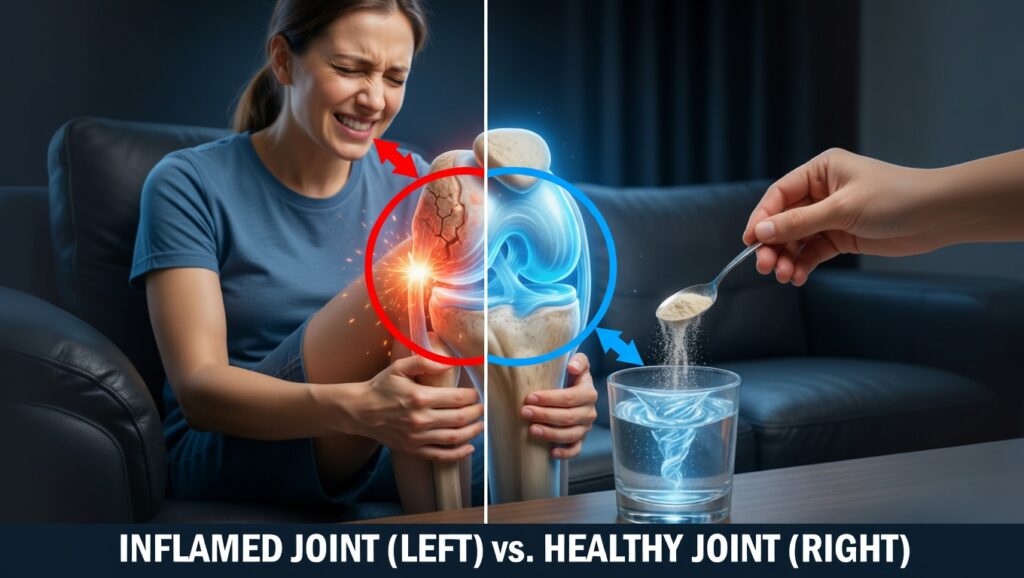
Do Your Knees Creak on the Stairs?
Do your knees make a crack-crack sound when you walk, squat, or climb stairs—as if something inside is grinding or snapping? Sometimes it hurts, sometimes it doesn’t, but the noise is always there. Many people shrug it off and think, “It’s just my age.” Age does play a role, but that doesn’t mean you’re doomed to live with noisy, uncomfortable knees.
That creaking or popping (known as knee crepitus) is often your body’s way of signaling that something essential is missing in your joints—something your knees need to move smoothly, quietly, and with less friction.
In this guide (inspired by the work of Oswaldo Restrepo RSC), you’ll learn:
- What that “something” actually is
- How a simple kitchen ingredient can help
- A 3‑week protocol to start reducing the noise
- When knee sounds are a red flag and require a doctor’s attention
1. Why Do My Knees Creak? Understanding What’s Happening Inside
To understand the cracking or grinding sound in your knees, it helps to know a bit about how the joint works.
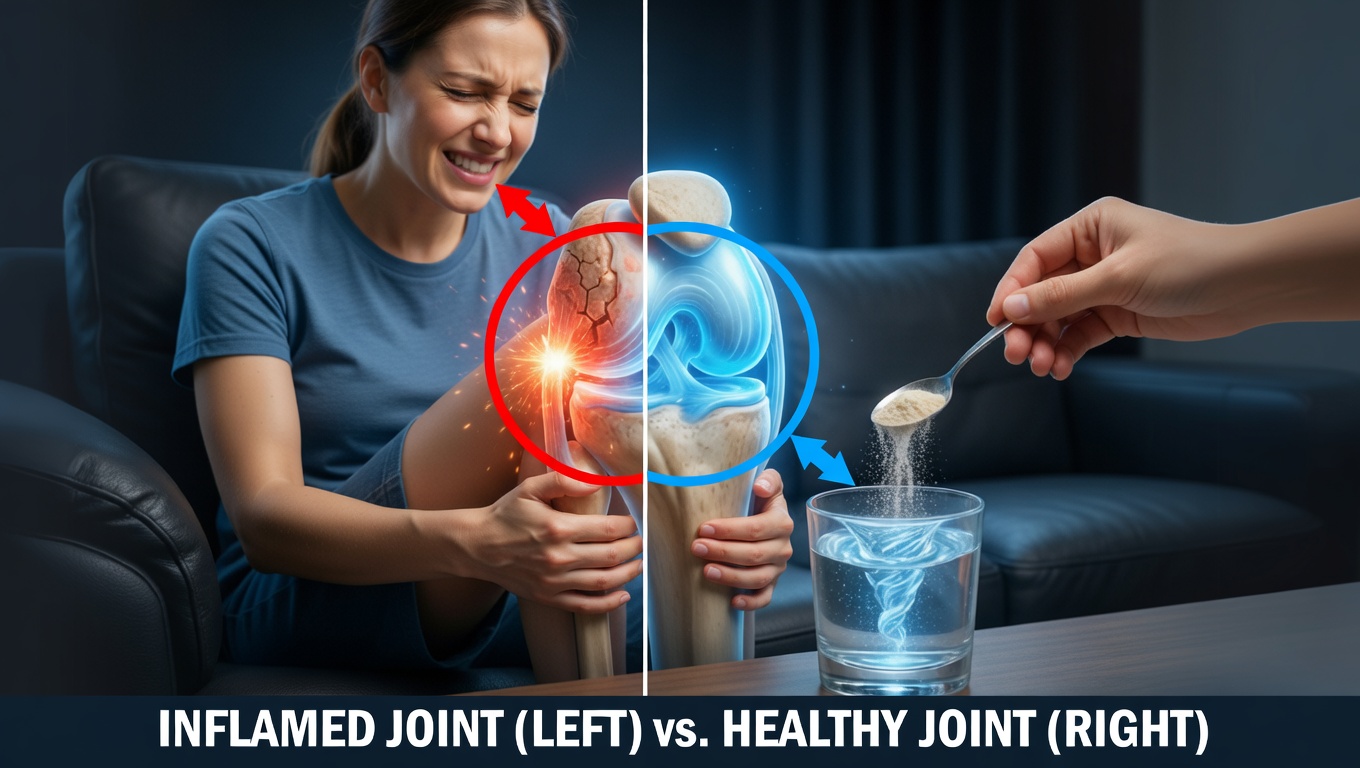
Inside each knee, there is a smooth, rubbery tissue called cartilage. Think of it as a cushion or shock absorber that sits between the thigh bone (femur) and shin bone (tibia). Its job is to:
- Prevent bones from rubbing directly against each other
- Allow the joint to bend and straighten smoothly
- Reduce friction with every step you take
When cartilage is healthy, thick, and well-lubricated, your knee movement is almost silent.
Over time, however, several things can cause this cartilage to wear down, become thinner, or rougher. When that happens, the bones start to make more contact, creating friction and noise. This is when you may hear:
- Creaking
- Popping
- Cracking
- Grinding
Common Reasons Knee Cartilage Wears Down
Several factors can damage or thin your cartilage and lead to noisy knees and joint discomfort:
-
Normal wear and tear over the years
Just like car tires, joints gradually wear out from decades of use. This is a natural part of aging. -
Excess body weight
Extra kilos or pounds increase the load on your knees. Roughly, every extra pound of body weight adds about four pounds of pressure to your knees when you walk or climb stairs. -
Old injuries
A previous knee injury (such as a sprain, fracture, or ligament tear) that didn’t heal perfectly can lead to cartilage problems years later. -
Too little movement
A sedentary lifestyle is harmful to joint health. Movement helps circulate nutrient-rich fluid inside the joint, feeding the cartilage. Without regular movement, cartilage can become undernourished and more fragile.
The Hidden Factor: Lack of Collagen
There’s another key piece most people overlook: collagen deficiency.
Cartilage is made largely of collagen, a structural protein that acts as the main building block for joint tissues, tendons, and ligaments. Your body constantly repairs everyday wear and tear in your cartilage—but it can only do this if it has enough collagen.
As we age, natural collagen production drops significantly:
- By around age 40, your body makes much less collagen than it did at 20.
- By 50, 60, and beyond, that decline is even more pronounced.
When your body isn’t producing enough collagen, it struggles to repair damaged cartilage. The result: faster wear, more friction, and more creaking or cracking sounds in the knees.
2. The Simple Kitchen Solution: Unflavored Gelatin
Here’s where a surprising but simple remedy comes in: plain, unflavored gelatin—the kind you can buy in small packets at most supermarkets.
Gelatin is basically cooked collagen. When you consume it, you provide your body with a direct source of the raw materials it needs to rebuild joint tissues.
How Gelatin Helps Your Knees
- Your digestive system breaks down gelatin into amino acids (the building blocks of proteins).
- These amino acids enter your bloodstream and travel throughout the body, including to your joints.
- Your body uses them to repair and regenerate cartilage and other connective tissues.
This doesn’t happen overnight, but with consistent use, the cartilage can gradually:
- Become slightly thicker and smoother
- Reduce friction inside the joint
- Decrease the creaking or grinding sounds
- Support more comfortable movement
How to Take Gelatin for Joint Support
Follow this simple daily routine:
- In the morning, on an empty stomach, add 1 tablespoon of unflavored gelatin powder to a glass of warm water.
- Stir until the powder is completely dissolved.
- Drink the entire glass.
- Wait about 20 minutes before eating breakfast.
Just one tablespoon a day is enough for most people to start supporting collagen levels and joint health.
3. Four Common Mistakes That Reduce Results
This remedy is straightforward, but many people unknowingly sabotage the benefits. Avoid these common mistakes to give your knees the best chance to improve.
-
Using sweetened, flavored, or dessert gelatin
- You must use pure, unflavored, unsweetened gelatin.
- Flavored gelatin desserts are full of sugar, artificial colors, and additives.
- Sugar can increase inflammation in the body, including in the joints, and may actually worsen knee pain.
-
Wanting instant results
- Your cartilage didn’t wear out in three days, and it will not rebuild in three days.
- Your body needs time to accumulate collagen and slowly repair tissue.
- Some people notice changes after 2–3 weeks of daily use—not after a single glass.
-
Ignoring pain, swelling, or stiffness
- A popping or cracking sound without pain can be normal and may not indicate serious damage.
- But if the noise comes with pain, swelling, locking, or stiffness, this could signal:
- Arthritis
- Advanced cartilage wear
- A meniscus tear or other knee injury
- In these cases, gelatin alone is not enough. You should consult a doctor or specialist for a proper diagnosis.
-
Taking more than one tablespoon a day
- More is not always better.
- Your body can only use a certain amount of collagen at a time; the rest is simply eliminated.
- Stick to 1 tablespoon per day. Consistency over weeks and months matters far more than taking large doses.
4. A 3-Week Plan for Quieter Knees
Use this simple protocol to test how your knees respond.
Week 1
- Every morning, on an empty stomach, drink 1 tablespoon of unflavored gelatin dissolved in warm water.
- Wait 20 minutes before eating breakfast.
What’s happening:
During this first week, your body is beginning to receive extra collagen-building amino acids. You may not notice big changes yet, but you are laying the foundation for cartilage repair.
Week 2
- Continue with the exact same routine daily.
What you may notice:
- Slight reductions in creaking or grinding
- The noise may occur less frequently or be less intense
Changes are usually subtle at this stage, but they are a good sign that your joints are starting to benefit.
Week 3
- Keep going with your daily gelatin on an empty stomach.
By the end of this week, many people report:
- Clearly reduced cracking or creaking
- Smoother, more comfortable knee movement
- Less feeling of “grinding” inside the joint
At the end of three weeks, evaluate:
- Is the noise less frequent or less loud?
- Do your knees feel smoother and easier to move?
If you notice improvement, you can safely continue taking 1 tablespoon of gelatin every day as a long-term habit to support joint health.
If there is no improvement—or if you have pain, swelling, or instability—it’s important to speak with a healthcare professional to rule out more serious joint conditions.
5. Beyond Gelatin: Everyday Habits to Protect Your Joints
Gelatin provides important building blocks, but your lifestyle also plays a big role in how well your knees function.
1. Keep Moving
- Cartilage has no direct blood supply; it depends on movement to receive nutrients.
- Aim for at least 20 minutes of walking a day, or any other low-impact activity you enjoy (such as cycling or swimming).
- Regular movement:
- Helps distribute nutrient-rich fluid inside the joint
- Prevents stiffness
- Supports better absorption and use of collagen
2. Reduce Excess Weight
- If you are overweight, even modest weight loss can dramatically lighten the load on your knees.
- Losing just 5–10 pounds (2–5 kg) can significantly reduce the stress on your knees and other weight‑bearing joints, easing pain and slowing down further cartilage wear.
Supporting your knees is a combination of smart nutrition (like daily unflavored gelatin), regular movement, and healthy body weight. Listen to your body: if knee sounds are accompanied by pain, swelling, or limited movement, don’t ignore them—seek medical advice. But for many people, this simple collagen-boosting protocol and a few lifestyle adjustments can make a real difference in how their knees feel and sound day to day.