Why Your Belly Fat Won’t Budge: The Hidden Insulin Connection
If your waistline refuses to shrink despite countless crunches and long workouts, the problem may not be your effort, your genes, or your willpower. The real issue is often constant insulin spikes triggered by the way you eat throughout the day.
Understanding how insulin controls fat storage—especially around your stomach—can completely change how you approach weight loss and metabolic health.
(Based on the insights of pharmacist Sento Segarra)
Key Takeaways
- A flat stomach depends far more on balanced insulin levels than on endless ab workouts.
- Regular insulin spikes—mainly from frequent eating and high-sugar, refined foods—tell your body to store fat, especially around the belly.
- Simple changes to what and when you eat can help reduce abdominal fat and improve overall metabolic health.
1. Insulin: The Real Decision-Maker for Belly Fat
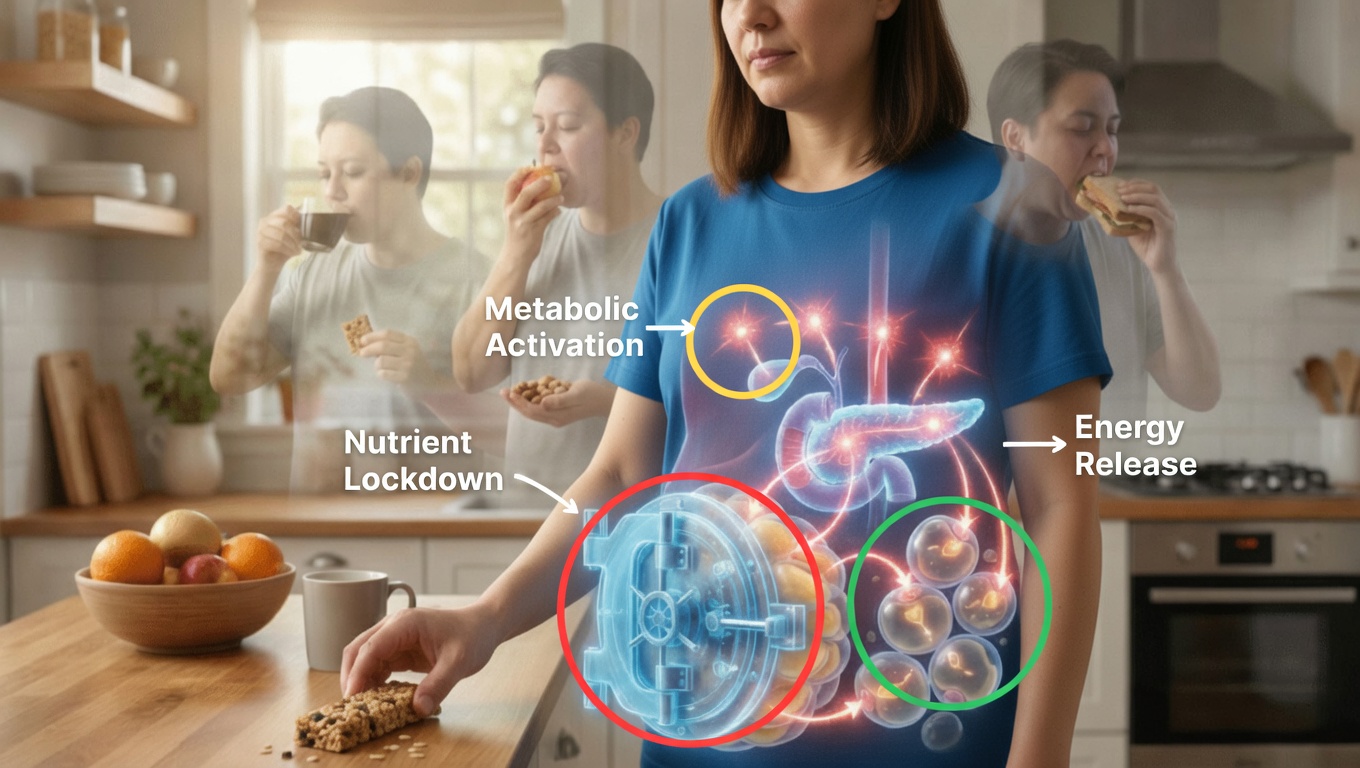
Insulin is a hormone produced by your pancreas. Its main role is to move sugar (glucose) out of your bloodstream and into your cells to be used as energy or stored for later. Imagine insulin as a warehouse manager: every time your blood sugar rises after you eat, insulin steps in to “file away” the extra sugar.
When you eat nutritious foods at reasonable intervals, this system works smoothly. The trouble starts when your day is filled with sugary breakfasts, processed snacks, and late-night treats. This pattern keeps insulin elevated for hours on end, repeatedly sending the message:
“Stop burning stored fat—keep storing more, especially around the belly.”
2. It’s Not Only What You Eat, But Also How Often You Eat
Many people with stubborn belly fat say, “I hardly eat anything—why am I still gaining around the waist?” The answer often lies in meal frequency, not just portion sizes or food quality.
Every time you eat—whether it’s a full meal, a granola bar, or even a small piece of fruit—your body releases insulin. If you’re constantly grazing, your insulin levels repeatedly rise and never fully return to baseline.
Over time, this can make your cells less responsive to insulin, a condition known as insulin resistance. That state encourages more fat storage, particularly in the abdominal area and even inside the liver.
3. Insulin Resistance: The Hidden Obstacle to Burning Belly Fat
When insulin is high too often, your cells start to “tune out” its signals, almost like turning down the volume on a blaring radio. To compensate, your pancreas produces even more insulin, and a self-perpetuating cycle begins:
- More insulin
- More fat stored around the belly
- More cravings for sugar and refined carbs
- More fatigue and low energy
This pattern often shows up as a stubborn belly, mid-afternoon crashes, difficulty concentrating, and sleep disturbances—long before any lab test shows diabetes.
4. Modern Eating Patterns: A Daily Setup for Fat Storage
A typical day for many people might look like this:
- Breakfast: toast, jam, cereal, or fruit juice
- Morning: sweet snack with coffee
- Lunch: restaurant meal with bread, fries, or dessert
- Afternoon: more snacks (biscuits, bars, or sugary drinks)
- Evening: pasta, rice, or bread-heavy dinner, sometimes followed by dessert
Even if the portions seem small, the constant intake—especially of carbohydrate-rich foods—triggers insulin again and again. When insulin is always up, your body rarely gets the chance to tap into stored fat.
Over months and years, this can show up as:
- Visible belly fat
- Fat accumulation in organs like the liver (non-alcoholic fatty liver disease)
5. Warning Signs Before Diabetes Shows Up on Tests
You don’t have to wait for a diagnosis of prediabetes or type 2 diabetes to know your metabolism is struggling. Your body usually sends signals long before blood tests flag a problem.
Early warning signs can include:
- Persistent belly fat that won’t budge
- Strong cravings for sweets or refined carbs
- Feeling very tired after meals
- Brain fog and difficulty focusing
- Restless or poor-quality sleep
- Feeling hungry again soon after eating
Abdominal fat is not just about appearance—it’s a sign that your metabolic system is under stress. The encouraging news: you can reverse much of this with daily choices.
6. Three Practical Steps to Reduce Insulin Spikes and Target Belly Fat
To start calming insulin levels and encourage your body to use stored fat, focus on these three evidence-based strategies.
Step 1: Eliminate Sugary Drinks and Visible Sugar
This is the fastest win for most people. Remove:
- Soft drinks and sodas
- Boxed or bottled fruit juices (even those labeled “natural”)
- Sugar added to coffee or tea
- Sweetened cocoa drinks and flavored milks
- Energy drinks
These beverages cause rapid spikes in blood sugar and insulin. Replace them with:
- Water
- Sparkling water
- Unsweetened herbal teas
Just this change can significantly reduce the workload on your pancreas and help stabilize your blood sugar.
Step 2: Eat a Metabolism-Friendly Breakfast
Starting your day with sugar and refined carbs (like pastries, jam toast, cereal, or juice) tells your body first thing in the morning: “Store fat.”
Instead, build a breakfast rich in protein and healthy fats, such as:
- Eggs (boiled, scrambled, or omelet-style)
- Plain Greek yogurt or cottage cheese
- Lean turkey or chicken slices
- Avocado
- Extra-virgin olive oil
- A small handful of nuts or seeds
This type of breakfast supports stable blood sugar, keeps you full longer, and significantly reduces morning and midday cravings.
Step 3: Stop Eating Around the Clock—Create Clear Meal Windows
Snacking all day, even on “healthy” foods, keeps insulin elevated and prevents your body from fully switching into fat-burning mode.
A realistic goal for most adults is:
- Three structured meals per day
- No snacks in between
Once that feels comfortable, some people move to two main meals with a defined eating window (a form of intermittent fasting). However, any major change in eating pattern should be supervised by a healthcare professional if you:
- Have diabetes or prediabetes
- Take blood sugar–lowering medication
- Use insulin
Between meals, stick to:
- Water
- Unsweetened herbal teas
- Black coffee (without sugar or cream)
Avoid any solid foods or calorie-containing drinks so your body has time to lower insulin and start using stored fat as fuel.
7. Important Safety Note for People on Medication
If you have been diagnosed with type 2 diabetes, prediabetes, or you’re taking medications that lower blood sugar (including insulin), do not radically change your diet on your own.
As your eating habits improve, your blood sugar may drop. Without proper adjustment of your medication by a doctor, you could experience hypoglycemia (dangerously low blood sugar).
Always work closely with your doctor or a qualified nutrition professional when:
- Reducing sugar and refined carbs
- Changing meal frequency
- Trying intermittent fasting or longer gaps between meals
They can help monitor your progress and safely adjust your treatment as your metabolic health improves.
Conclusion: Break the Insulin Cycle and Free Your Waistline
Ab exercises have their place, but they are not the main driver of a flat stomach. Insulin is. The crucial factor is not only how much you eat, but how often you trigger insulin with constant snacking and sugary foods.
That “stubborn” belly is often your body’s way of warning you about underlying metabolic imbalance.
By:
- Cutting out sugary drinks and added sugar
- Choosing a protein- and healthy-fat–based breakfast
- Setting clear meal times and avoiding constant snacking
you can do more for your belly fat and long-term health than any quick-fix product promises.
The real power to change your waistline—and your metabolic future—is in your daily food choices and your eating schedule.
Source: Sento Segarra