Trouble Sleeping Night After Night?
If you keep tossing and turning, you are far from alone. Millions of people deal with insomnia and disrupted sleep. When bedtime feels frustrating instead of restful, it can be hard to relax and settle down.
A simple evening yoga routine may help you ease into sleep more comfortably. Yoga can be a gentle, effective way to relax, release stress, and get your body ready for rest.

Why It Can Be Hard to Wind Down
Sleeplessness can happen for many reasons, but one common issue is having a hard time letting go of tension at the end of the day. When your body feels tight and your mind is still active, falling asleep may not come easily.
That is where bedtime yoga can help. Slow, calming movements and restful positions can encourage your body to soften, your breath to slow, and your evening routine to feel more peaceful.
A Bedtime Yoga Sequence for Better Rest
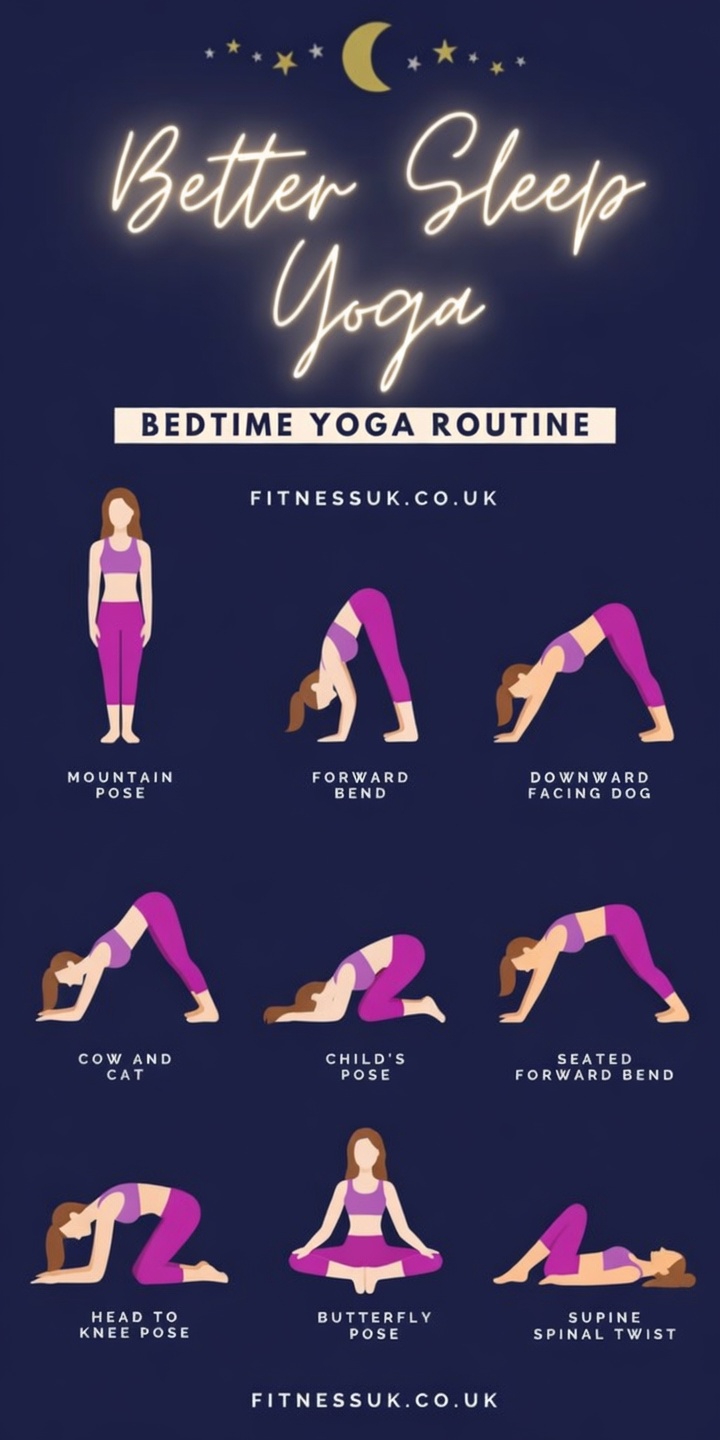
Try these 13 bedtime yoga poses to help your body unwind before sleep.
1. Mountain Pose (Tadasana)
- Stand at the front of your mat with your feet about hip-width apart and your weight balanced evenly.
- Gently draw the navel in and up to support your core and back.
- Open across the collarbones, broaden the shoulder blades, and lengthen through the spine by reaching the crown of your head upward.
- Let your arms rest by your sides with your palms facing forward, and stay here for a few breaths.
2. Forward Fold (Uttanasana)
- From Mountain Pose, fold forward over your legs, bringing your forehead toward your shins.
- If your hamstrings feel tight, keep a small bend in your knees.
- You can also try a Rag Doll variation by holding opposite elbows.
- Let your head hang heavy and soften the back of your neck.
- Remain for a few breaths, then gently release your hands toward the mat.
3. Downward Facing Dog (Adho Mukha Svanasana)
- Fold forward and walk your hands out until your body forms an upside-down “V.”
- Press evenly through both hands and lift your hips toward the sky.
- Move your chest toward your thighs and keep space between your shoulder blades.
- Reach your heels toward the floor and lengthen your legs while maintaining a long spine.
4. Cow / Cat (Bitilasana / Marjaryasana)
- Come onto your hands and knees in a tabletop position.
- As you inhale, let your belly drop and draw your chest forward, lifting your gaze slightly for Cow.
- As you exhale, round your spine, pull your belly in, and bring your chin toward your chest for Cat.
- Flow through several rounds, linking each movement with your breath.
5. Child’s Pose (Balasana)
- From tabletop, send your hips back toward your heels.
- Separate your knees and keep your big toes touching.
- Reach your arms forward with your palms down.
- Notice the length along the back of your body, from your tailbone to the top of your head.
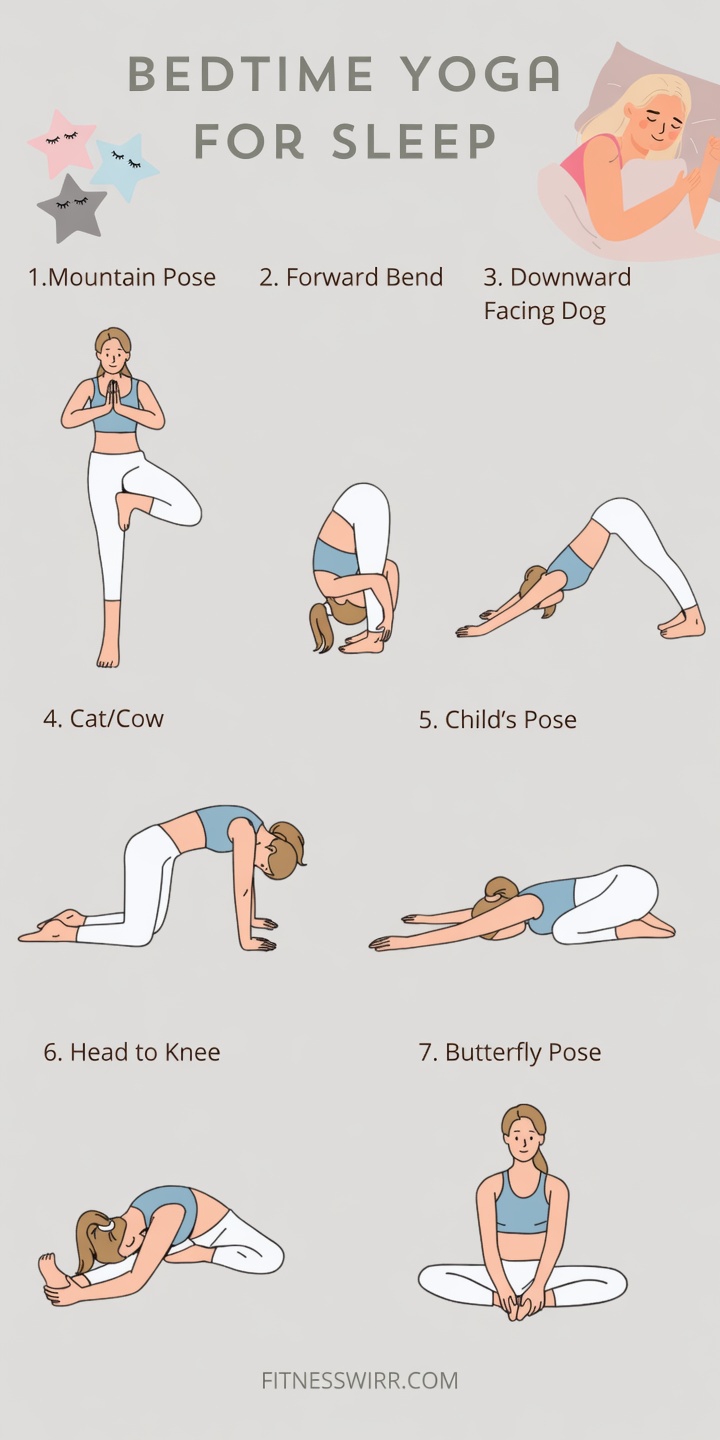
6. Seated Forward Bend (Paschimottanasana)
- Sit with your legs extended straight in front of you.
- Inhale and lift both arms overhead to lengthen your spine.
- Exhale as you fold over your legs, reaching for your feet, ankles, or shins.
- Let your forehead drop and relax the back of your neck.
- If you feel pulling in your lower back, keep a slight bend in your knees or place a pillow underneath them.
7. Head to Knee Pose (Janu Sirsasana)
- Start seated with both legs stretched out in front of you.
- Bend your left knee and place the sole of your left foot against your inner right thigh.
- Inhale your arms up, then exhale and fold over your right leg, reaching toward your right foot.
- Lower your head and work toward bringing your forehead to your left knee.
- Stay for a few breaths and notice the back of your leg releasing.
- To come out, lift your torso, straighten your left leg, and repeat on the other side.
8. Butterfly Pose (Baddha Konasana)
- From sitting, bend your knees and bring the soles of your feet together.
- Hold your ankles or the inner arches of your feet.
- Root down through your sit bones and sit tall, lifting through the front of your torso toward the sternum.
- For a more restorative version, place a cushion or bolster under each knee.
9. Supine Spinal Twist (Supta Matsyendrasana)
- Lie on your back and hug your right knee into your chest.
- Exhale and guide your right knee across your body to the left to create a spinal twist.
- To deepen the shoulder stretch, extend your right arm out to the side.
- Stay for several breaths and allow the muscles and connective tissues to soften.
- Slowly return to center, lower your right leg, and repeat on the other side.
10. Reclined Pigeon Pose (Supta Kapotasana)
- Lie on your back with your knees bent and your feet on the floor or bed.
- Cross your right ankle over your left thigh, creating a triangle shape between both knees and your pelvis.
- Place your left arm around the outside of your leg and thread your right arm through the opening between your legs.
- Lift your left foot and draw your legs toward your chest as your right knee opens outward.
- If you have experienced a knee injury, be incredibly mindful and come out of the pose if you feel pain or pulling.
- Remain for several breaths, then release and switch sides.
11. Happy Baby (Ananda Balasana)
- Begin on your back.
- Hug both knees in and bend your legs to a 90-degree angle so the soles of your feet face upward.
- Hold your big toes or ankles and gently draw your knees down.
- Keep the natural curves of your spine and reach your pelvis toward the floor.
- If your lower back starts rounding into the floor, hold the backs of your inner thighs instead.
- Stay for several breaths, long enough to feel your hip flexors soften.
12. Waterfall Pose / Legs Up the Wall (Viparita Karani)
- Sit next to a wall with one side of your body touching it.
- Slowly lower onto your back while bringing your legs up the wall.
- Your body should form an “L” shape with a 90-degree bend at the hips.
- If your lower back feels uncomfortable, move your buttocks a few inches away from the wall.
- Keep a small bend in your legs so your kneecaps do not lock.
- Take several deep breaths and stay here for several minutes.
- Let your upper body settle fully into the floor, mat, or bed.
- You may place a folded blanket under your upper back, shoulders, and neck for added comfort.
13. Corpse Pose (Savasana)
- Lie on your back in any comfortable position.
- Allow your whole body to feel heavy and relaxed.
- Release any lingering tension in your face, jaw, and throat.
- Notice your heart rate beginning to slow as you breathe naturally.
- If you practiced on a mat, you may want to move to your bed for Savasana so the transition into sleep feels easier.
The Simple Solution for Sweeter Sleep
Adding a short yoga practice to your evening routine is a proactive way to support better sleep quality and overall well-being. The most important part is consistency.
Even a few minutes of focused practice can make a meaningful difference. Roll out your mat, lower the lights, and let these calming poses help guide you toward a more restful night.
Sweet dreams.
Consult a healthcare professional before making changes.