Quiet the Ringing: Tinnitus, Nutrient Deficiencies, and a Simple Food-Based Approach
That constant high-pitched tone, the never-ending buzz, or the faint whistle that’s always in the background—especially at night when everything else is quiet—can be exhausting. When you finally lie down to rest, the internal noise feels even louder, making sleep difficult and stress levels soar.
This persistent, phantom sound has a name: tinnitus.
Tinnitus often has multiple triggers: loud noise exposure, aging, infections, medications, or circulation problems. But one important factor is frequently overlooked, even in medical settings: nutritional deficiencies. Your body may simply be lacking key nutrients that support the health of your auditory system.
Based on insights from Oswaldo Restrepo RSC, this guide explains how missing nutrients—especially zinc and vitamin B12—can contribute to tinnitus, and how two everyday foods may help. With a consistent three-week routine, many people notice a reduction in ringing. However, there are also situations where tinnitus is a red flag and needs urgent medical attention, which we will also cover.
Key Takeaways
-
What Is Tinnitus?
Tinnitus is the perception of sound (ringing, buzzing, hissing, or whistling) when no external sound is present. It often arises from damage or irritation in the inner ear or auditory nerves. -
The Nutrient Link
Deficiencies in zinc and vitamin B12 can disrupt normal nerve signaling in the auditory pathway, triggering the “false” sounds we know as tinnitus. -
The 2-Food Daily Habit
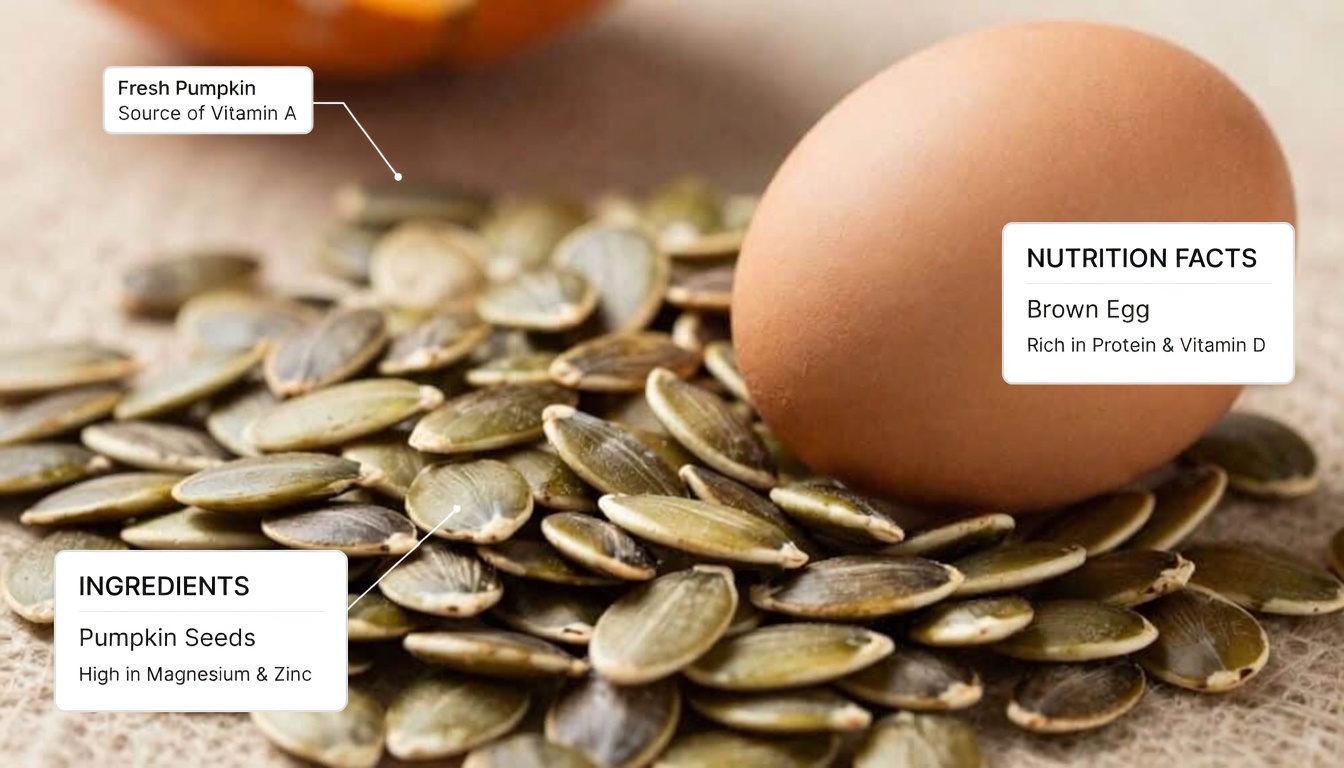
Eating one handful of raw, unsalted pumpkin seeds (rich in zinc) and one whole egg (rich in vitamin B12) every day can help correct these deficiencies and may gradually reduce tinnitus symptoms. -
When to See a Doctor Immediately
If your tinnitus starts suddenly, affects only one ear, or is accompanied by dizziness, vertigo, hearing loss, or a heartbeat-like pulsing, skip the protocol and see a doctor right away. These signs can indicate a more serious condition.
1. What Is Tinnitus and Why Does It Happen?
To address tinnitus effectively, it helps to understand what’s going on inside your ears and brain.
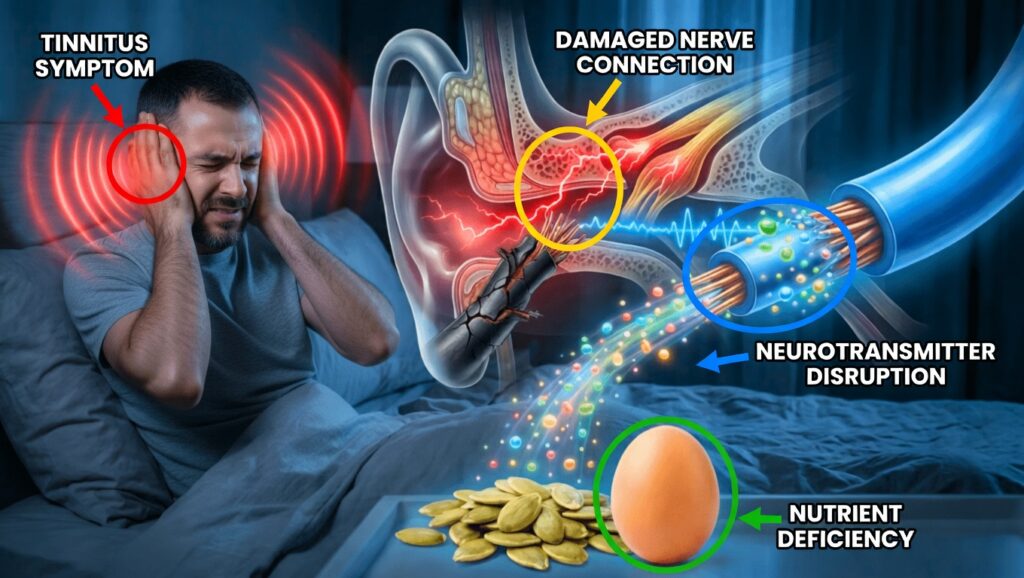
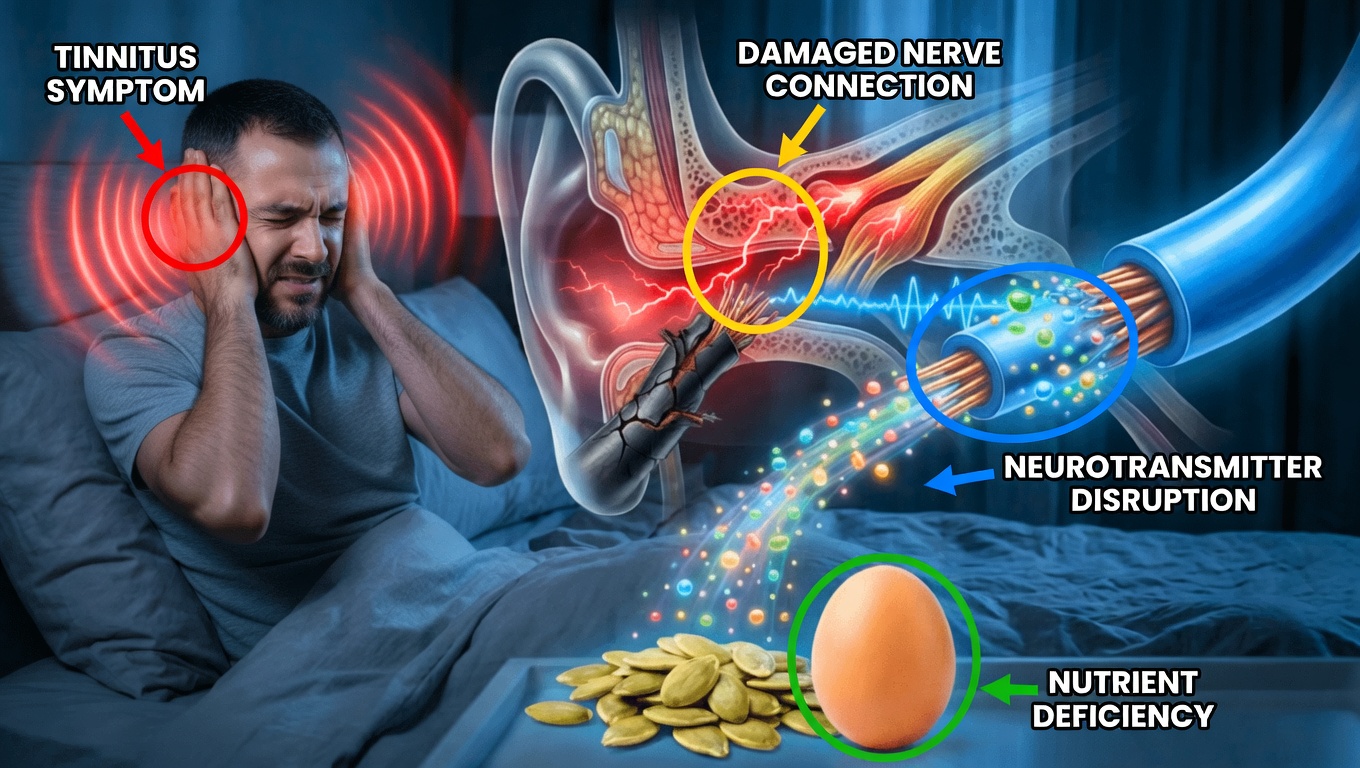
Deep in your inner ear are tiny sensory cells that look like microscopic hairs. When sound waves enter the ear, they move these hair cells. That movement is converted into electrical signals that travel along the auditory nerve to your brain, which then interprets those signals as sound—voices, music, traffic, or any other noise.
When these hair cells or the auditory nerves are:
- damaged
- irritated
- inflamed
they may start to misfire. Instead of sending accurate signals that correspond to real sounds, they send false or erratic electrical impulses to the brain. Your brain, doing its job, interprets these impulses as sound—even though no external sound exists. The result: ringing, buzzing, hissing, or whistling that only you can hear.
Common causes of this damage include:
- Long-term or sudden exposure to loud noises
- Ear infections or inflammation
- Certain medications that are toxic to the ear
- Age-related hearing changes
- Blood circulation problems affecting the inner ear
Alongside these, there is another often-ignored factor: lack of specific nutrients that nerves and auditory cells need to function properly.
2. The Hidden Nutrient Connection: Zinc and Vitamin B12
Nerves are not simple electrical wires; they are living tissue that depends on vitamins and minerals to maintain structure and function. Two nutrients stand out for auditory health:
- Zinc
- Vitamin B12
Zinc: Calming Hyperactive Nerves
Zinc is an essential mineral involved in hundreds of processes in the body, including nerve function. In the auditory system, zinc acts as a neuromodulator, helping regulate how nerve cells send and receive signals.
When zinc levels are low:
- The auditory nerves can become overly sensitive and irritable.
- They may fire signals when they shouldn’t, even in silence.
- This unnecessary, constant signaling can be perceived as tinnitus.
Research has shown a strong association between zinc deficiency and tinnitus in many individuals. For some, restoring zinc levels leads to noticeable improvement in the loudness or persistence of ringing.
Vitamin B12: Protecting the Nerve Insulation
Vitamin B12 is another key nutrient for your nervous system. One of its main jobs is to maintain the myelin sheath—the protective “insulation” that surrounds nerve fibers.
Think of myelin as the rubber coating around an electrical cable:
- It keeps electrical signals traveling smoothly and efficiently.
- It prevents signals from “leaking” or short-circuiting.
When you’re deficient in vitamin B12:
- The myelin sheath can degenerate.
- Nerves become more vulnerable and can misfire.
- Faulty or distorted signals may be sent to the brain, which can be interpreted as tinnitus.
Together, zinc and vitamin B12 help your auditory system:
- Zinc supports proper nerve signaling.
- B12 protects the structure and insulation of those nerves.
When both are adequate, your auditory pathway is more likely to send clear, accurate messages instead of the random noise that becomes tinnitus.
3. A 3-Week Food-Based Protocol to Support Tinnitus Relief
You can increase your intake of zinc and B12 through a very simple daily habit using two common foods: pumpkin seeds and eggs.
Follow this protocol for at least three weeks.
Step 0: Check If This Protocol Is Right for You
Before starting, evaluate your symptoms carefully. Do not begin this protocol without medical advice if:
- The ringing is only in one ear
- The tinnitus started suddenly
- You experience dizziness, vertigo, or balance problems
- You notice hearing loss
- You hear a pulsing or whooshing sound in sync with your heartbeat
These can be signs of serious conditions such as vascular problems, sudden hearing loss, or other issues that must be assessed by a doctor urgently.
If your tinnitus:
- Affects both ears
- Developed gradually
- Is not accompanied by severe or alarming symptoms
then you can consider trying this nutritional approach.
Week 1: Start Building Your Nutrient Reserves
Every day:
- Eat one small handful of raw, unsalted pumpkin seeds
- Eat one whole egg
Guidelines:
- The handful of pumpkin seeds should be what fits easily in the palm of your hand.
- The egg can be boiled, scrambled, fried, poached—any method is fine.
- Make sure to eat the yolk, as it contains many of the key nutrients, including B12.
During the first week, your body is just beginning to rebuild its stores of zinc and B12. You may not notice any immediate relief in the ringing yet, but you’re setting the foundation for change.
Week 2: Stay Consistent and Watch for Subtle Changes
Continue with the same daily routine:
- One handful of raw, unsalted pumpkin seeds
- One whole egg
By the end of week two, start observing:
- Is the ringing a little less intense?
- Are there times when you forget about it for a while?
- Does it seem less intrusive, especially during the day?
If after two full weeks there is absolutely no change, it may mean that nutrient deficiency is not the main driver of your tinnitus. In that case, consult your doctor or an ear specialist for further evaluation.
Week 3: Look for Clear Improvement
Maintain the protocol:
- Raw, unsalted pumpkin seeds – one handful daily
- One whole egg – daily, prepared as you prefer
By the end of the third week, if your tinnitus was significantly related to zinc and B12 deficiency, you may notice:
- The ringing is quieter or less frequent
- The noise is less constant
- Falling asleep and staying asleep has become easier
- The tinnitus no longer dominates your attention all day
If you experience this improvement, you can keep this habit as part of your regular diet. Pumpkin seeds and eggs are nutrient-dense foods that most people can safely include long term, unless a doctor has advised otherwise.
4. Common Mistakes That Can Make Tinnitus Worse
While following this protocol, avoid these frequent errors that can reduce its effectiveness or even aggravate your tinnitus.
Mistake 1: Using Roasted, Salted Pumpkin Seeds
This is a major pitfall.
- Roasting pumpkin seeds at high temperatures can destroy a significant amount of their zinc content.
- Salted seeds add excess sodium, which may raise blood pressure and worsen tinnitus in some individuals.
For this approach to work as intended, the seeds must be:
- Raw
- Unsalted
Mistake 2: Relying on Only One Nutrient
It might be tempting to just take a zinc supplement or only a B12 tablet and hope for the best. However:
- Zinc helps your nerves send and regulate signals.
- Vitamin B12 helps protect and repair the myelin sheath around those nerves.
They function like a team. Focusing on only one nutrient may lead to partial or no improvement. Supporting your auditory system works best when both zinc and B12 needs are met together, ideally through food and, if needed, under medical guidance with supplements.
Final Thoughts
Tinnitus is real, not imagined, and it can seriously affect quality of life. For many people, underlying nutrient deficiencies—especially in zinc and vitamin B12—play an important role in how intensely they experience that constant ringing or buzzing.
A simple daily routine of:
- One handful of raw, unsalted pumpkin seeds
- One whole egg
followed consistently for at least three weeks may help reduce symptoms when deficiency is a contributing factor.
However, never ignore warning signs such as sudden onset, one-sided tinnitus, dizziness, hearing loss, or a pulsing sound. In those cases, seek immediate medical attention rather than relying on diet alone.
By combining proper medical evaluation with smart nutritional support, you give yourself the best chance to quiet the noise and protect your hearing health.