How to Do a Push-Up Correctly: Step-by-Step Guide to Perfect Form
Today, you’re going to learn how to do a push-up the right way.
The push-up is one of the most effective bodyweight exercises for building upper-body strength. It looks simple, but proper technique makes a huge difference in both results and safety.
A standard push-up involves lifting and lowering your body using your arms while keeping your body aligned from head to toe. Research has shown that during a regular push-up, you lift about 66% of your body weight.
That makes the push-up an excellent exercise for developing the chest, triceps, and front shoulders. It also activates several supporting muscles that help stabilize the movement.
If you want an effective home chest workout, push-ups deserve a place in your routine.
In this guide, you’ll learn how to do a push-up with proper form, which muscles it works, and which variations to try if you’re a beginner or ready for a challenge.
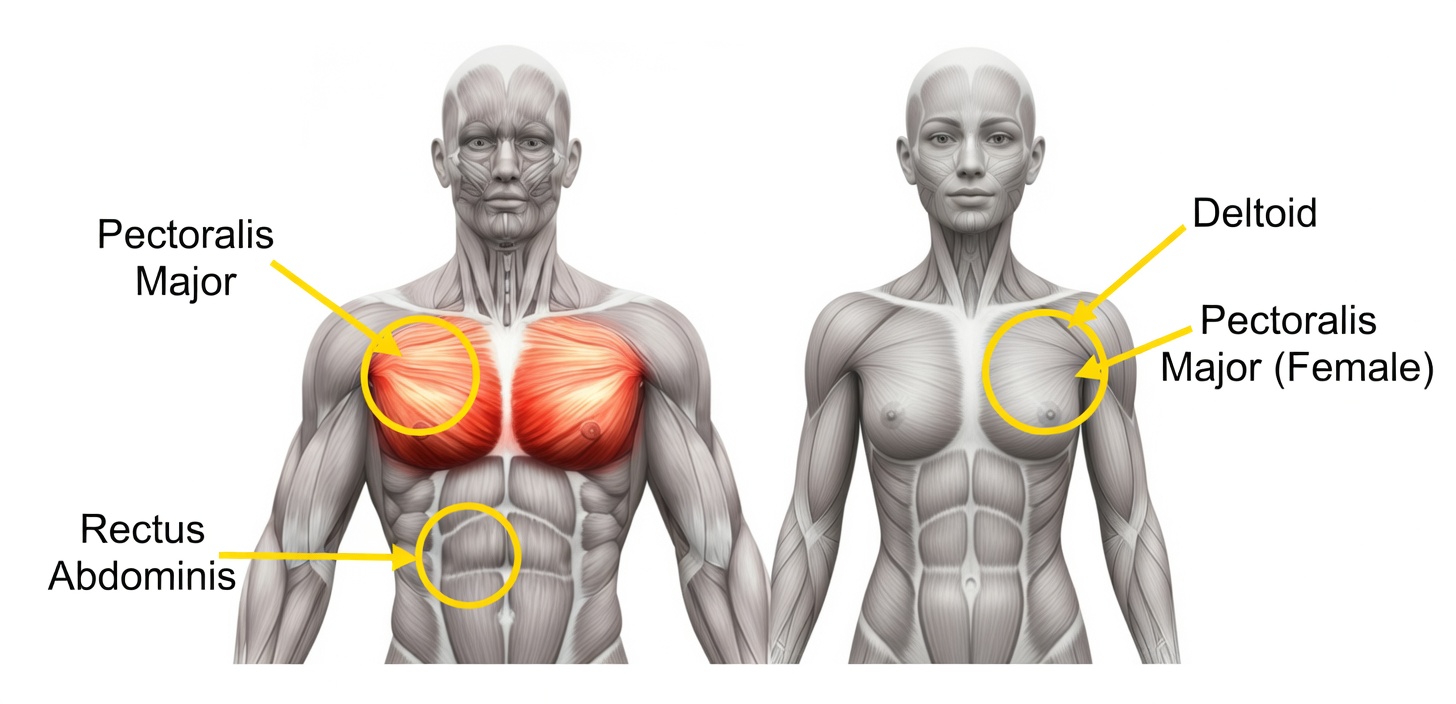
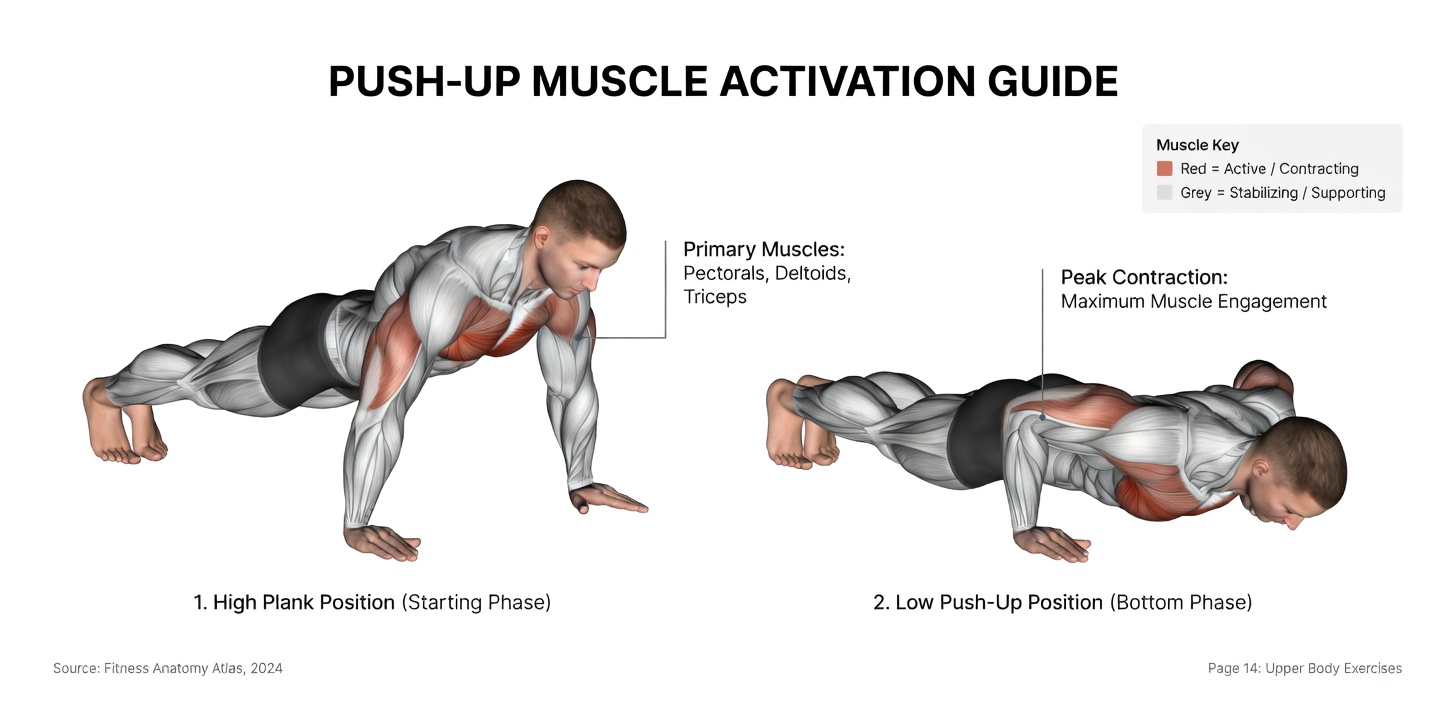
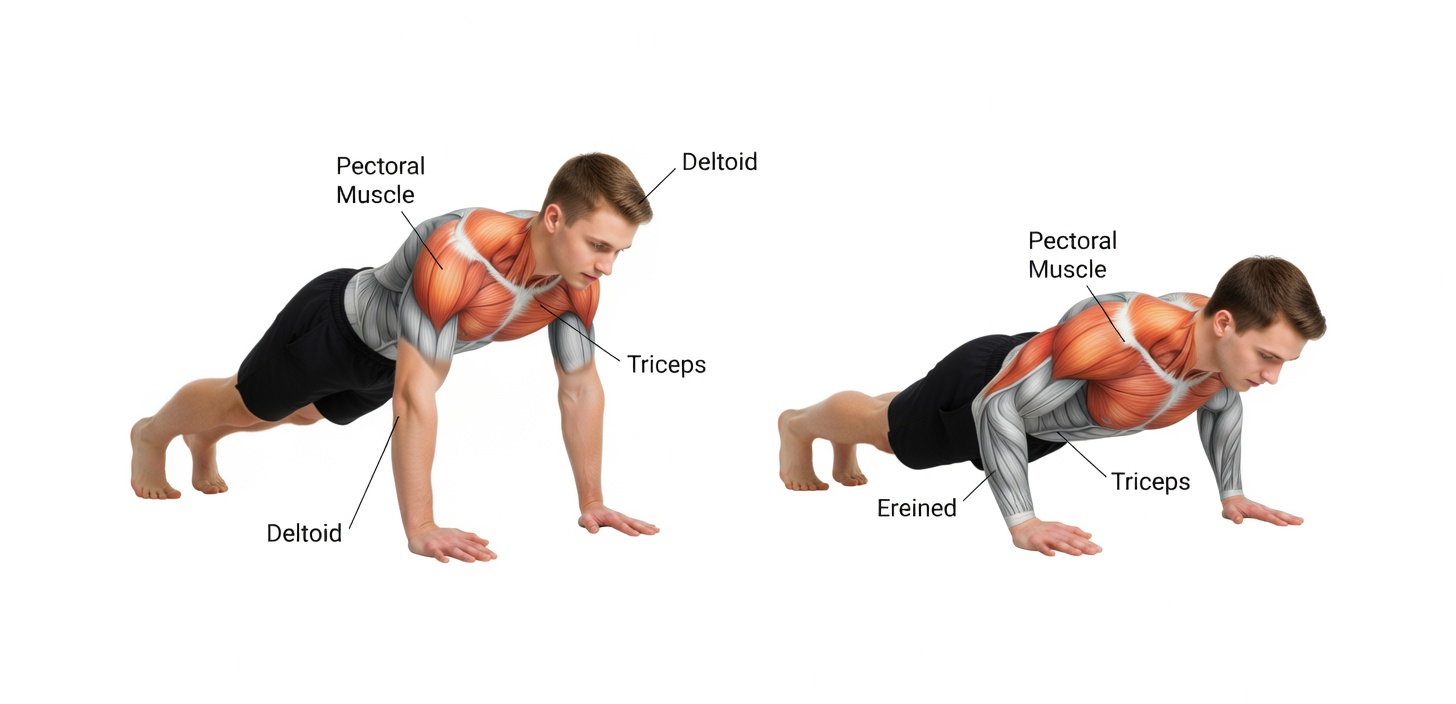
Muscles Worked During a Push-Up
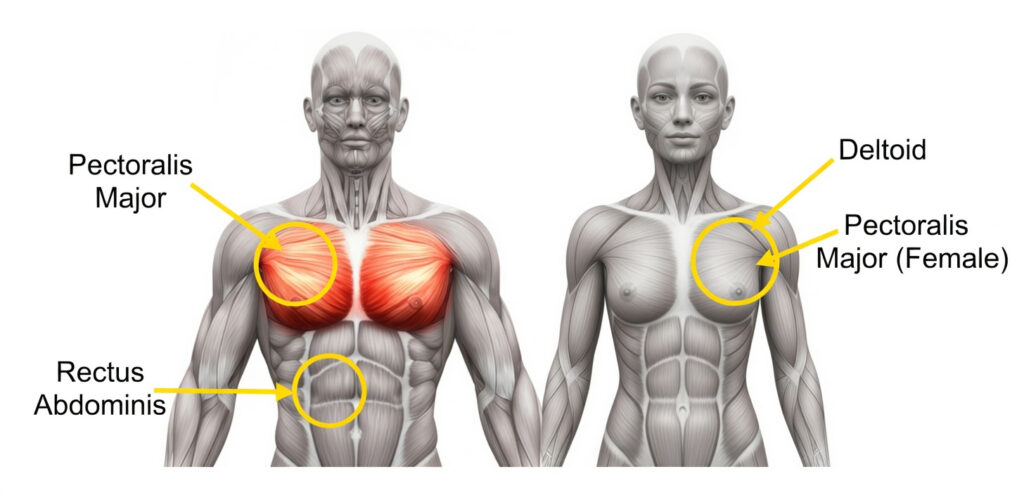
A properly performed push-up targets several muscle groups at once, including:
- Pectoral muscles (chest)
- Triceps
- Anterior deltoids (front shoulders)
- Serratus anterior
- Coracobrachialis
- Abdominals and core
Because so many muscles are involved, push-ups are a great exercise for improving upper-body strength, core stability, and overall control.
Push-Up Form and Body Positioning
Before you begin, make sure you have enough open space to fully extend your body.
If you’re working out on a hard or rough floor, place a mat underneath you. This adds comfort and support for your hands, elbows, and forearms during the exercise.
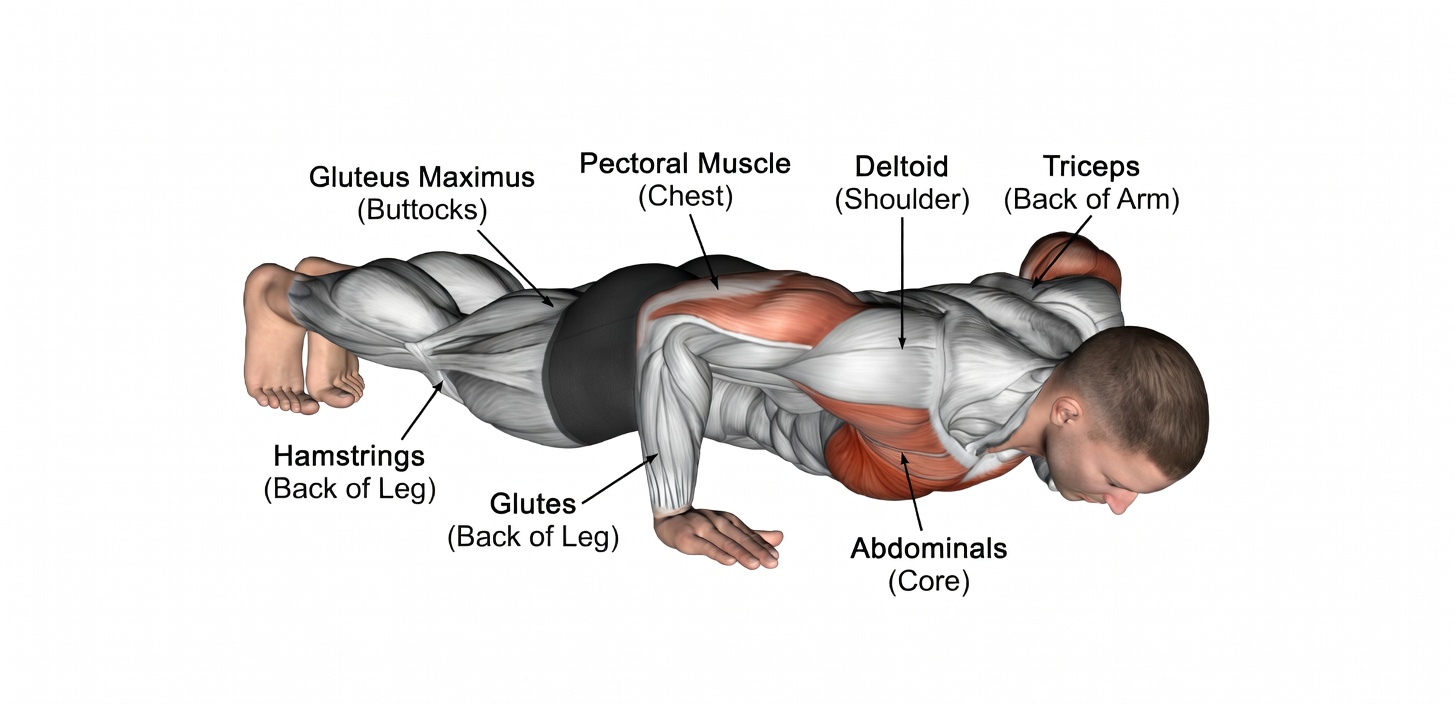
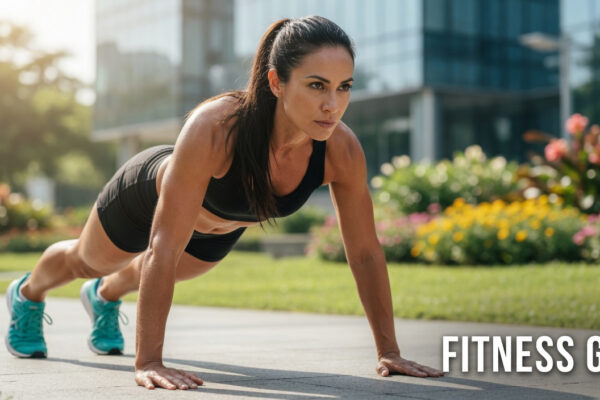
Step 1: Set Up in a High Plank
Start by getting into a high plank position.
- Place your hands on the floor about shoulder-width apart
- Keep your palms flat and directly under your shoulders
- Point your fingers forward
- Engage your torso so your body feels solid and stable
Your body should form one straight line from the top of your head down to your heels.
To maintain good alignment:
- Keep your spine neutral
- Do not arch your lower back
- Press your toes into the floor for stability
- Tighten your abs as if bracing for impact
- Squeeze your glutes
- Engage your quadriceps
This full-body tension helps you stay strong and controlled throughout the movement.
Step 2: Lower Your Body With Control
From the top position, slowly bend your elbows and lower your body toward the floor.
- Lower yourself through a full range of motion
- Stop when your chest is close to the ground
- Keep your body in a straight line from head to toe
- Avoid letting your hips sag or your glutes rise up
As you descend:
- Pull your shoulder blades back and down
- Keep your elbows close to your body
- Aim for about a 90-degree bend at the elbows at the bottom
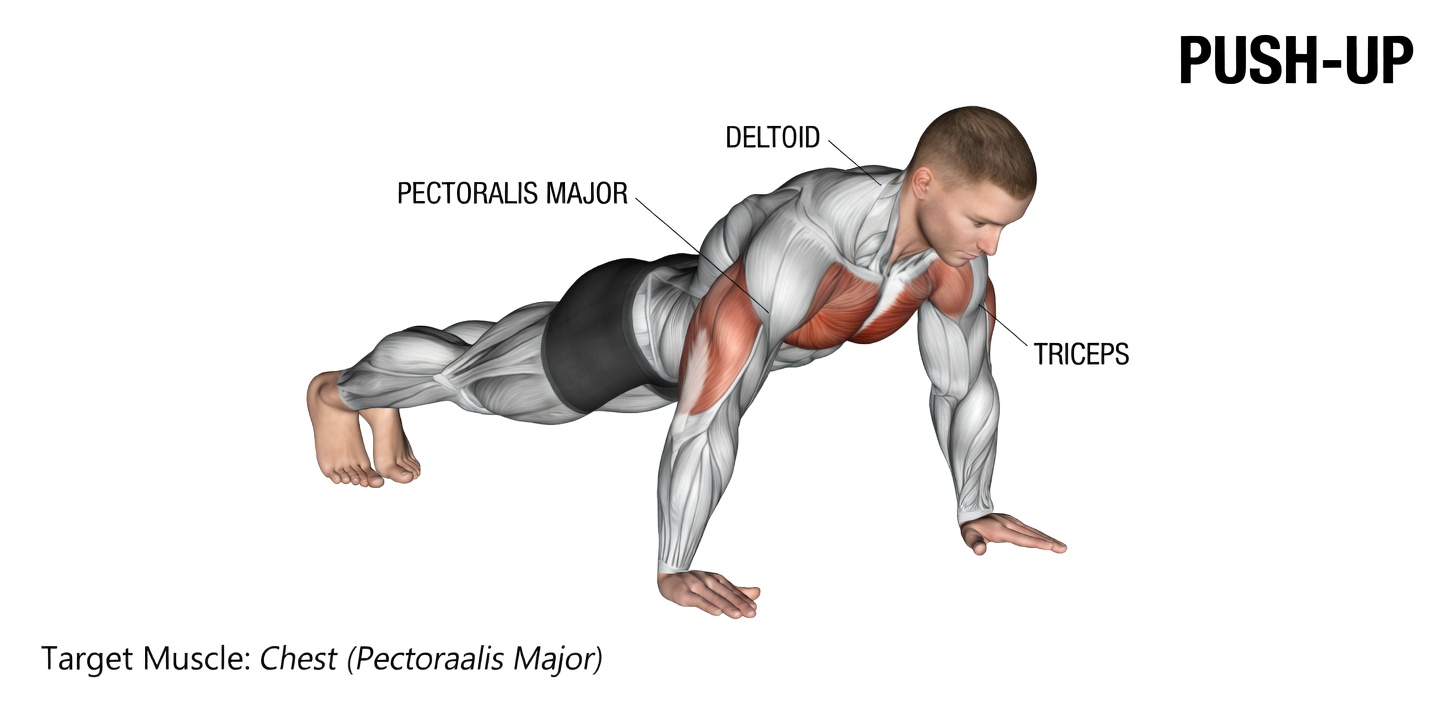
Step 3: Push Back Up
Once you reach the bottom of the movement, press through your palms and push your body back to the starting position.
- Keep your core engaged
- Exhale as you press upward
- Return to the high plank without losing alignment
That counts as one repetition.
A good target is 10 to 15 reps using correct technique.
Remember, it is always better to perform fewer reps with proper form than to rush through sloppy ones. Good technique is what helps build chest strength, triceps power, core control, and upper-body muscle.
Tips for Better Push-Up Form
If you’re new to push-ups and can’t yet perform a full standard version, don’t worry. Push-ups require a combination of:
- Strength
- Joint stability
- Shoulder health
- Mobility
- Control
That’s why many beginners benefit from starting with easier push-up variations. These modified versions help you build the strength needed for a full push-up while still practicing proper form.
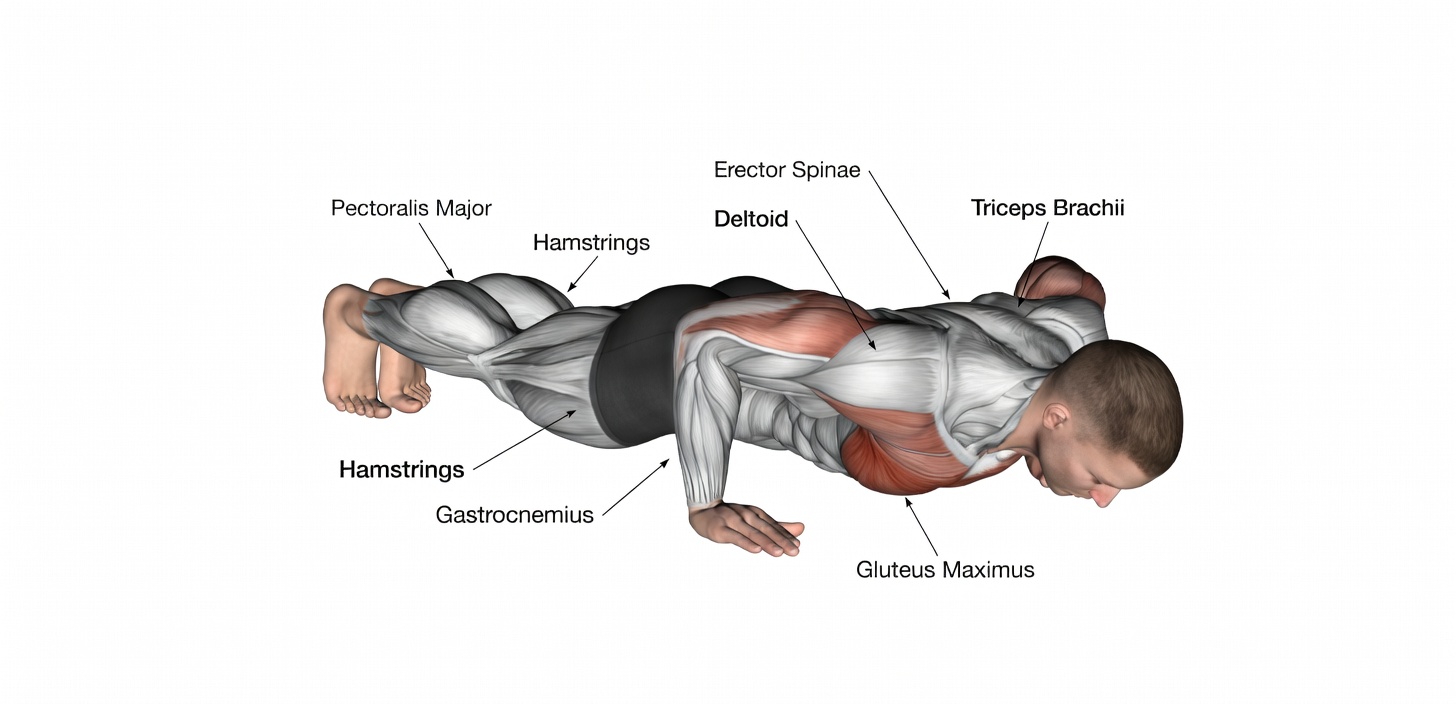
Beginner Push-Up Variations
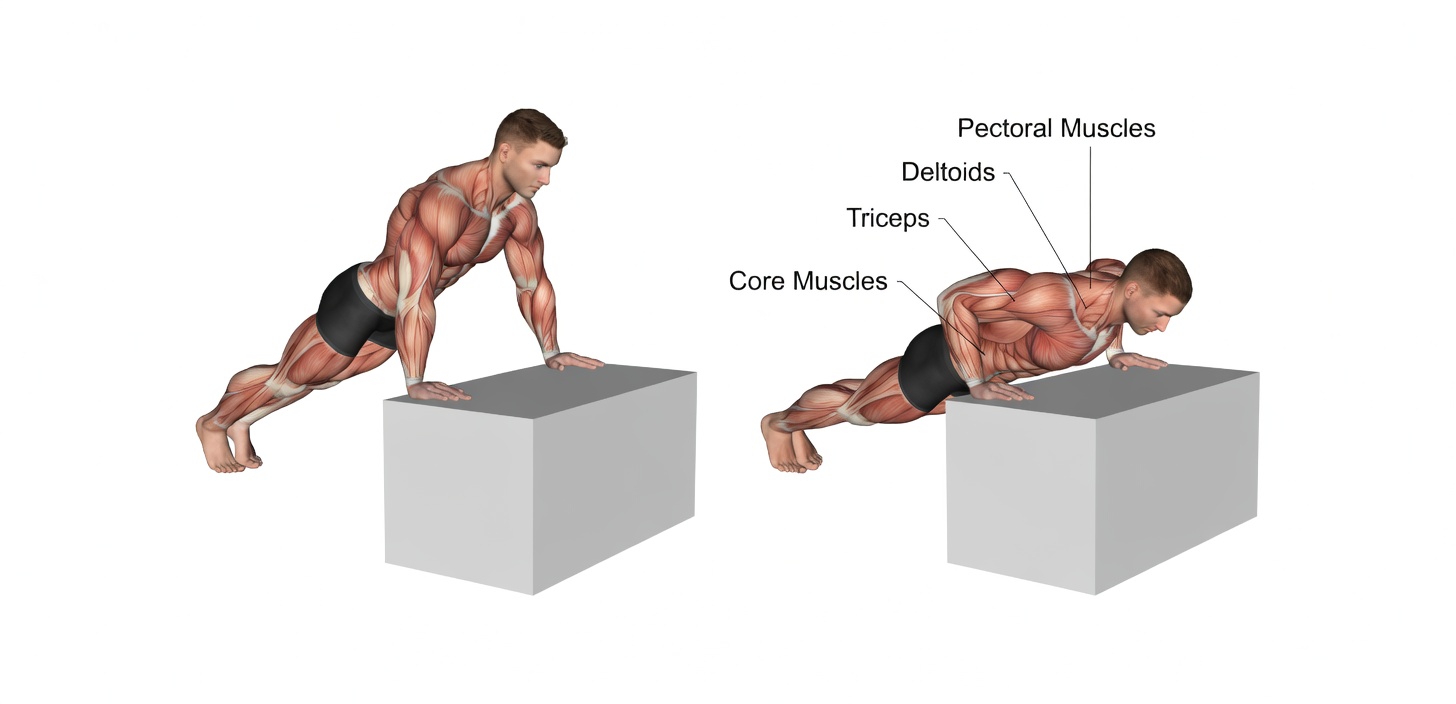
Incline Push-Ups
If a regular push-up feels too difficult, start with an incline push-up using a bench or another sturdy raised surface.
This variation reduces the amount of body weight you need to push, making it easier on the chest, shoulders, and arms while still teaching proper mechanics.
How to Do Incline Push-Ups
- Stand facing a bench or stable platform
- Place your hands on the edge, shoulder-width apart
- Walk your feet back until your body forms a straight line at an angle
- Keep your toes on the floor
- Lower yourself using the same form as a standard push-up
- Bend your elbows until they reach about 90 degrees
- Push back up while keeping your body aligned
Perform 10 to 12 reps for 2 to 3 sets.
Kneeling Push-Ups
The kneeling push-up is another beginner-friendly option. Instead of supporting your body on your toes, you perform the movement with your knees on the mat.
This makes it easier to move through a full range of motion without having to lift your entire body weight.
How to Do Kneeling Push-Ups
- Kneel on a mat
- Place your hands directly under your shoulders
- Set up in push-up position with your knees on the floor
- Keep your elbows tucked in
- Maintain a straight line from your knees through your hips to your shoulders
- Do not bend excessively at the hips
- Lower your body slowly by bending your arms
- Press back up by straightening your elbows
Advanced Push-Up Variations
Once you’ve mastered the standard push-up, you can increase the challenge with more advanced versions.
Diamond Push-Up
The diamond push-up is similar to a regular push-up, but your hands are placed close together under the center of your chest, forming a diamond shape.
Because your base of support is smaller, this version is more demanding and places greater emphasis on the triceps and inner chest.
Add this variation to your workout after you have solid push-up technique.
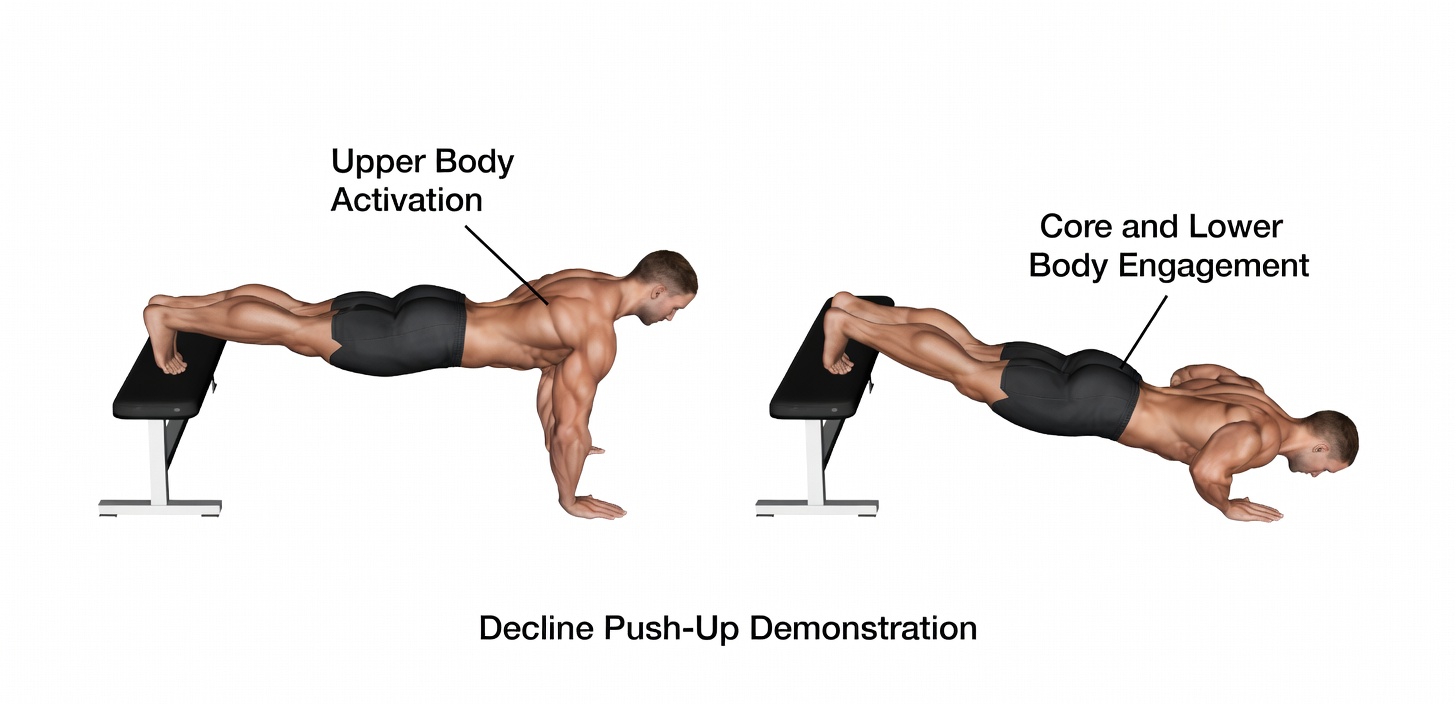
Decline Push-Up
The decline push-up is performed with your feet elevated on a bench or stable object.
This changes your body angle and places more stress on the upper chest and front shoulders, making it a more advanced option.
How to Do a Decline Push-Up
- Place your toes on a bench or another secure elevated surface
- Start with a low height if you are trying this exercise for the first time
- A height of about 1 to 2 feet is a good starting point
- Face away from the bench and place your hands on the floor shoulder-width apart
- Make sure your heels point upward
- Tighten your quads, glutes, abs, and core
- Lower your body by bending your elbows under control
- Keep your elbows tucked in
- Push through your hands to return to the starting position
Complete 10 to 20 reps for 2 to 4 sets.
Pike Push-Up
The pike push-up is another advanced bodyweight exercise. It looks more like a yoga position than a traditional strength move, but it is highly effective for building upper-body power.
This variation strongly targets the:
- Shoulders
- Triceps
- Serratus anterior
- Core
It is an excellent exercise for improving shoulder strength and stability.
How to Do a Pike Push-Up
- Begin in a position similar to downward dog
- Keep your hands and feet on the floor
- Straighten your arms and legs
- Lift your hips high
- Raise your heels slightly and shift weight onto your toes
- Keep your head in line with your arms
- Bend your elbows slowly to lower your upper body
- Do not allow your forearms to flare outward
- Press back up by straightening your elbows
Perform 10 to 15 reps for 2 to 3 sets.
One-Arm Push-Up
The one-arm push-up is a true test of strength, balance, and body control.
This advanced variation demands:
- Exceptional core strength
- High levels of stability
- Strong pressing power
- Good movement control
Supporting your body with only one arm is extremely challenging on its own. Performing the full movement with correct form makes it even harder.
It’s also common for one side of the body to be stronger than the other. Training your weaker arm can help improve strength and restore better muscle balance between the left and right sides.
Final Thoughts
A push-up may be a classic exercise, but doing it properly matters. With correct form, push-ups can help you build a stronger chest, triceps, shoulders, and core using nothing but your body weight.
Start with the variation that matches your current fitness level, focus on quality over quantity, and progress gradually. As your strength improves, you’ll be able to perform a perfect push-up with confidence and control.