Looking for the Most Effective Strength Training Exercises?
If you want to build strength fast, the good news is that the process does not need to be complicated. At its core, getting stronger and adding muscle comes down to four key factors:
- A well-balanced diet with enough protein
- The mental drive to work beyond your comfort zone
- Progressive overload
- Smart exercise selection
The first two points may sound straightforward, but they are broad subjects on their own.
There are many qualified dietitians, coaches, and health professionals who can guide you through nutrition and mindset for strength development. In addition, plenty of research explores the science behind eating well and pushing performance limits.
This article will focus primarily on the last two factors: progressive overload and choosing the right exercises.

You may also be interested in:
- The Best Dumbbell Exercises for a Stronger Back
- The 7 Most Important Exercises for Men Over 40
How to Get Stronger
To improve strength efficiently, you need more than motivation alone. Two of the biggest drivers of progress are:
- Progressive overload
- Exercise selection
Let’s break down how each one works.
Progressive Overload Explained
In simple terms, progressive overload means asking your body to do slightly more over time than it has done before. That extra challenge is what encourages muscles and strength to improve.
In practice, progressive overload can be applied in several ways, including:
- The Two-for-Two Rule
- RPE-based training
- One-rep max programs
- Other structured progression methods
For beginners, all of this can seem overly technical and difficult to follow. Fortunately, it does not have to be.
A Simple Strength-Building Recommendation
Here is an easy approach based on your training level:
- If you are a competitive athlete or have very specific performance goals: work with a qualified coach. A customized program is often the best option when your sport or objective demands precision.
- If you simply want to become healthier and stronger: choose a weight that makes you reach fatigue somewhere between 8 and 15 repetitions. Once that weight no longer challenges you in that range, increase the load or make the exercise harder until you are again working within 8 to 15 reps.
Then repeat the process consistently.
That is progressive overload in a practical, beginner-friendly form.
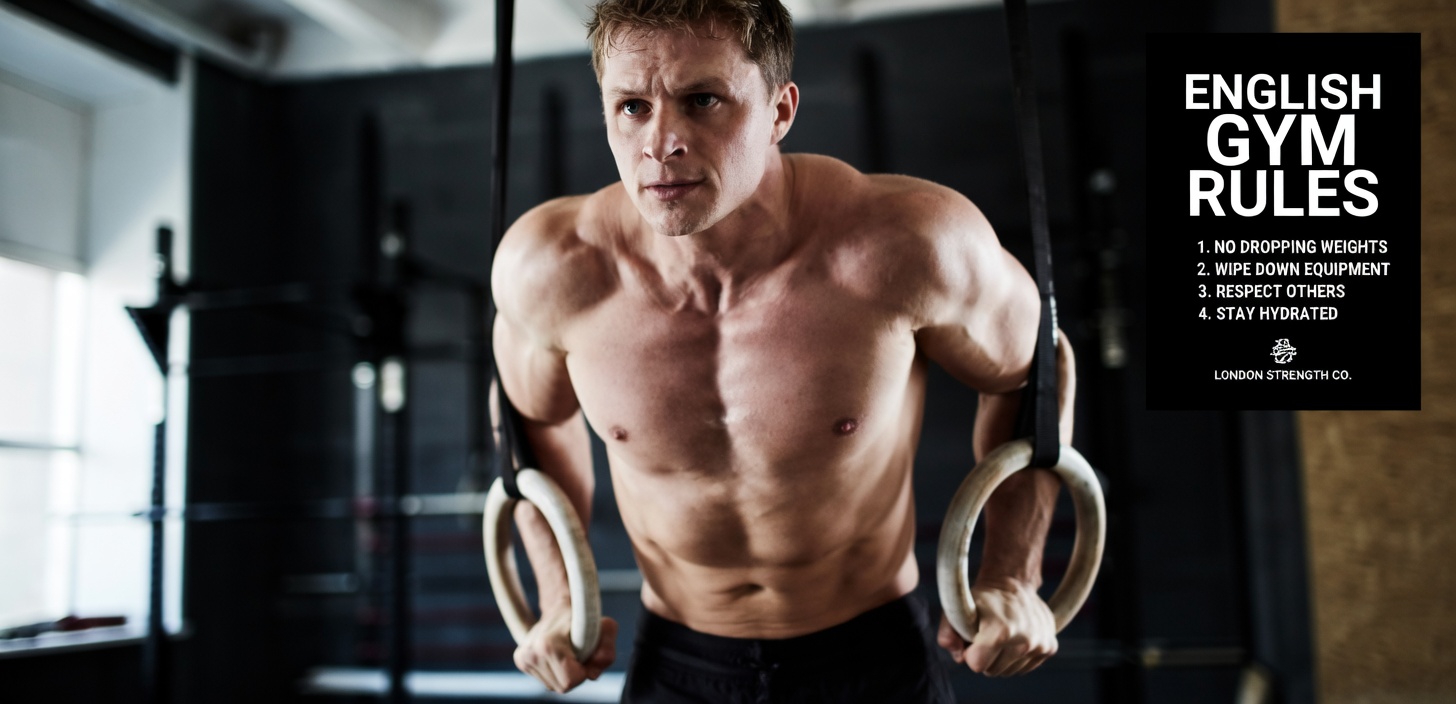
Different rep ranges can support different training goals. However, for most new lifters, the 8-15 rep range is an excellent starting point for building both muscle and strength.
Why Exercise Selection Matters
The second major piece of the strength puzzle is choosing the right movements.
Not every exercise delivers the same results. Some movements simply give you more value for your effort and time.
In general, multi-joint exercises are the best choice for most people who want to get stronger because they:
- Are safe when performed with proper technique
- Allow you to lift heavier loads over time
- Train multiple muscle groups at once
- Make your workouts more time-efficient
Because of these advantages, the following section highlights three of the best exercises for building total-body strength.
Whether you are new to training or have years of gym experience, these lifts deserve a place in your routine.
The 3 Best Exercises to Rapidly Improve Strength
To be completely honest, you should not expect these exercises to literally double everyone’s strength in two weeks.
For example, if you can currently deadlift 400 pounds for 3 reps, it is not realistic to assume you will lift 800 pounds for 3 reps after just two weeks. It is also unlikely that you will jump from 3 reps to 6 reps at the same weight in that short time.
That kind of dramatic progress is mostly seen in beginners, who often experience rapid neuromuscular adaptations when they first start resistance training. In other words, their bodies quickly become better at recruiting muscles efficiently.
Still, these three exercises can benefit nearly everyone, no matter their training experience or fitness goal.
Weekly Training Frequency
You can perform this workout 2 to 3 times per week. Keep in mind that most muscle groups usually need about 48 hours of recovery before they are ready to train hard again.
A practical guideline is:
- 3 sets of each exercise
- 8 to 15 reps per set
- Rest between sets until you feel ready, but try not to exceed 2 minutes

1. Squats
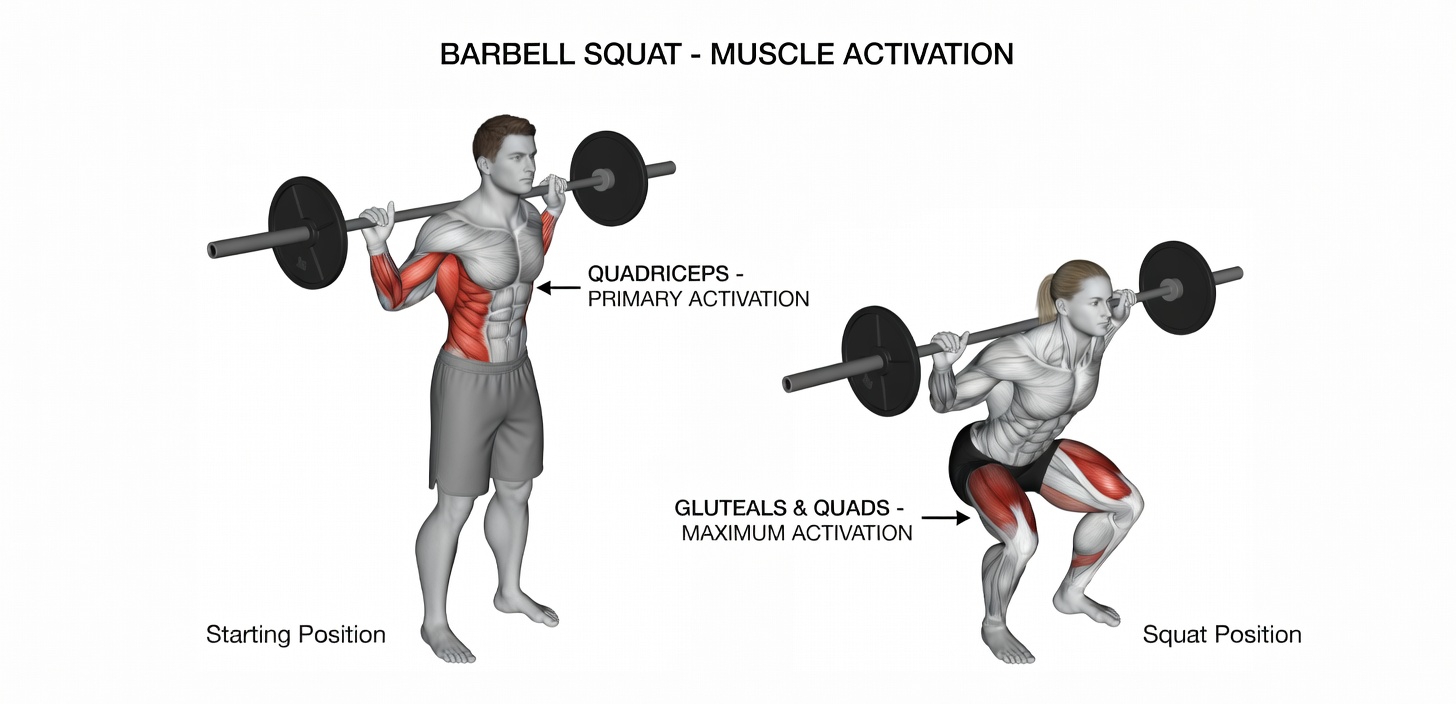
Squats are one of the most useful, adaptable, and powerful exercises you can do. They train the lower body effectively and can be adjusted easily by changing the load, equipment, or bar position.
For this article, we will focus on the barbell back squat.
Main Muscles Worked
- Primary muscles: quadriceps, glutes, calves
- Secondary muscles: core, shoulders, and back muscles
Recommended Training Parameters
- 8-15 reps
- 3-5 sets
- 2-3 sessions per week
- Rest up to 2 minutes between sets
How to Do a Barbell Back Squat
- Position the barbell securely across your shoulders.
- Begin lowering your body by bending the knees and hips.
- Keep your back flat and your chest lifted throughout the movement.
- Descend as far as your mobility allows while maintaining good form.
- Push through your feet and reverse the movement to stand back up.
Safety Tip
If you are using heavy weight, it is strongly recommended to use:
- A squat rack with safety bars
- A spotter
- Another reliable safety setup
2. Bench Press
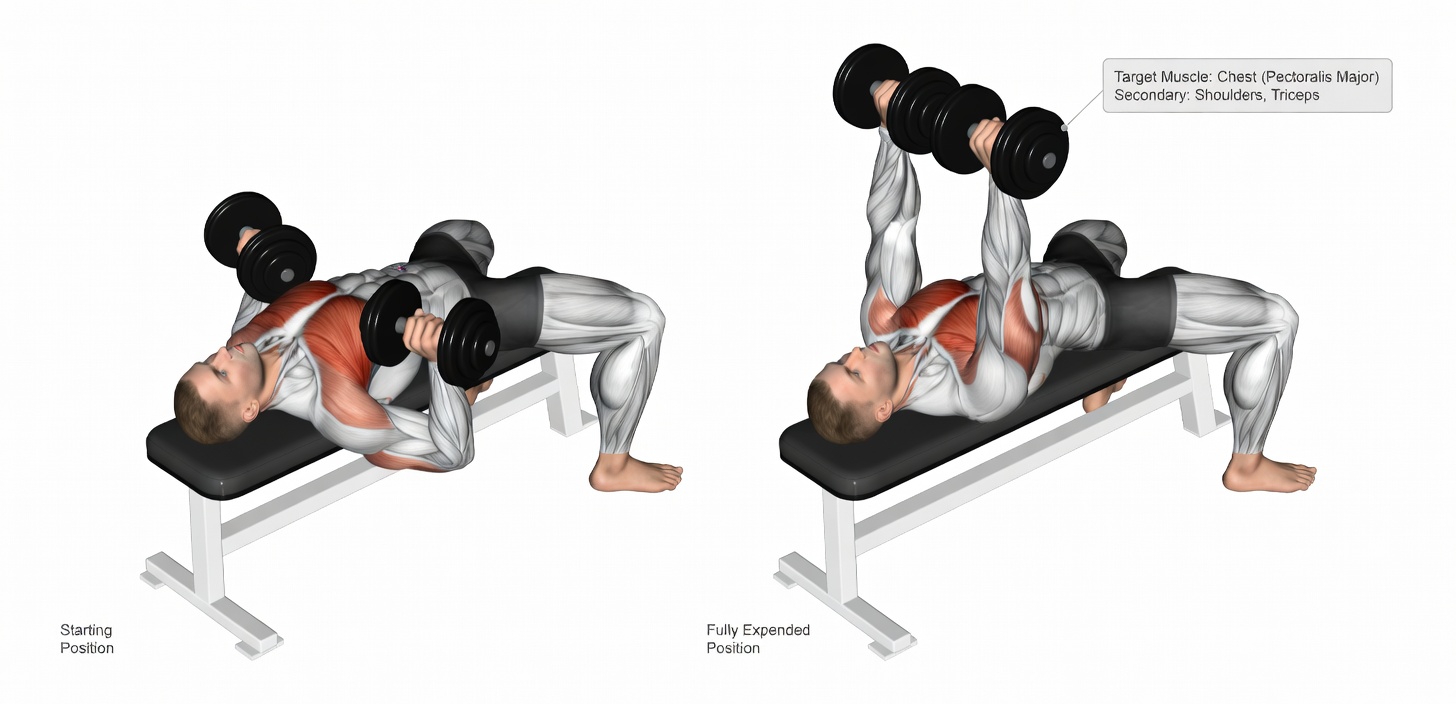
Just as squats are a top lower-body exercise, the bench press is one of the best upper-body strength builders. It is practical, scalable, and suitable for many fitness levels.
While there are several bench press variations, this version focuses on the dumbbell bench press.
Main Muscles Worked
- Primary muscles: chest, shoulders, triceps
- Secondary muscles: core, upper back, and stabilizing shoulder muscles
Recommended Training Parameters
- 8-15 reps
- 3-5 sets
- 2-3 sessions per week
- Rest up to 2 minutes between sets
How to Do a Dumbbell Bench Press
- Hold a dumbbell in each hand and carefully lie back on the bench.
- Start with the dumbbells in a controlled position near your chest.
- Press the weights straight upward toward the ceiling.
- Keep your elbows from flaring too far outward.
- At the top, stop short of fully locking the elbows.
- Lower the dumbbells slowly back to the starting position.
Safety Tip
When training with challenging loads, use a spotter or another safety measure to reduce the risk of injury.
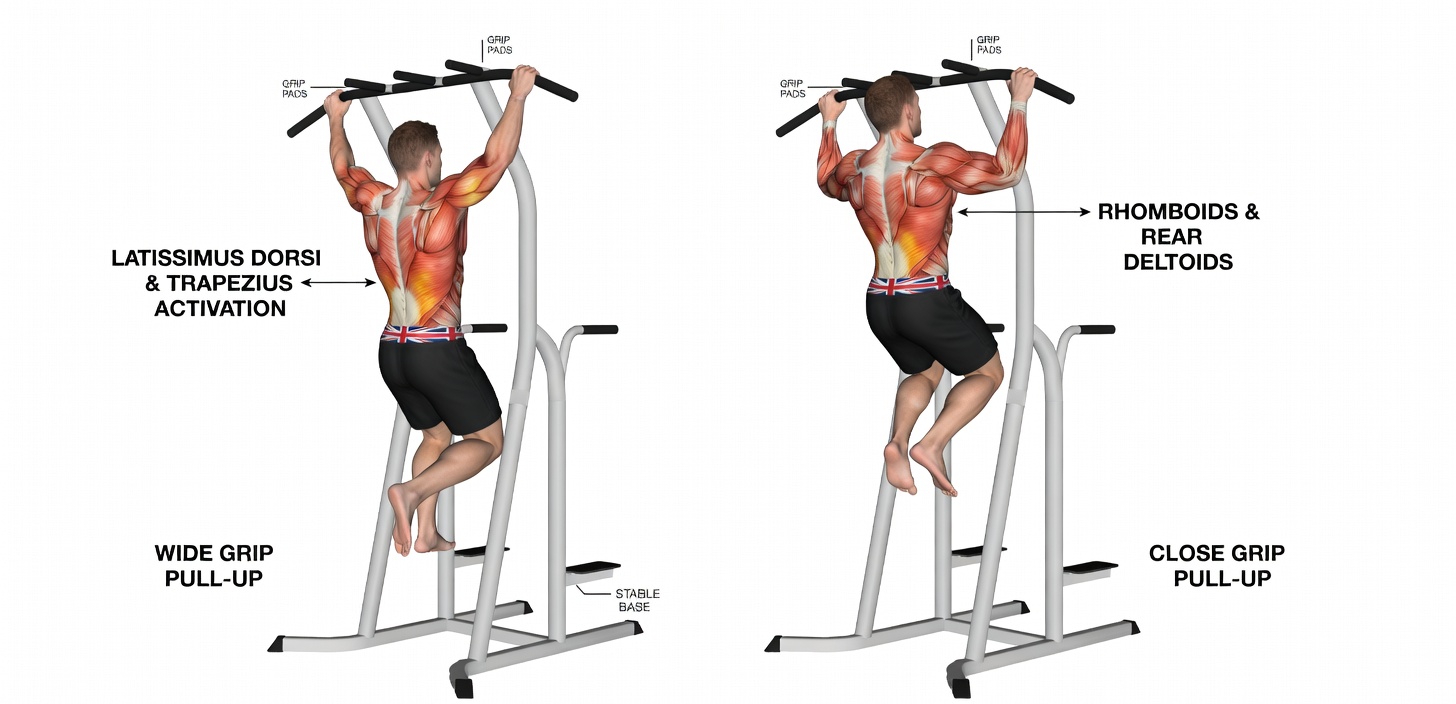
3. Pull-Ups
Squats and bench press already train a large portion of the body. Pull-ups help complete the picture by targeting muscles that those exercises do not emphasize as much.
They are also highly versatile. You can make pull-ups easier or harder by using:
- Resistance bands
- A weight belt
- A lat pulldown machine as a regression option
Main Muscles Worked
- Primary muscles: lats, biceps
- Secondary muscles: shoulders, core, and upper back muscles
Recommended Training Parameters
- 8-15 reps
- 3-5 sets
- 2-3 sessions per week
- Rest up to 2 minutes between sets
How to Do Pull-Ups Properly
- Hang from the bar with your arms nearly straight.
- Keep the upper back engaged so you do not simply sink into the shoulders.
- Pull yourself upward, aiming to bring your chin above the bar or your upper chest close to it.
- Lower yourself slowly and with control to complete the repetition.
Safety Tip
If you add weight with a dip belt or another method, make sure your setup is secure before starting the set.
Final Thoughts on Increasing Strength
These three exercises work nearly every major muscle group in the body and provide excellent returns for the time you spend training.
If your goal is to get stronger, you do not need an overly complex program. Focus on the basics:
- Eat a balanced diet with enough protein
- Train consistently
- Apply progressive overload
- Choose efficient, compound exercises
Squats, bench press, and pull-ups form a strong foundation for almost any strength training routine. Stick with them, gradually challenge yourself, and you will be well on your way to building more muscle, more power, and better overall fitness.