Why a Full-Body Stretching Routine Matters
Many modern fitness trends place most of the spotlight on intense training while giving too little attention to recovery, flexibility, and mobility work.
High-intensity exercise often involves repetitive impact from activities like running, sprinting, and jumping. While these workouts are effective, they should not replace mobility training. In reality, stretching and high-intensity exercise work best together, not separately.
Your daily posture matters too. Long hours at a desk can create tension in the muscles and joints, especially when you stay seated in the same position for too long. Without regular mobility work, this can leave your body feeling tight, weak, and restricted.
This guide explains the main benefits of full-body stretching and provides a simple total body flexibility routine you can add to your current schedule.
You May Also Like
- 3 Super-Flexible Stretches to Help You Touch Your Toes
- 5 Easy Stretching and Mobility Exercises for Seniors
- 10 Best Stretching Exercises to Improve Flexibility in 4 Weeks
Benefits of Stretching
A lot of people skip stretching because they see it as boring. Others assume it does little to support their fitness goals.
That mindset is understandable. When life is busy and time is limited, most people naturally lean toward workouts that feel more intense and burn more calories.
Still, research shows that even a few short full-body stretching sessions each week can offer meaningful results.
1. Greater Range of Motion
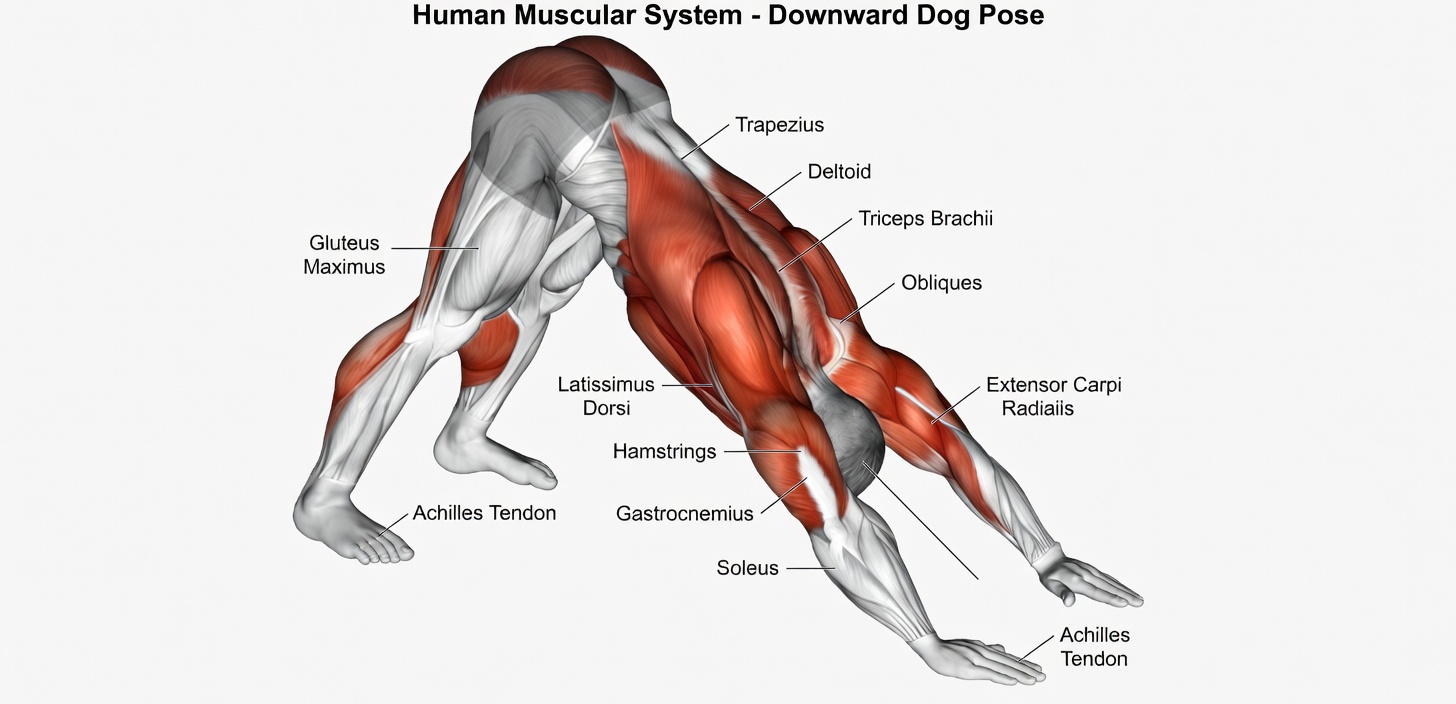
One of the clearest benefits of stretching is improved range of motion. Better mobility in the joints can help your body move more efficiently and more comfortably.
Why does that matter? Because improved flexibility may help you produce more force through a larger movement range. In practical terms, adding regular stretching to your routine can support better movement quality and even help you feel stronger during workouts.
2. Lower Injury Risk
Flexible muscles and mobile joints are often linked to a reduced chance of injury. For example, research has shown that better hamstring flexibility may be associated with fewer hamstring injuries during sprinting.
That said, flexibility should be paired with strength training. The goal is not to become overly loose, but to create a healthy balance between strength and mobility.
3. Better Mood and Mental Well-Being
Stretching does more than support physical performance. Studies also suggest that it can improve mood and mental state.
One reason may be that stretching encourages you to slow down, breathe deeply, and relax. That pause can help reduce stress, improve body awareness, and create a calmer mental space.
The Best Full-Body Stretches
In the next section, you’ll find a simple stretching plan designed to improve mobility across the whole body.
While stretching frequency recommendations can vary, one point is clear: doing some mobility work is always better than doing none.
For example, if you currently do no stretching at all, starting with just one 10-minute session this week is already progress. The next week, you might do two sessions. From there, you can gradually build a routine that fits your lifestyle.
Each exercise below targets a different area. Together, they create a practical total body stretching program.
I recommend doing this routine 3 to 5 days per week. You can stretch on the same days as your strength training or on separate days. The most important thing is consistency.
Total Body Flexibility Routine
Below are 5 stretching exercises for the entire body. If you’re new to mobility training, move slowly, breathe steadily, and use each stretch as a chance to relax and reconnect with your body.
1. Cat-Cow Stretch
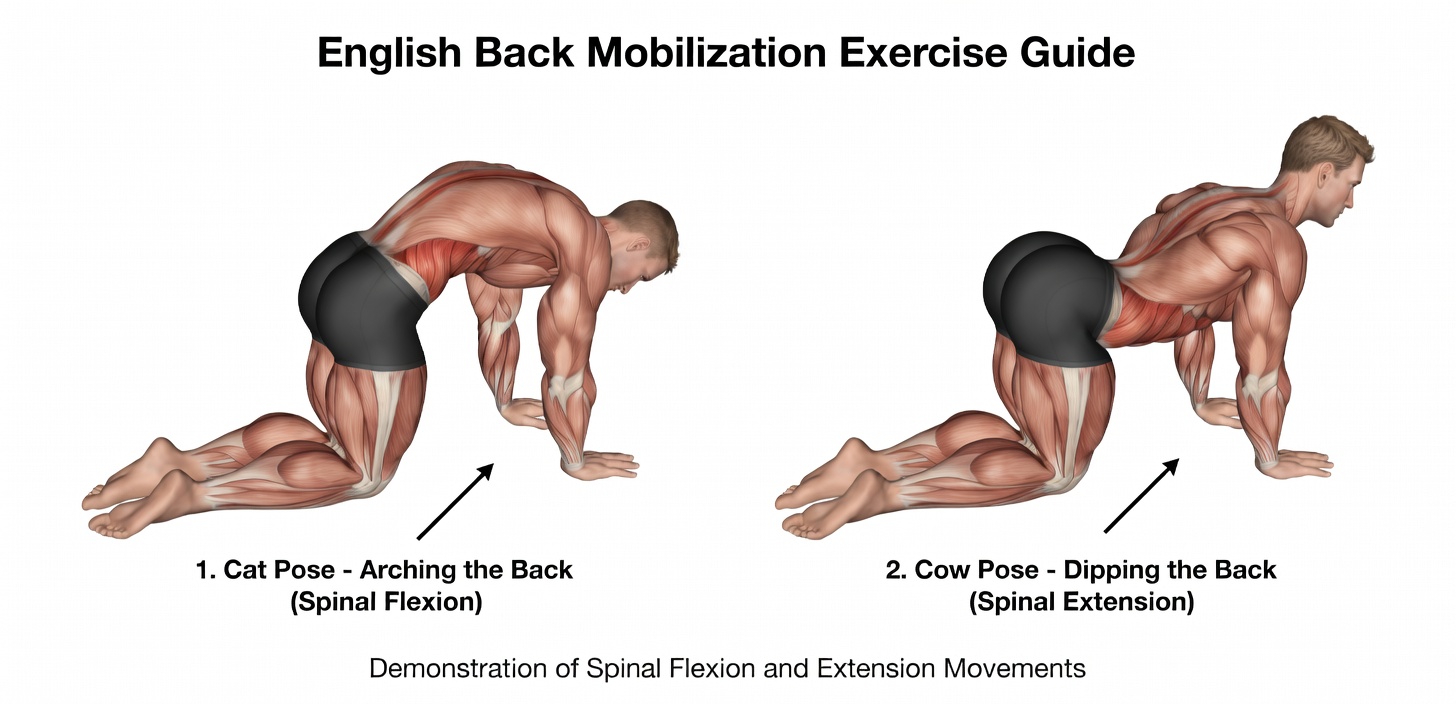
The Cat-Cow stretch is a classic yoga movement used in many mobility routines. It is especially useful for improving breathing mechanics, coordination, and spinal flexibility.
Target muscles:
- Abdominals
- Upper back
- Front and back of the neck
Parameters and notes
- Hold each position for 15 seconds, or for 3 deep breaths, whichever lasts longer.
- Move directly from Cat to Cow and back again.
- Complete 5 rounds of each position.
How to do it
- Start on your hands and knees.
- Keep your hands directly under your shoulders and your knees under your hips.
- For Cat, round your upper back, tuck your chin toward your chest, and keep your elbows straight.
- After holding the position, move into Cow by gently lifting your head, arching your back, and maintaining straight elbows.
- If you feel pain, reduce the intensity or stop until you’ve been assessed by a qualified healthcare professional.
2. Band Shoulder Stretch
Shoulder mobility is limited in many people, whether they are very active or mostly sedentary. This stretch is a great option before workouts, after training, or during the workday.
Target muscles:
- Chest muscles
- Shoulder muscles
Parameters and notes
- Use a resistance band, towel, or dowel rod.
- If you do not have specialized equipment, any object you can comfortably hold with both hands can work.
- This movement can feel intense, so begin gently.
- Hold the stretch for 15 seconds while breathing deeply.
- Perform 10 rounds, gradually increasing your range if it feels comfortable.
How to do it
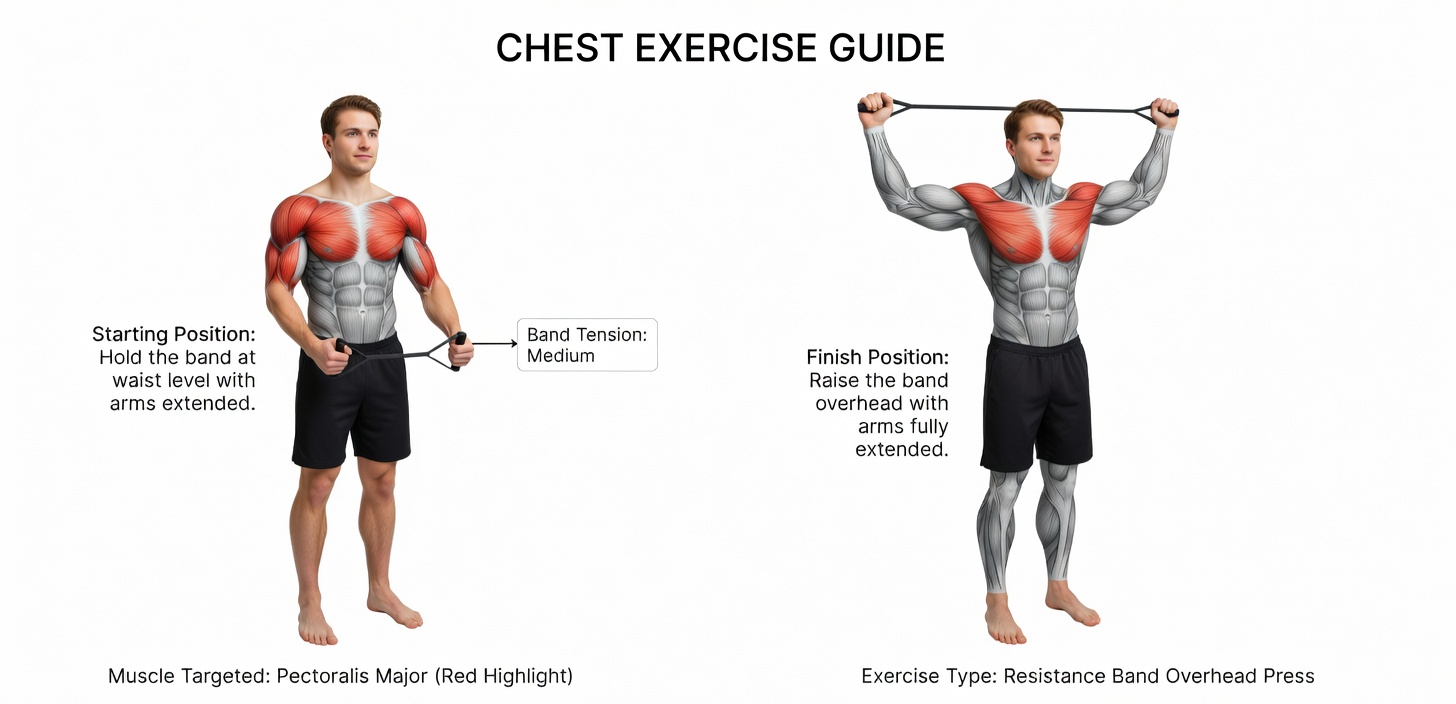
- Hold the band or towel with both hands, palms facing down.
- Begin with a grip around shoulder width.
- Lift your arms up and over your head until you feel a stretch across the chest and shoulders.
- Keep breathing the whole time.
- Return to the starting position and rest briefly before the next repetition.
3. Adductor Stretch on the Wall
Improving flexibility in the inner thighs can be a major help for hip mobility and lower-body function. This wall stretch is an effective way to target that area.
Target muscles:
- Hip adductors
- Hamstrings
- Calves, with a slight adjustment
Parameters and notes
- Be careful if you are new to stretching.
- Pushing too hard too soon can leave the inner thighs sore for days.
- Hold the stretch for 30 seconds.
- Try to increase the range slightly every few seconds, but only within a comfortable limit.
- Perform at least 4 rounds per session.
How to do it
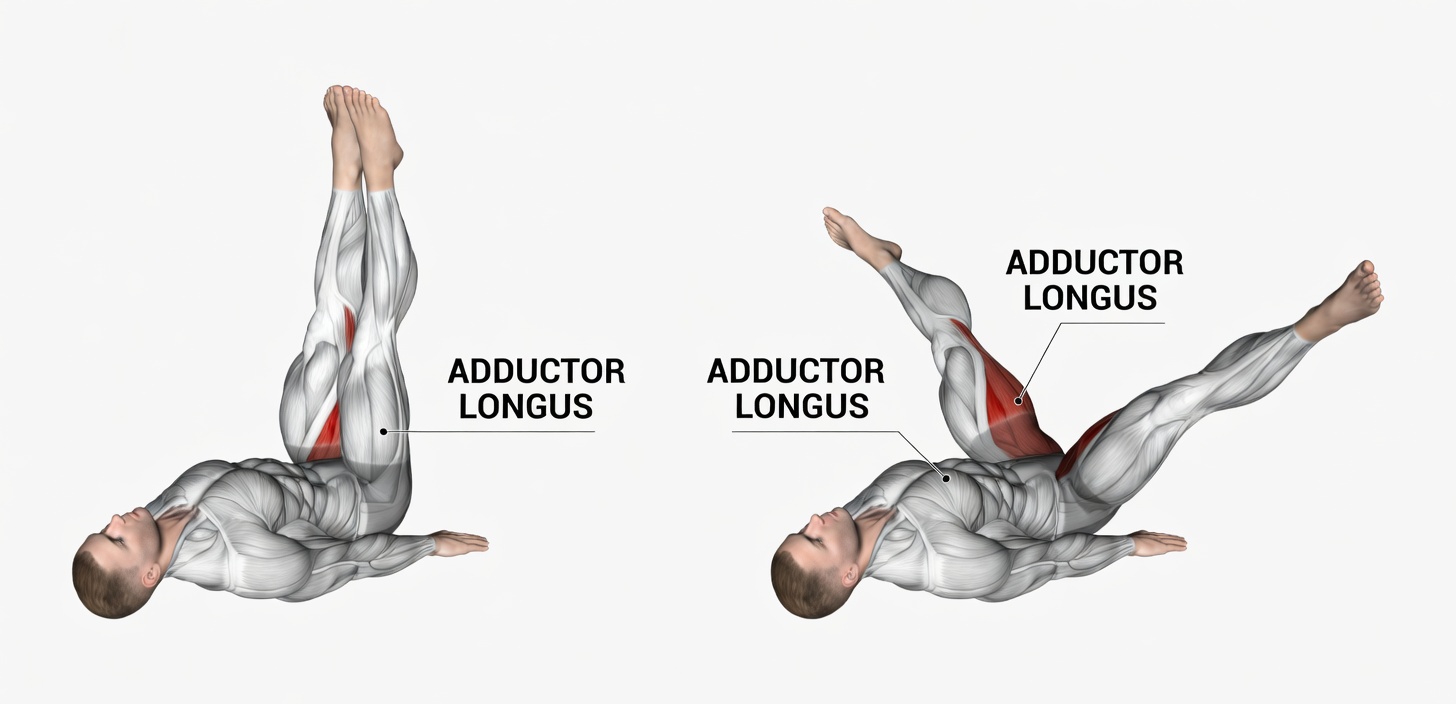
- Lie on your back with your legs straight up against a wall.
- Slowly let your legs open apart to the sides, like a pair of scissors.
- Keep your lower back flat on the floor.
- If possible, keep your hips close to the wall throughout the movement.
- Focus on slow breathing and adjust the stretch if it feels too strong.
- To add more work for the calves and hamstrings, pull your toes back toward you.
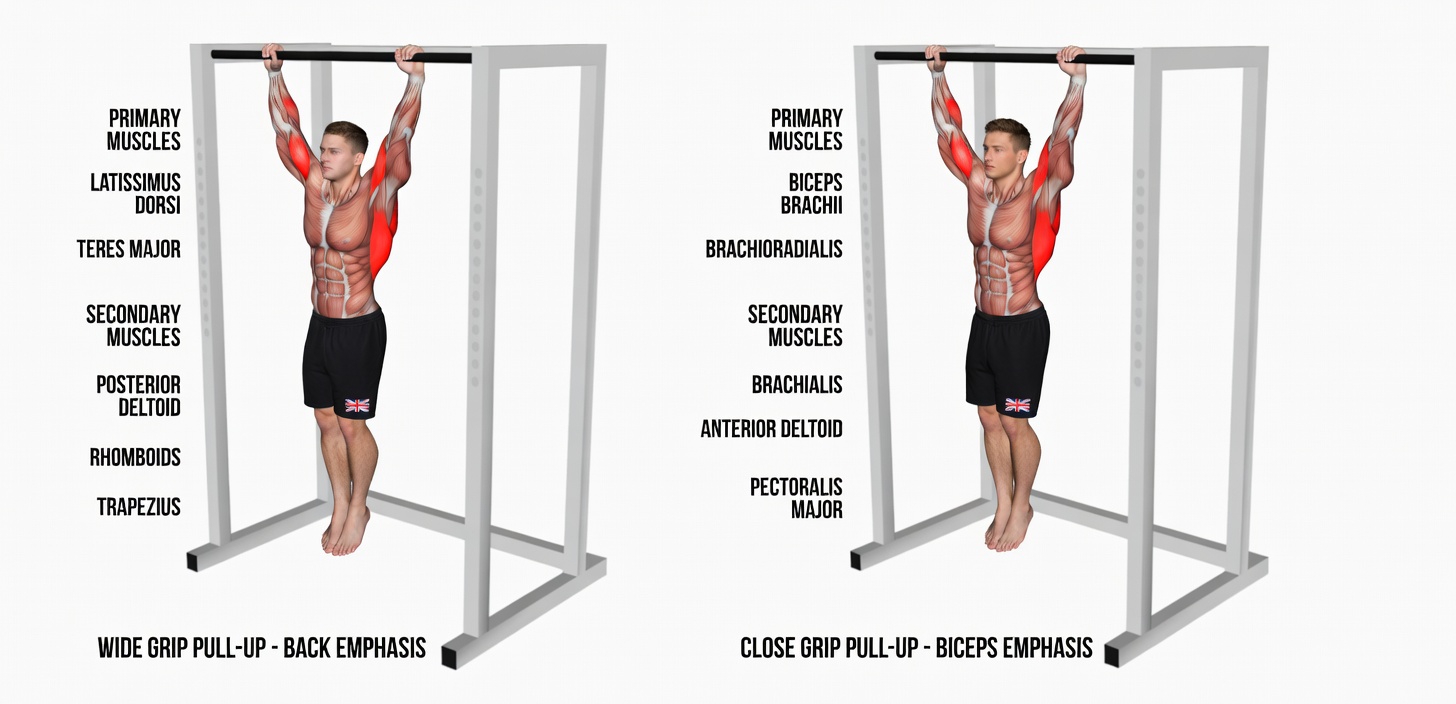
4. Dead Hang Stretch
A dead hang helps create traction through the spine, something that is hard to replicate without a sturdy bar or hanging surface. It can also improve shoulder mobility and decompress the upper body.
Target muscles:
- Shoulders
- Lats
- Forearms and grip muscles
- Spine and upper back
Parameters and notes
- Use a secure pull-up bar or sturdy overhead support.
- Hang for 15 to 30 seconds at a time.
- Complete 3 to 5 rounds.
- If a full bodyweight hang is too difficult, keep one or both feet lightly on the ground for support.
How to do it
- Grab the bar with both hands using a comfortable overhand grip.
- Let your body hang naturally while keeping your shoulders active but not tense.
- Breathe slowly and allow your spine to lengthen.
- Step down carefully and rest before repeating.
- Stop if you feel sharp pain in the shoulders, elbows, or hands.
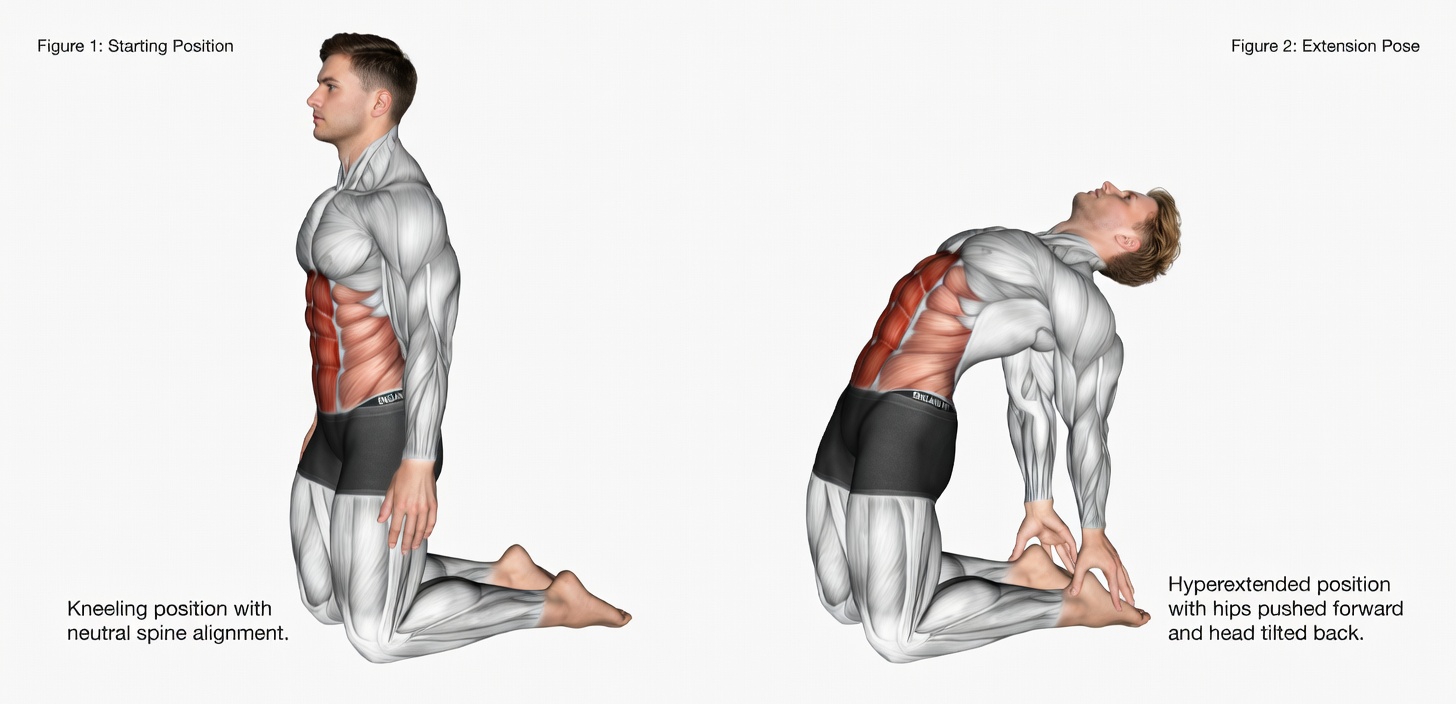
5. Half-Kneeling Hip Flexor Stretch
Because long periods of sitting often tighten the front of the hips, a hip flexor stretch is a smart addition to any full-body routine. It helps improve posture, supports lower-body movement, and can reduce stiffness from desk work.
Target muscles:
- Hip flexors
- Quadriceps
- Front of the thigh
Parameters and notes
- Hold each side for 30 seconds.
- Perform 3 to 4 rounds per side.
- Keep the movement gentle and controlled rather than forcing a deep stretch.
How to do it
- Kneel on one knee with the other foot planted in front of you.
- Keep your torso upright and your core lightly engaged.
- Gently shift your hips forward until you feel a stretch at the front of the kneeling leg.
- Avoid arching your lower back.
- Hold, breathe deeply, and then switch sides.
How to Add This Stretching Routine to Your Week
You do not need to overhaul your entire fitness plan to benefit from stretching. Start small and build from there.
A simple approach could look like this:
- Begin with one 10-minute session per week
- Add a second session the following week
- Work up to 3 to 5 weekly sessions
- Use the routine on training days or rest days
- Focus on consistency rather than perfection
Final Thoughts
A good workout plan should not focus only on intensity. Mobility, recovery, and flexibility training deserve a place in your schedule too.
Full-body stretching can help improve range of motion, mood, movement quality, and injury resilience. It also helps counteract the physical stress caused by prolonged sitting and repetitive daily postures.
If you are not stretching at all right now, even a small amount is a valuable start. Commit to a few minutes, stay consistent, and let your mobility improve over time.