Stretching and Flexibility: Why They Matter
Stretching and flexibility training have evolved into a workout category of their own—and for good reason.
A regular stretching routine can help improve flexibility, expand joint range of motion, support better posture, reduce back discomfort, boost circulation to the muscles, ease tension headaches, and promote stress relief.
In the past, many people believed stretching always had to be done before exercise. Current research suggests that is not always necessary.
Instead, it is smarter to prepare the body first with a light warm-up, such as:
- High steps
- Walking lunges
- A brisk walk
Stretching is generally more effective when your muscles are already warm.
22 Flexibility Exercises for Better Mobility
The American College of Sports Medicine (ACSM) recommends stretching all major muscle groups at least twice per week.
As the body ages, maintaining flexibility in the hips and hamstrings becomes especially important. Good mobility in these areas supports balance, stability, and safer everyday movement.
Below is a collection of effective stretches to add to your exercise routine for better flexibility and mobility.
1. Standing Hamstring Stretch
Stretching the hamstrings helps improve pelvic movement and can reduce stress on the lower back. When the hamstrings are tight, they may pull on the pelvis and flatten the natural curve of the spine, which can contribute to pain.
How to do it:
- Stand tall with a neutral spine.
- Extend your right leg in front of you with the heel on the floor and toes pointing upward.
- Slightly bend your left knee.
- Hinge forward gently at the hips while keeping your back straight.
- Rest your hands on your right thigh.
Hold: 10 to 30 seconds
Repeat: Up to 5 times on each leg
Targets:
- Hamstrings
- Lower glutes
- Lower back
2. Standing Hip Flexor Stretch
People who sit for four or more hours a day often develop tight hip flexors. This is one of the most common contributors to back pain.
How to do it:
- Stand in a lunge stance with your right foot forward.
- Bend the front knee to about 90 degrees.
- Place your hands on your lower thigh just above the knee.
- Gently press your hips forward until you feel a stretch at the front of your upper left leg.
Hold: 10 to 30 seconds
Repeat: Up to 5 times on each leg
Targets:
- Hips
- Groin
- Thighs
3. Standing Quad Stretch
The quadriceps work every time you walk, climb stairs, or stand up. Keeping them loose helps movement stay smooth and unrestricted.
How to do it:
- Stand with your feet shoulder-width apart and toes facing forward.
- Bend your left knee and bring your heel toward your buttocks.
- Hold your ankle.
- Gently pull the leg so your left knee points down toward the floor.
Hold: 10 to 30 seconds
Repeat: 5 times on each leg
Targets:
- Quadriceps
- Hips
- Groin
4. Cat Stretch
The cat stretch lengthens the muscles along the sides of the spine. These muscles often become stiff after staying in one position for too long. It is also an excellent stretch to do in the morning.
How to do it:
- Begin on your hands and knees.
- Keep your head aligned with your chest and tailbone.
- Take a deep breath in.
- As you exhale, draw your stomach muscles inward and round your spine toward the ceiling.
Hold: 10 to 30 seconds
Repeat: 5 times
Targets:
- Mid-back
- Upper back
- Pelvis
5. Figure Four Stretch
This stretch is often used to target the piriformis muscle, which is important because the sciatic nerve passes through it. If the piriformis becomes tight or spasms, it may irritate the sciatic nerve.
How to do it:
- Sit upright in a chair with your shoulders stacked over your hips.
- Cross your right ankle over your left knee to form a figure-four shape.
- Gently press down on the right knee.
Hold: 10 to 30 seconds
Repeat: 5 times on each leg
Targets:
- Piriformis
- Hips
- Glutes
6. 90/90 Stretch
The 90/90 stretch reaches parts of the hips that can be difficult to mobilize. If you cannot fully get into the position right away, ease into it. Even working toward the posture can help build hip mobility.
How to do it:
- Sit on the floor with both knees bent.
- Place your hands behind you for support.
- Position your right leg in front of you as if sitting cross-legged, with the knee bent to 90 degrees and the foot aligned with the knee.
- Move your other leg out to the side with the inner thigh on the floor and the foot behind you.
- Keep that knee bent at 90 degrees as well.
- Maintain a straight spine, turn toward your right thigh, and lower your belly button toward the thigh.
Hold: 10 to 30 seconds
Repeat: 5 times on each leg
Targets:
- Internal hip rotators
- External hip rotators
- Glutes
7. Piriformis Stretch
This version of the piriformis stretch also creates a strong stretch through the lower back and upper glutes.
How to do it:
- Lie on the floor with both knees bent.
- Cross your left foot over your right knee in a figure-four position.
- Clasp your hands around your left leg.
- Gently pull your left knee toward your right shoulder.
Hold: 10 to 30 seconds
Repeat: 5 times on each leg
Targets:
- Piriformis
- Hips
- Glutes
- Lower back
8. Lunge With Spinal Twist
This movement improves flexibility in both the hips and spine, which is important for a healthy walking pattern. Tightness in these regions can also create muscular imbalances.
How to do it:
- Step your right foot forward into a deep lunge.
- Keep your back leg straight with your weight on the ball of that foot.
- Place your right hand on the floor beside you.
- Lift your left hand toward the ceiling while rotating your spine toward the right.
Hold: 10 to 30 seconds
Repeat: 5 times on each side
Targets:
- Hip flexors
- Quadriceps
- Side back muscles
9. Chest Stretch
Stretching the chest can improve breathing by opening the chest area and may also help reduce rounded, forward shoulders.
How to do it:
- Hold a towel behind your back with both hands about shoulder-width apart.
- Keep your shoulders down and away from your ears.
- Gently lift the towel upward behind you toward the ceiling.
Hold: 10 to 30 seconds
Repeat: 5 times
Targets:
- Pectoral muscles
- Chest
10. Triceps Stretch
A triceps stretch can improve shoulder mobility, which may help the neck move more freely and reduce the risk of strain.
How to do it:
- Raise your left arm overhead with your palm facing outward.
- Bend the elbow so your palm moves toward your upper back.
- Your middle finger should line up with your spine.
- Use your opposite hand to gently press just above the left elbow.
Hold: 10 to 30 seconds
Repeat: 5 times on each side
Targets:
- Triceps
- Back of the shoulders
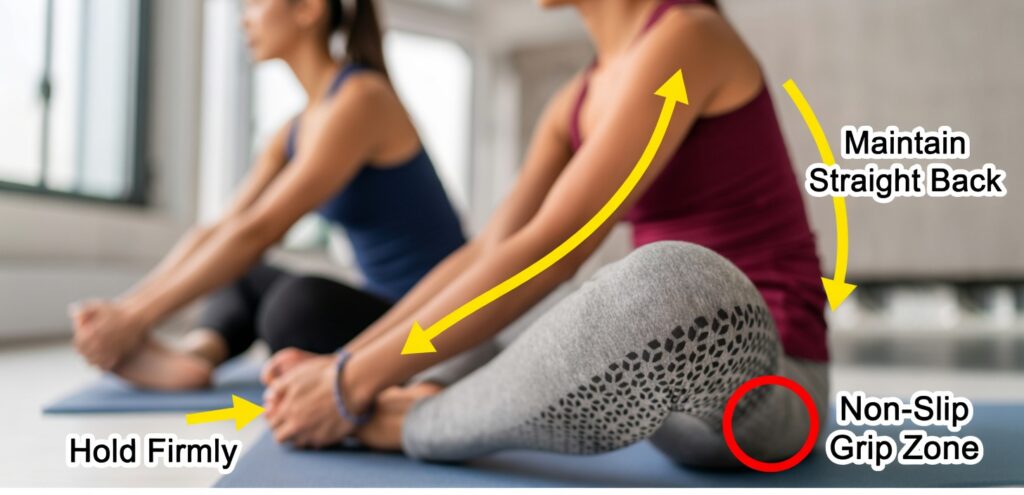
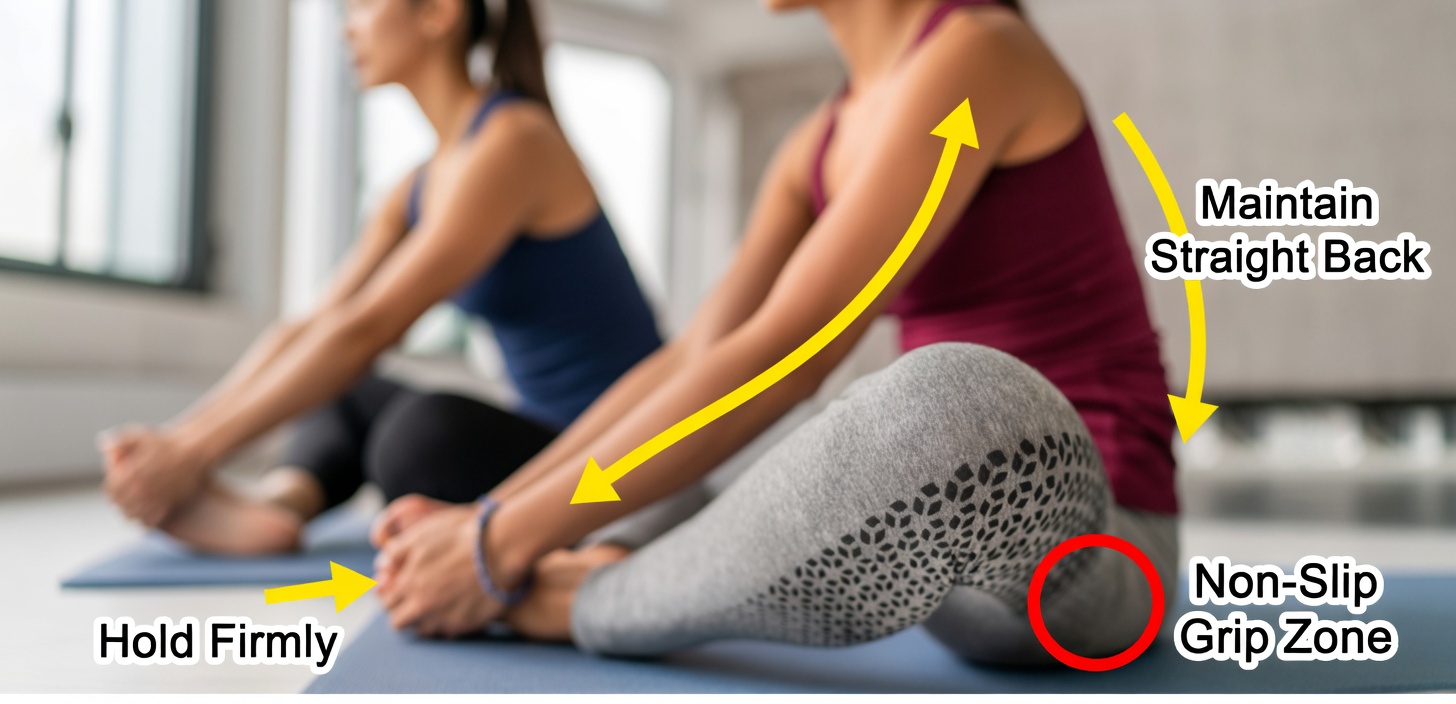
11. Butterfly Stretch
The butterfly stretch is excellent for improving groin flexibility and stretching the inner thighs.
How to do it:
- Sit on the floor with your knees bent and the soles of your feet together.
- Let your knees drop gently toward the ground like butterfly wings.
- Move your feet closer or farther away from your body to change the intensity.
- Do not bounce.
Hold: 10 to 30 seconds
Repeat: 5 times
Targets:
- Inner thighs
- Hips
- Groin
12. Side Bend Stretch
Side bending helps improve movement through the torso and spine and may lower the risk of mechanical low back pain.
How to do it:
- Reach your right arm straight overhead.
- Bend your upper body to the left.
- Keep your chest facing forward and avoid twisting.
Hold: 10 to 30 seconds
Repeat: 5 times on each side
Targets:
- Sides of the torso
- Lower back
- Shoulder
13. Lunging Hip Flexor Stretch
The hip flexors attach to the pelvis, so keeping them flexible is important for supporting lower back health.
How to do it:
- Move into a lunge position.
- Lower the back knee and shin to the floor.
- Tuck your hips slightly under.
- Gently press your hips forward until you feel a stretch at the top front of the hip.
Hold: 10 to 30 seconds
Repeat: 5 times on each side
Targets:
- Hip flexors
- Pelvis
- Upper thigh
Final Thoughts
A consistent flexibility routine can support better posture, reduce muscle tightness, and improve overall mobility. Whether you are active, spend long hours sitting, or simply want to move more comfortably, adding these stretches to your weekly routine can make a real difference.