Feeling tense, stressed, and run down?
If you have been wanting an easy way to relax, ease stress, and help your body feel more balanced, this simple “do nothing” yoga pose may be exactly what you need.
Many of us are taught to think better results only come from doing more. But when your goal is to let go of built-up tension, support circulation, and calm stress, doing less can actually help a lot.
Why this simple pose can help
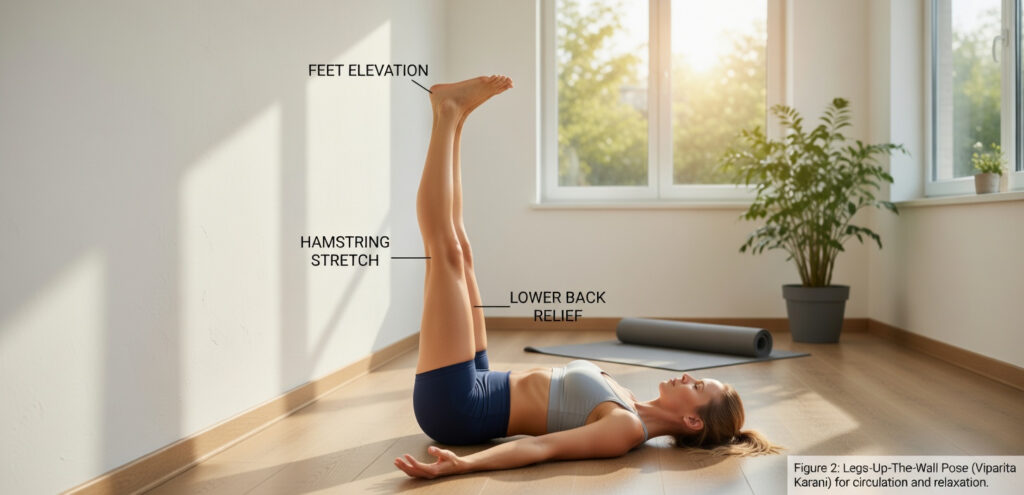
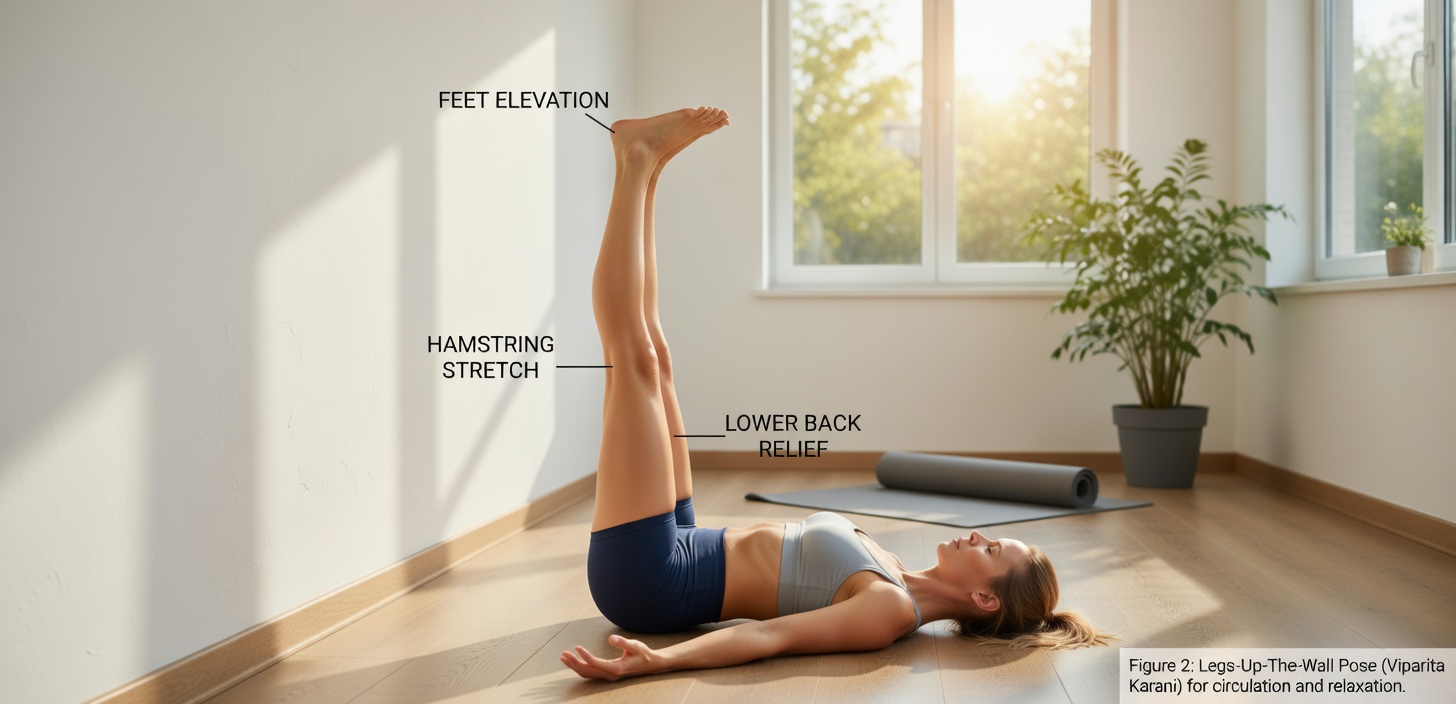
Viparita Karani, often called the legs-up-the-wall pose, is a gentle yoga position that does not require the flexibility or core strength that many other poses demand.
You simply lie on the floor facing upward and rest your legs against a wall. That is what makes it so approachable. The pose asks very little from you other than breathing deeply and allowing yourself to relax.
This quiet pose can support your heart, blood circulation, and stress levels. It is a helpful way to decompress every day.
According to Robert Saper, MD, MPH, this active inversion can help improve circulation and release tension. Unlike other inverted poses such as a headstand, it does this without putting your neck or spine at risk in the same way.
How to do the legs-up-the-wall pose the right way
To get the full benefit, it helps to set up the pose correctly.
-
Choose your space
- Find an open area with a flat wall.
- Place a yoga mat in front of the wall.
- If you want extra comfort, use a short, thin pillow under your head.
-
Get into position
- Lie down on the mat with your legs resting up the wall.
- Keep your glutes close to the wall, about a few inches away.
- Your tailbone should stay on the mat.
- Rest your head on the mat or pillow and relax your neck.
- Keep your back in contact with the mat.
-
Hold and breathe
- As you stay in the pose, you should feel a gentle stretch in your hamstrings.
- Flex your feet so they are perpendicular to the wall.
- Hold the pose for 20 seconds to 2 minutes.
- Take deep breaths while you remain in position.
-
Come out slowly
- When you are finished, gently lower your legs from the wall.
- Carefully move into a seated position.
- Stay there and relax for a minute or two.
Who should avoid legs-up-the-wall?
Like any exercise or yoga pose, even this simple movement comes with some risk.
This pose is not for you if you have been dealing with:
- Heart disease
- Breathing issues
- Kidney failures
- Uncontrolled high blood pressure
Be sure to consult your doctor and physical therapist before starting a new workout and exercise.
Consult a healthcare professional before making changes.