Plank Exercise: A Simple Move With Powerful Core Benefits
The plank is a foundational core exercise performed by holding a push-up-style position on your forearms. It is widely considered one of the best bodyweight exercises for building core strength.
A strong core plays a vital role in daily life. Almost every movement you make depends on it in some way. From standing up to twisting your torso, motion either begins in the core or passes through it.
Beyond improving core stability, the plank is also an excellent exercise for defining the abdominal muscles. Although it is a static movement, it offers impressive physical benefits and is often underestimated.
One reason the plank is so popular is its versatility. There are many plank workouts designed for beginners, intermediate exercisers, and advanced athletes.
Once you become confident with the standard version, you can progress to more demanding variations such as side planks, bear planks, and dynamic planks. Still, the classic plank remains the best starting point for most people. This basic isometric exercise is an effective way to assess your current core strength.
How Long Should You Hold a Plank?
A common question is: how long is enough?
According to research referenced by Harvard, the world record for a plank is an astonishing 4 hours. Fortunately, you do not need to hold a plank anywhere near that long to see results. Many fitness professionals agree that 30 to 60 seconds is enough for building core strength.
If holding a proper plank for that amount of time feels very difficult, it may be a sign that your core needs strengthening through regular practice.
On the other hand, if you can easily maintain perfect form for well beyond 60 seconds, it may be time to move on to a more challenging plank variation.
Below, you’ll learn the key benefits of planks and how to do one correctly.
Benefits of Planks
1. Builds Core Strength
Planks are highly effective for strengthening the core on a regular basis.
Your core includes multiple muscle groups, such as the abdominals, glutes, hips, and back. When these muscles become stronger, everyday movement feels easier and more controlled. Better core strength can also improve balance and posture.
If you deal with poor posture or mild lower back discomfort linked to weak core muscles, adding planks to your routine may help.
2. Easy and Convenient
The plank is a bodyweight exercise that requires no equipment. You can do it almost anywhere, whether at home, in the gym, or while traveling. All you need is a little space and a few minutes.
3. Supports Back Health
Back pain, whether occasional or ongoing, affects many people. One way to reduce strain on the back is by improving posture and building a stronger core.
A stable core helps support the spine and may reduce unnecessary pressure on the lower back. It also helps protect your body during common actions such as bending, sitting, standing up, and changing direction.
What Muscles Do Planks Work?
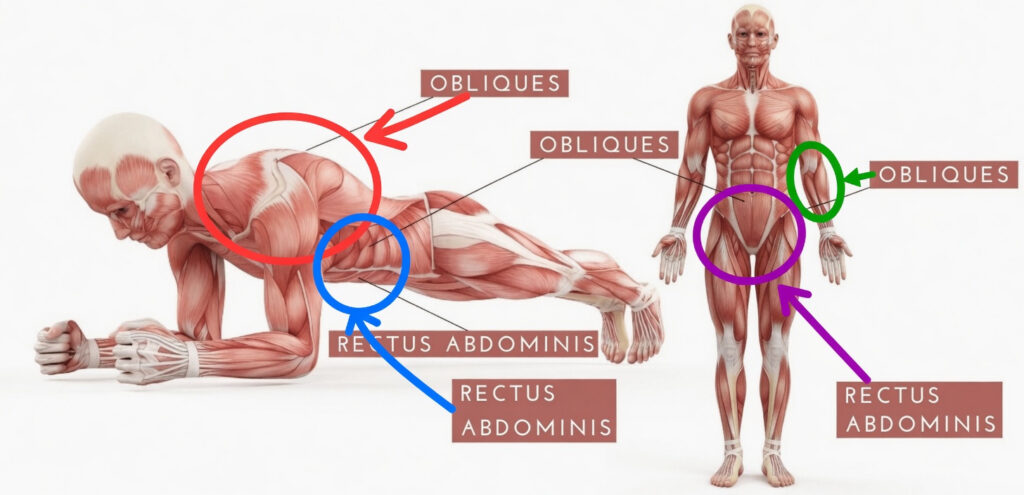
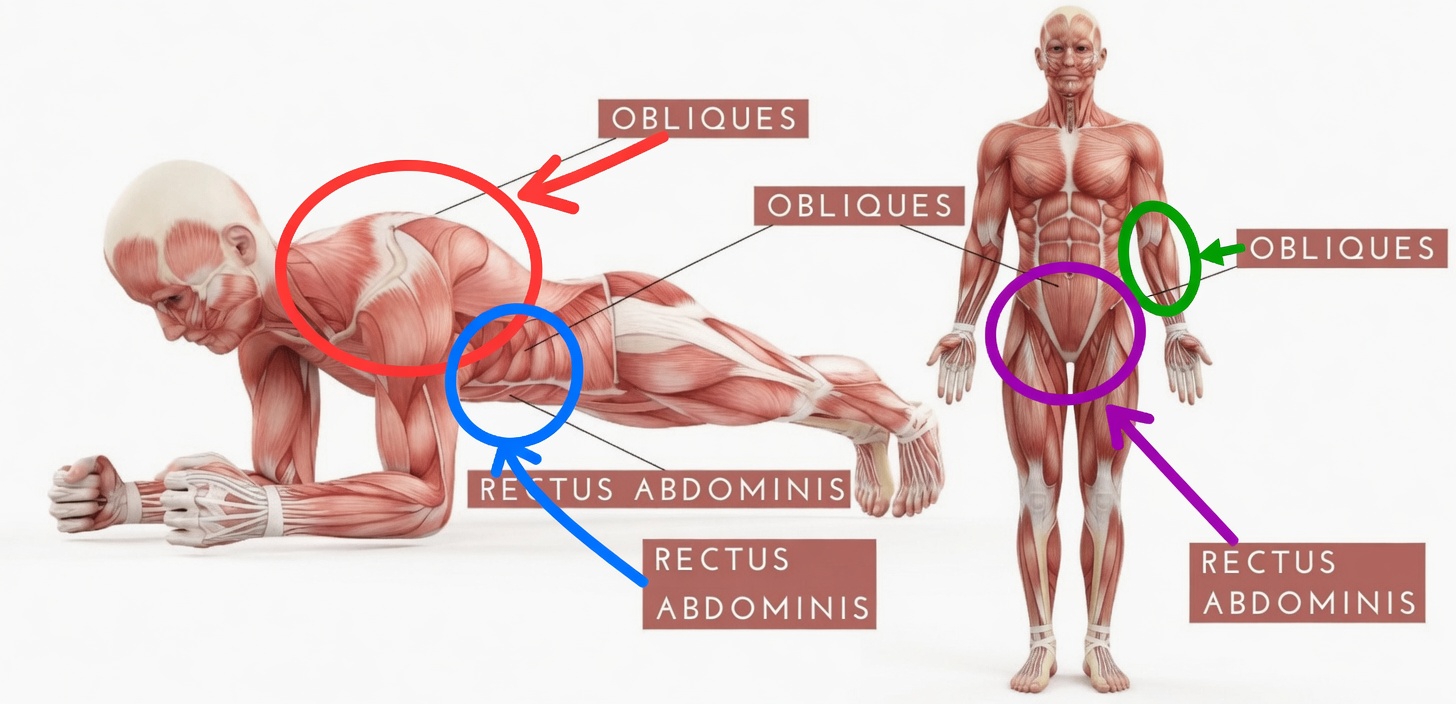
Planks mainly target the core muscles, which are found between the pelvic floor and the diaphragm. These muscles support the trunk, stabilize the spine, and assist with movement.
The primary muscles involved include:
- Rectus abdominis — the front abdominal muscles
- Obliques — the muscles along the sides of the abdomen
- Transversus abdominis — the deep abdominal muscle that wraps around the sides and spine
Planks can also engage other important muscle groups, including the glutes, hamstrings, and lower back.
How to Do a Plank Correctly
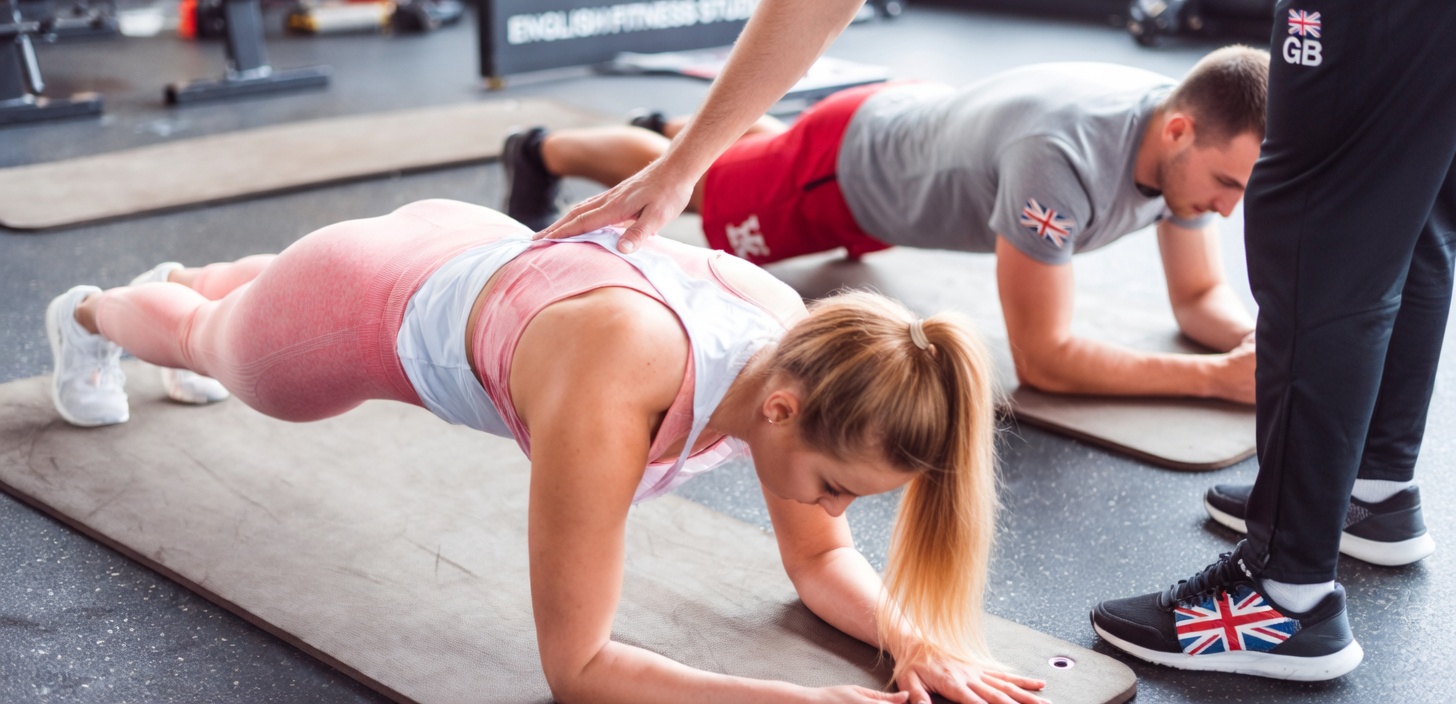
The plank is a static ab exercise that improves both core strength and stability. When done with proper form, it activates several major muscles at the same time.
To perform a standard plank:
- Start on all fours with your elbows on the floor.
- Place your elbows directly under your shoulders.
- Keep your knees under your hips and face the floor with your head relaxed.
- Tighten your abdominal muscles by drawing your belly button toward your spine.
- Lift your knees off the floor and extend your body into a straight line from head to heels.
- Avoid arching your back or letting your hips sag.
- Maintain a neutral spine throughout the exercise.
- Hold the position for 30 to 60 seconds.

The longer you can hold a plank with correct form, the more you challenge and strengthen your abdominal muscles. However, quality always matters more than duration.
Final Thoughts
The plank is one of the most effective exercises for strengthening the abdominals and improving spinal stability. It is a simple yet powerful core workout that can be done anywhere using only your body weight.
In addition to training the abs, planks also activate the glutes, hamstrings, hips, and lower back. Whether you are a beginner or more advanced, the standard plank is an excellent place to build a stronger, more stable body.