A Simple Household Pest Control Trick: Borax on Wax Paper Under the Fridge
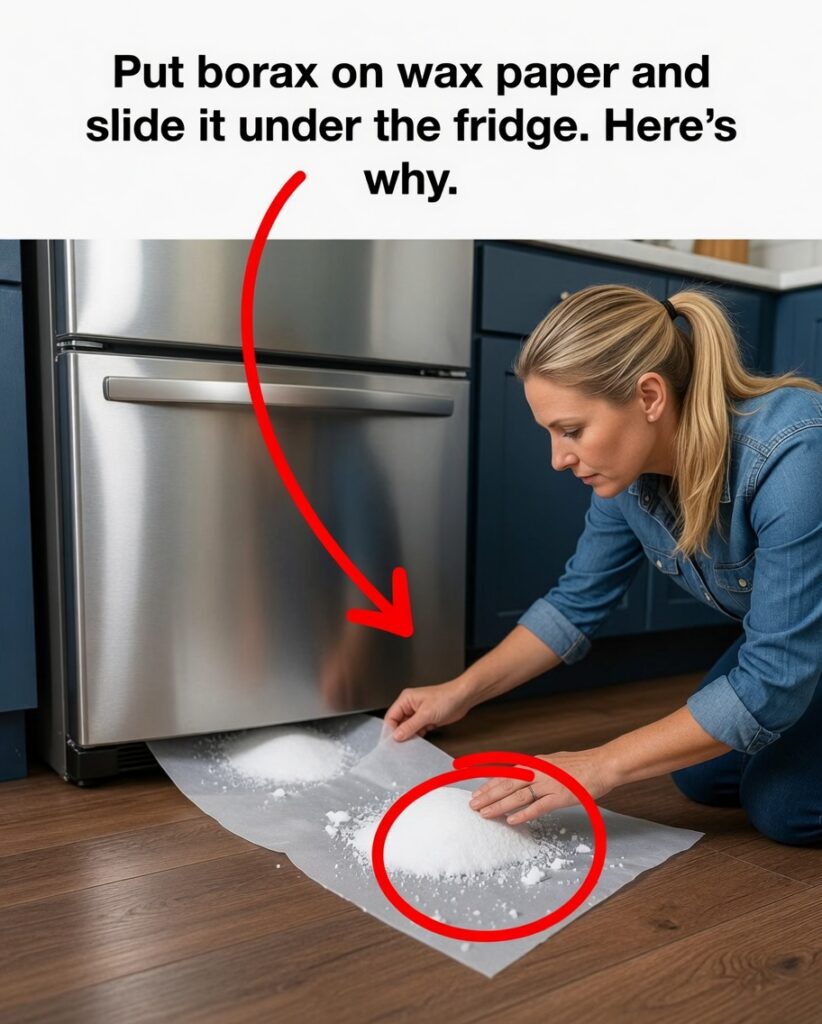
Household pests like ants and cockroaches can quickly turn a clean home into a frustrating battleground. If you’ve dealt with an infestation before, you already know how persistent these insects can be. One surprisingly effective, low-effort approach is an old-school method: borax spread on wax paper and placed under your refrigerator. This targeted setup helps reduce pest activity in a common hiding and feeding zone—without relying on strong chemical sprays.
Why Borax Works for Ants and Roaches
Borax (sodium borate) is a naturally occurring mineral found in many everyday products, including laundry boosters, cleaning supplies, and insect control formulas. It’s popular for home pest management because it can be effective while still being easy to use and budget-friendly.
How Borax Affects Insects
Borax controls pests in two key ways:
- Stomach poison effect: When ants or roaches ingest borax, it disrupts their digestive system and eventually kills them.
- Dehydration effect: Borax can also damage an insect’s outer protective layer, contributing to dehydration.
For ants, borax can be especially useful because worker ants may carry traces back to the nest, which can help reduce the colony—not just the insects you happen to see.
Why Wax Paper Is the Best Surface
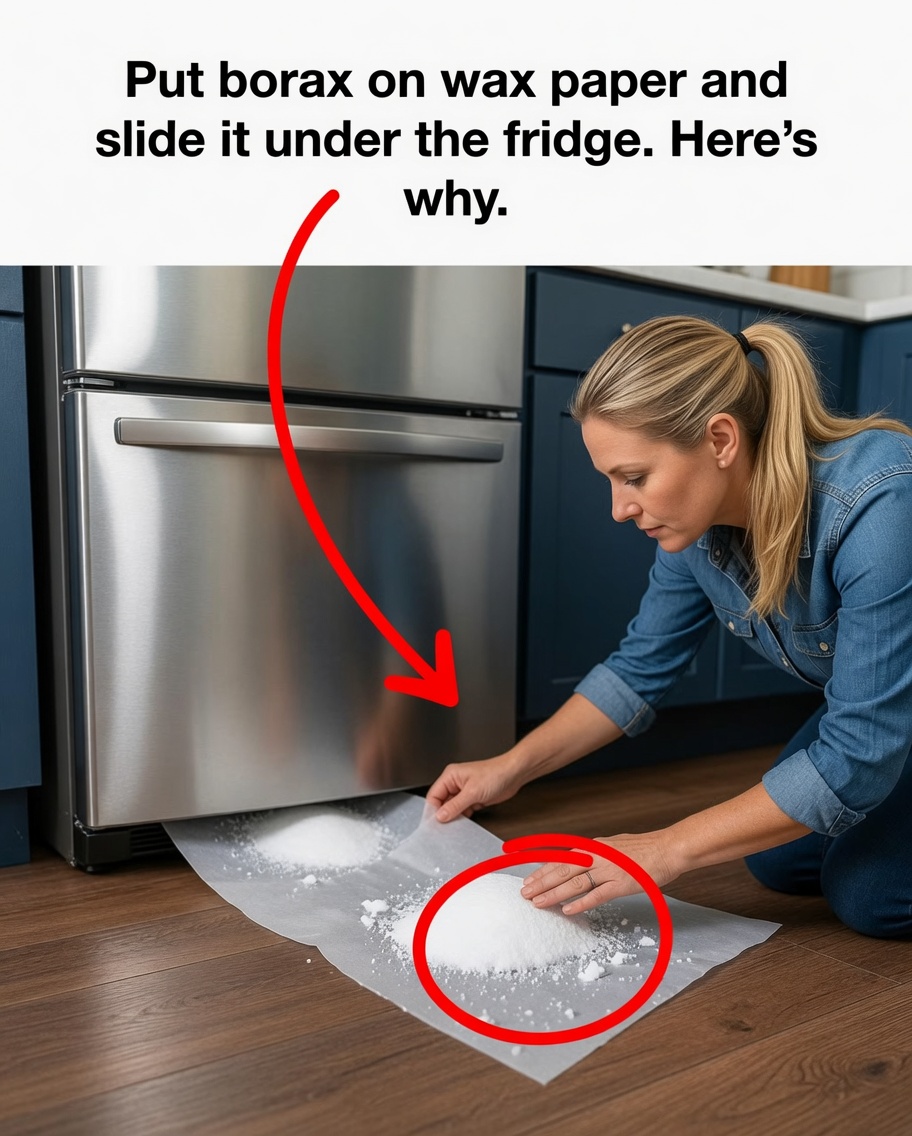
Using wax paper makes the borax easier to place neatly and safely. It helps you create a controlled “station” of powder without scattering it across your floor.
Wax paper also offers practical advantages:
- Makes it easier to spread a thin, even layer
- Helps prevent borax from sticking to surfaces
- Reduces the chance of direct contact in areas where kids or pets could potentially reach
Why Put It Under the Refrigerator?
The space under a fridge is one of the most common pest hotspots in a home. It often provides:
- Warmth from appliance heat
- Occasional moisture
- Hidden crumbs, grease, and spills that attract insects
Because ants and roaches frequently travel through this area, placing borax there increases the chance they’ll contact or consume it.
Step-by-Step: How to Use Borax on Wax Paper Under Your Fridge
-
Collect your supplies
- Borax powder
- Wax paper
- Scissors
- A spoon (or a small piece of cardboard for spreading)
-
Cut the wax paper
- Cut a sheet sized to fit under your fridge.
- A 12 x 12 inch (30 x 30 cm) square works well in many kitchens.
-
Apply the borax
- Sprinkle a light, even coating across the wax paper.
- Typically, 1–2 tablespoons is enough.
-
Slide it into place
- Carefully push the wax paper under the fridge, positioning it where pests are likely to travel.
- Keep the powder flat and contained on the paper.
-
Check and replace
- Inspect every few weeks.
- Replace if the borax becomes wet, dirty, or clumped.
Benefits of This Borax Method
This approach is popular because it offers multiple practical advantages:
- Lower-toxicity option when used correctly: Borax is far more dangerous to insects than to humans, and wax paper helps limit accidental contact.
- Affordable pest control: Borax costs less than many store-bought insecticides or professional services.
- More eco-conscious than many sprays: As a naturally occurring mineral, borax doesn’t carry the same profile as many synthetic pesticides.
- Long-lasting placement: Once set up, it can keep working for weeks or even months with minimal effort.
Safety Tips for Using Borax at Home
Even though borax is commonly used in households, it still needs careful handling:
- Keep it out of reach of children and pets, especially if they can access under-appliance spaces.
- Avoid breathing in dust and don’t touch your face while using it.
- Consider gloves when applying borax, especially if you have sensitive skin.
- Store borax securely in a sealed container, away from food and drinks, in a cool dry location.
A Targeted, Low-Effort Way to Reduce Pests
Placing borax on wax paper under your refrigerator is a straightforward, cost-effective way to help manage ants and roaches where they tend to gather. By focusing on a high-traffic pest zone and following basic safety precautions, you can support a cleaner, more pest-resistant home—without depending on harsh chemical treatments.