Peanut Butter and Health: Could It Also Help Detect Early Alzheimer’s?
Nuts and nut butters offer a wide range of nutritional benefits. Among them, peanut butter stands out as one of the most widely consumed foods in the United States. It provides protein, healthy fats, and nutrients that can support overall wellness.
As part of a balanced diet, peanut butter may help lower the risk of several long-term health problems, including heart disease, stroke, and diabetes. But researchers have explored another surprising possibility: peanut butter may have value beyond nutrition.
A team at the University of Florida (UF) investigated whether a simple spoonful of peanut butter could help identify early-stage Alzheimer’s disease. Their idea led to a low-cost, non-invasive smell test designed to detect some of the earliest changes linked to cognitive decline.
Could an everyday food really help reveal the first warning signs of Alzheimer’s? Let’s examine the science behind the peanut butter smell test and what it may tell us about dementia and brain health.
What Is Alzheimer’s Disease?
Alzheimer’s disease is a progressive neurodegenerative disorder that damages the brain and gradually impairs mental function. It is the sixth leading cause of death in the United States (1).
While occasional forgetfulness can happen with aging, Alzheimer’s goes far beyond normal memory lapses. The disease causes damage to brain cells, leading to a decline in:
- Memory
- Thinking ability
- Judgment
- Communication
- Daily functioning
Over time, this loss of cognitive ability can progress to dementia.
Alzheimer’s is most often diagnosed in adults aged 65 and older, which is also the age group most commonly affected by memory disorders. In rare cases, early-onset Alzheimer’s can appear between the ages of 30 and 65.
It is one of the leading causes of dementia in older adults, with Parkinson’s disease often cited as another major neurodegenerative condition linked to cognitive decline (1).
For many people, Alzheimer’s significantly reduces quality of life. As the disease advances, patients may need support from family members, caregivers, or memory care facilities.
At present, Alzheimer’s has no cure. Although some medications may help slow progression for a time, the disease is ultimately fatal. Certain studies have also explored the use of antidepressants in Alzheimer’s patients, but results remain mixed. Anyone experiencing mild cognitive changes should speak with a healthcare provider about their risk.
How Is Alzheimer’s Diagnosed?
Diagnosing Alzheimer’s disease can be challenging. There is no single physical exam, blood test, or brain scan that can confirm it on its own. Symptoms often overlap with other forms of dementia and memory disorders, so a careful medical evaluation is essential.
In many cases, patients are referred to a specialist such as:
- A neurologist, who focuses on disorders of the brain and nervous system
- A geriatrician, who specializes in the care of older adults
The diagnostic process usually begins with a review of medical history and an effort to rule out other possible causes of memory loss.
Doctors may then use several tools, including:
- Laboratory testing
- CT scans
- MRI scans
- PET scans (2)
Some of the hallmark features of Alzheimer’s can only be fully confirmed by examining brain tissue after death. These include amyloid plaques and tau tangles.
Amyloid Plaques
Amyloid plaques form when naturally occurring amyloid proteins clump together between neurons. These buildups interfere with normal communication between brain cells (3).
Tau Tangles
Tau tangles occur when tau proteins collect inside neurons and become twisted together. These tangled fibers disrupt the neuron’s ability to send signals properly (3).
Key Biomarkers Used in Alzheimer’s Testing
In living patients, certain biomarkers are considered the gold standard for helping diagnose Alzheimer’s. These include:
- Amyloid plaques
- Tau protein
- Phosphorylated tau in cerebrospinal fluid (CSF) (4)
To collect CSF, doctors must perform a spinal tap. Although effective, this procedure is invasive and can be uncomfortable.
Another option is the beta-amyloid PET scan, which can identify amyloid buildup in both plaques and the blood vessels that supply the brain (4). This approach is less invasive than spinal fluid testing, but it can be expensive.
A newer and more accessible method is the plasma pTau181 test, a blood-based biomarker test for Alzheimer’s disease (5).
Why Plasma pTau181 Matters
The plasma pTau181 blood test has drawn attention because it may help distinguish Alzheimer’s disease from other dementias, including:
- Tauopathies
- Frontotemporal lobar degeneration (5)
People with Alzheimer’s often have elevated plasma pTau181 levels. This marker can be measured through a simple blood draw and may even prove more accurate than spinal fluid tests and PET scans in some cases.
Researchers also believe this biomarker may detect changes earlier than an amyloid PET scan, because pTau181 levels can rise before tangles become visible (5).
This makes blood-based testing:
- Less invasive
- Less painful
- More affordable
- Easier to repeat over time
Even so, research is still ongoing.
Common Symptoms of Dementia and Alzheimer’s
Alzheimer’s disease usually begins with subtle symptoms, especially in older adults. Although the exact pattern varies from person to person, memory loss is often one of the earliest signs.
Other symptoms may include:
- Difficulty finding words
- Confusion
- Behavior changes
- Poor judgment
- Problems with vision or spatial awareness
- Language difficulties (1)
One especially early clinical sign of Alzheimer’s may be olfactory nerve dysfunction, or impaired sense of smell (6). Because of this, researchers have explored whether smell loss could help indicate the severity or progression of the disease.
That idea led scientists at the University of Florida Department of Neuroscience to conduct a small pilot study using a very familiar scent: peanut butter.
The Peanut Butter Smell Test
The test was developed by Jennifer Stamps, a graduate student at the UF McKnight Brain Institute Center, together with Kenneth Heilman, a distinguished professor of neurology.
The idea emerged when Stamps observed Heilman’s clinic and noticed that patients were not routinely being tested for their sense of smell, even though smell can be affected early in cognitive decline.
The research was carried out in the lab of Linda Bartoshuk, a University of Florida professor in the Department of Community Dentistry and Behavioral Science who specializes in taste and smell.
Researchers found that the peanut butter smell test was able to detect differences in smell sensitivity among people with probable Alzheimer’s disease. The study included:
- 19 patients with likely early-stage Alzheimer’s
- 24 patients with mild cognitive impairment
- 26 patients with other forms of dementia (7)
What Is the Peanut Butter Smell Test?
To perform the test, each patient was asked to:
- Close their eyes
- Close their mouth
- Block one nostril
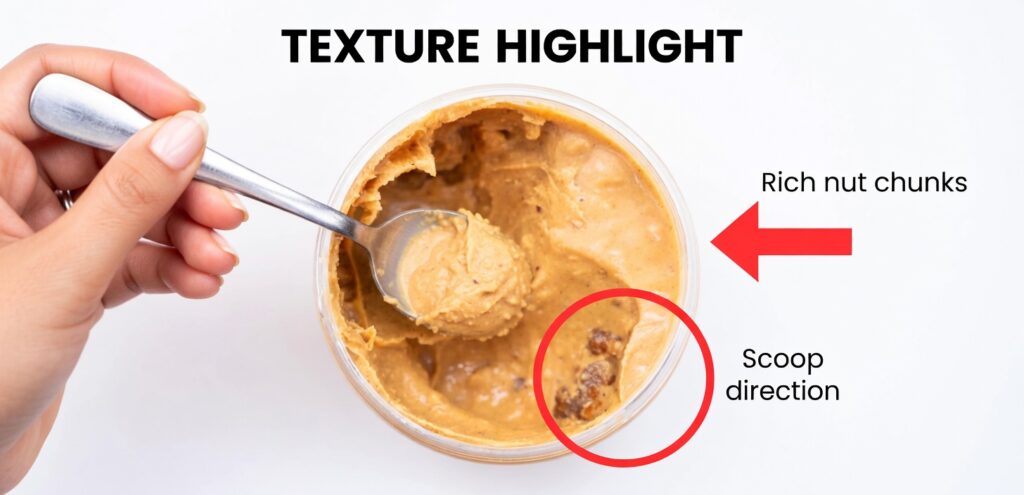
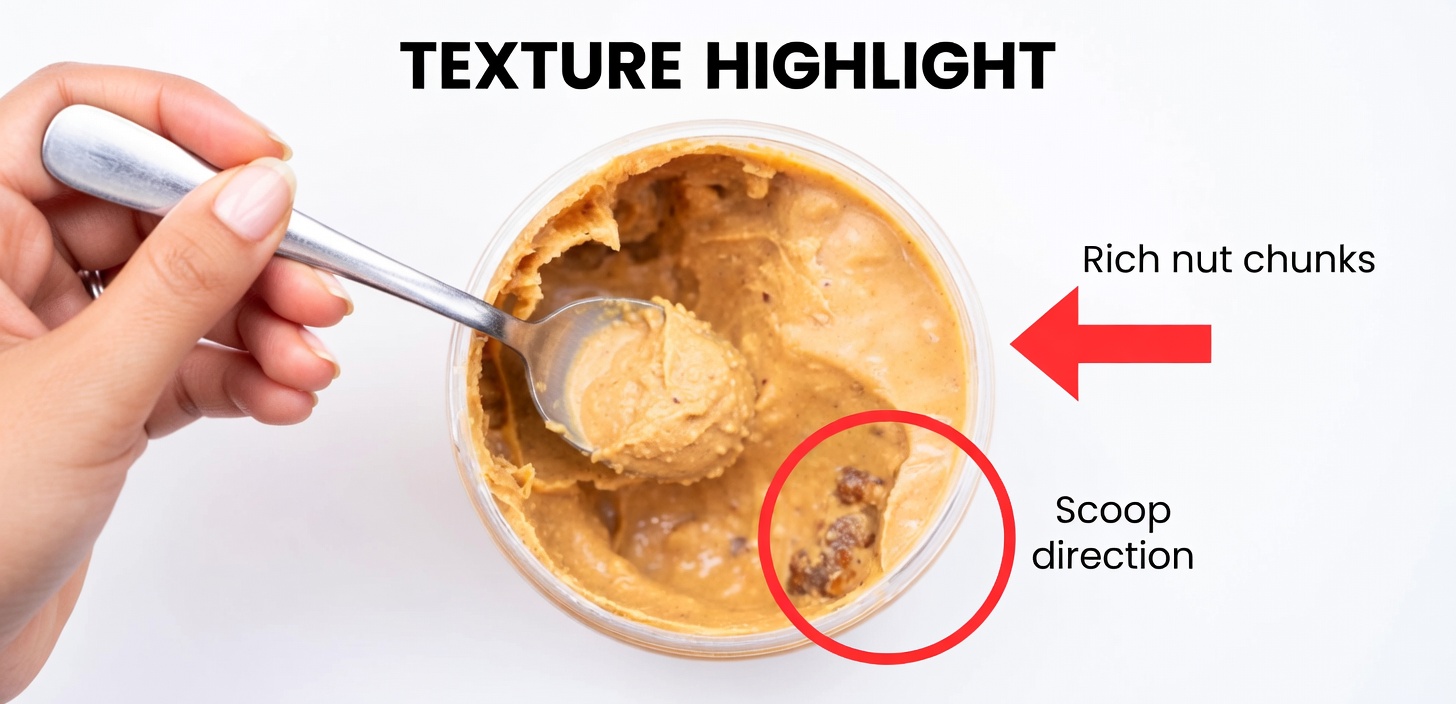
Researchers used 14 grams of peanut butter, or about one tablespoon, as a pure odor source. Peanut butter was chosen because its scent is easily recognized by the olfactory nerve, also called the first cranial nerve (CN1). That made it useful for checking how well the smell system was working.
An open container of peanut butter was slowly moved toward the patient from a short distance away until the person could detect the smell. A metric ruler was used to measure the distance in centimeters.
After recording the result, the same procedure was repeated with the other nostril following a 90-second delay.
What the Study Found
Patients with probable Alzheimer’s disease showed a striking difference between the left and right nostrils when detecting the peanut butter odor. In particular, the left nostril often required the peanut butter to be much closer before the scent could be recognized.
This asymmetry was not seen in the same way among patients with mild cognitive impairment or other types of dementia.
The findings suggested that smell loss in the left nostril might be associated with early Alzheimer’s disease, making the peanut butter smell test an interesting and inexpensive screening concept.
Can Peanut Butter Diagnose Alzheimer’s?
The peanut butter smell test attracted attention because it was:
- Simple
- Low-cost
- Non-invasive
- Easy to perform
However, it is important to understand its limitations. This was a small pilot study, and peanut butter cannot diagnose Alzheimer’s on its own. A smell test may point to a possible problem, but it cannot replace proper medical testing, specialist evaluation, or biomarker-based diagnosis.
Still, the research highlights an important point: changes in smell may appear early in Alzheimer’s disease. That makes olfactory testing a promising area for future study, especially in combination with blood biomarkers and brain imaging.
Final Thoughts
Peanut butter is already known for its nutritional benefits, but research has also explored its potential use in the early detection of Alzheimer’s disease. The University of Florida’s peanut butter smell test offered an intriguing glimpse into how a common food could help identify early cognitive decline through changes in smell perception.
Although the test is not a stand-alone diagnostic tool, it supports a growing body of evidence showing that olfactory dysfunction may be an early sign of Alzheimer’s. As scientists continue to improve blood tests, imaging tools, and other screening methods, simple smell-based approaches may still play a role in the future of early Alzheimer’s detection.