Can’t Touch Your Toes? Here’s How to Improve Your Flexibility
Being able to touch your toes is a simple test of flexibility. It reflects how mobile and flexible your body is from the lower back down to the calves.
If you rarely stretch, you may find this movement much harder than expected. Tight hamstrings, stiff calves, restricted hips, and a tense lower back can all make a toe touch difficult.
For many people, the problem is not a lack of effort but a lack of regular stretching. The good news is that a few targeted stretches can help release tightness in the lower body, especially in the hips and hamstrings that often become stiff after long hours of sitting.
Even a few minutes of daily stretching can start to undo the tension that keeps you from reaching your toes.
Stretching does more than improve flexibility. It can also:
- Increase range of motion
- Support healthy blood circulation
- Reduce stiffness from prolonged sitting
- Help lower the risk of injury
- Ease back discomfort, especially in older adults
For adults over 60, improved flexibility can be especially valuable, as it may help with balance, mobility, and reducing back pain.
Research also supports the benefits. A 2019 review found that better flexibility is linked to improved athletic performance and balance. The most important factor is consistency. If you keep up the habit for several weeks, you are likely to notice meaningful progress.
Related Stretching and Mobility Articles
You may also be interested in:
- 10 Piriformis Stretches To Get Rid Of Sciatica, Hip, And Lower Back Pain
- 5 Easy Exercises to Improve Your Posture
- 7 Exercises You Should Never Do If You Have Lower Back Pain
- 5 Best Stretching Exercises for Seniors To Stay Limber at Any Age
3 Best Stretches to Help You Touch Your Toes
These three simple stretches target the muscles most responsible for a successful toe touch: the back, hips, hamstrings, and calves.
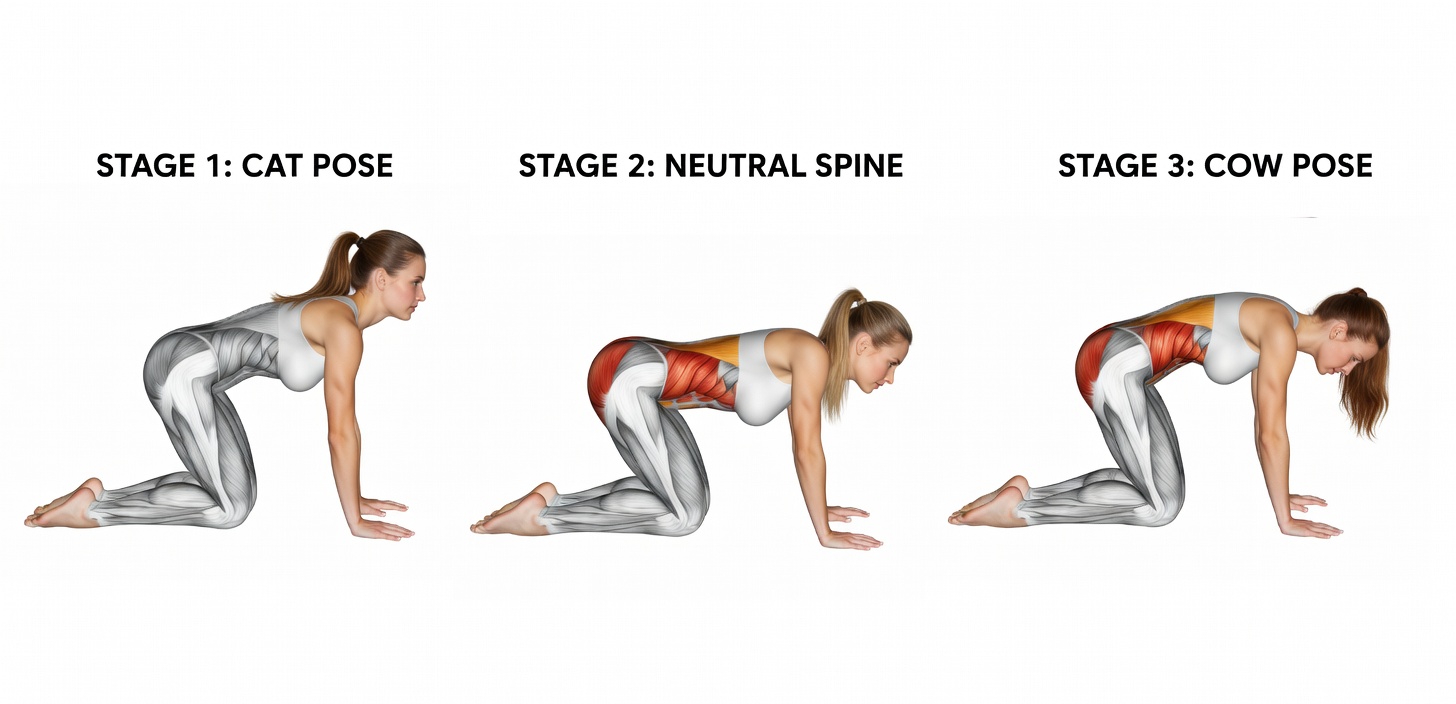
1. Cat-Cow Stretch
The Cat-Cow stretch is a classic yoga movement that helps loosen the spine, lower back, glutes, and even the upper back. As you alternate between rounding and arching your back, you improve mobility through the entire spine.
This stretch is especially helpful for people who sit for long periods, since it can release built-up tension and improve back flexibility.
If your back feels stiff when you bend forward, this is a great place to begin.
How to do the Cat-Cow Stretch
- Start on all fours with your hands under your shoulders and your knees under your hips.
- Keep your arms straight and your spine in a neutral position.
- Cat: Exhale as you round your spine toward the ceiling, keeping your shoulders relaxed.
- Cow: Inhale as you lift your tailbone, arch your back, and gently lower your belly toward the floor while keeping your core engaged.
- Move slowly between both positions.
Repeat the sequence 5 times, then return to a neutral spine.
2. Downward Dog Stretch
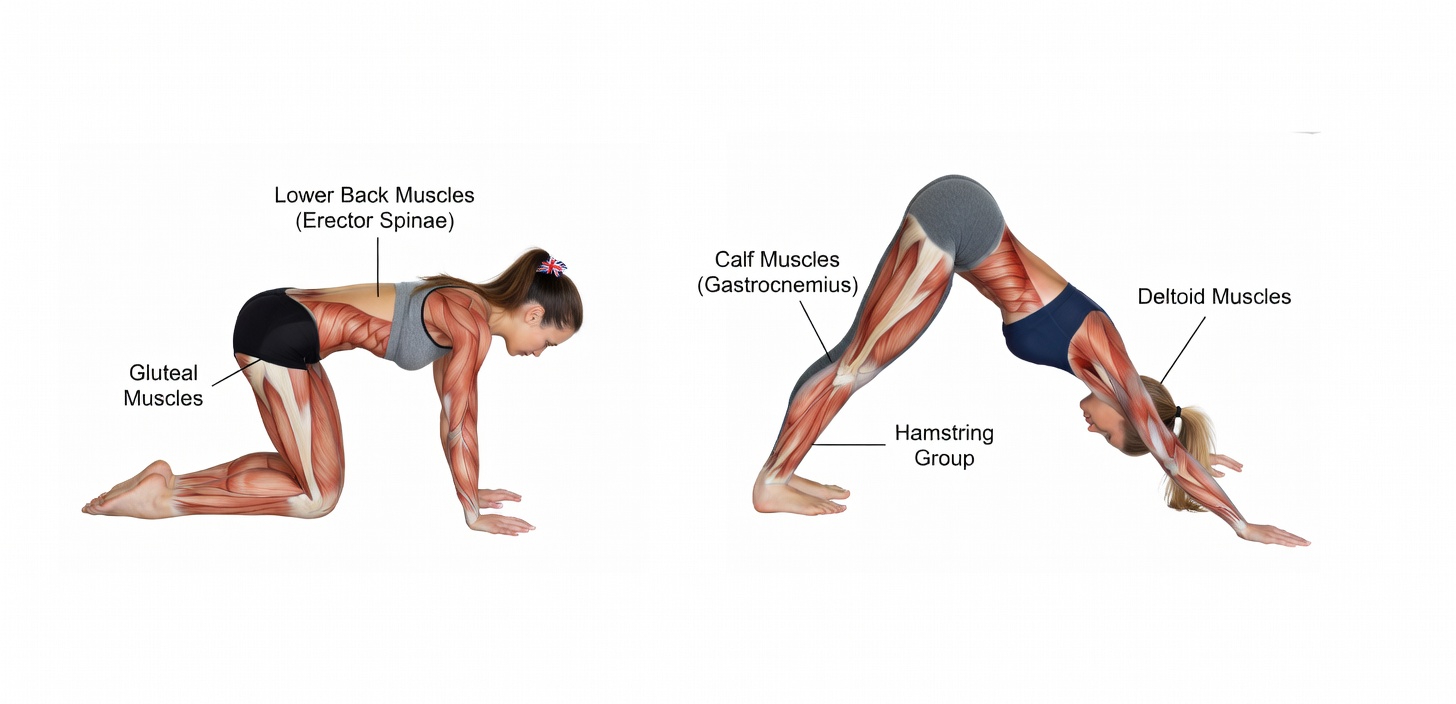
Once your back feels more open, the next step is to stretch the lower body. Downward Dog is one of the most effective yoga poses for lengthening the calves, hamstrings, hips, and spine all at once.
This pose helps prepare your body for a forward bend by creating length through the back of the legs and improving overall body alignment.
If bending forward feels uncomfortable, Downward Dog is an excellent alternative to start building flexibility safely.
How to do the Downward Dog Stretch
- Begin on all fours with your hands and knees on the floor.
- Keep your arms extended.
- Exhale, tuck your toes under, and lift your hips toward the ceiling.
- Slowly straighten your legs as much as comfortable, forming an upside-down V shape.
- Press your weight back toward your heels while keeping your spine long.
- Straighten your arms and legs as much as your flexibility allows without forcing the position.
Hold the pose for at least 30 seconds, then gently bend your knees and rest.
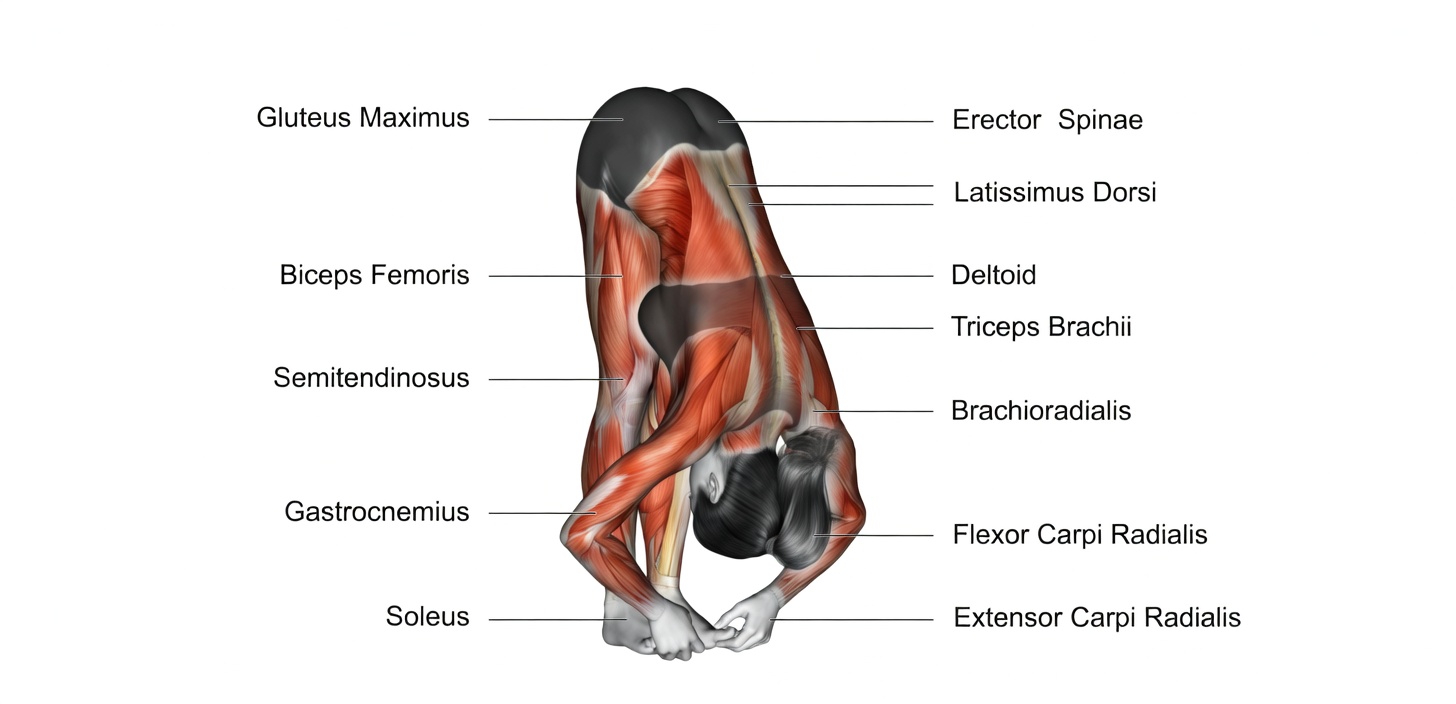
3. Standing Forward Bend Stretch
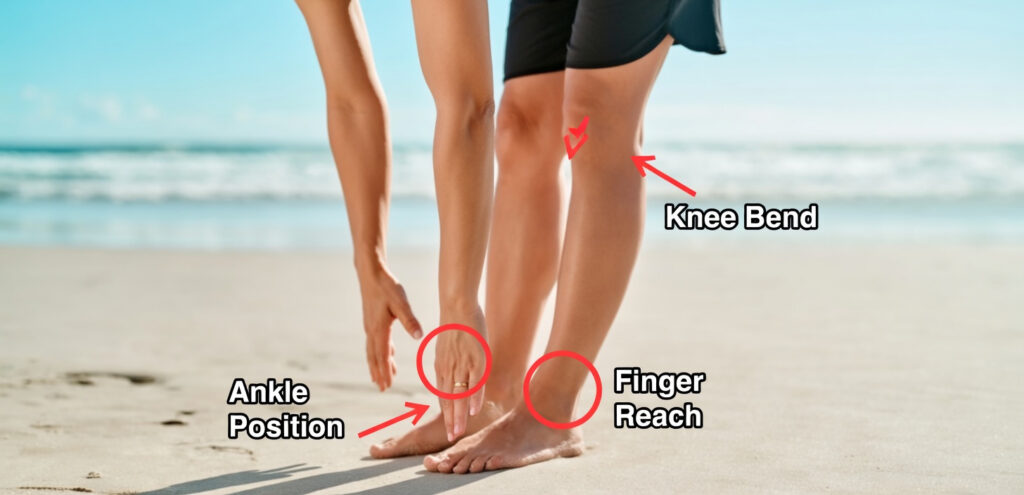
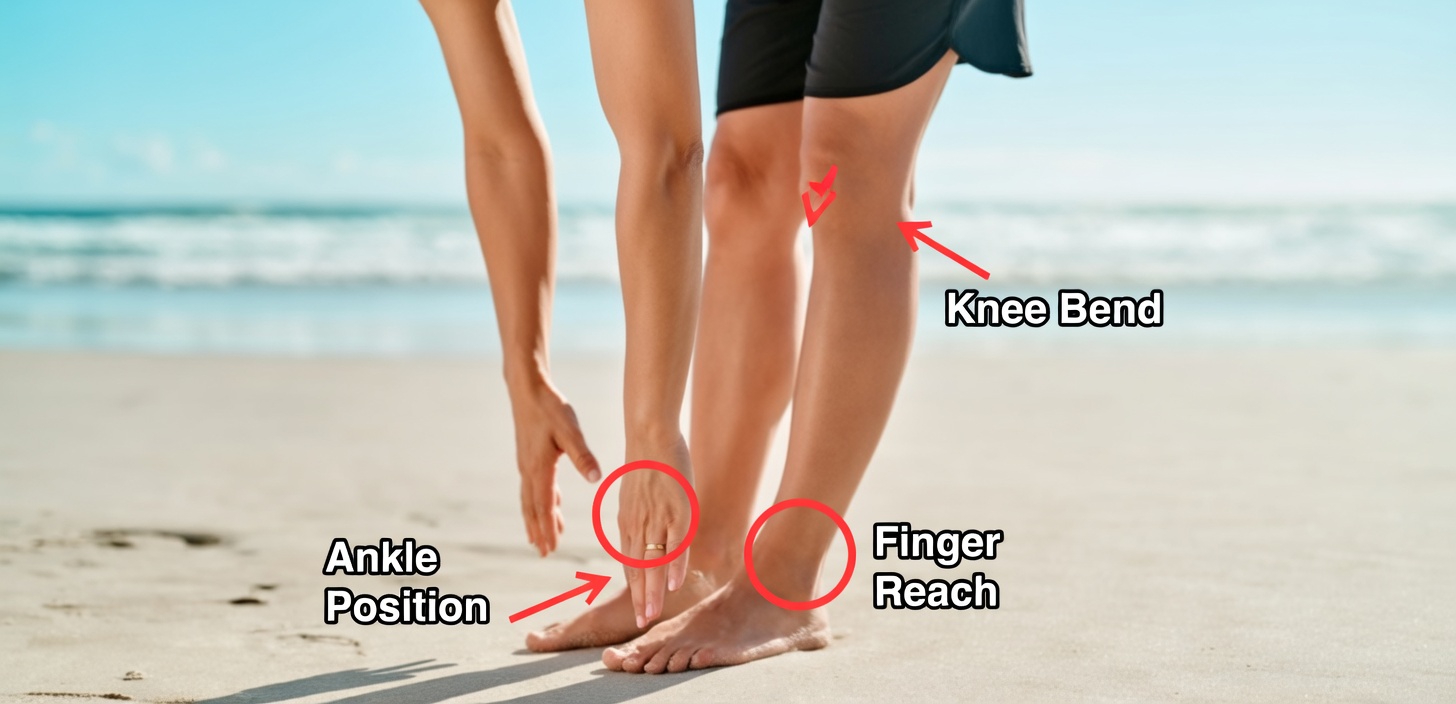
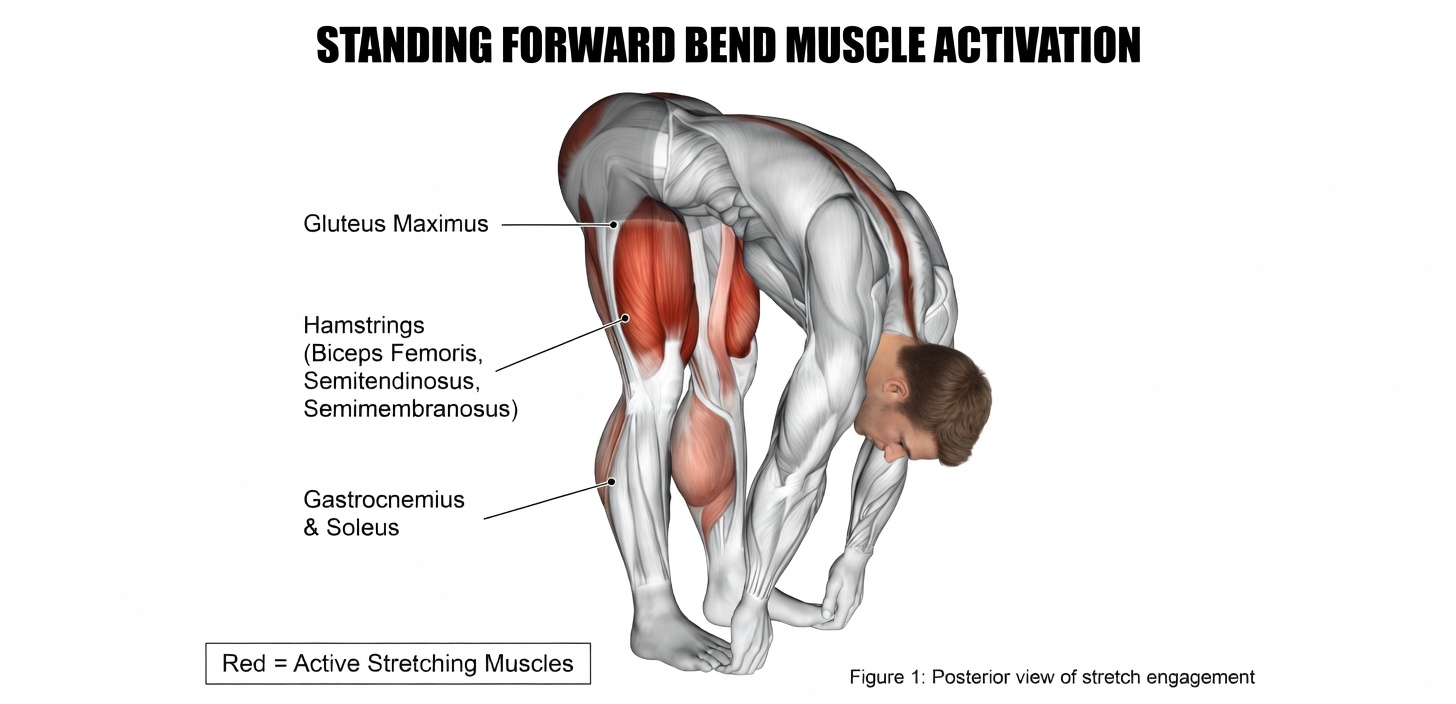
The standing forward bend closely matches the motion required to touch your toes, making it one of the best stretches for building this ability.
Although it looks simple, this movement is often done incorrectly. It is not just about reaching your fingers toward your feet. The real goal is to stretch the entire backside of the body, including the soles of the feet, calves, hamstrings, and lower back.
With regular practice, this stretch can gradually bring you closer to a full toe touch.
How to do the Standing Forward Bend
- Stand tall with your feet hip-width apart.
- Keep your heels grounded and the backs of your knees straight.
- Exhale and hinge forward from your hips.
- Let your arms hang naturally toward the floor.
- If your hamstrings are very tight and you cannot maintain length through your back, use a chair or another support.
Hold for 30 seconds and repeat 3 times.
How to Get Better Results From Your Stretching Routine
To improve flexibility faster and more safely, follow these key tips:
- Warm up first: Spend 3 to 5 minutes getting your body warm before stretching. This helps increase circulation and prepares your muscles for movement.
- Focus on the right muscles: Pay attention to the area you are stretching instead of rushing through the pose.
- Use your breath: Inhale and exhale slowly as you move into each stretch. Breathing helps your body relax and deepen the stretch naturally.
- Stay consistent: Regular practice matters more than intensity. Even 5 minutes a day can make a difference over time.
Stretch Safely
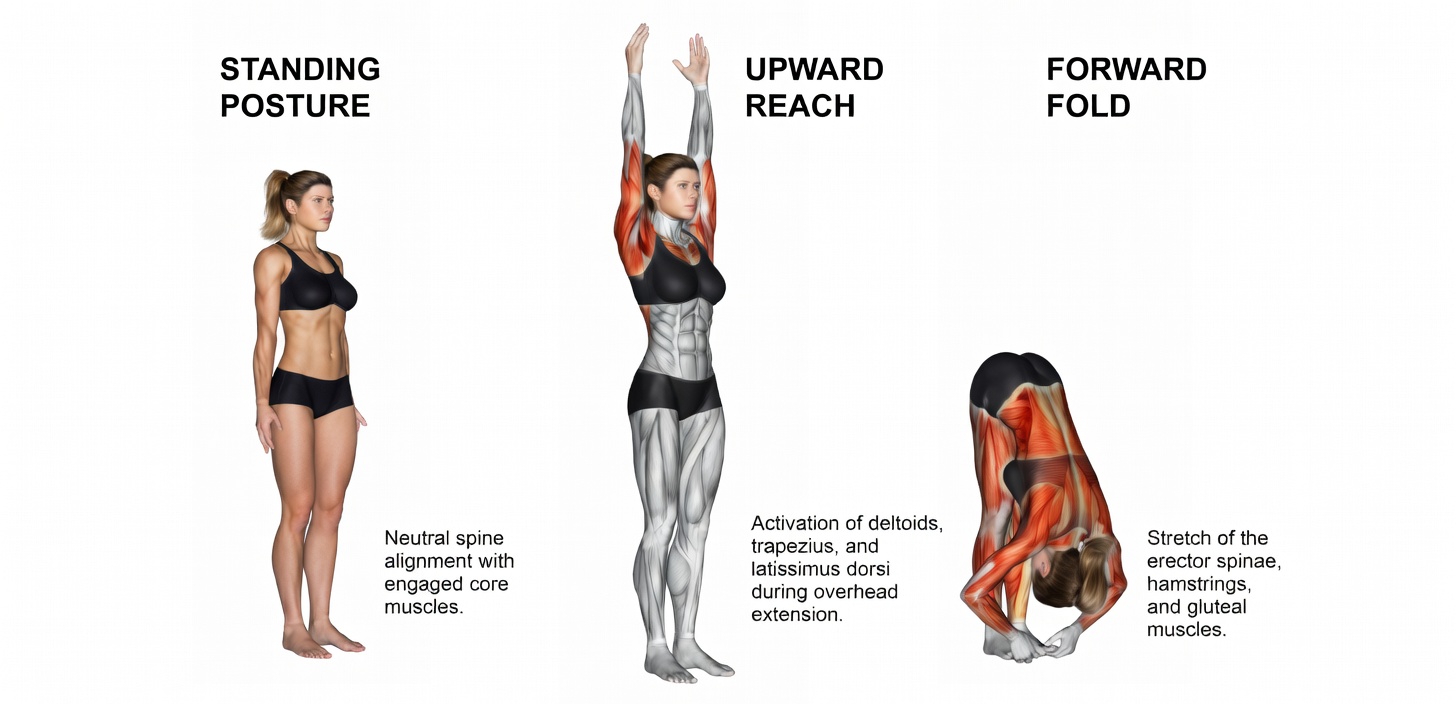
Stretching should never feel like you are forcing or pulling your muscles aggressively. Respecting your limits is essential for safe and effective flexibility training.
Keep these safety guidelines in mind:
- Avoid severe pain: Mild discomfort can happen when muscles are tight, but sharp or intense pain is a sign to stop immediately. If pain continues, speak with a qualified professional.
- Use proper form: Good technique makes stretching effective and helps prevent strains or injury. If you are unsure about a movement, review the steps carefully before trying it.
- Listen to your body: Progress takes time. Flexibility improves best when you move gently and patiently.
The Bottom Line
Practicing these stretches regularly can improve your flexibility, increase your range of motion, and help you finally touch your toes.
Be patient with the process. Do not rush through each movement. Breathe deeply, move with control, and allow your body to adapt gradually.
For best results, aim to stretch for 10 to 15 minutes, 3 to 4 times per week, over the course of 4 to 6 weeks.
More Articles You May Like
- 10 Best Stretching Exercises To Make You as Flexible as a Cat in 4 Weeks
- Never Violate These 6 Squat Rules: Common Squat Mistakes to Avoid