Stay Independent as You Age With This Simple Mobility Workout
Staying mobile is a big part of keeping your independence as you get older. While aging can bring welcome changes like greater wisdom and more free time, it can also come with challenges such as reduced mobility and lower strength.
If you want to remain active, handle everyday tasks more easily, and continue doing the things you enjoy, it becomes even more important to stay strong, functional, and full of vitality.
Why Mobility and Strength Matter More With Age
As the years go by, natural changes in strength and movement can make daily life harder. Simple actions like sitting down, standing up, walking, climbing stairs, or getting out of bed may not feel as effortless as they once did.
For anyone hoping to enjoy retirement by traveling, gardening, or keeping up with grandchildren, maintaining function is essential. Limited mobility can make those everyday moments more difficult and may affect your ability to stay independent.
Another concern is that reduced strength and mobility can raise the risk of falls and injuries. That is why staying active with the right type of exercise can make such a meaningful difference.
The Cause: Natural Declines in Function and Movement
Aging naturally affects the body’s movement, strength, and coordination. Over time, this can lead to a drop in muscle mass, balance, and mobility.
This is where functional strength training becomes especially valuable. Functional exercises mirror common movement patterns such as walking, lunging, sitting, pressing, and rotating. Because these exercises closely match real-life actions, they can directly support the way you move through your day.
Functional training also tends to work multiple muscle groups at once, making it an effective way to build strength while improving coordination and balance. Many of these movements are calisthenics, so they can be done with just body weight and progressed with free weights as you get stronger.
The Solution: A 4-Move Functional Strength Workout
This four-move workout includes the key movement patterns that become more important with age: squatting, lunging, pressing, and rotating. Together, they can help support mobility, coordination, strength, and muscle mass.
Best of all, you do not need a gym or special equipment. Just a little open space and your body weight are enough to get started.
1. Bodyweight Squat
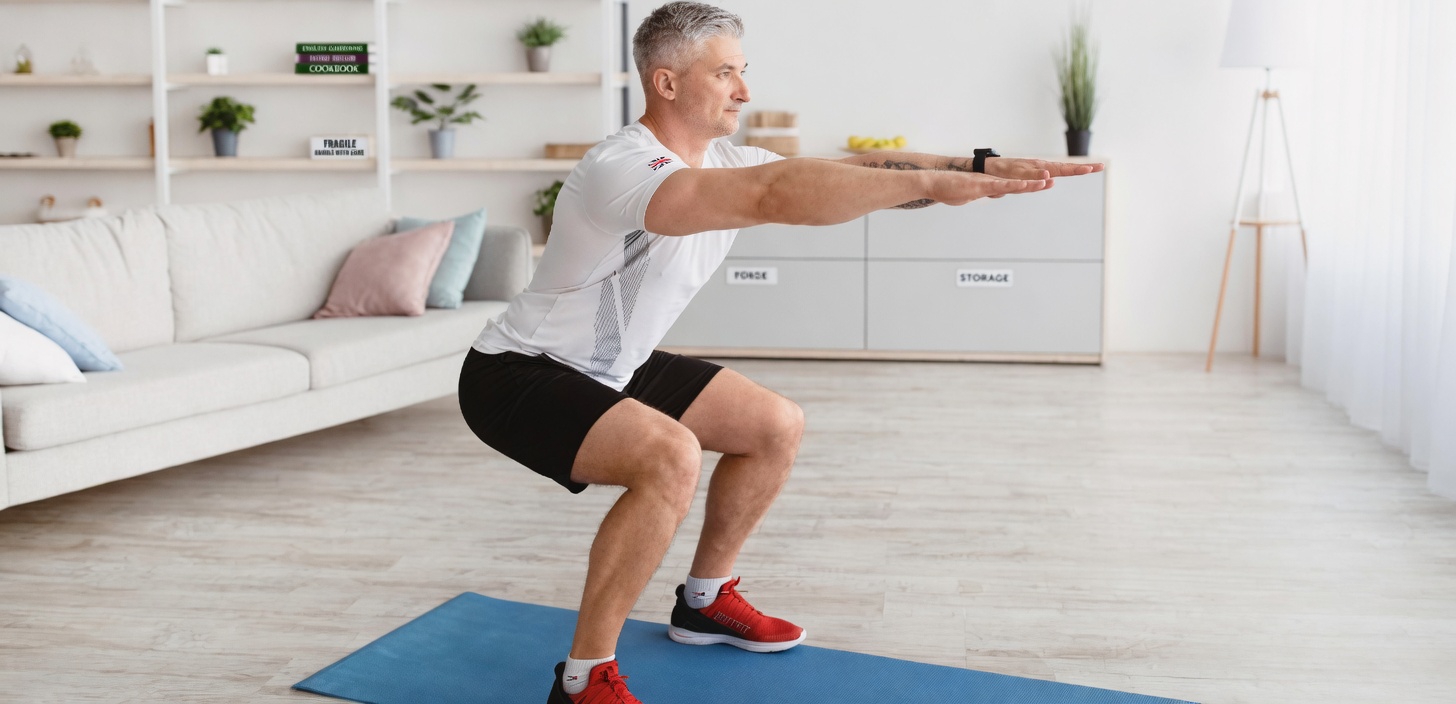
Squats help train the movements used in everyday life, including sitting down and getting out of bed. This exercise also supports balance, stability, and lower-body strength.
If you are new to the movement, begin with bodyweight only. Once your form improves and you feel stronger, you can add dumbbells.
How to Do It
- Stand tall with a flat back and place your feet slightly wider than shoulder-width apart.
- Turn your toes outward and keep your knees slightly bent.
- Keep your chest lifted.
- Place your hands on your hips or extend your arms straight in front of you with your palms facing down.
- Inhale, then push your hips back as you bend at the knees and hips.
- Keep your spine neutral and make sure your knees track in line with your feet.
- Lower until your thighs are parallel to the floor, or go lower if you have good hip mobility.
- If you have knee joint pain, ankle pain, or any other issue, control your range of motion and do not go past 90 degrees into a full squat.
- Pause, then return to standing.
- Complete 10 reps.
2. Forward Lunges
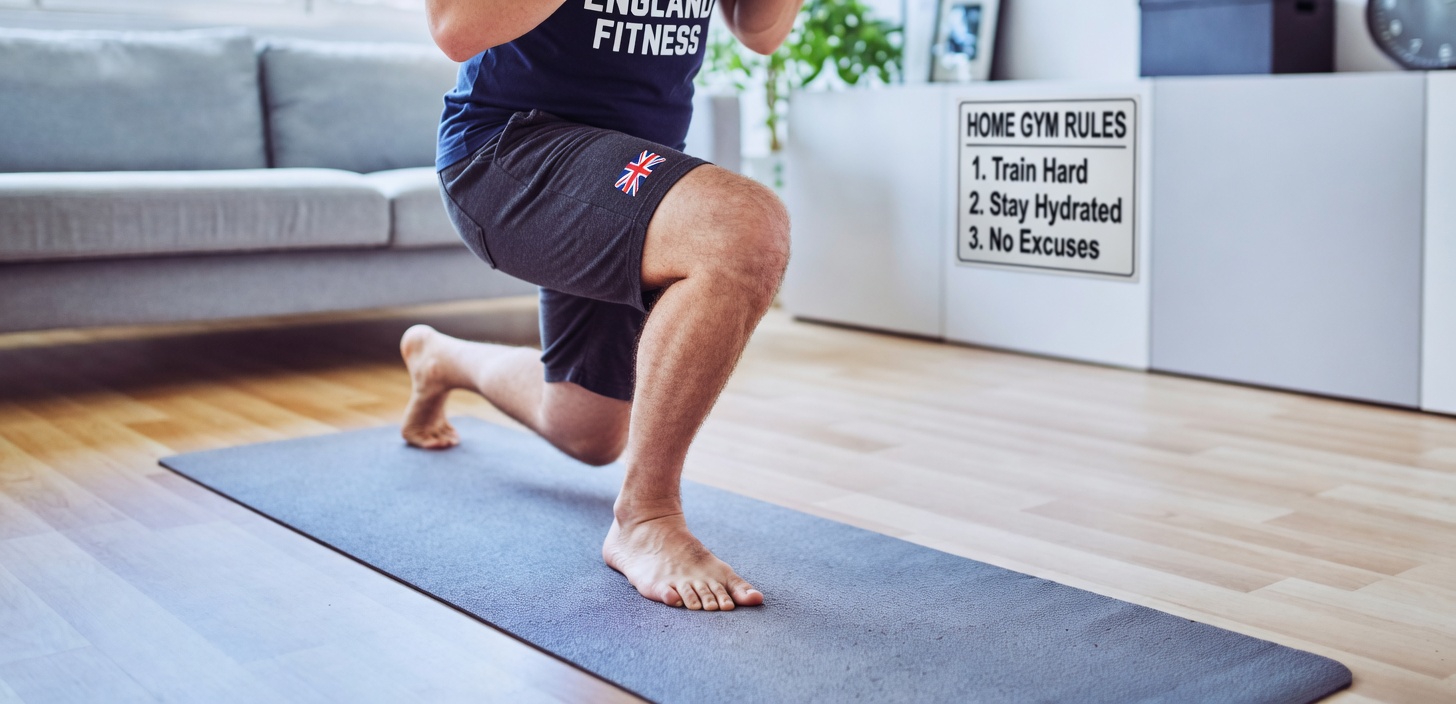
The lunge pattern shows up in everyday actions like walking and climbing stairs. This lower-body exercise strengthens the hamstrings, adductors, hip flexors, and glutes, while also engaging the core and abs.
How to Do It
- Stand upright with your feet hip-width apart.
- Brace your core and step forward with one foot, letting the heel touch down first.
- Keep your other foot planted on the floor.
- Lower your body until your front thigh is parallel to the floor.
- If your flexibility allows, lightly tap your back knee to the ground.
- Keep your head up as you lunge.
- Push through the heel of your front foot to return to standing.
- Perform 8 to 12 reps stepping forward with the right leg.
- Switch sides and repeat with the left leg.
- Complete 3 to 4 sets.
3. Dumbbell Alternating Press With Twist
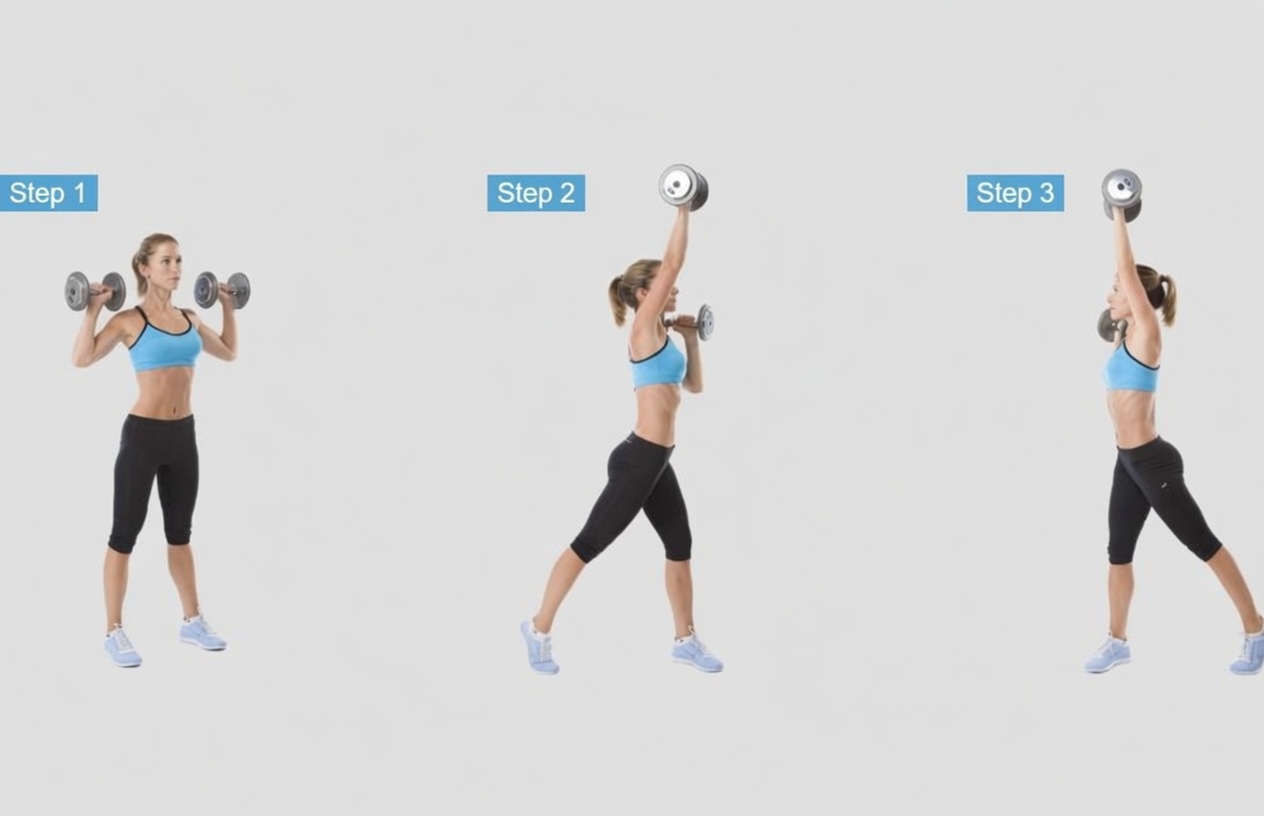
This upper-body movement works the shoulders and triceps while adding rotation through the torso. The pressing and twisting action also brings in the obliques and core, making it a more complete full-body exercise.
You can use dumbbells or even water bottles for this exercise.
How to Do It
- Stand tall with a flat back.
- Hold a pair of dumbbells or water bottles just outside your shoulders.
- Keep your elbows bent and your palms facing each other.
- Rotate your torso to the left while pressing the dumbbell in your right hand overhead.
- Return to the starting position.
- Switch sides and repeat.
- That counts as one rep.
- Complete 8 to 10 reps per side.
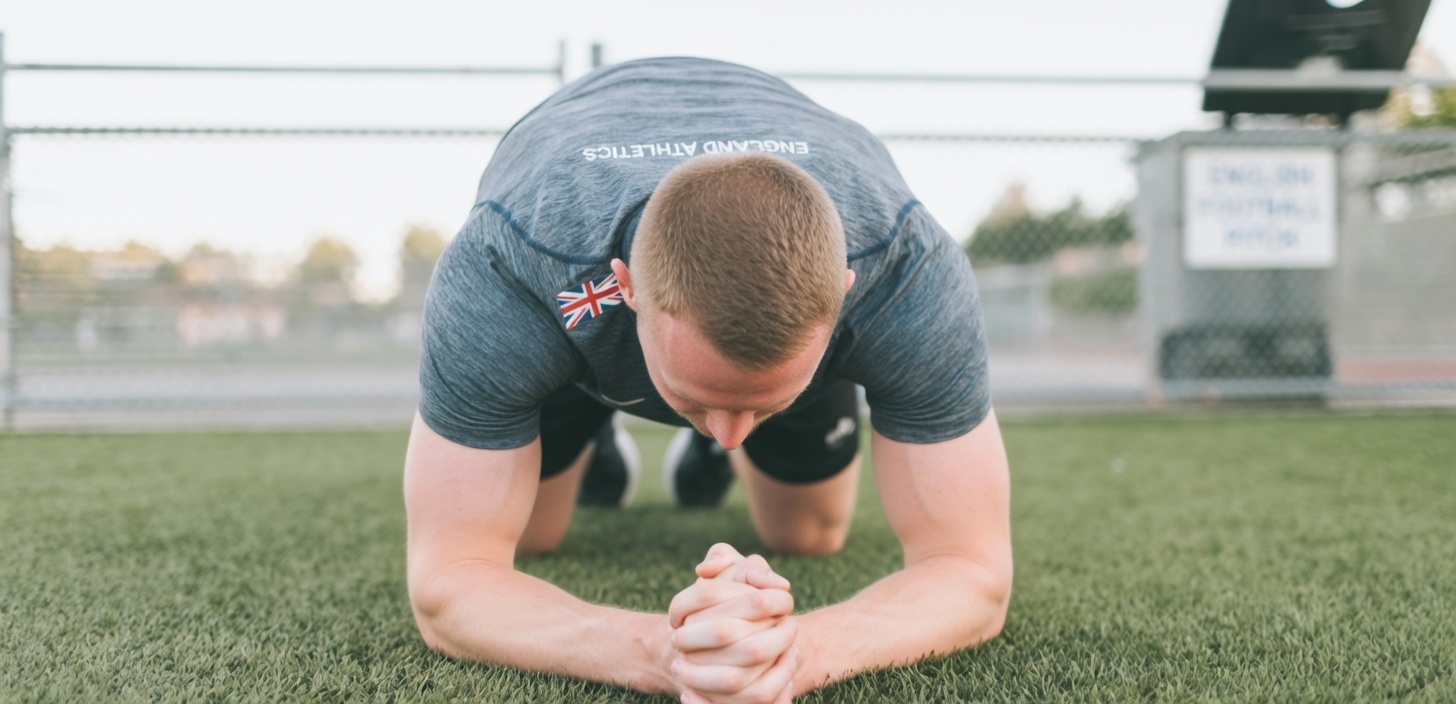
4. Plank
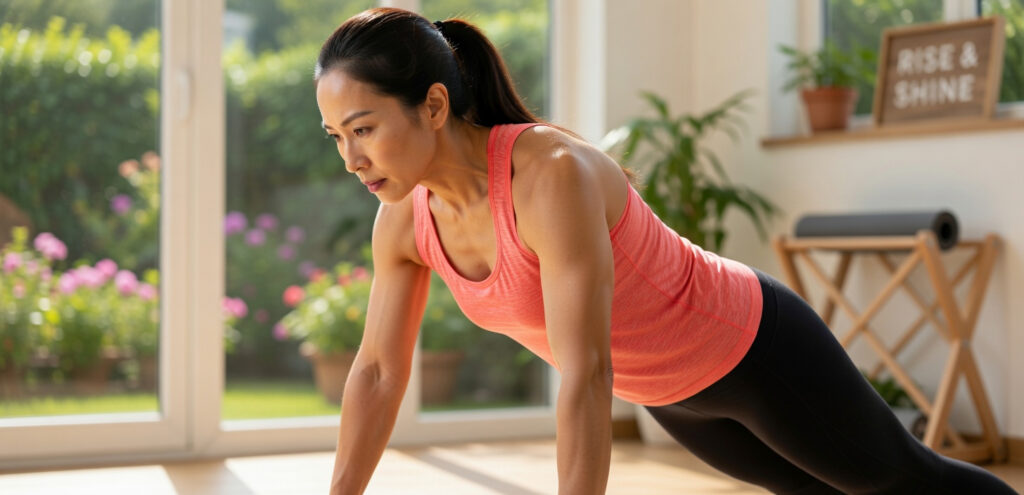
The plank is an isometric exercise, meaning you hold one position for a period of time. It is especially useful for building core and spine stability.
This move helps teach proper bracing and develops foundational strength. It also builds awareness of how the core supports the spine. Unlike exercises such as crunches that focus mostly on the front abdominal muscles, the plank involves more of the body.
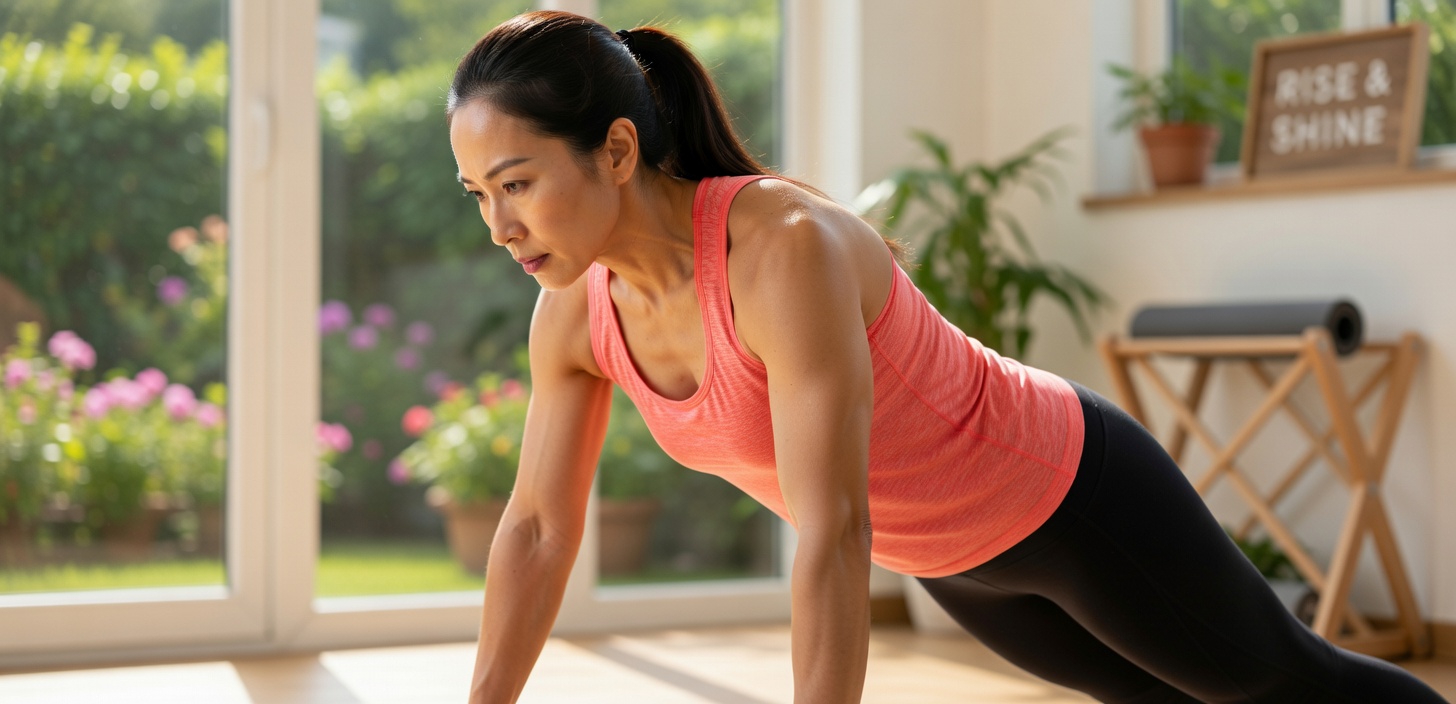
It engages the rectus abdominis, obliques, back extensors, quads, and lats. Your glutes also work to help maintain proper spinal stability. This makes the plank a strong functional exercise for older adults.
How to Do It
- Start on all fours with your elbows on the floor.
- Place your elbows directly below your shoulders and your knees under your hips.
- Face downward and keep your head relaxed.
- Tighten your abs and draw your navel toward your spine.
- Lift your knees off the floor.
- Adjust your body so it forms a straight line from head to heels.
- Avoid rounding your back or letting your hips drop.
- Hold the position for 30 to 60 seconds.
Build Strength for Everyday Life
Functional strength training can help you stay active, move with greater confidence, and handle daily tasks with less difficulty as you age. Because these exercises reflect real-life movement patterns, they are especially helpful for supporting independence and reducing the risk of falls and injuries.
With consistent practice, this simple routine can help you stay ready for the things you love most, whether that means traveling, gardening, or spending time with family.
Consult a healthcare professional before making changes.