5 Effective Stretches to Help Prevent Low Back Pain
Have you ever dealt with pain in your lower back? If not, you are among the fortunate few. Low back pain is one of the most widespread health complaints worldwide and a major cause of disability for millions of people.
The good news is that there are simple habits that can support spinal health and lower your risk of developing ongoing discomfort.
One of the most practical strategies is to follow a consistent flexibility routine. Regular stretching can help keep the lower back mobile, reduce stiffness, and improve overall movement.
Why Is Low Back Pain So Common?
There is no single, proven explanation for why lower back pain is so common across the world.
For many years, researchers have tried to identify the exact reason behind the increasing number of cases, but no clear answer has emerged.
That said, several well-known risk factors are linked to low back pain, including:
- Stress
- Physical inactivity
- Poor lifting mechanics
- High blood pressure
In addition to these, many other medical conditions and lifestyle habits may also increase the likelihood of back problems.
Treatment Options for Low Back Pain
In general, there are four main approaches used to treat lower back pain:
- Surgery
- Medication
- Physical therapy
- Lifestyle changes
In many cases, the best results come from combining more than one of these options rather than relying on just one treatment alone.
Among these approaches, surgery and medication are often viewed as carrying the greatest risk. In many situations, it makes sense to explore physical therapy and healthy lifestyle adjustments first before considering more invasive measures.
Lifestyle changes may include:
- Improving your diet
- Quitting smoking
- Starting a regular exercise plan
- Increasing daily movement
- Adding stretching to your routine
Stretching is especially helpful because it can be both a preventive habit and a core part of a physical therapy program.
5 Best Stretches for Lower Back Flexibility and Support
Before starting any stretching routine for low back pain, it is wise to speak with a doctor or physical therapist. Some forms of back pain are more serious and require professional assessment.
The safest way to know whether stretching will help your condition is to get evaluated by a qualified healthcare provider.
A few important guidelines:
- Stretch only to the point of moderate discomfort, not pain
- If a movement hurts, ease off slightly
- If the pain continues, stop and contact your doctor or physical therapist
- Perform this stretching routine 5 to 7 times per week
- Hold each stretch for 30 to 60 seconds per side, when applicable
- Repeat each movement 4 to 6 times per session
You may also be interested in:
- 6 Best Lower Back Pain Exercises to Reduce Pain
- 5 Best Core Exercises for Beginners
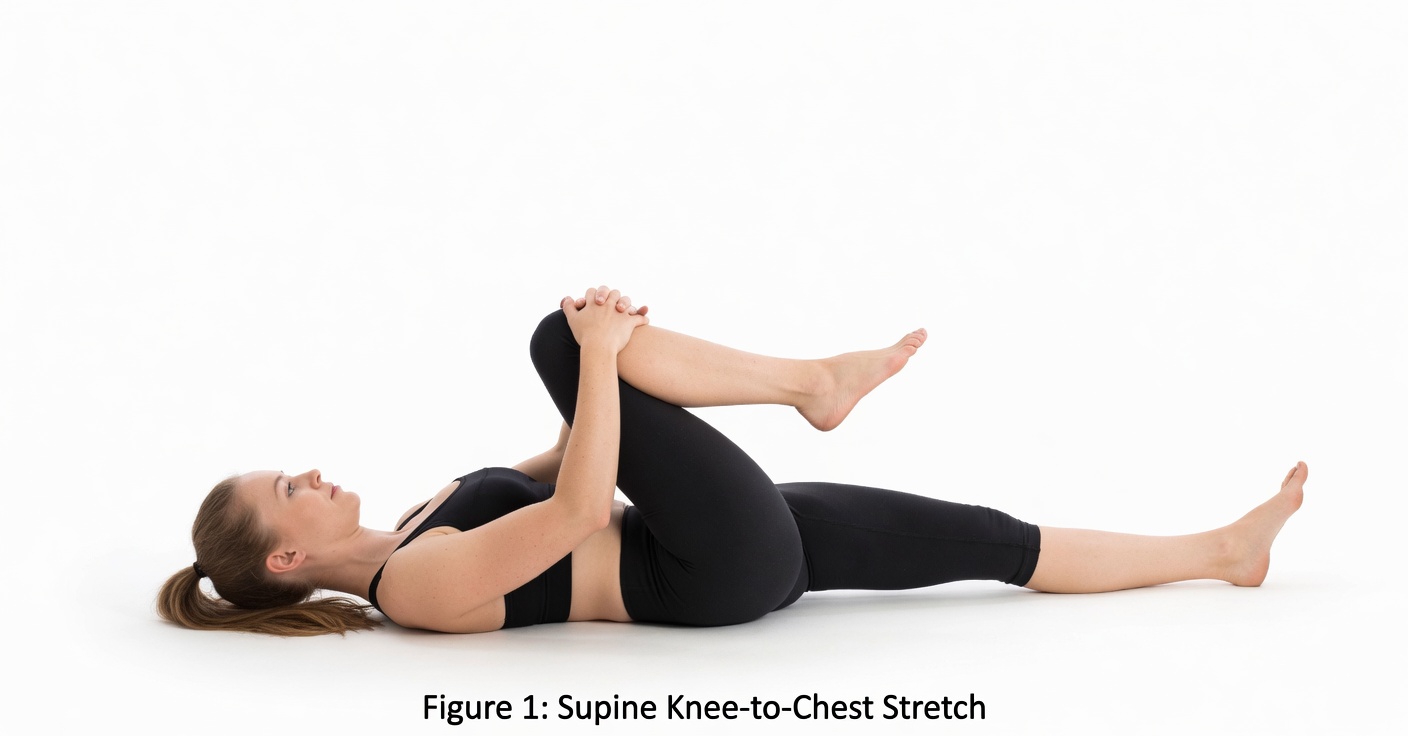
1. Supine Single Knee to Chest Stretch
Often called the SKTC stretch, this is usually a gentle movement for most people. It is a great place to begin before moving on to deeper stretches for the lower back and legs.
Target muscles:
- Glutes
- Lower back muscles
- Upper hamstrings
How to do it:
- Lie flat on your back with both legs extended.
- Bring one knee up toward your chest.
- Hold your shin with your hands and gently pull the leg closer.
- You should notice a mild to moderate stretch in the glute area.
- A slight pulling sensation in the lower back is also normal.

2. Trunk Twist Stretch
Rotational movement is important for maintaining spinal mobility and balanced muscle flexibility. This stretch helps open up the back while also targeting the piriformis and the deeper hip rotator muscles.
Target muscles:
- Piriformis
- Obliques and other trunk rotators
- Deep external rotators of the hip
How to do it:
- Sit upright with your spine straight.
- Cross your right leg over your left.
- Place your left elbow on the outside of your right knee.
- Gently press your elbow against the knee to rotate your torso further to the right.
- Hold the stretch, then repeat on the other side.
3. Seated Single Leg Hamstring Stretch
Because many people spend long hours sitting, tight hamstrings are extremely common. When these muscles shorten too much, they can pull on the pelvis and affect its position, which may contribute to lower back pain.
Target muscles:
- Hamstrings
- Smaller lower back muscles
- Gastrocnemius
How to do it:
- Sit with your right leg extended in front of you and your toes pointing upward.
- Bend your left leg comfortably, placing the sole of your left foot against the inside of your right thigh.
- Keep your back straight as you hinge forward from the hips.
- Reach toward your right toes without rounding your spine.
- Repeat on both sides.
Important: Avoid bending through your back to reach farther. That reduces the hamstring stretch and may place unnecessary strain on your lower back.

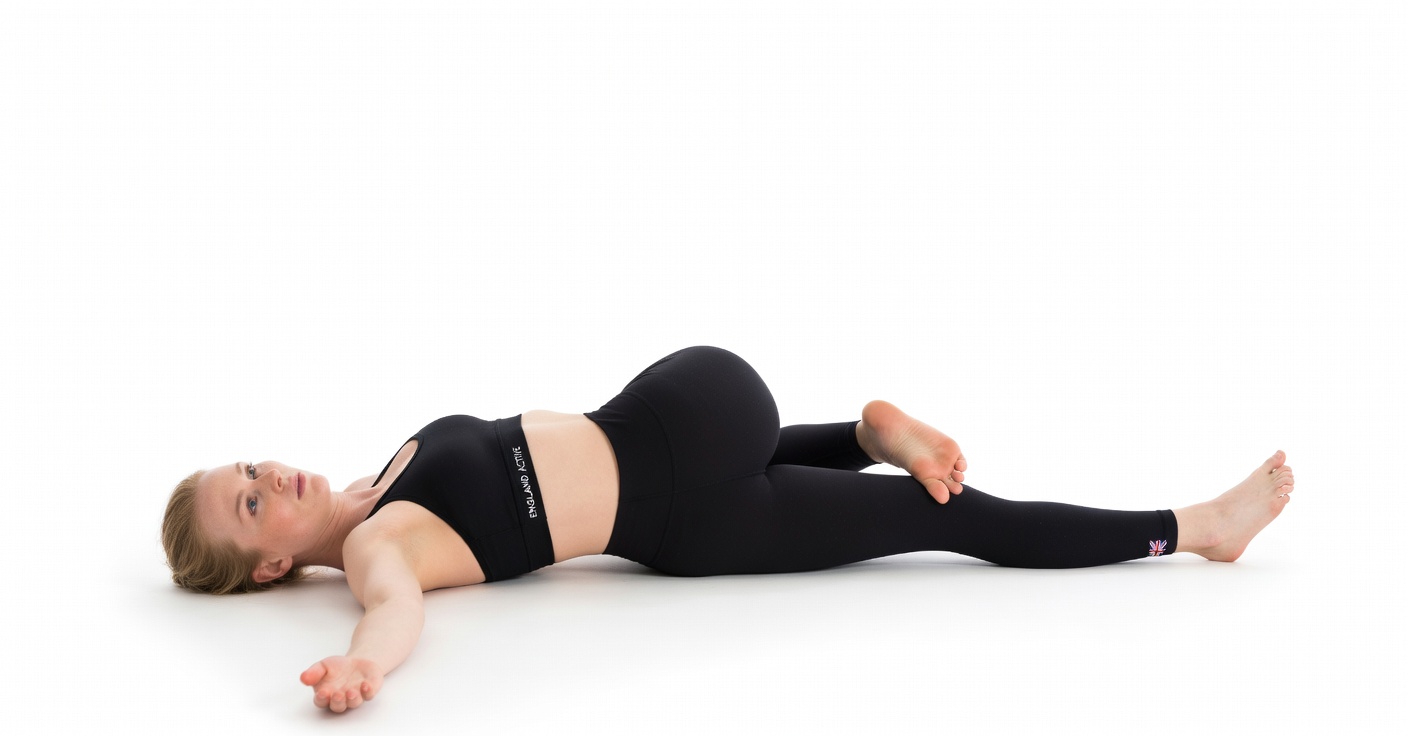
4. Crossover Stretch
This is another excellent rotational stretch, but unlike the trunk twist, it creates the movement by guiding the legs rather than turning the upper body.
From an exercise science perspective, the trunk twist and crossover stretch differ based on which body segment stays fixed and which one moves. The trunk twist is generally considered a closed-chain movement, while the crossover stretch is more of an open-chain movement.
Target muscles:
- Piriformis
- Glutes
- Rotational muscles of the trunk
How to do it:
- Lie on your back.
- Keep both shoulder blades in contact with the floor.
- Move your right leg across your body, aiming your right knee toward your left armpit.
- Use your left hand to guide the knee and apply gentle extra pressure if needed.
- Repeat on both sides.
5. Cat-Cow Stretch
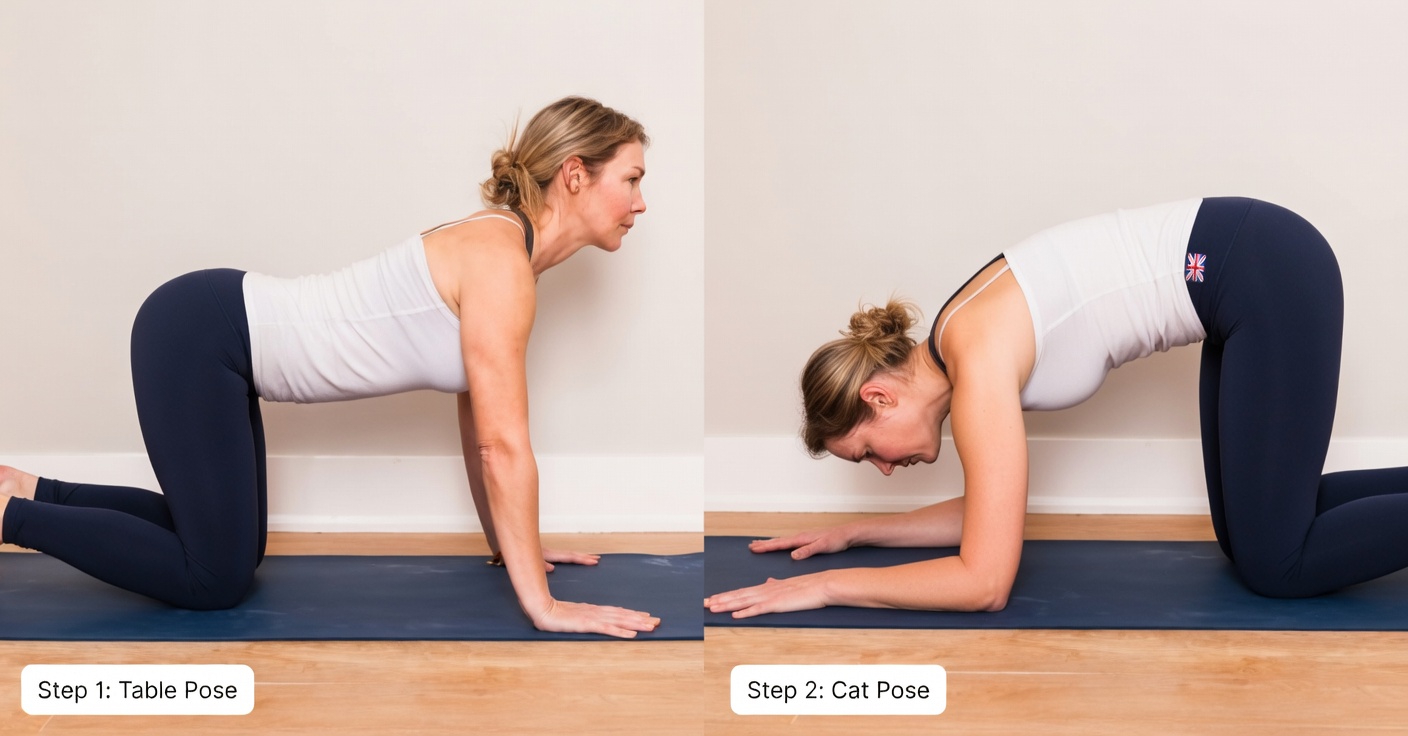
The cat-cow stretch is a classic movement often used in yoga and mobility training. It works through the entire spine and helps improve flexibility, coordination, and movement in the back.
Target muscles:
- Multiple muscles along the spine
- Abdominal muscles
- Rhomboids
How to do it:
- Start on your hands and knees.
- Place your hands directly below your shoulders.
- Position your knees directly under your hips.
- Round your back and bring your chin toward your chest to create the cat position.
- Hold briefly, then reverse the motion.
- Let your stomach drop toward the floor and lift your head to move into the cow position.
- Continue alternating between these two positions for the full set.
Final Thoughts
Low back pain is a serious and often disabling problem that affects millions of people every year. If you are looking for simple ways to protect your back, these stretches can be a helpful place to start.
Move slowly, stay gentle, and never force a stretch through pain. If your symptoms worsen or become more frequent, contact your doctor or physical therapist as soon as possible.
References
- Hoy D, March L, Brooks P, Blyth F, Woolf A, Bain C, Williams G, Smith E, Vos T, Barendregt J, Murray C, Burstein R, Buchbinder R. The global burden of low back pain: estimates from the Global Burden of Disease 2010 study. Ann Rheum Dis. 2014;73:968–974.
- Zafar F., Qasim Y. F., Farooq M. U., Shamael I., Khan I. U., Khan D. H. The Frequency of Different Risk Factors for Lower Back Pain in a Tertiary Care Hospital. Cureus. 2018;10(8):e3183.