Apple Cider Vinegar: What It Really Does Inside Your Body
If you’ve been scrolling past apple cider vinegar (ACV) videos because you’re convinced you’ve heard it all, or you’ve been told it can slash blood sugar, melt fat, and skyrocket your metabolism, it’s time for a clearer look.
Most people misunderstand how ACV actually interacts with your metabolism—and using it the wrong way can be irritating at best and harmful at worst.
This guide breaks down what ACV truly does in the body, why it seems to work for some people but not others, and how to use it safely and effectively.
Key Takeaways
- Apple cider vinegar is not a miracle detox drink; it works mainly as a metabolic signal that influences how your body handles sugar.
- How and when you take ACV matters—timing, dosage, and dilution all play a big role.
- You can be perfectly healthy without ACV; it’s an optional tool, not a requirement.
1. ACV Acts as a Metabolic Signal, Not a Magic Cure
Stories about dramatic weight loss or “instant” blood sugar control can make ACV sound like a miracle. In reality, ACV does not:
- Burn fat on contact
- Melt away calories
- Replace a balanced diet or exercise
What ACV does do is send a metabolic signal that changes how quickly sugar enters your bloodstream after a meal. By influencing that pace, it can affect how your body uses and stores energy.
2. The Core Issue: Blood Sugar Spikes, Not Just Calories
When you eat, especially meals rich in carbohydrates (like bread, pasta, sweets, or sugary drinks), your blood sugar rises. In response:
- Your pancreas releases insulin.
- Insulin moves sugar from your blood into your cells for energy or storage.
- If this spike-and-crash cycle happens repeatedly, your cells can become less responsive to insulin.
Over time, this insulin resistance can contribute to:
- Increased fat storage
- Energy crashes and brain fog
- Metabolic syndrome
- Non-alcoholic fatty liver disease
- Type 2 diabetes
It’s not only about how much sugar you eat—it’s about how quickly your blood sugar shoots up after eating.
3. How Apple Cider Vinegar Slows Sugar Absorption
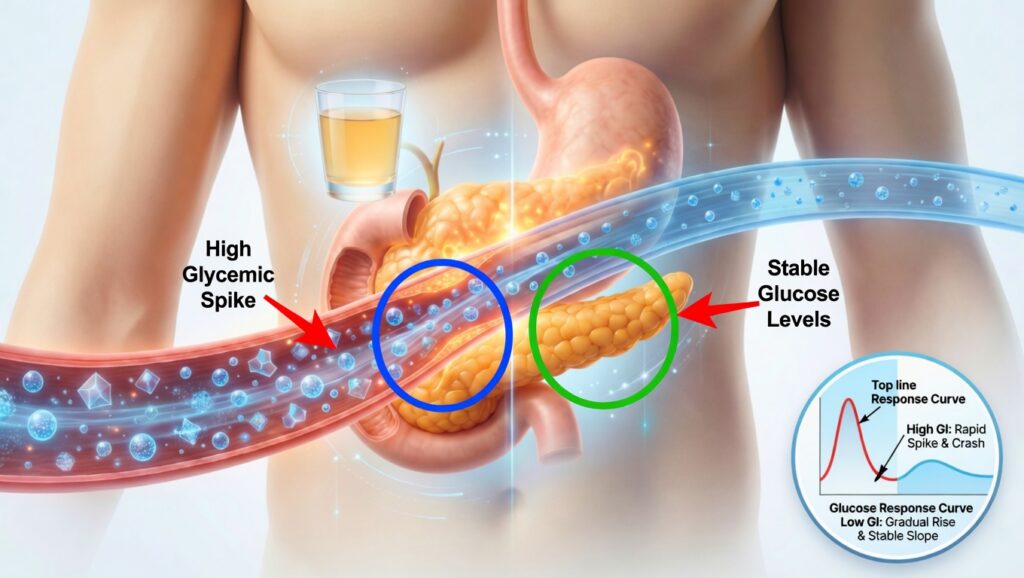
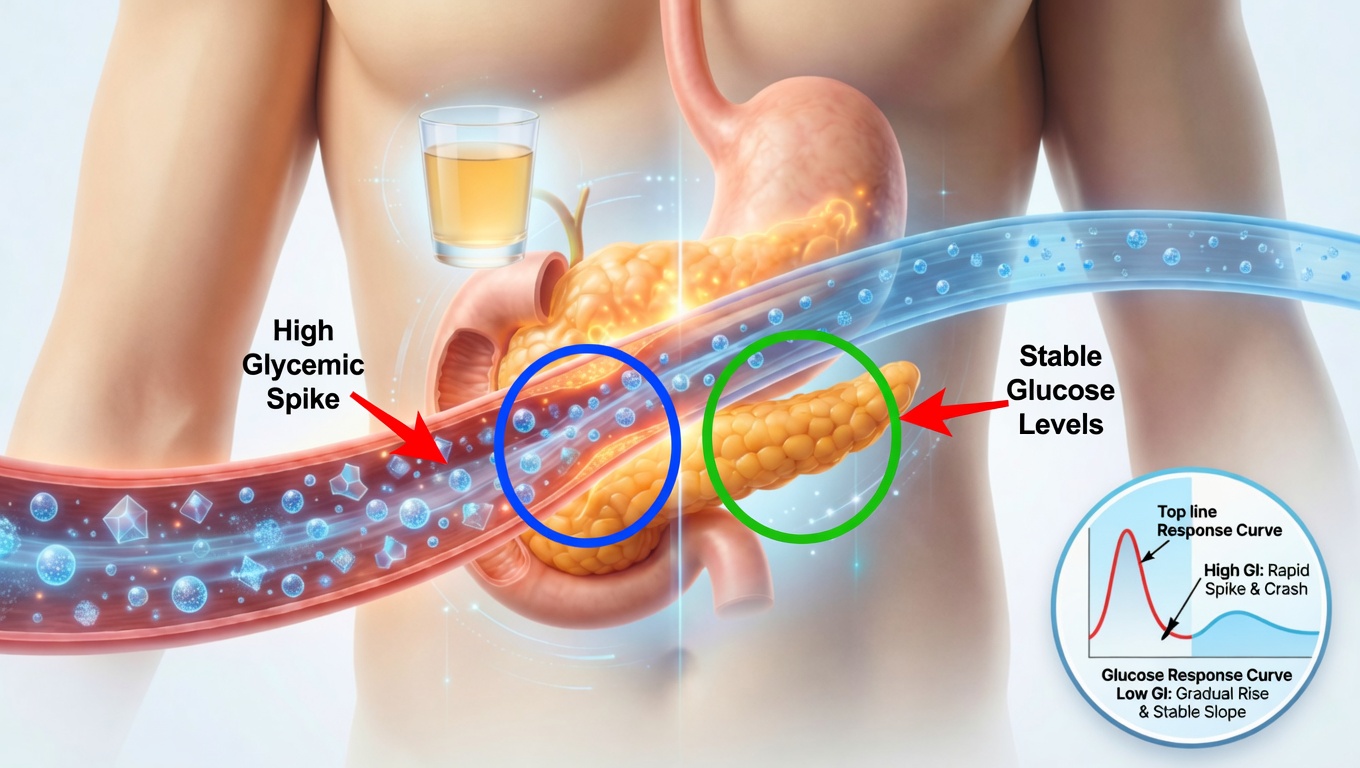
One of the key active components in ACV is acetic acid. This acid can help slow down gastric emptying, which is the rate at which food leaves your stomach and enters your small intestine.
When gastric emptying is slowed:
- Sugar is absorbed into the bloodstream more slowly.
- Blood sugar rises more gradually instead of spiking.
- Your insulin response tends to be less extreme.
This is why some people feel more steady energy and fewer crashes when they take diluted ACV before carbohydrate-heavy meals.

4. Why Your Pancreas and Liver Care About ACV
By helping to blunt sharp spikes in blood sugar, ACV may reduce how hard your pancreas has to work to pump out insulin. Over time, this can potentially:
- Support better insulin sensitivity
- Reduce the metabolic stress on your pancreas
- Help your liver manage how it processes and stores fat
Some research has linked regular ACV use (in safe amounts) to improvements in:
- Markers of fatty liver
- Overall metabolic health
These benefits are not from ACV “detoxing” your body, but from improving the signaling and regulation around blood sugar and insulin.
5. The Most Common Mistake: Using ACV the Wrong Way
If you’ve ever tried to drink ACV straight from the bottle, you’re not alone—but you should stop.
Taking undiluted apple cider vinegar can:
- Erode tooth enamel
- Irritate your throat and esophagus
- Worsen acid reflux or heartburn in some people
More is not better. The goal is to use ACV as a gentle metabolic tool, not as a shot of harsh acid.
A safer approach:
- Mix 1 teaspoon to 1 tablespoon of ACV in a full glass of water.
- Drink it shortly before a meal, especially one higher in carbs.
- Avoid taking it constantly throughout the day or back-to-back without breaks.
6. Safe Dos and Don’ts for Apple Cider Vinegar
To use ACV in a way that supports your health instead of harming it, keep these guidelines in mind:
Do
- Dilute every time: Always mix ACV with plenty of water.
- Use a straw: This helps reduce contact with your teeth.
- Rinse your mouth afterwards with plain water to help protect enamel.
- Start small: Begin with 1 teaspoon and gradually increase up to 1 tablespoon, only if you tolerate it well.
Don’t
- Don’t drink ACV straight—no shots, no undiluted sips.
- Don’t use ACV if you have significant reflux, ulcers, or serious dental issues without talking to your healthcare provider first.
- Don’t force it if you dislike the taste or it upsets your stomach. Your health does not depend on taking ACV.
7. You Don’t Need ACV to Be Healthy
ACV can be a helpful add-on for some people, especially those looking to smooth out blood sugar spikes. But it is not essential for:
- Weight loss
- Hormone balance
- “Detox”
- Overall health
If you can’t stand the flavor or your body doesn’t respond well to it, skip it. A nutrient-rich diet, regular movement, good sleep, and stress management matter far more for long-term health.
8. Consistency Beats Extremes Every Time
The real strength of apple cider vinegar lies in its ability to gently nudge your metabolism in a better direction when used consistently and correctly—not in megadoses or crash-style “ACV cleanses.”
Supporting smoother blood sugar control can:
- Improve daily energy levels
- Influence how your body stores fat
- Support hormonal balance
- Protect long-term metabolic health
Small, sustainable habits—like mindful eating, balanced meals, and appropriate ACV use—are far more powerful than extreme diets or “miracle” hacks.
9. The Science Is Real—The Hype Is Not
There is scientific evidence that ACV:
- Can reduce the speed and magnitude of post-meal blood sugar rises
- May improve insulin sensitivity in some people
However, claims that ACV alone will cure multiple diseases, strip off body fat instantly, or detox your entire system are exaggerated.
ACV works best as one piece of a broader healthy lifestyle that includes:
- Whole, unprocessed foods
- Regular physical activity
- Adequate sleep and stress management
10. Share the Science, Not the Myths
You probably know someone who swears ACV changed their life—and someone else who insists it’s useless. The truth is more balanced:
- ACV can be a helpful metabolic tool for some people.
- It is not magic, and it is not mandatory for good health.
Share what you’ve learned so others can move past the hype and use apple cider vinegar—if they choose to—more safely and effectively.
Conclusion
Apple cider vinegar isn’t a miracle cure, but it can play a smart supporting role in blood sugar control and metabolic health when used properly.
Focus on:
- Safe, diluted use in sensible amounts
- Consistent, sustainable lifestyle habits
- Avoiding extremes and quick-fix mindsets
Your body responds best to steady, intelligent choices, not to fads or force. If this perspective helped clear up the confusion around ACV, pass it along to friends or family who might still be stuck in the myths.
Source: Dr. Mandell