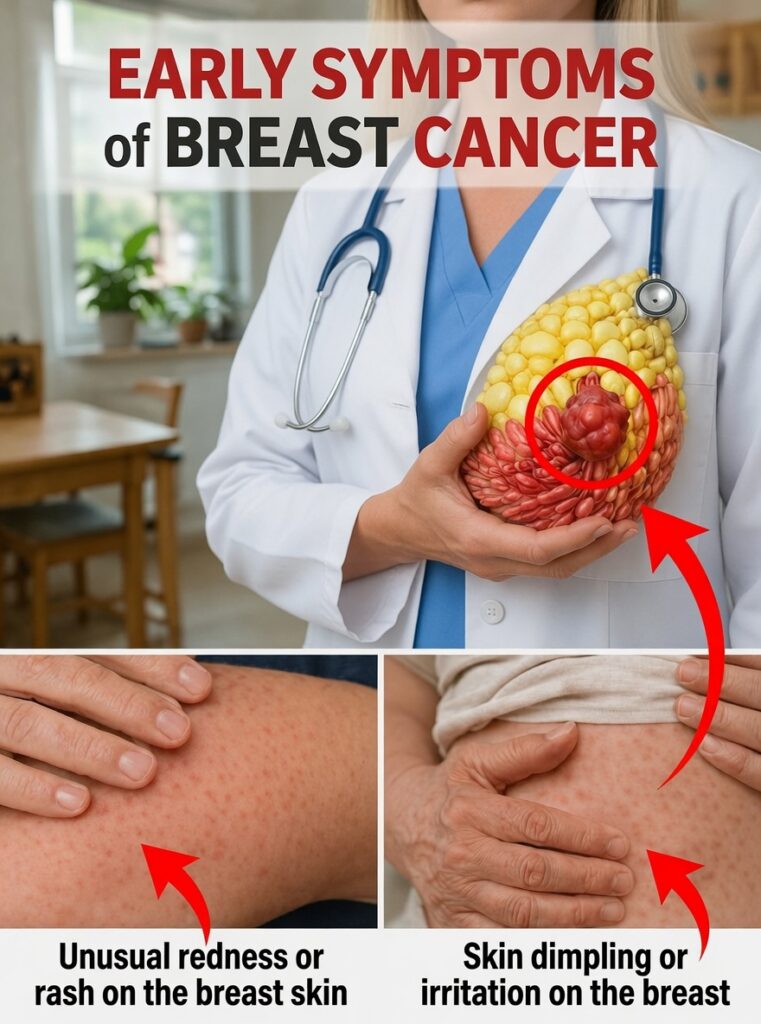
Don’t Ignore These Breast Changes: Early Warning Signs of Breast Cancer
Many women notice small changes in their breasts during everyday moments—while showering, getting dressed, or applying lotion—and dismiss them as “nothing.” With work, family, and daily responsibilities, it’s easy to overlook subtle details. But one truth matters: paying attention to your body can make a real difference, especially when it comes to early detection of breast cancer.
In this guide, you’ll learn 10 important signs and symptoms of breast cancer to watch for, plus practical steps you can start today. And there’s one surprising fact about early detection that many people miss—stay until the end to see why it matters.
Why Monitoring Breast Changes Matters
Breast changes are common, and most are not caused by cancer. Still, research consistently shows that recognizing suspicious signs early greatly improves the chances of successful treatment. When breast cancer is found at an early stage, survival rates are significantly higher.
Knowing what’s normal for you isn’t about fear—it’s a powerful way to take control of your health.
10 Breast Cancer Signs and Symptoms You Shouldn’t Ignore
1. A new lump or thickened area
A new lump or a firm, thickened spot in the breast or underarm is the most well-known warning sign. It may feel hard, uneven, or sometimes tender. Many lumps are benign, but any new lump should be checked.
2. Swelling or a change in breast size or shape
One breast may look larger, feel heavier, or appear differently shaped—even if you don’t notice a distinct lump.
3. Dimpling or pulling of the skin
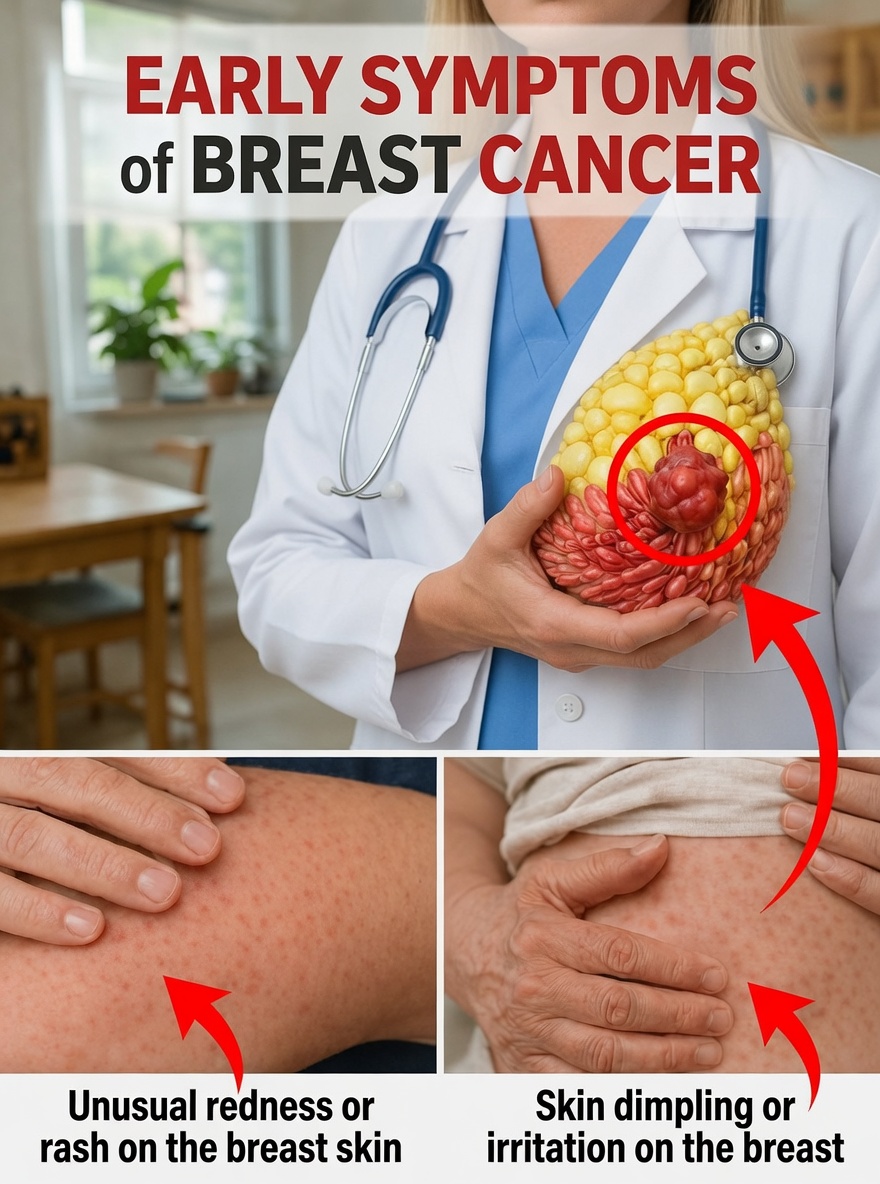
Skin that looks puckered, pulled inward, or resembles an orange peel texture can be subtle but significant.
4. Redness, flaking, or irritation
The breast skin may become red, itchy, scaly, or irritated—often around the nipple area.
5. A nipple that turns inward or changes position
If your nipple suddenly becomes inverted or shifts position without a clear reason, take note and seek medical advice.
6. Unusual nipple discharge
Fluid that leaks from the nipple—clear, yellowish, or bloody—especially if it happens without squeezing, should be evaluated.
7. Persistent breast pain in one specific area
Ongoing pain in one spot that doesn’t come and go with your menstrual cycle deserves attention.
8. A localized thickening without a defined lump
Sometimes an area feels denser, swollen, or “different,” even if there’s no clear lump.
9. Changes in skin texture
The skin may feel thicker, rougher, or show more visible pores than usual.
10. Swollen lymph nodes
Enlarged nodes (a lump or swelling) in the armpit or near the collarbone can be a warning sign and should be assessed.
What You Can Do Starting Today
- Do a monthly breast self-check: look and feel for changes regularly.
- Track what you notice: write down changes, when they started, and whether they’re getting better or worse.
- Keep up with routine screenings: follow medical guidance for mammograms and other exams based on your age and risk.
- Know your family history: genetics and family patterns can affect your risk level.
- Choose healthier habits: balanced nutrition, regular exercise, and avoiding smoking and excessive alcohol can support long-term health.
- See a doctor promptly: any persistent or unusual symptom should be evaluated sooner rather than later.
What Happens at a Medical Appointment?
A healthcare professional may:
- perform a physical breast exam,
- recommend mammography, ultrasound, or other imaging,
- and, if needed, request additional tests.
The reassuring news: most breast changes are not cancer, and getting properly checked often brings peace of mind.
Frequently Asked Questions
Can breast cancer have no symptoms?
Yes. Breast cancer can develop without noticeable signs and may only be found during routine screening tests.
Can men get breast cancer?
Yes, although it’s rare. The symptoms are similar, including lumps, nipple changes, or discharge.
How often should you do a breast self-check?
Once a month is generally recommended to help you recognize what’s normal for your body.
Final Thoughts
Your body sends signals for a reason. Spending a few minutes each month paying attention to breast changes can bring reassurance—and in some cases, it can save your life.
Here’s the surprising fact: most breast changes are not cancer, but acting quickly when something feels off is what leads to the best outcomes.
Stay informed, take your health seriously, and make yourself a priority.