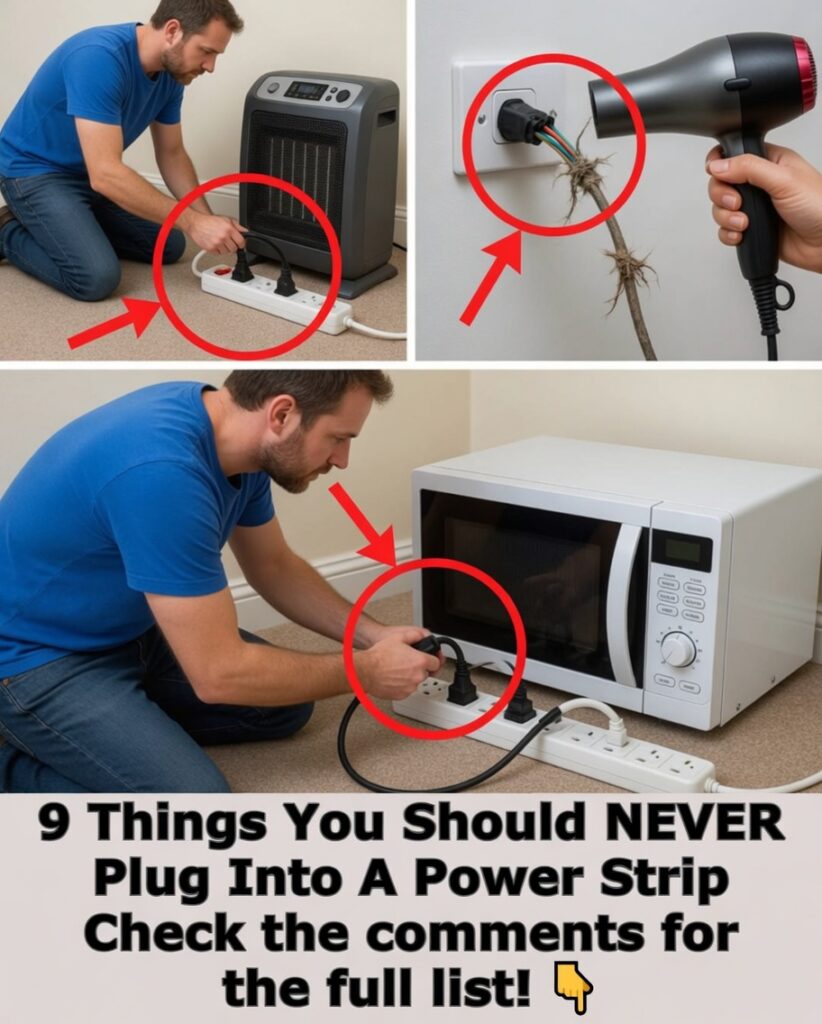
Power Strips: Convenient, but Not for Every Appliance
Power strips make it easy to add extra outlets, but they’re not built for every type of device. When a strip is overloaded, it can overheat, trigger short circuits, damage electronics, and in the worst cases, start a house fire.
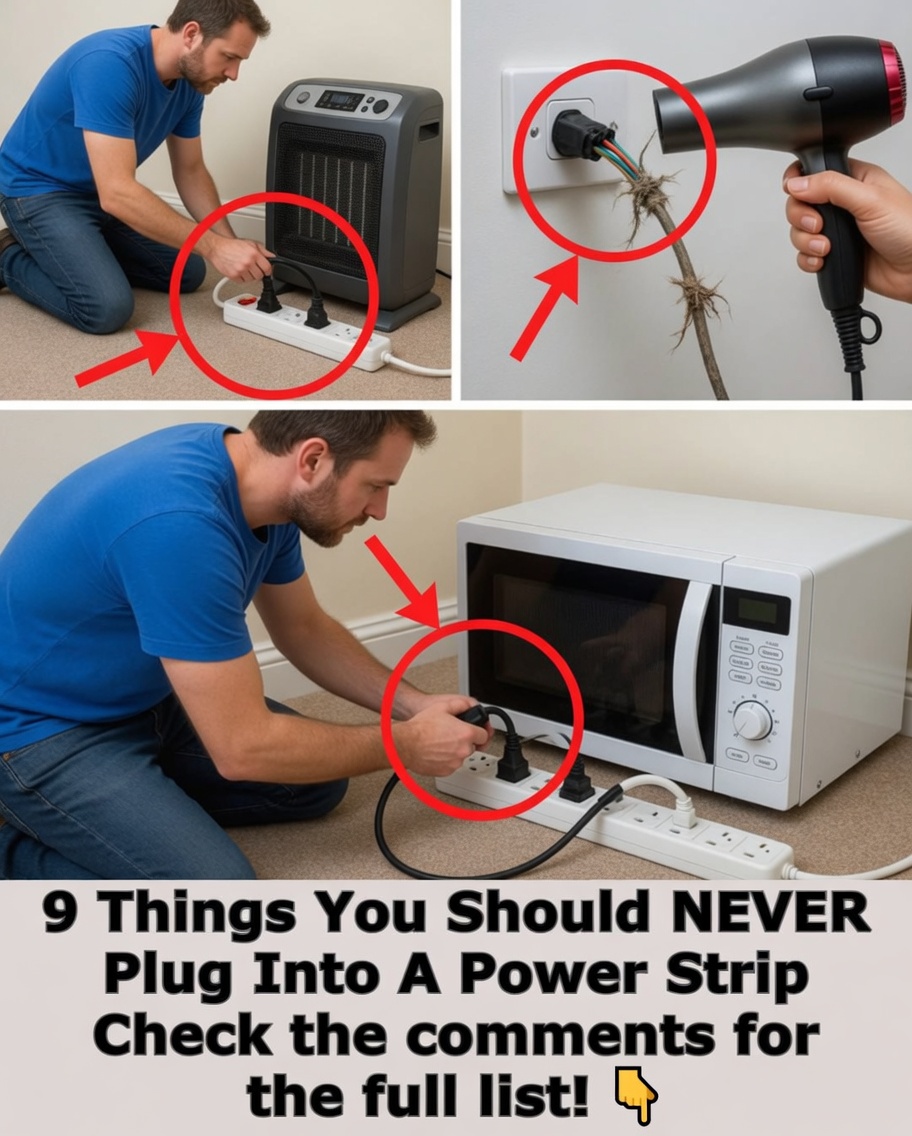
To reduce electrical risks and protect your home, avoid plugging the following nine high-demand devices into a standard power strip.
1. Refrigerators and Freezers
Fridges and freezers run in cycles and need reliable, steady power—especially when the compressor kicks on. A power strip may overheat or fail under that load, potentially causing shutdowns that can spoil food.
- Safer choice: Plug directly into a wall outlet.
2. Microwaves and Toaster Ovens
Kitchen heating appliances like microwaves and toaster ovens pull a large amount of electricity. On a power strip, that demand can overwhelm the wiring and cause the strip to overheat or melt.
- Safer choice: Use a dedicated wall outlet.
3. Coffee Makers, Slow Cookers, and Electric Kettles
Anything that heats water or stays hot for extended periods typically uses high wattage. Power strips generally aren’t designed for sustained heavy electrical loads.
- Safer choice: Plug heating appliances straight into the wall.
4. Space Heaters
Space heaters are one of the most common causes of electrical overloads. They draw significant power, and a power strip can overheat quickly—creating a serious fire hazard.
- Safer choice: Always use a dedicated outlet (never a power strip).
5. Hair Dryers, Curling Irons, and Flat Irons
Hair tools use high power in short bursts and can easily overload a strip or trip breakers. Bathrooms also add additional safety concerns due to moisture.
- Safer choice: Plug into a GFCI-protected wall outlet (bathroom-rated).
6. Air Conditioners and Portable Heaters
Air conditioners and portable heaters require strong, consistent power, especially during startup. Using a power strip can lead to overheating, voltage drops, and increased fire risk.
- Safer choice: Use a properly rated, dedicated wall outlet on the correct circuit.
7. Washing Machines and Dryers
Laundry appliances consume a lot of electricity and often require higher-capacity circuits. Power strips are not designed for these loads and may fail dangerously.
- Safer choice: Plug into a properly grounded outlet that matches the appliance requirements.
8. Power Tools (Drills, Saws, Air Compressors, and More)
Many power tools draw sudden bursts of energy, especially at startup. That spike can overheat a power strip and cause interruptions or electrical damage.
- Safer choice: Use a wall outlet or an industrial-grade extension cord rated for the tool.
9. Plugging One Power Strip into Another (Daisy Chaining)
Connecting power strip to power strip increases the chance of circuit overload and heat buildup. “Daisy chaining” is a common cause of electrical fires and blown breakers.
- Safer choice: If you need more outlets, choose a heavy-duty surge protector with built-in circuit protection, or add outlets through a qualified electrician.
Safety Tips to Help Prevent Electrical Fires
- Use surge-protected power strips for electronics when appropriate.
- Unplug devices you’re not using, especially heat-producing items.
- Never place a power strip under rugs, furniture, or curtains, where heat can build up.
- Inspect cords and strips regularly, and replace damaged cables immediately.
Final Thoughts
Power strips are ideal for small electronics and low-wattage devices—but they’re not a safe solution for high-power appliances. Avoid plugging in the nine items above to lower the risk of overheating, electrical failure, and fire in your home.