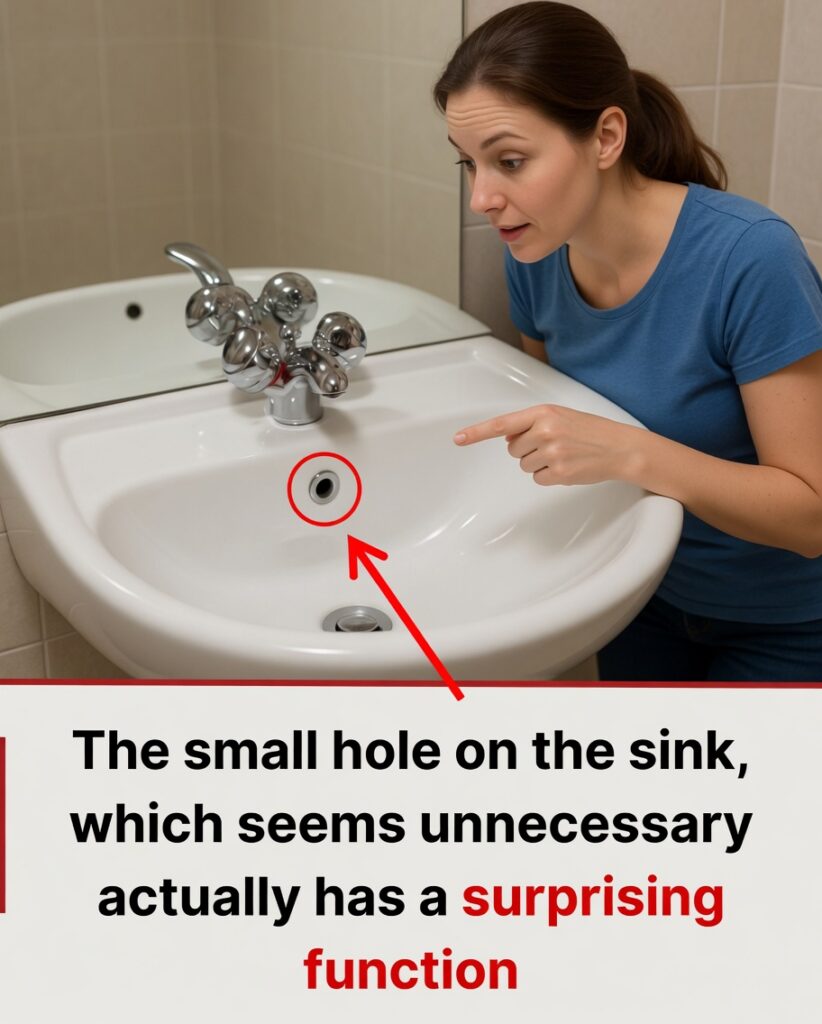
Why Bathroom Sinks Have a Small Hole Near the Faucet
Most bathroom sinks include a small opening near the faucet, usually positioned about one-third of the way up the basin. It may look like a pointless detail, but it actually serves an important function.
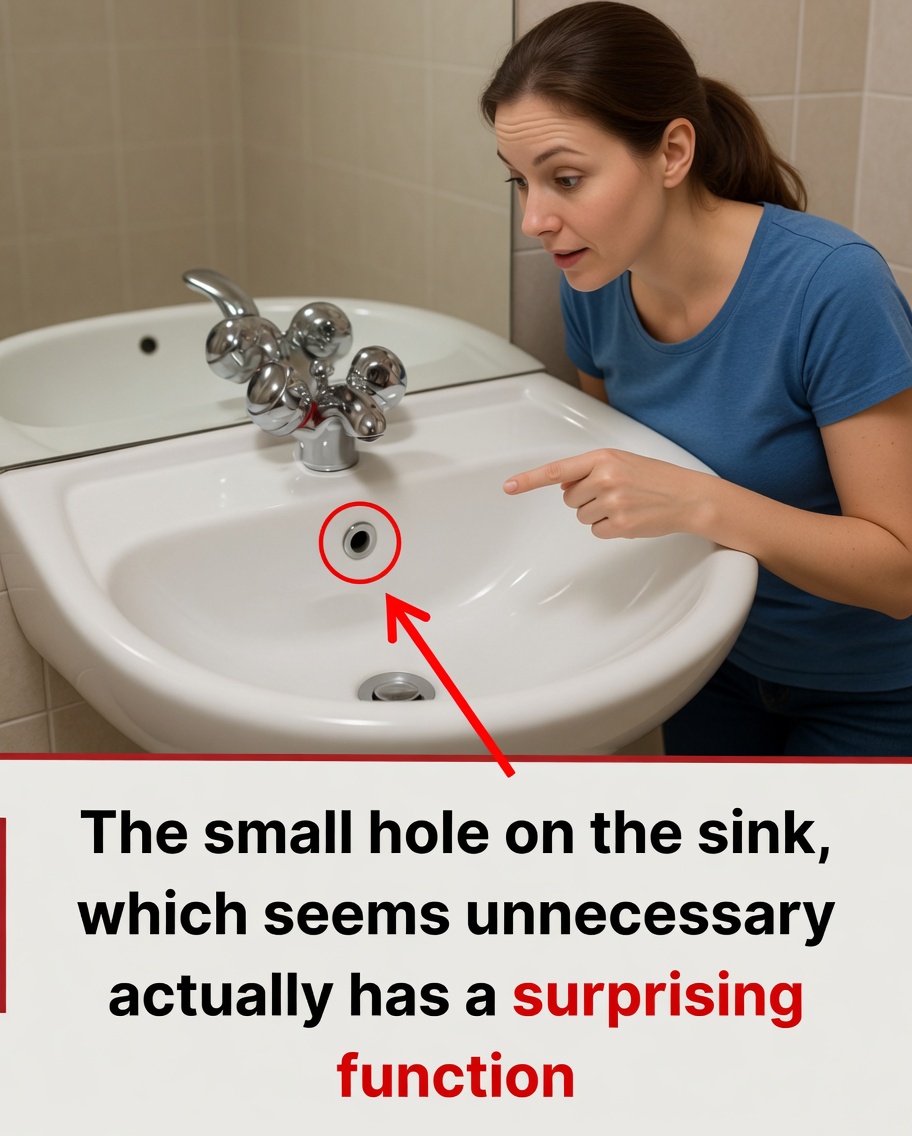
The Real Purpose: Preventing Overflow and Flooding
This opening is an overflow hole, and it connects directly to the drainpipe underneath the sink. It’s designed for moments when someone accidentally leaves the tap running—such as stepping away to take a phone call while the basin is filling.
When the water level rises high enough (typically around two-thirds of the sink’s depth), the overflow hole allows excess water to drain into the pipe. This helps stop water from spilling over the edge, reducing the risk of a wet floor and bathroom flooding.
The Downside: Odors, Bacteria, and Mold Buildup
Although useful, the overflow hole can be inconvenient to maintain. Because it sits in a hard-to-reach area, it can collect dirt, bacteria, and mold over time. As a result, unpleasant smells may travel up from the pipes and become noticeable around the sink.
How to Clean the Overflow Hole With Vinegar and Baking Soda
If you detect a bad smell coming from the sink—especially near the overflow opening—this simple cleaning method can help:
- Mix vinegar and baking soda.
- Put the mixture directly into the overflow hole.
- Let it react and work through the buildup for 5 to 10 minutes.
- Rinse with warm water to flush out loosened grime.
Using this approach can clear residue inside the pipe and help keep your bathroom smelling fresh and clean.