High Creatinine Levels: What They Really Mean and How to Protect Your Kidneys
Finding out your creatinine level is high can be alarming. Many people immediately assume it means serious kidney disease and start searching for miracle teas, detox drinks, or “kidney cleanses” that promise quick fixes. Before you jump into drastic measures, it’s important to understand what elevated creatinine actually means—and what really helps.
Creatinine is a useful warning marker, but a single high result is not always a life-long sentence. Below, based on the insights of Dr. Alberto Sanagustín, you’ll learn what a high creatinine reading can signify, when it’s truly concerning, and seven evidence-based steps you can take to support your kidney health.
Key Takeaways
- Elevated creatinine does not automatically equal permanent kidney disease.
- One isolated lab test rarely tells the whole story—context and trends over time are essential.
- Your doctor’s evaluation is crucial for accurate diagnosis and safe treatment.
- Lifestyle choices matter: hydration, a balanced diet, and blood pressure control are central to kidney protection.
- Herbal remedies and teas are not risk-free, especially if you already have kidney issues or take medications.
1. Don’t Panic Over a Single High Result
If you see “high creatinine” on your lab report, do not rush into fear or drastic changes. One abnormal value does not necessarily mean your kidneys are failing.
Creatinine can temporarily rise due to:
- Dehydration
- Vigorous exercise
- Fever or acute illness
- Certain medications or supplements
Instead of immediately starting detoxes or stopping your medications on your own, pause, gather more information, and talk to a professional.
2. Look for Temporary or Reversible Causes
Before assuming chronic kidney disease, consider what has been happening in your life and health recently. Ask yourself:
- Did you do intense physical activity in the last day or two?
- Have you been sick, with a fever, vomiting, or diarrhea?
- Have you been drinking less water than usual?
- Have you started or increased any medications or supplements?
Any of these can distort your creatinine level without indicating permanent kidney damage. Often, with:
- Adequate rest
- Better hydration
- Adjusting or pausing certain drugs (only under medical supervision)
creatinine may return to normal.
3. Repeat the Test Under the Right Conditions
You should not base serious decisions on a single blood test. If your high creatinine result came from a routine check or a self-requested test, it usually needs to be repeated.
For a more reliable result, your doctor may recommend:
- Doing the test fasting if appropriate
- Staying well hydrated (but not overhydrated) before the test
- Avoiding strenuous exercise the day before
- Reviewing your current medications and supplements
Your healthcare provider will decide when to repeat the test and under what conditions to get the most accurate picture of your kidney function.
4. Ask for a Complete Kidney Function Assessment
Creatinine alone is only one piece of the puzzle. To properly evaluate kidney function, ask your doctor about a more complete workup, which may include:
- Estimated glomerular filtration rate (eGFR): This gives a better overall measure of how well your kidneys filter waste.
- Urea (BUN): Another waste product that can help assess kidney performance.
- Electrolytes: Such as potassium and sodium, which can be affected by kidney function.
- Urinalysis: To look for protein, blood, or other abnormalities in the urine.
Be sure your doctor knows about all medications and supplements you take, including “natural” products—many can influence kidney tests or kidney health.
5. How to Interpret Creatinine Numbers
“High creatinine” depends on context, but typical reference ranges are:
- Men: 0.7–1.3 mg/dL
- Women: 0.6–1.1 mg/dL
Some points to keep in mind:
- Levels above about 1.5 mg/dL usually warrant further investigation.
- Values over 2 mg/dL require closer medical attention and follow-up.
- More important than one isolated reading is the trend over time.
A gradual and persistent rise in creatinine—especially if accompanied by signs such as:
- Foamy or bubbly urine
- Swelling in ankles, legs, or around the eyes
- Fatigue or weakness
suggests that deeper evaluation and intervention are needed.
6. Lifestyle Changes That Support Kidney Health
If further tests confirm a genuine kidney issue or a persistent elevated creatinine, lifestyle becomes a key part of your treatment plan. The main goals should be:
a. Control Blood Pressure, Blood Sugar, and Cholesterol
- High blood pressure, diabetes, and high cholesterol are major drivers of chronic kidney damage.
- Managing these aggressively (with medication, diet, and exercise) protects not only your kidneys but also your heart and blood vessels.
b. Cut Back on Ultra-Processed Foods and Excess Salt
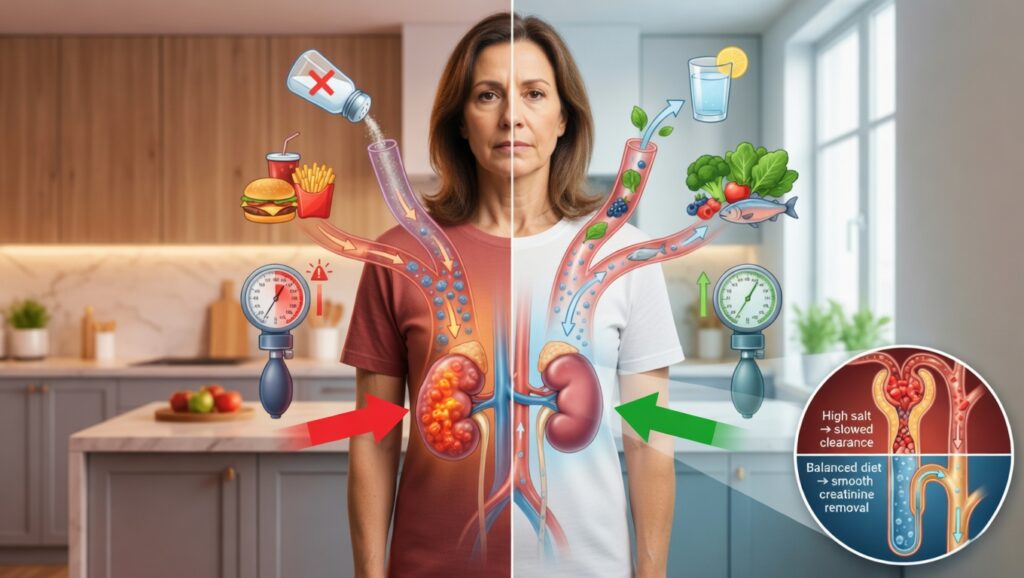
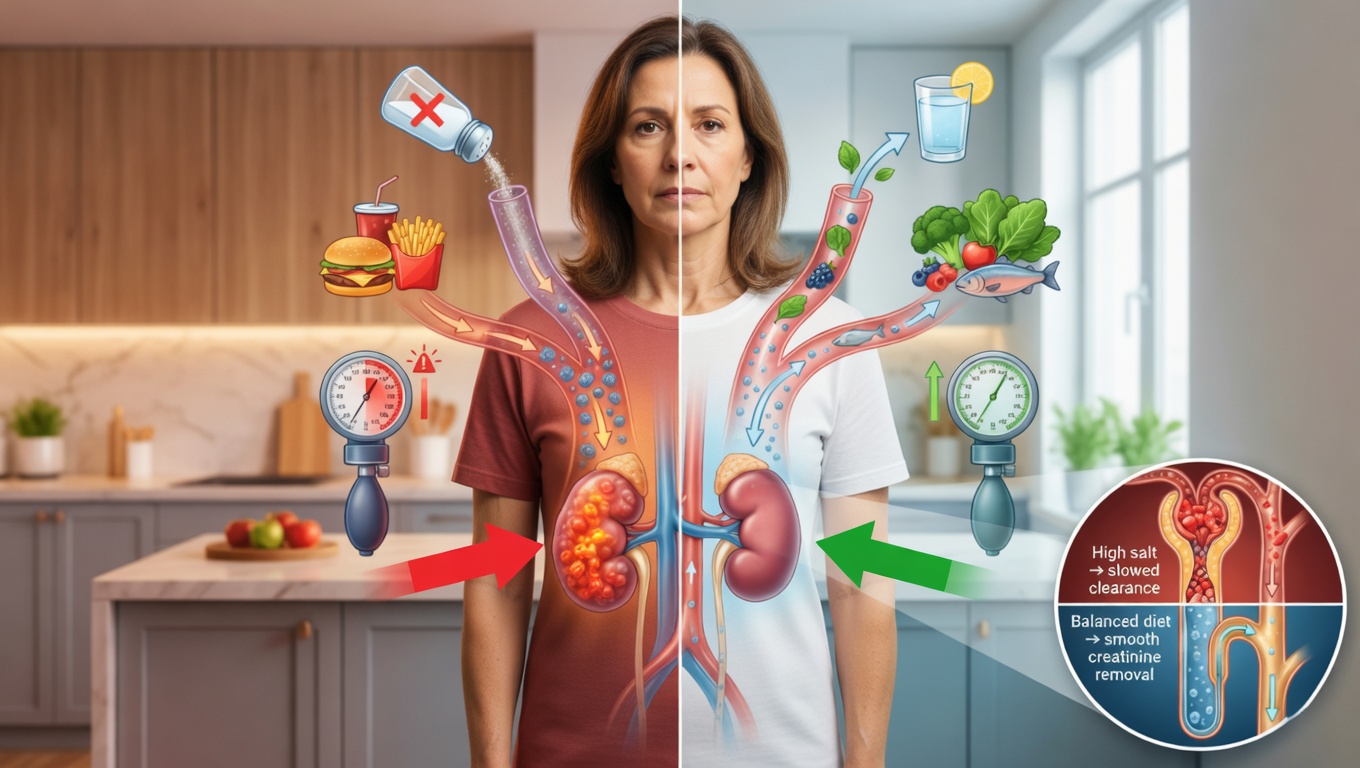
- Fast foods, packaged snacks, processed meats, and salty ready-made meals can overload the kidneys.
- Aim to:
- Cook more at home
- Reduce added salt
- Choose fresh or minimally processed foods when possible
c. Stay Physically Active and Prioritize Sleep
- Regular moderate exercise supports blood pressure, weight control, and overall metabolic health.
- Good sleep quality also contributes to better blood pressure and hormone balance, indirectly helping kidney function.
d. Hydrate Wisely (Not Excessively)
- Mild to moderate hydration is usually helpful, but more water is not always better.
- If you have:
- Heart failure
- Advanced kidney disease
- Fluid retention or swelling
you might need to limit fluids, not increase them. Always follow your doctor’s advice about how much to drink for your specific situation.
e. Moderate, Not Eliminate, Protein Intake
- Very high protein intake, particularly from large amounts of red meat or protein supplements, can increase kidney workload.
- However, too little protein can lead to malnutrition, muscle loss, and weakness.
- A balanced approach usually includes:
- Moderate portions of lean animal protein (fish, poultry, eggs, low-fat dairy)
- Plant-based proteins (beans, lentils, tofu, nuts) as appropriate
- Ideally, adjust your protein intake with guidance from your doctor or a renal dietitian, especially if you already have chronic kidney disease.
7. Be Careful With Home Remedies and Herbal Teas
The internet is full of promises: “cleanse your kidneys in 7 days,” “detox your body,” or “flush out creatinine naturally.” Many involve herbal teas or supplements. While some herbs have beneficial properties, they are not universally safe.
Examples:
- Hibiscus tea:
Can help lower blood pressure in some people, but may be risky if your blood pressure is already low or if you take antihypertensive medications. - Dandelion:
Has a mild diuretic effect (makes you urinate more) but does not repair kidney damage or restore kidney function. - Ginger and turmeric:
May have anti-inflammatory effects. - Garlic:
Has cardiovascular benefits and may support overall health.
However, if you have:
- High potassium levels
- Chronic kidney disease
- Diabetes or high blood pressure requiring medication
these herbs and supplements can interact with your treatments or worsen your condition. You should always:
- Inform your healthcare provider about any herbal products you use.
- Avoid starting new teas, powders, or supplements without medical advice, especially if you already know your kidneys are compromised.
What You Should Not Do
To avoid harm, steer clear of these common mistakes:
-
Do not fixate on the creatinine number alone.
Always look at the whole clinical picture: symptoms, eGFR, urinalysis, and other lab results. -
Do not stop prescription medications on your own.
Blood pressure, diabetes, or cholesterol medications may be protecting your kidneys and heart. Never replace them with “natural” therapies without your doctor’s approval. -
Do not experiment with random herbal mixtures or strong diuretics.
Unsupervised detoxes, extreme fasting, or very restrictive diets can worsen kidney function or cause dangerous imbalances. -
Do not believe in “kidney cleanses” that promise results in days.
No tea, supplement, or detox can regenerate damaged kidney tissue in a week.
Frequently Asked Questions
Does a high creatinine level always mean kidney disease?
No. Creatinine levels are influenced by several factors beyond kidney function, including:
- Muscle mass (more muscle often means higher creatinine)
- Dehydration
- Fever or acute illness
- Recent intense exercise
- High protein intake or protein supplements
- Certain medications
Only after considering these factors and repeating tests when needed can your doctor determine whether kidney disease is present.
How long does it take for creatinine to go down?
It depends on the source of the problem:
- Reversible causes (such as dehydration or a medication effect): creatinine can improve within days once the cause is corrected.
- Chronic kidney damage: the decline is often long-term. In many cases, kidney function cannot return to normal, though it may stabilize or improve slightly with proper treatment.
Are all painkillers harmful to the kidneys?
Not all painkillers have the same risk:
- NSAIDs (non-steroidal anti-inflammatory drugs) like ibuprofen, naproxen, and similar drugs can be problematic, especially in high doses, for long periods, or in people with existing kidney issues or dehydration.
- Acetaminophen (paracetamol) is generally considered safer for the kidneys when taken at recommended doses.
- Topical pain creams or gels (used on the skin) have minimal impact on kidney function.
The real danger comes from chronic, high-dose use; combining multiple pain medications; or using them when dehydrated or with underlying kidney disease. Always ask your doctor which painkiller is safest for you.
Do I have to stop eating meat forever if my creatinine is high?
In most cases, no. Completely eliminating meat is not automatically necessary. What matters more is:
- Reducing excessive portions
- Choosing lean cuts and healthier cooking methods
- Spreading protein intake evenly throughout the day
- Balancing animal and plant-based protein sources
Any major dietary change should be done with medical guidance, especially if you have established chronic kidney disease.
Can chronic kidney disease be reversed?
Unfortunately, once significant structural damage to the kidneys occurs, it is usually not fully reversible. However:
- Good control of blood pressure, blood sugar, and cholesterol
- A kidney-friendly diet
- Avoiding harmful medications and toxins
- Maintaining a healthy weight and lifestyle
can often slow—or sometimes modestly improve—kidney function. Some people may even move from a more advanced stage (for example, stage 4 to stage 3) with intensive and consistent management.
Final Thoughts
A high creatinine level is a signal that deserves attention, but not blind panic. The key is to:
- Understand the context behind the numbers
- Repeat tests when appropriate
- Get a thorough evaluation of overall kidney function
- Work closely with your healthcare team
Instead of chasing quick fixes or miracle cleanses, focus on evidence-based lifestyle changes and medical advice. With the right approach, many people with elevated creatinine can protect their kidneys and maintain a good quality of life for many years.
Source: Based on the insights of Dr. Alberto Sanagustín.