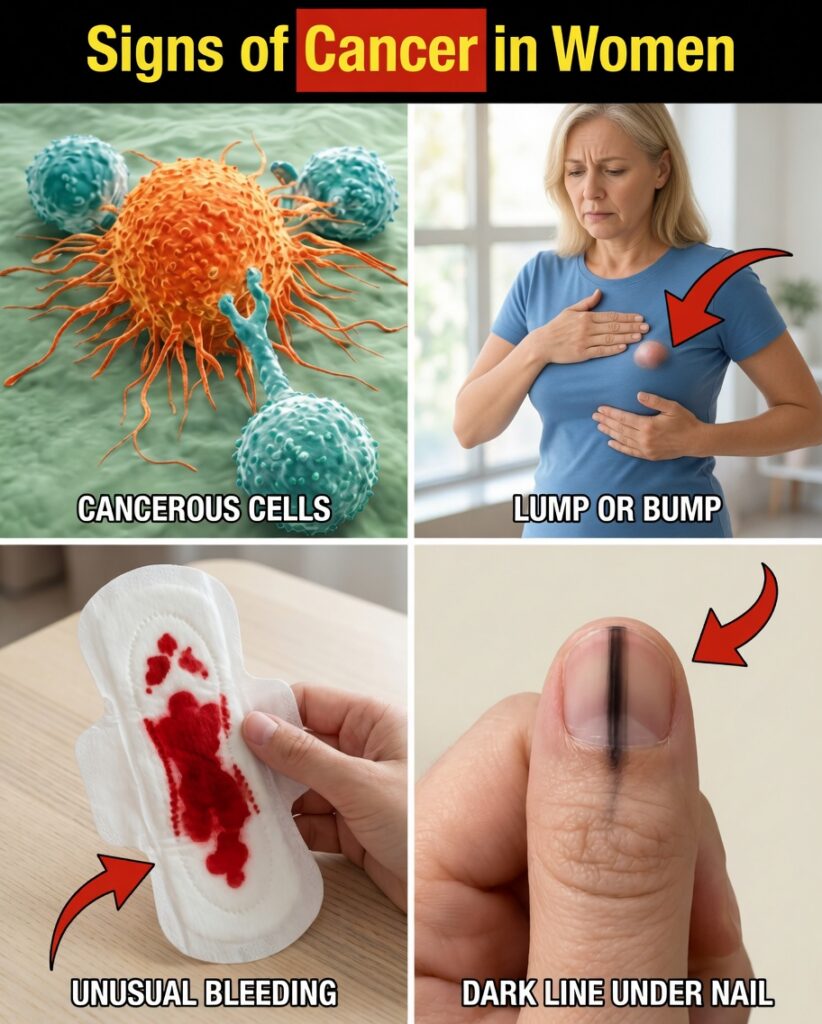
Subtle Cancer Warning Signs Women Should Not Ignore
Cancer does not always begin with obvious symptoms.
For many women, the earliest signals are mild, unusual, or simply persistent—easy to blame on stress, busy schedules, or hormonal changes.
Having one or more of these signs does not automatically mean you have cancer.
However, if they continue over time or worsen, they deserve medical attention and proper evaluation.
14 Cancer Warning Signs to Watch Carefully
1. Ongoing, Unexplained Fatigue
A deep, overwhelming tiredness that does not improve with sleep or rest, and interferes with daily life.
2. Unintentional Weight Loss
Losing weight without trying—no change in diet, exercise, or lifestyle—should always be examined.
3. Persistent, Unusual Pain
Pelvic, abdominal, back, or bone pain that has no clear cause and does not go away with usual treatments.
4. Frequent Bloating
A swollen, bloated abdomen almost every day, especially when it is new or more intense than usual.
5. Changes in Appetite
Feeling full very quickly, eating less than normal, or losing interest in food for a prolonged period.
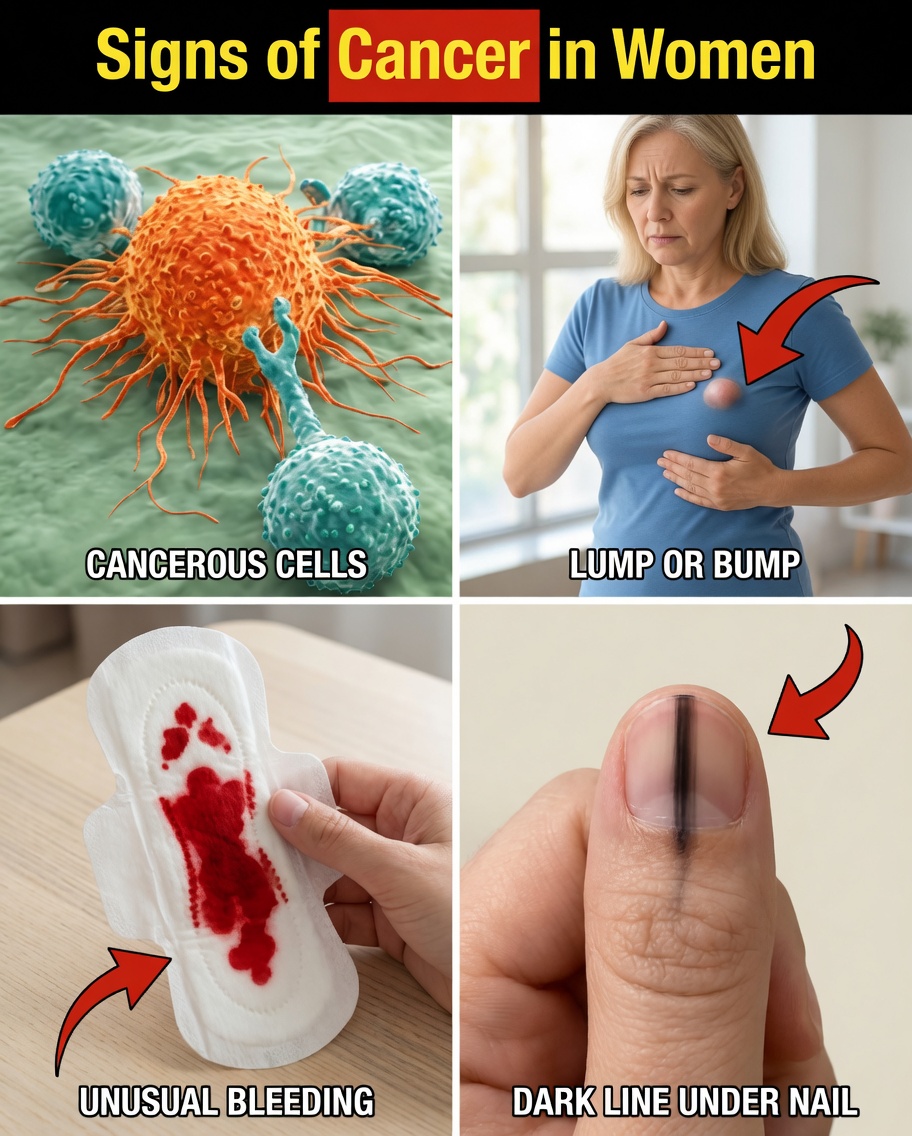
6. Abnormal Bleeding
Bleeding that occurs:
- Between menstrual periods
- After menopause
- After sexual intercourse
Any unexpected bleeding should be discussed with a health professional.
7. Breast Changes
New or persistent changes such as:
- A lump, thickening, or hardened area
- Nipple changes (inversion, discharge, shape change)
- Redness, swelling, or ongoing breast pain
8. Unusual Digestive Problems
Digestive issues that do not settle, including:
- Long-lasting constipation or diarrhea
- Persistent heartburn or acid reflux
- Changes in bowel habits without obvious reason
9. Frequent Shortness of Breath
Feeling out of breath with minimal effort, or without a known heart or lung condition.
10. Changes in Urination
New or persistent urinary symptoms, such as:
- Needing to urinate very often
- Pain or burning when urinating
- Constant feeling of pressure or incomplete emptying
11. Wounds That Do Not Heal
Sores on the skin, in the mouth, or elsewhere that take a long time to heal or keep coming back.
12. Skin Changes
Noticeable changes in the skin, including:
- Spots or moles that change size, shape, or color
- Persistent itching without a clear cause
- Yellowing of the skin or eyes (jaundice)
13. Persistent Hoarseness or Chronic Cough
A hoarse voice or cough that lasts more than three weeks, especially if it does not improve with usual treatments.
14. Unexplained Night Sweats
Heavy, repeated night sweats that soak clothing or sheets, and are not related to menopause, fever, or obvious illness.
When Should You See a Doctor?
Consult a health professional if:
- A symptom lasts longer than 2 to 3 weeks
- Several of these signs appear at the same time
- You notice any unusual or worrying change in your body
Prompt evaluation can help rule out serious conditions or detect problems early.
Why Regular Screening Matters
Many cancers respond far better to treatment when they are found early.
Routine check-ups and screening tests can save lives, including:
- Mammograms
- Pap smears (cervical screening)
- Regular health and blood tests, as recommended by your doctor
Following your country’s screening guidelines and your doctor’s advice is an important part of prevention.
Important Reminder
- This information is educational, not a medical diagnosis
- It does not replace a consultation with a doctor or specialist
- Avoid self-diagnosing based on online information alone
- Paying attention to your body is an act of care and prevention, not of fear
In Summary
Early signs of cancer in women can be subtle and easy to misinterpret. Ignoring them may delay a crucial diagnosis.
Staying aware of changes in your body and seeking medical advice when something feels “not right” is a powerful, proactive step to protect your health.