Carob: A Nutritious, Caffeine‑Free Alternative to Cocoa
Carob comes from the pods of the Ceratonia siliqua tree and has long been used as a wholesome substitute for cocoa. Naturally sweet, rich in nutrients, and free from caffeine, it is an excellent ingredient for anyone looking to support their health while still enjoying chocolate-like flavors. Below you’ll find the main health benefits of carob and simple ways to add it to your everyday meals and snacks.

Key Health Benefits of Carob
-
High in Antioxidants
Carob is packed with antioxidant compounds that help protect your cells from oxidative stress, supporting overall health and longevity. -
Excellent Source of Fiber
Its high fiber content promotes healthy digestion, supports regular bowel movements, and may help keep you feeling full for longer. -
Naturally Caffeine-Free
Unlike cocoa, carob contains no caffeine, making it suitable for people who are sensitive to stimulants or trying to reduce their caffeine intake. -
Low in Fat
Carob is naturally low in fat, making it a heart-friendly choice for those watching their fat consumption. -
Naturally Sweet Flavor
Its inherent sweetness means you often need less added sugar in recipes, helping you reduce overall sugar intake. -
Rich in Calcium (Without Oxalates)
Carob provides a good amount of calcium to support strong bones and teeth, and it is free from oxalates, which are present in cocoa and can interfere with mineral absorption in some people. -
Gluten-Free
Carob contains no gluten, so it is safe for individuals with celiac disease or gluten sensitivity. -
Low Glycemic Index
With a relatively low impact on blood sugar, carob can be a suitable option for people with diabetes when consumed in moderation.

-
Supports Heart Health
Carob is free from cholesterol and may help promote balanced LDL (bad) cholesterol levels as part of a heart-healthy diet. -
Promotes Digestive Comfort
The tannins in carob have mild antibacterial and anti-inflammatory properties, which can help support gut health. -
Helps Soothe Diarrhea
Thanks to its gentle astringent effect, carob is sometimes used to help relieve diarrhea, especially in mild cases. -
Supports Healthy Weight Management
Its combination of high fiber and low calories can help curb appetite and support weight-control efforts. -
Boosts Immune Function
Carob contains vitamins and minerals, including vitamin E, which contribute to normal immune system function. -
Tooth-Friendly
Carob is free from the acids found in cocoa, making it a more tooth-friendly option that is less likely to erode enamel. -
Anti-Inflammatory Effects
The polyphenols in carob have anti-inflammatory properties that may help reduce chronic inflammation in the body. -
Supports Brain Health
Minerals such as magnesium in carob play a role in normal nerve function and brain health. -
Suitable for All Ages
When used appropriately, carob can be included in the diets of toddlers and even some pets (always check with a vet for animals). -
Helps Prevent Anemia
Carob contains iron, which is essential for the production of healthy red blood cells and the prevention of iron-deficiency anemia.
Simple Homemade Uses of Carob
Carob is incredibly versatile and can be used in both sweet and savory recipes. Here are some easy ways to use carob powder and pods at home.
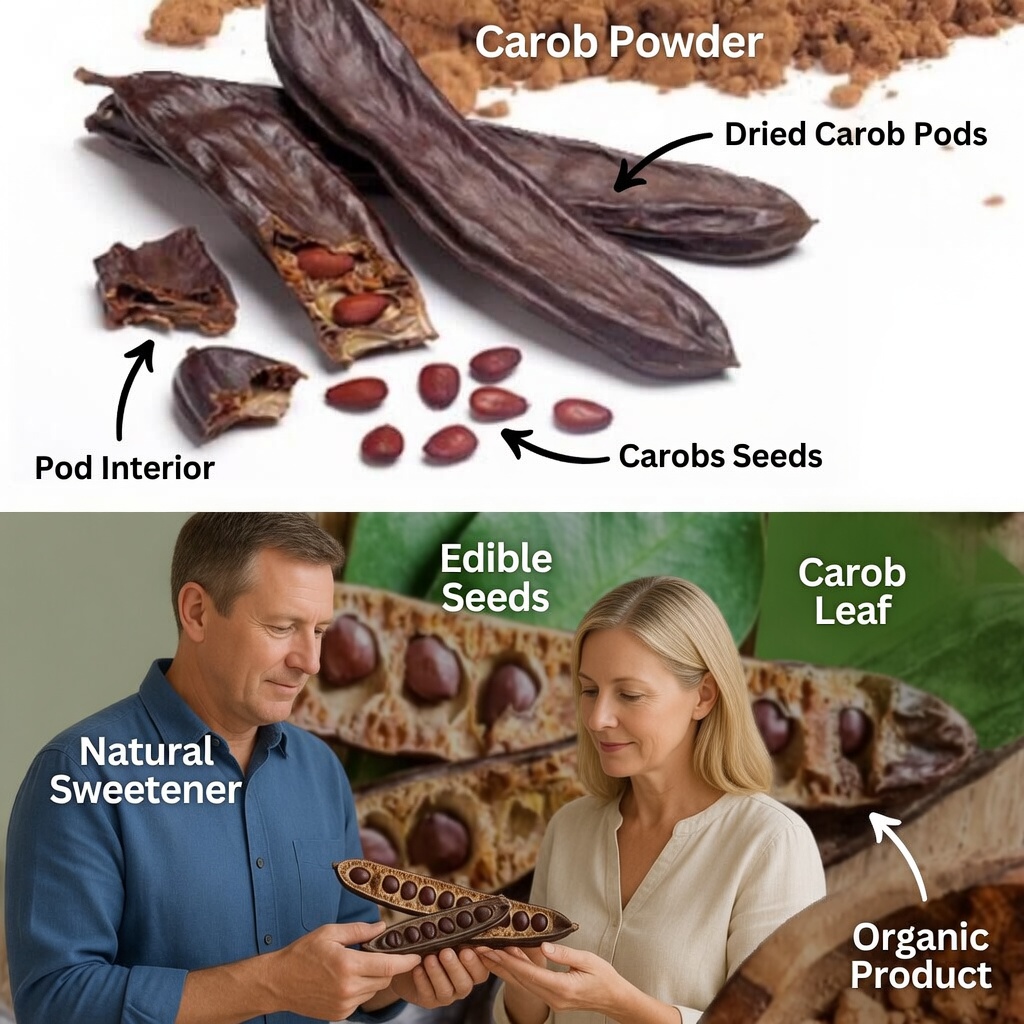
1. Carob Powder for Baking
- Substitute cocoa powder with carob powder in a 1:1 ratio in cakes, cookies, muffins, and brownies.
- Because carob absorbs liquid slightly differently, you may need to add a small amount of extra liquid if the batter seems too dry.
2. Carob Syrup
- Boil 5–6 carob pods in 4 cups of water for about 30 minutes.
- Strain the mixture, then return the liquid to the pot and simmer until it thickens into a syrup.
- Use as a topping for pancakes, waffles, yogurt, or oatmeal.
3. Carob Tea
- Add 1–2 dried carob pods or 2 tablespoons of carob powder to 3 cups of water.
- Boil for around 10 minutes, then strain.
- Serve warm as a comforting, caffeine-free drink.
4. Carob Milk
- Gently heat 2 cups of milk or plant-based milk.
- Whisk in 1 tablespoon of carob powder and a sweetener of your choice.
- Stir until smooth and enjoy as a hot or chilled beverage.
5. No‑Bake Carob Energy Bars
Ingredients (makes 8–10 bars):
- 200 g rolled oats, coarsely ground
- 100 g carob powder
- 100 g nuts (almonds, cashews, or a mixture)
- 150 g pitted dates (or raisins)
- 3 tbsp melted coconut oil
- 2 tbsp honey or maple syrup
- 1 tsp cinnamon (optional)
- A pinch of salt
Instructions:
-
Make a date paste
Place the dates in a blender or food processor and process until a smooth paste forms. -
Add dry ingredients
Add the oats, carob powder, ground nuts, cinnamon, and salt to the date paste. -
Combine
Pour in the melted coconut oil and honey or maple syrup, then blend again until the mixture becomes sticky and holds together. -
Shape the bars
Press the mixture firmly into a small tray lined with parchment paper, aiming for a thickness of about 2 cm. -
Chill and slice
Refrigerate for 2–3 hours or until firm, then cut into bars and store in the fridge.
6. Carob Spread
- Mix together:
- 2 tablespoons carob powder
- 1 tablespoon coconut oil
- 2 tablespoons honey
- 2 tablespoons milk powder
- Stir until smooth and creamy.
- Transfer to a jar and use as a spread on bread, toast, or crackers.
7. Carob Ice Cream (Nice Cream)
- Blend 3 frozen bananas with 1 cup of milk (dairy or plant-based), 2 tablespoons of carob powder, and a drizzle of honey.
- Once smooth, transfer to a container and freeze for 1–2 hours before serving for a soft, ice-cream-like dessert.
8. Homemade Carob Chips
- Combine 1/2 cup melted coconut oil with 1/2 cup carob powder and honey to taste.
- Spread the mixture onto a baking sheet lined with parchment paper.
- Freeze for about 1 hour, then break into small pieces and use as carob chips in cookies, granola, or trail mix.
Precautions and Possible Side Effects of Carob
While carob is generally considered safe and well tolerated, it is still important to be mindful of the following:
-
Natural Sweetness and Blood Sugar
Carob is naturally sweet, so people with diabetes or blood sugar regulation issues should consume it in moderate amounts and monitor their response. -
Potential Allergies
Though rare, some individuals—especially those with sensitivities to legumes—may experience allergic reactions to carob. -
Tannins and Digestion
Carob contains tannins, which in large quantities may lead to mild digestive discomfort, such as gas or bloating, in some people. -
High Fiber Intake
Despite being caffeine-free, consuming very large amounts of carob can still affect digestion due to its high fiber content. -
Introducing to Children
When giving carob to young children, start with small amounts and increase gradually to ensure there are no sensitivities or adverse reactions.
Carob is a flavorful, nutrient-rich, and caffeine-free alternative to cocoa that can easily be incorporated into drinks, desserts, and snacks. If you found these carob benefits and recipes helpful, share them with others and help spread the word about this underrated super ingredient.