Cancer can grow quietly for a long time, but the body sometimes sends early signals. These symptoms do not automatically mean cancer, yet they should not be dismissed—especially if they continue, return, or get worse over time.
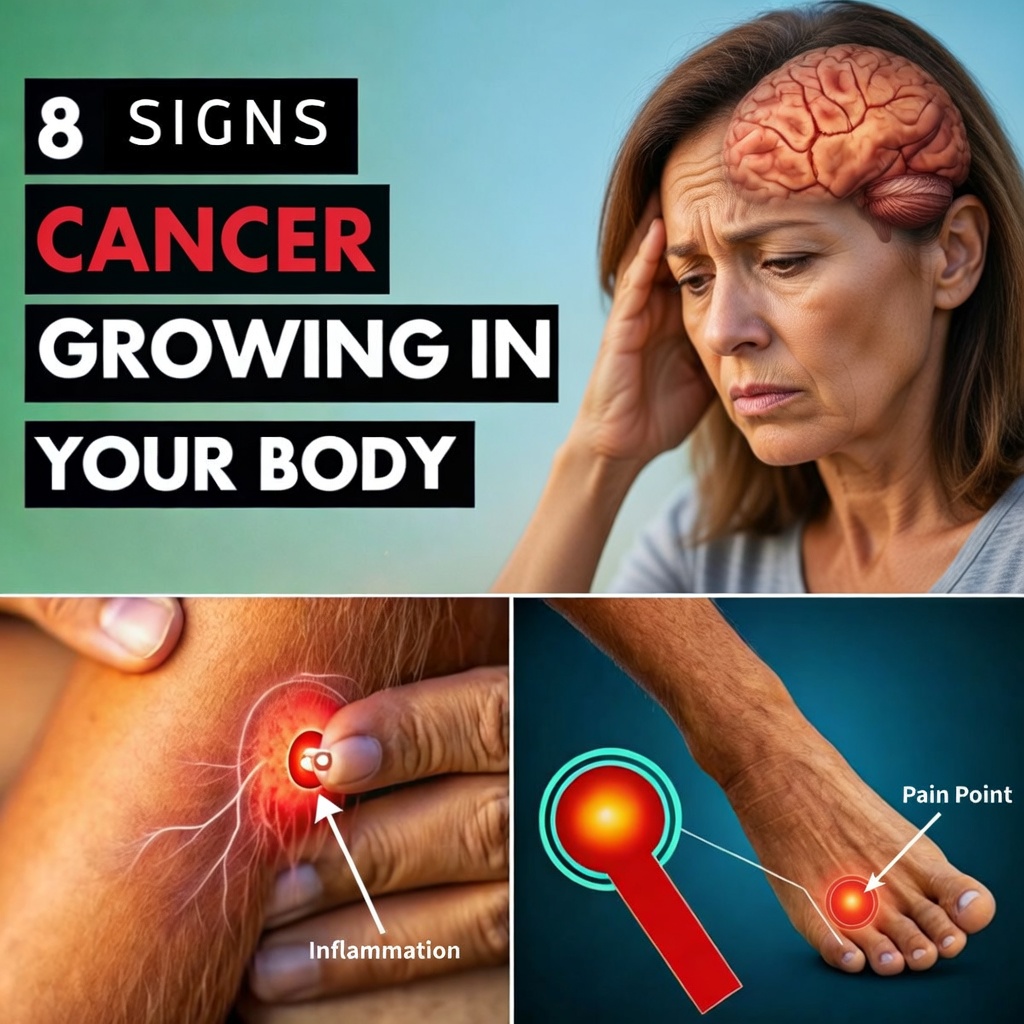
8 Possible Warning Signs of Cancer Growth
1. Unexplained weight loss
Losing 10 pounds (about 4.5 kg) or more without changing your diet or activity level can be an early sign of certain cancers, including:
- Pancreatic cancer
- Stomach cancer
- Lung cancer
- Esophageal cancer
Cancer can increase the body’s energy use and may interfere with normal metabolism.
2. Ongoing, unusual fatigue
This is more than everyday tiredness—it’s persistent exhaustion that doesn’t improve even after rest. It can appear in cancers such as:
- Leukemia
- Colon cancer
- Stomach cancer
In some cases, fatigue may be linked to internal bleeding or changes in how blood cells are produced and function.
3. New lumps or thickened areas under the skin
A new or growing lump can be a warning sign, especially if it appears in the:
- Breast
- Neck
- Testicles
- Armpit
- Groin
Even if a lump is painless, it should be checked—particularly if it increases in size.
4. Noticeable skin changes
Skin can reflect underlying health issues. Watch for:
- Skin that becomes darker, yellow, or red
- Sores that do not heal
- A new mole or changes to an existing mole (size, shape, color, bleeding), which may be associated with melanoma
5. Chronic pain with no clear explanation
Pain that lasts and doesn’t respond to typical treatment deserves attention, especially when it involves:
- Back pain (sometimes linked to bone or ovarian cancer)
- Head pain (may occur with a brain tumor)
- Abdominal pain (can be associated with liver, colon, or pancreatic cancer)
6. A cough or hoarse voice that won’t go away
A cough or hoarseness lasting more than three weeks, especially if you notice blood in mucus, should be evaluated. It can be connected to:
- Lung cancer
- Throat cancer
- Thyroid cancer
7. Changes in bowel or bladder habits
Long-lasting digestive or urinary changes can be important clues, including:
- Blood in stool or urine
- Ongoing constipation or diarrhea
- Frequent urination that feels unusual
- Pain or burning with urination
These symptoms may be related to cancers such as:
- Colon cancer
- Prostate cancer
- Bladder cancer
- Kidney cancer
8. Unusual bleeding or unexpected discharge
Bleeding that isn’t normal for you should never be ignored, such as:
- Vaginal bleeding between periods or after menopause (possible cervical or uterine cancer)
- Nipple discharge (can be linked to breast cancer)
- Bleeding from the rectum, blood in urine, or coughing up blood
When to see a doctor
If one or more of these signs lasts longer than 2–3 weeks, consider taking action:
- Schedule a medical evaluation and discuss screening
- Ask whether blood tests or imaging may be appropriate
- Follow through with a specialist referral if recommended
Why early detection matters
Finding cancer early can make a major difference. Many types of cancer are highly treatable—and sometimes curable—when caught in the early stages.