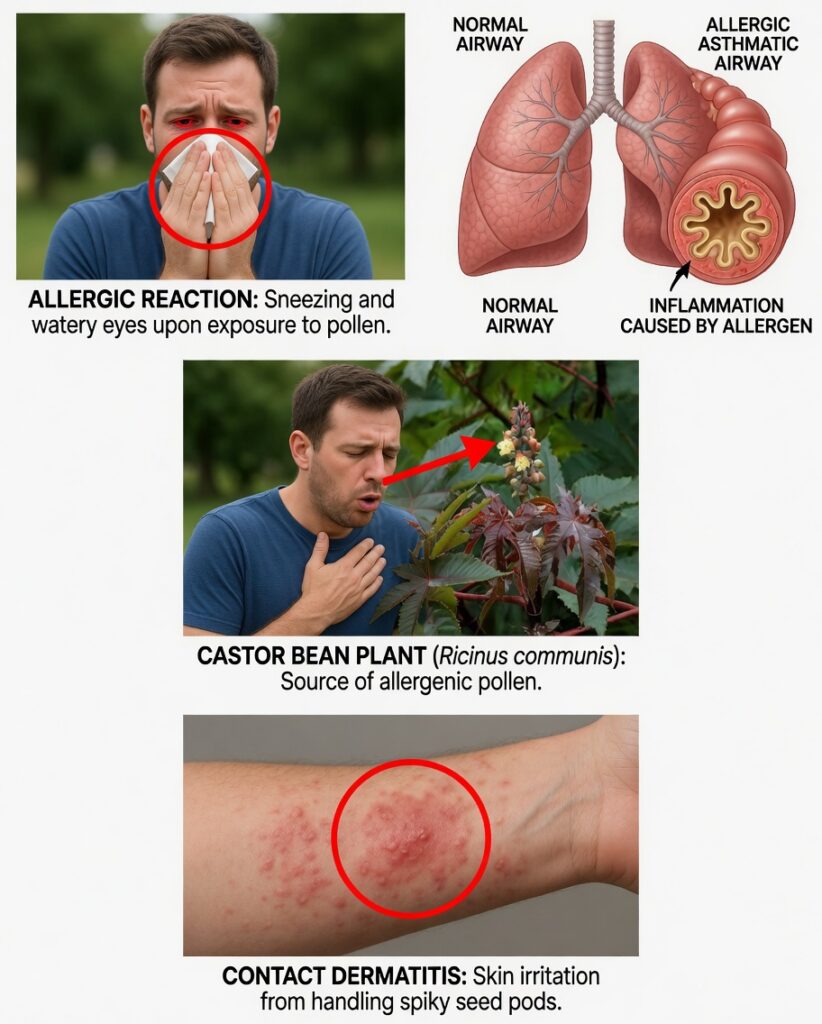
Castor Bean Plant (Ricinus communis): Benefits, Uses, and Safety Concerns
The castor bean plant (Ricinus communis) is a rapid-growing tropical species recognized for its bold, decorative leaves and oil-rich seeds. It’s cultivated around the world primarily for castor oil, a valuable ingredient in health products and manufacturing. At the same time, the plant has a serious reputation because its seeds contain ricin, an extremely poisonous substance. Even with this risk, castor has a long history of use in traditional medicine, agriculture, and industry.
Botanical Overview
Key facts about Ricinus communis:
- Scientific name: Ricinus communis
- Common names: Castor bean plant, Palma Christi
- Plant family: Euphorbiaceae
- Origin: Native to parts of Africa and India, now widely grown globally
- Growth habit: Fast-growing; commonly reaches 6–15 feet (1.8–4.6 m) with large, palmate foliage
- Toxicity: Seeds contain ricin, a potentially fatal toxin
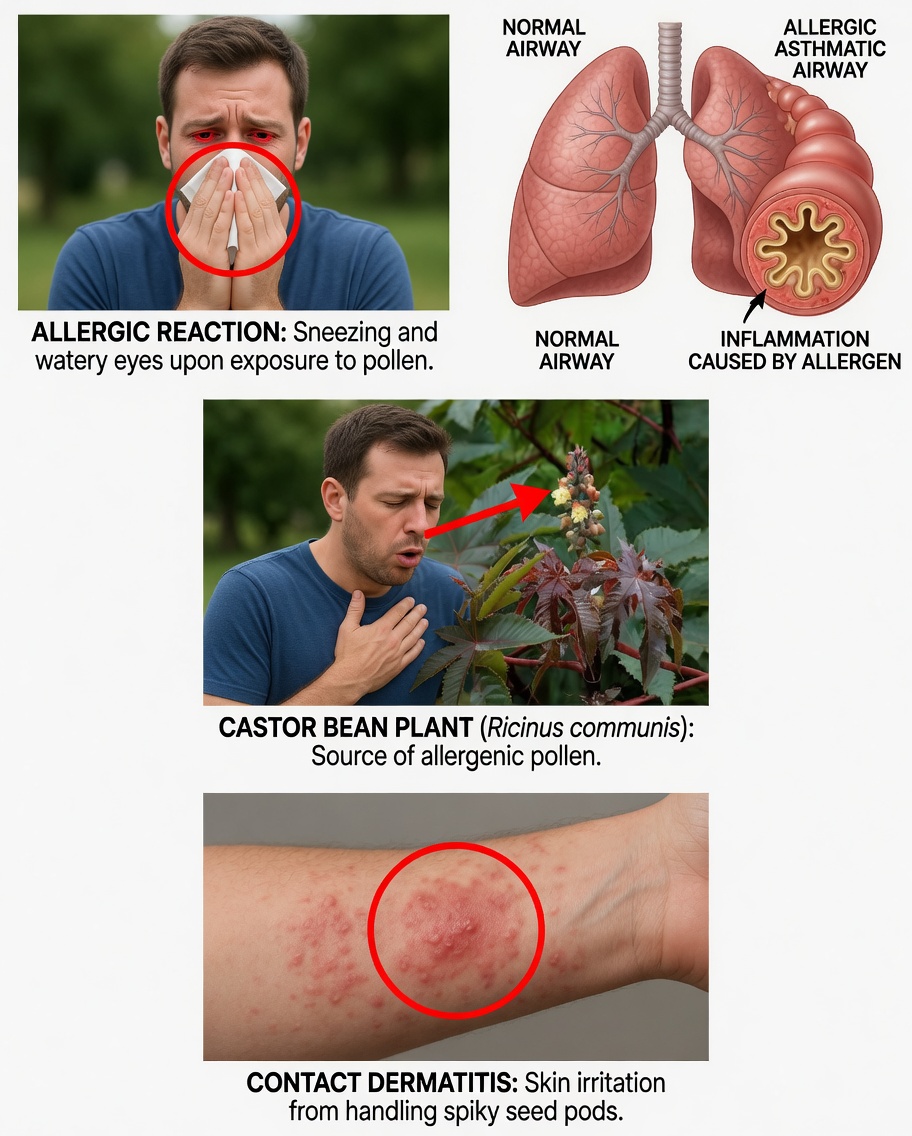
Health and Medicinal Uses of Castor Oil
Although the seeds are toxic, castor oil—when properly extracted and purified—is considered safe and is widely used in wellness and personal care. Common benefits and traditional uses include:
- Digestive support: Often used as a laxative to relieve constipation
- Pain and inflammation relief: Applied in routines for joint discomfort, including arthritis-related soreness
- Skin and hair care: Used to hydrate dry skin, improve the look of fine lines, and support hair conditioning and growth
- Wound care support: Known for properties associated with microbial resistance
- Traditional detox support: Used in Ayurvedic practices as part of cleansing routines
Important safety note: Never eat castor seeds. Only purified castor oil is intended for use.
Industrial and Cosmetic Applications
Castor oil is also a major ingredient in many commercial and manufacturing processes due to its chemical stability and performance:
- Industrial lubricant: Used in machinery and specialized engine applications
- Cosmetics and skincare: Common in soaps, lotions, lip products, and makeup
- Biofuel potential: Explored as a renewable energy option
- Plastics and coatings: Used in production of biodegradable plastics, as well as paints and related materials
Gardening and Agricultural Benefits
Beyond oil production, the castor plant is used in gardens and farming for both function and appearance:
- Natural pest deterrent: Helps repel certain rodents and insects
- Soil improvement: Can contribute to soil enrichment when processed appropriately as fertilizer
- Ornamental value: Popular for its tropical, dramatic look in landscapes
Warning: Keep castor bean plants away from children and pets. Seed ingestion can be deadly.
Interesting Facts About the Castor Plant
- In ancient Egypt, castor oil was used for both medicine and lamp fuel.
- The seeds are so toxic that only a few may cause severe poisoning.
- Ricin has been researched in controlled settings for possible medical applications, including cancer-related studies, at extremely low doses.
- Historically, castor oil has also been used as a punitive laxative in certain times and places.
Final Thoughts
The castor bean plant is truly a double-edged sword: its oil is valued worldwide for health, beauty, and industrial uses, yet its seeds contain one of the most dangerous natural toxins. With responsible handling and the use of properly refined castor oil, it remains one of the most versatile natural products in modern life.