Grow Mushrooms at Home Using Store-Bought Mushrooms (Step-by-Step)
Growing mushrooms at home from store-bought varieties—especially oyster mushrooms—is a satisfying project that can turn a simple grocery purchase into several future harvests. With a clean setup, the right substrate, and steady humidity, you can create your own small mushroom-growing system indoors.
Materials You’ll Need
- Store-bought oyster mushrooms (other varieties can work, but oysters are beginner-friendly)
- A sterilized jar with a lid (for starting and expanding mycelium)
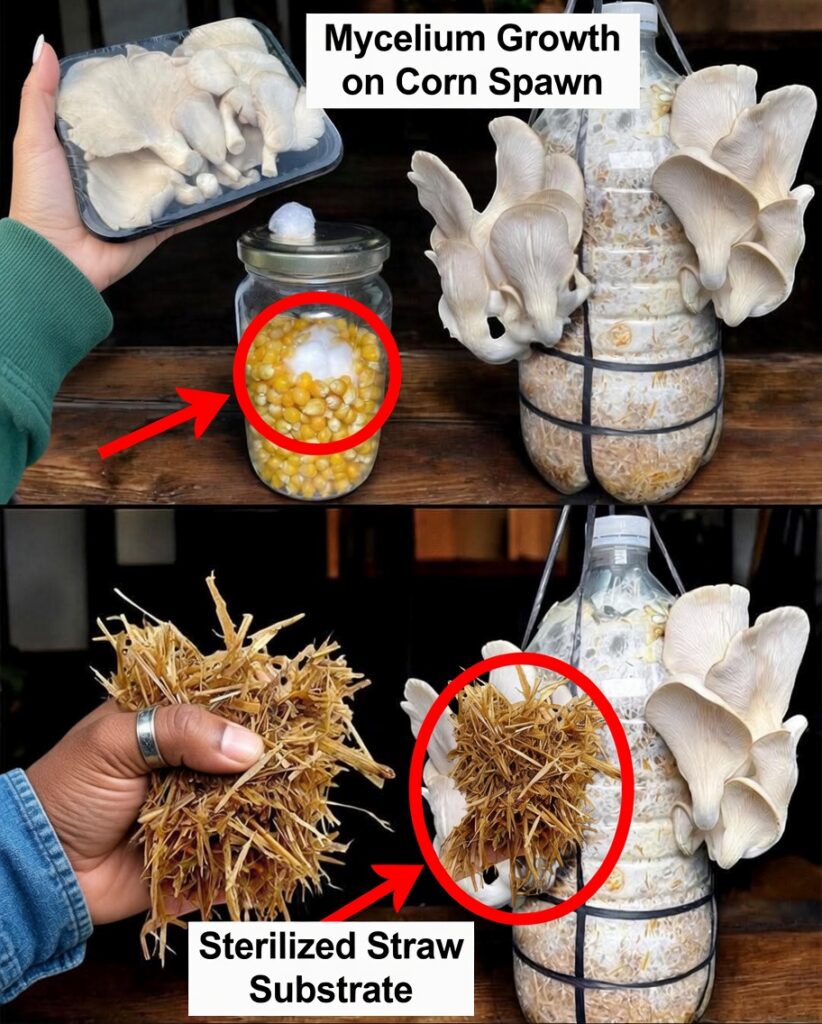
- Grains for spawn (such as corn kernels or wheat berries)
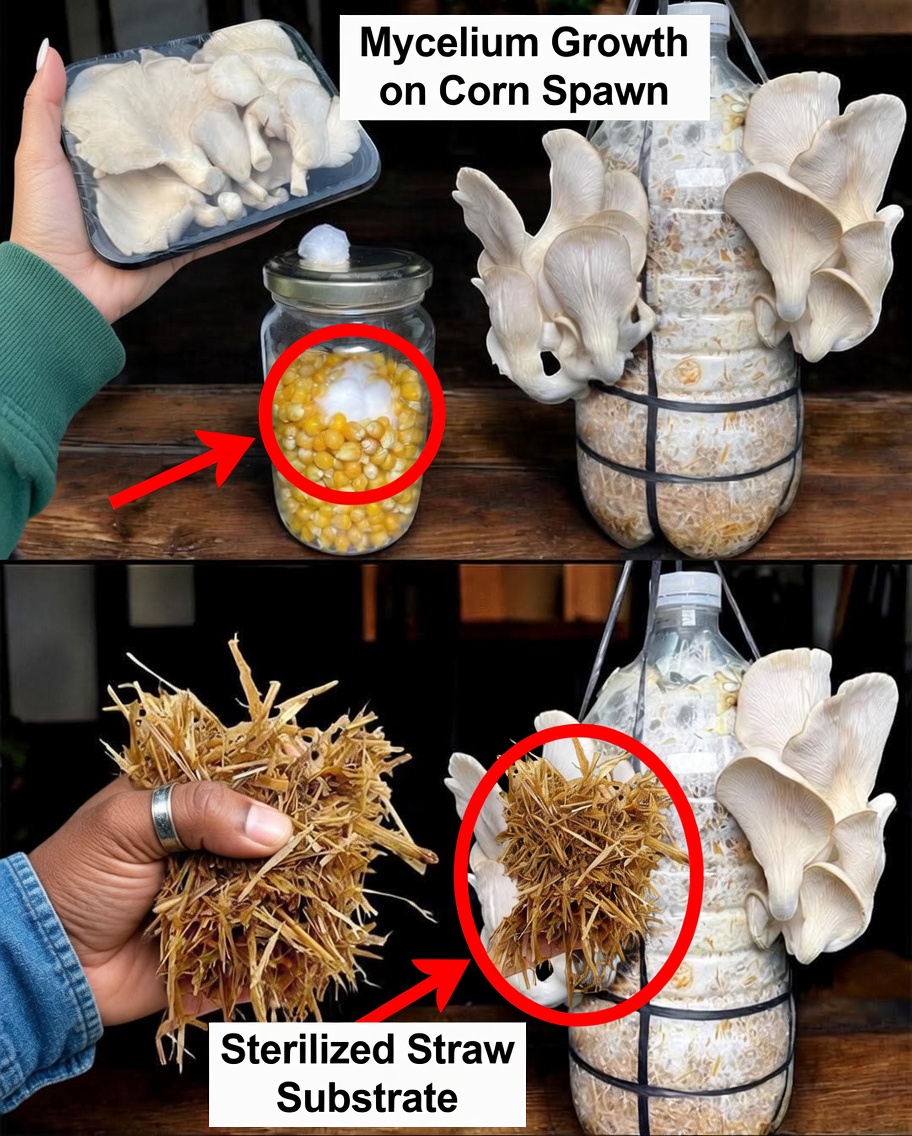
- Straw or sawdust (your mushroom substrate)
- A clean plastic bottle or plastic grow bag (for colonization and fruiting)
- Water + a spray/misting bottle
- Cotton or a filter patch (for airflow on the jar lid while blocking contaminants)
- Rubber bands or string (to secure plastic bags or improvised covers)
Step 1: Make a Mycelium Starter (Grain Spawn)
- Select fresh mushroom tissue: Take a few pieces of your store-bought oyster mushrooms and cut the stem ends into small chunks.
- Prepare grain in a sterile jar: Cook/boil grains (corn or wheat berries) until hydrated, then place them in a sterilized jar.
- Inoculate the grains: Add the mushroom stem pieces into the jar and gently distribute them among the grains.
- Allow filtered air exchange: Close the jar using a lid fitted with a small cotton plug or filter so the mycelium can breathe without inviting contamination.
- Incubate: Keep the jar in a dark place at 20–25°C (68–77°F) for about 7–14 days, until you see white mycelium spreading through most or all of the grains.
Step 2: Prepare and Inoculate the Substrate (Straw or Sawdust)
- Hydrate the substrate: Soak straw (or sawdust, depending on what you use) in water overnight.
- Pasteurize/sterilize to reduce contamination:
- Boil or steam the substrate for about 1 hour to kill competing microbes.
- Drain and cool completely: This is essential—adding spawn to hot substrate can kill the mycelium.
- Combine spawn and substrate: Mix your fully colonized grains (from Step 1) into the cooled substrate inside a clean plastic bottle or grow bag.
- Pack and add airflow points: Compress the mix firmly and make small holes in the plastic to support gas exchange.
Step 3: Incubation (Colonization Phase)
- Store the packed bottle/bag in a warm, dark area for 2–3 weeks.
- Check occasionally. The goal is full colonization: the substrate should turn white as mycelium spreads throughout.
Step 4: Fruiting (Getting Mushrooms to Grow)
- Move to fruiting conditions: Once fully colonized, place the container in a humid, well-ventilated spot with indirect light.
- Create openings for growth: Cut small slits in the plastic where you want mushrooms to emerge.
- Maintain humidity: Mist with water 2–3 times per day (avoid soaking—steady humidity is the key).
- Watch for pins and clusters: Oyster mushrooms often begin forming within 5–10 days.
Step 5: Harvest and Encourage More Flushes
- Harvest when caps are fully formed and opening. Twist gently and pull the cluster off cleanly.
- Keep misting and maintaining conditions to trigger additional flushes (multiple harvest rounds are common).
A Simple Way to Recycle Store-Bought Mushrooms
This approach lets you reuse store-bought mushrooms to produce a renewable home supply, using basic materials and a bit of patience. With clean technique and consistent moisture, you can enjoy fresh mushrooms grown right at home.