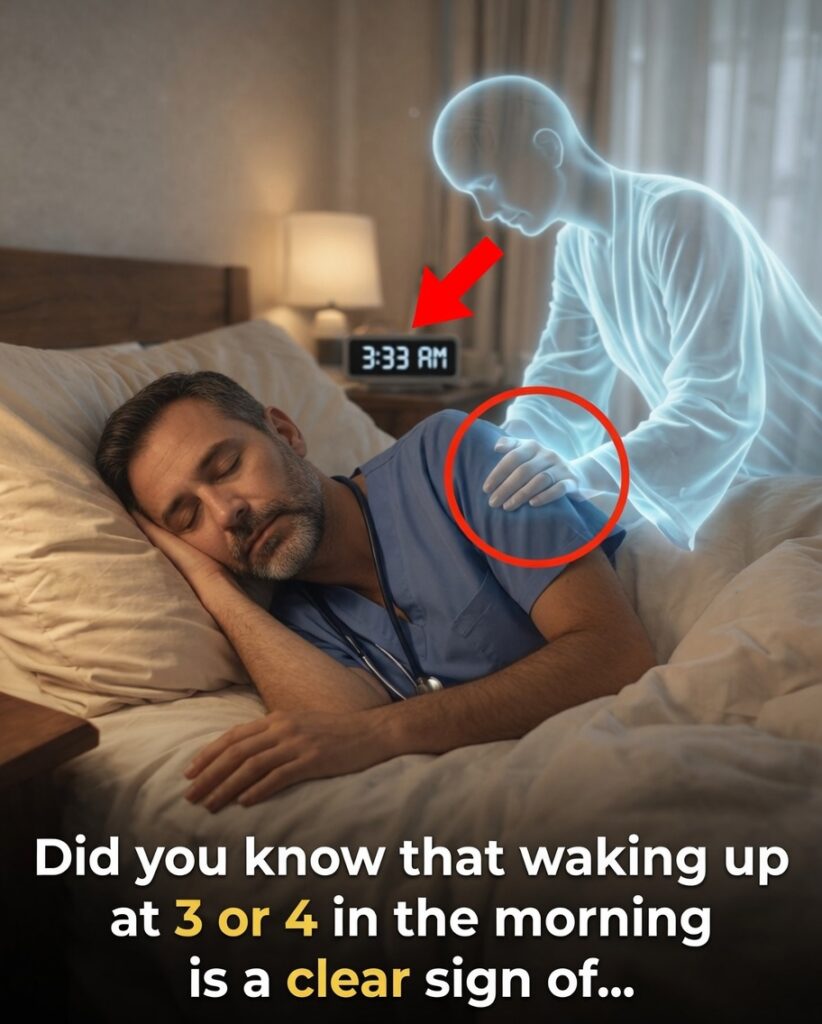
Waking Up Between 3 a.m. and 5 a.m.? Your Body May Be Signaling Something — A Simple Method to Sleep Better
You turn over in bed in the deep quiet of night, and suddenly your eyes snap open at 3:17 a.m.—again. The house is still, everything feels calm… except you. You stare at the ceiling as frustration builds, and sleep refuses to return.
You already know what comes next: fatigue the following day, mental fog, unexplained irritability, and that lingering sense that something is quietly draining your energy.
It can feel like your own body is working against you. But what if these early-morning wake-ups aren’t “just insomnia”—and are instead a clue that something deeper is happening? Keep reading, because reframing this pattern can change the way you experience those restless hours.

What Science Says About Waking Up in the Middle of the Night
Your body runs on a highly organized circadian rhythm. Throughout the night, you move through sleep stages, and in the later hours, sleep naturally becomes lighter. That means small changes—like a shift in temperature, a faint sound, or even a single thought—can wake you more easily.
Another key factor is cortisol, often called the “wake-up hormone.” It begins rising naturally in the early morning (often around 2–3 a.m.) to prepare the body for daytime alertness. If you’re already under stress, that rise can be strong enough to wake you completely.
Common triggers that can make early waking more likely include:
- Evening screen time (blue light exposure)
- Eating dinner too late or too heavily
- Hormonal changes (especially for women)
- An irregular sleep schedule
Understanding this matters: your body isn’t sabotaging you—it’s responding to internal and external cues.
The Traditional Chinese Medicine (TCM) Perspective: Lungs and the 3–5 a.m. Window
In Traditional Chinese Medicine, each time period of the day is linked to specific organs and energy flow. The hours between 3 a.m. and 5 a.m. are commonly associated with the lungs.
In this framework, the lungs are connected not only to breathing, but also to emotional processing—especially sadness, grief, and letting go.
If you frequently wake during this window, TCM may interpret it as a sign of:
- Suppressed emotions
- A need to “release” something internally
- An imbalance in vital energy (Qi)
In other words, it can be viewed as the body asking for a kind of physical and emotional clearing.
A Spiritual Lens: Could It Be an Inner Wake-Up Call?
Many spiritual traditions consider the early morning hours to be a quiet, powerful time—when the world is still and the mind is more receptive.
Some cultures refer to this period as Brahma Muhurta, a time often recommended for meditation and inner connection.
From this angle, waking up may not be a “problem” to fix, but an invitation to listen. People who experience it repeatedly often report:
- More vivid or meaningful dreams
- Heightened emotional sensitivity
- A strong desire to change something in life
- Sharper intuition
- Increased interest in meditation, journaling, or reflection
It can feel as if awareness is gradually surfacing.
Important: Not Every Wake-Up Has a Deep Meaning
Balance matters. While these perspectives can be helpful, not every 3 a.m. awakening is symbolic.
Very common medical or lifestyle-related causes include:
- Anxiety and chronic stress
- Acid reflux
- Sleep apnea
- Medication side effects
If this pattern is frequent and harms your quality of life, it’s essential to consult a qualified healthcare professional.
A Simple Routine to Turn 3–5 a.m. Wake-Ups Into Something Positive
Instead of fighting the moment, try meeting it with calm. Here’s an easy, practical approach you can follow:
- Breathe slowly and deeply: inhale for 4 seconds, hold for 4, exhale for 6
- Write down any thoughts or emotions that appear (a quick note is enough)
- Avoid your phone (light and scrolling can fully wake your brain)
- If sleep doesn’t return, get up briefly and do something gentle (like quiet reading)
- Build a consistent night ritual: dim lights, calming tea, and no screens after 9 p.m.
Over time, this can support not only better sleep—but also better emotional regulation and overall well-being.
A New Way to Understand Your Early-Morning Insomnia
Waking between 3 and 5 a.m. doesn’t have to be torture. It can become a moment of reconnection—with your body, your feelings, and possibly something deeper within you.
Maybe your body isn’t failing. Maybe it’s trying to communicate.
Listen gently. Respond calmly. And trust that rest can return.
Frequently Asked Questions
-
Is waking up between 3 a.m. and 5 a.m. always spiritual?
No. It may simply reflect biology, stress, or lifestyle factors. -
How can I stop waking up at 3 a.m. naturally?
Improve sleep hygiene: keep a consistent schedule, sleep in a dark cool room, and avoid caffeine and screens at night. -
What should I do if I wake up during that time?
Use slow breathing, relax your body, and—if it helps—do light reflection or gentle meditation.
Disclaimer: This content is for informational purposes only and does not replace medical advice. If the issue continues, seek guidance from a qualified professional.