After 50, This Small Food Can Support Stronger Bones, Calm Your Body, and Boost Daily Energy
As we get older, subtle shifts often start to appear: stiffness when you wake up, lighter or interrupted sleep, and that nagging feeling that your energy isn’t what it used to be. Over time, these changes can make everyday tasks feel harder—and it’s natural to wonder what you can do, in a simple and natural way, to feel better again.
What if one small daily habit could quietly help your body regain balance and vitality? Keep reading—you may be surprised by what these tiny seeds can do.
Why Pumpkin Seeds Deserve More Attention
Pumpkin seeds (also known as pepitas) are a compact, nutrient-dense food. A serving of about 30 g (roughly 1/4 cup) delivers key nutrients such as magnesium, zinc, healthy fats, protein, and antioxidants.
Magnesium is especially important after 50. It supports over 300 processes in the body, including muscle function, energy production, and bone health. Many adults in this stage of life don’t get enough magnesium through diet alone.
Zinc also plays a major role in immune health, hormonal balance, and cellular protection. For men, zinc is additionally linked to prostate comfort.
On top of that, pumpkin seeds contain anti-inflammatory compounds and antioxidants that can support overall wellness.
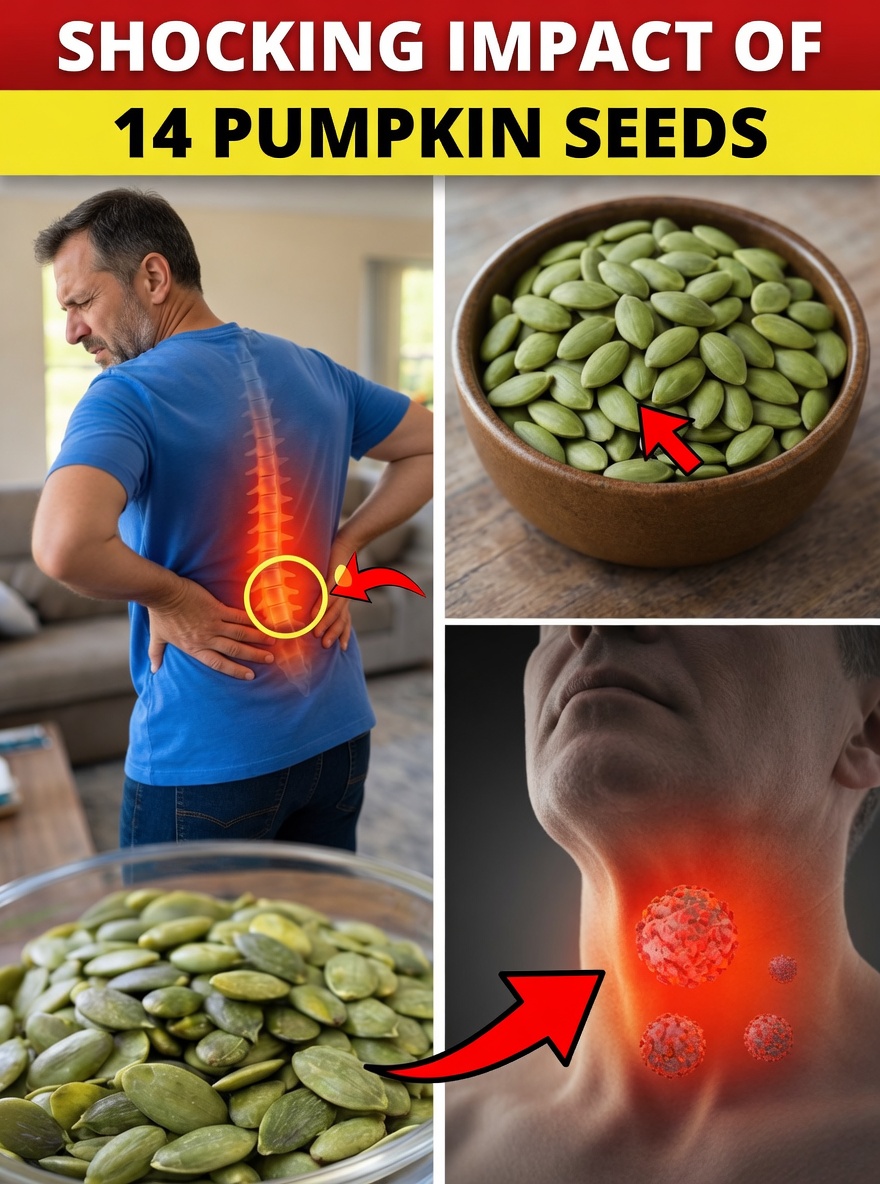
Potential Benefits of Eating Pumpkin Seeds Daily (What Research Suggests)
When eaten regularly, pumpkin seeds may contribute to:
- Muscle and joint comfort: thanks to magnesium and anti-inflammatory properties
- Bone health: support for maintaining bone mineral density
- Better sleep quality: they contain tryptophan, which supports relaxation
- Heart health: may help support normal blood pressure and healthy blood sugar levels
- Male urinary comfort: some studies suggest improvement in mild symptoms over time
Important note: results tend to be gradual, not instant. Consistency matters most.
Moderation Matters: How Much Is Too Much?
Even healthy foods can cause issues when overdone. Because pumpkin seeds contain a lot of fiber and fats, eating too many may lead to digestive discomfort such as gas, bloating, or heaviness.
A common safe daily amount:
- About 1 handful per day (25–30 g)
If you’re not used to eating them, begin with a smaller portion and see how your body responds.
Precautions to Keep in Mind
- If you have low blood pressure or take medications, use caution
- Allergic reactions are uncommon, but possible
- When in doubt, speak with a healthcare professional—especially if you have a medical condition
Simple Ways to Add Pumpkin Seeds to Your Routine
Try any of these easy options:
- Sprinkle them on yogurt or oatmeal
- Add to salads or cooked vegetables
- Blend into smoothies
- Lightly toast with olive oil and herbs (low oven for 20–30 minutes)
Extra tip: eating pumpkin seeds in the evening may support relaxation and better sleep.
If chewing is difficult, grind them and stir into soups, sauces, or spreads.
Signs You May Be Eating Too Many
Cut back if you notice:
- Bloating or abdominal discomfort
- A heavy stomach feeling
- Blood pressure changes (if you track it)
The Real Secret: Small Habits Done Consistently
Pumpkin seeds aren’t a miracle cure—but they can be a powerful, natural addition to a healthy diet. They may help fill common nutritional gaps that appear with age and support steadier energy, better rest, and everyday comfort.
Many people report subtle improvements over time—like feeling more rested, more balanced, and more comfortable in daily life. Sometimes, the simplest habits really can make a meaningful difference.
Frequently Asked Questions
How many pumpkin seeds should I eat per day?
About 30 g (1/4 cup) is a practical daily amount.
Can pumpkin seeds help with sleep?
They may support sleep thanks to tryptophan and magnesium.
Is it better to eat them raw or roasted?
Both can be beneficial. Lightly roasted seeds are often easier to digest.
With shells or without?
Shell-free pepitas are generally gentler on the stomach.
Disclaimer: This content is for informational purposes only and does not replace medical advice. Talk to a healthcare professional before changing your diet, especially if you have existing conditions or take medications.