Staying Safe Outdoors: Why Knowing Datura Matters
Spending time outside is a favorite activity for many families, but unfamiliar plants can raise understandable concerns—especially when they look similar to common garden flowers or weeds. That uncertainty can lead to worry about accidental contact, particularly for curious children and pets.
Learning how to recognize specific plants such as Datura helps you create a safer yard, garden, and neighborhood. Keep reading to the end to discover a simple daily habit that makes plant awareness almost automatic for everyone in your home.
What Is Datura?
Datura is a group of flowering plants in the nightshade family (Solanaceae). Several species grow widely across the United States and many other regions, especially in warm or temperate climates. You’ll often find them in:
- Disturbed soils
- Roadsides and vacant lots
- Gardens and open fields
Botanical research describes Datura species as annual or perennial herbs that can grow up to about 5 feet tall. Their stems often branch and may appear slightly purple or covered with fine hairs.
Recognizing Datura early supports safer outdoor routines and helps you decide whether removal or extra caution is needed.
How to Identify Datura: Key Features
Datura identification begins with looking at the overall shape of the plant, then focusing on its leaves, stems, flowers, and fruits.
Leaves and Stems
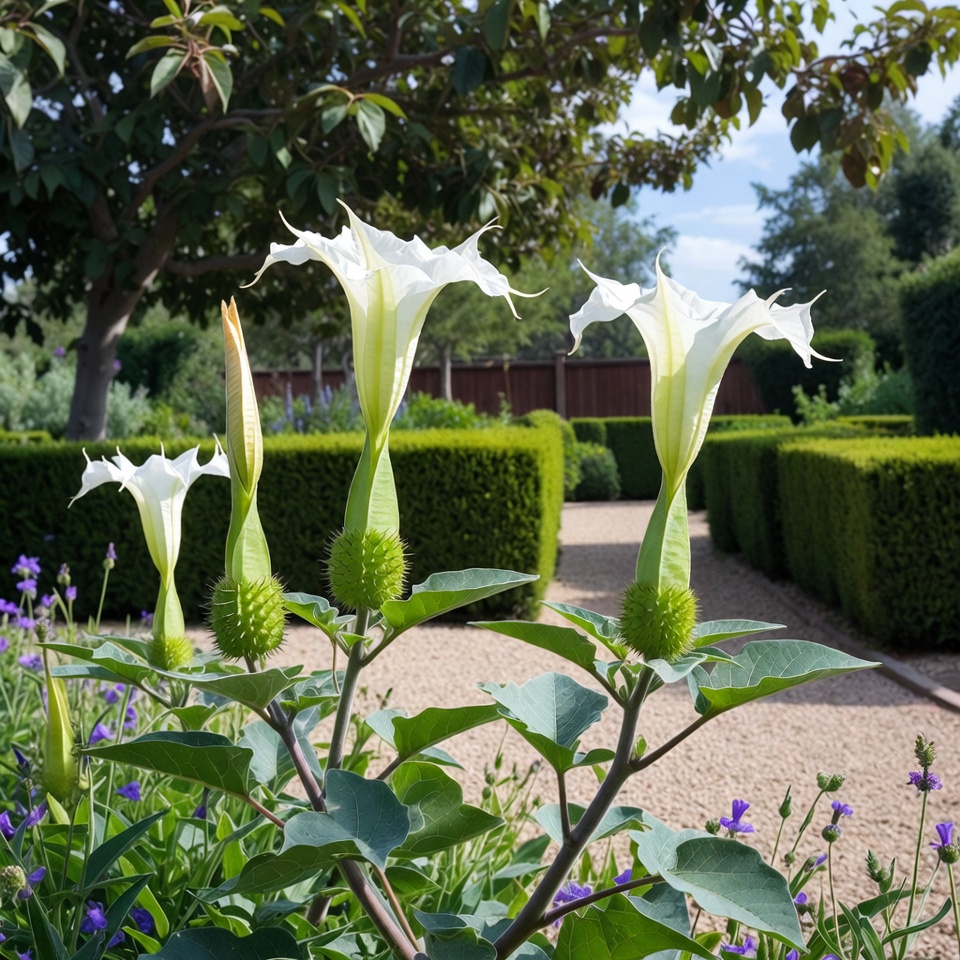
Datura leaves are one of the first clues:
- Size: Typically 3–8 inches long
- Shape: Broad, football- to egg-shaped
- Edges: Wavy or toothed (jagged) margins
- Color: Usually dark green
- Texture: Coarse or slightly rough
When a leaf is crushed, it releases a strong, unpleasant smell—often compared to a mix of wet dog and rancid peanut butter.
The stems are:
- Thick and sturdy
- Pale green to purple in color
- Sometimes covered with fine hairs in certain species
Some people may experience skin irritation from the plant’s sap, so it’s best to avoid handling Datura with bare hands.
Flowers
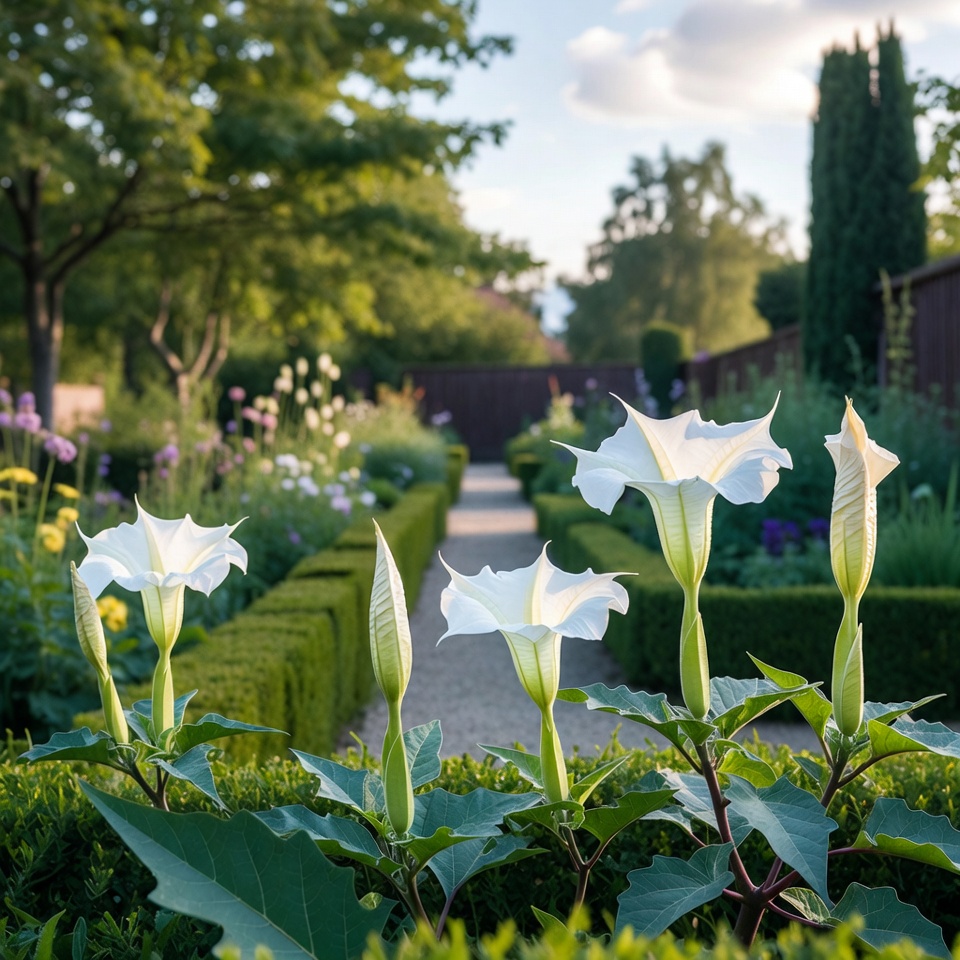
Datura’s flowers are striking and easy to notice once you know what to look for:
- Shape: Large, trumpet-like blooms
- Orientation: Either drooping downward or held upright
- Color: Commonly white, but some species can be pink or purple
- Structure: Pointed lobes at the edge of the trumpet
These flowers are vespertine, meaning they typically open in the evening. At that time, they release a sweet fragrance that attracts night-active pollinators.
Research notes that the flowers can reach up to about 8 inches in length, making them very noticeable at dusk. They often bloom from summer into fall, depending on climate and location.
Fruits and Seeds
Once the flowers fade, Datura produces distinctive fruit:
- Shape: Round or egg-shaped capsules
- Surface: Covered with sharp spines (hence the common name “thornapple”)
- Color: Green when young, turning brown as they dry
- Structure: When mature, the capsules split into four sections
Inside are numerous small, kidney-shaped seeds. Although they may vaguely resemble tiny tomato seeds, they are not safe to handle or ingest and should be treated with caution.
Datura vs. Look-Alike Plants
Several plants can be confused with Datura at a glance. Comparing specific features can help you avoid misidentification.
Comparison Guide
| Feature | Datura | Morning Glory (Look-Alike) | Brugmansia (Related Plant) |
|---|---|---|---|
| Flower Shape | Trumpet-shaped, hanging or upright with pointed lobes | Upright, funnel-shaped flowers | Very large, hanging trumpet flowers |
| Leaf Edges | Jagged, toothed or wavy | Mostly smooth or slightly wavy | Broad leaves, often wavy |
| Fruit | Spiky, thornapple-like capsules | Smooth seed pods | Smooth or slightly bumpy fruits |
| Smell | Foul odor when leaves are crushed | Usually mild or no strong scent | Sweet, pleasant fragrance |
| Stem | Often purple-tinged and hairy | Green, typically smooth | Woody, shrub- or tree-like stems |
These differences, documented in botanical references, can help you distinguish Datura from other similar plants in gardens or wild spaces.
Health and Safety Considerations
All parts of the Datura plant contain naturally occurring chemicals such as atropine, scopolamine, and hyoscyamine. Scientific and medical sources report that these substances can affect the nervous system if eaten or absorbed in significant amounts.
Possible symptoms of exposure may include:
- Dry mouth and skin
- Blurred or altered vision
- Rapid heartbeat
- Confusion or agitation in more serious cases
The CDC and poison control centers have documented accidental exposures to Datura, especially among children and individuals who were unaware of its toxicity.
Key points to remember:
- Avoid touching the plant with bare skin if possible.
- Wear gloves when handling unknown plants in your yard.
- Do not allow children or pets to play with or chew on leaves, flowers, or seed pods.
Most reported incidents involve unintentional contact or ingestion, emphasizing the importance of early recognition and education.
Step-by-Step: How to Identify Datura Safely
Use the following approach to examine a suspected Datura plant while minimizing risk:
-
Look from a distance
Scan for large trumpet flowers and spiky seed pods without touching the plant. -
Note the growing site
Datura often appears in sunny spots with disturbed soil, such as garden edges, fields, or roadsides. -
Assess the smell carefully
Without grabbing the leaves, gently move air toward your nose with your hand. Datura leaves often have a harsh, disagreeable odor when crushed. -
Cross-check with reliable sources
Use a plant identification app, field guide, or local extension service to compare photos and descriptions. -
Take clear photos
Capture images of the whole plant, leaves, flowers, and fruits. These can be shared with gardening experts or local botany groups for confirmation.
Adopting these habits promotes careful, informed observation rather than casual handling.
Everyday Habits for Ongoing Plant Safety
Simple routines can dramatically reduce the risk of unwanted contact with hazardous plants:
-
Weekly garden walk-throughs
Regularly check your yard, garden, or property boundary for new or unfamiliar plants. -
Teach easy safety phrases
Use memorable lines with children, such as:
“Spiky pod, trumpet bloom—give it room.” -
Favor native or well-known plants
Choosing local, non-invasive species can help crowd out undesirable plants and make your garden easier to manage. -
Connect with local plant groups
Join a gardening club, native plant society, or online community in your region to share photos, ask questions, and learn from others.
Researchers consistently note that repeated exposure to plant identification skills builds long-term environmental awareness.
Safe Removal of Datura Plants
If you discover Datura on your property and decide to remove it, handle the process with care.
Step-by-Step Removal Guide
-
Wear protective clothing
Put on sturdy gloves, long sleeves, long pants, and eye protection to reduce skin contact. -
Uproot the plant
In moist soil, use a shovel or weeding tool to pull the entire plant, including roots, especially when plants are young and easier to remove. -
Contain the plant material
Place all plant parts—leaves, stems, flowers, and seed pods—into a strong garbage bag. Seal it securely. -
Dispose according to local guidelines
Follow municipal instructions for disposal of yard waste. Avoid composting Datura, as seeds may survive and spread. -
Monitor the area
Over the next few weeks, check for new seedlings and remove them promptly. -
Limit chemical use if possible
Manual removal is often safer for beneficial insects and nearby plants than broad herbicide applications.
These steps, consistent with weed management recommendations, help minimize exposure while protecting your local environment.
What to Do If You’re Concerned About Exposure
If you suspect contact with Datura:
-
Wash the area
Rinse skin thoroughly with soap and water as soon as possible. -
Observe for symptoms
Watch for irritation, rash, or any unusual physical sensations. -
Seek medical guidance when needed
If there are signs of illness, eye irritation, or ingestion, contact a healthcare professional or poison control center immediately.
Prompt response, as shown in poison control data, can reduce the severity of symptoms and provide peace of mind.
Insights from Scientific Research
Studies on Datura emphasize both its ecological presence and its potential health risks:
- Toxicity levels can vary with plant age, growing conditions, and even individual plants.
- Animal studies show notable effects on the nervous system, reinforcing the need for caution.
- Reviews of human cases highlight the role of education and early recognition in preventing serious outcomes.
Commonly reported effects in research include:
- Dry mouth and skin
- Rapid or irregular heart rate
- Visual disturbances (such as dilated pupils or blurred vision)
- Stomach discomfort or nausea
Understanding these findings supports safer handling and more informed decision-making around Datura.
Creating a Safer Outdoor Environment
You can encourage curiosity about nature while still prioritizing safety:
- Explore plant guides together as a family.
- Ask children to point out plants they don’t recognize instead of touching them.
- Use outdoor time as an opportunity to practice identification skills.
Now for that unexpected daily habit:
Turn “plant spotting” into an evening game. During walks or time in the yard, challenge family members to notice and describe different plants—shape, color, flowers, and pods—without touching them. Over time, this playful routine makes plant awareness second nature for everyone.
By learning the key traits of Datura—such as trumpet-shaped flowers, jagged leaves, and spiky “thornapple” seed pods—and combining that knowledge with practical habits, you can enjoy the outdoors with more confidence and fewer worries.
Frequently Asked Questions
What does a Datura plant look like?
Datura plants typically have:
- Large, trumpet-shaped flowers (often white or purple)
- Broad, jagged or wavy-edged leaves with a strong, unpleasant smell when crushed
- Spiny, ball-like seed pods (thornapples)
They can grow up to about 5 feet tall and are commonly found in sunny, disturbed areas such as roadsides, vacant lots, and open gardens.
How can I tell Datura apart from similar plants?
To distinguish Datura from look-alikes:
- Check the flowers: Datura has prominent trumpet flowers that may hang or stand upright, while morning glories have smaller, upright funnels.
- Examine the fruit: Datura fruits are spiky capsules, whereas many similar plants have smooth pods or berries.
- Look at the stems: Datura stems may be purple-tinged and hairy, unlike the smooth green stems of many other species.
What precautions should I take around unknown plants?
- Avoid touching unfamiliar plants with bare hands.
- Wear gloves and protective clothing if you need to handle or remove them.
- Teach children and caregivers that plants should never be tasted or chewed unless an adult confirms they are safe.
- Use plant ID apps, guidebooks, or local experts when you are unsure.
Disclaimer
This article is for informational purposes only and does not constitute medical advice, diagnosis, or treatment. If you have health concerns related to plant exposure or suspect poisoning, contact a healthcare professional or poison control center immediately. The information provided is based on general research and should not replace personalized guidance from qualified professionals.