DIY Aloe Vera Hair Oil for Shiny, Smooth Hair
Dry, frizzy, and dull hair can be discouraging—especially when you’ve already spent money on store-bought serums and oils that don’t deliver. Many commercial products contain harsh chemicals and heavy silicones that can build up on the scalp or weigh hair down instead of truly nourishing it.
That’s why making your own aloe vera hair oil has become a favorite option for anyone looking for a fresher, more natural hair-care routine.
The good news: this homemade treatment is much easier to prepare than it looks, and you only need a handful of simple ingredients. Below you’ll find a step-by-step guide, plus a smart way to customize the recipe for your unique hair needs.
Why Is Aloe Vera Hair Oil So Popular?
Aloe vera has been used for centuries for its soothing and hydrating properties. When combined with a plant-based oil, it turns into a light, moisturizing treatment that’s especially helpful for dry or frizzy hair.
Aloe vera naturally contains:
- Vitamins
- Enzymes
- Amino acids
With regular use, many people notice:
- Softer, more manageable hair
- Improved shine
- A healthier overall appearance
What Exactly Is Aloe Vera Oil?
In this context, aloe vera oil isn’t the pure juice or gel from the plant. It’s an infused oil, made by gently heating fresh aloe vera gel with a carrier oil such as coconut oil or olive oil.
Compared to raw aloe gel, the infused oil:
- Keeps much longer
- Is easier to apply to hair and scalp
The light green color comes from the natural pigments in the aloe vera leaf.
Ingredients You’ll Need
- 1–2 large fresh aloe vera leaves
- 2 cups of carrier oil
- Coconut oil or
- Olive oil
Optional additions:
- A few drops of vitamin E oil
- Essential oils (such as lavender, rosemary, etc.)
Pro tip: For best results, use fresh aloe vera gel from the leaf instead of store-bought aloe gel that may contain additives.
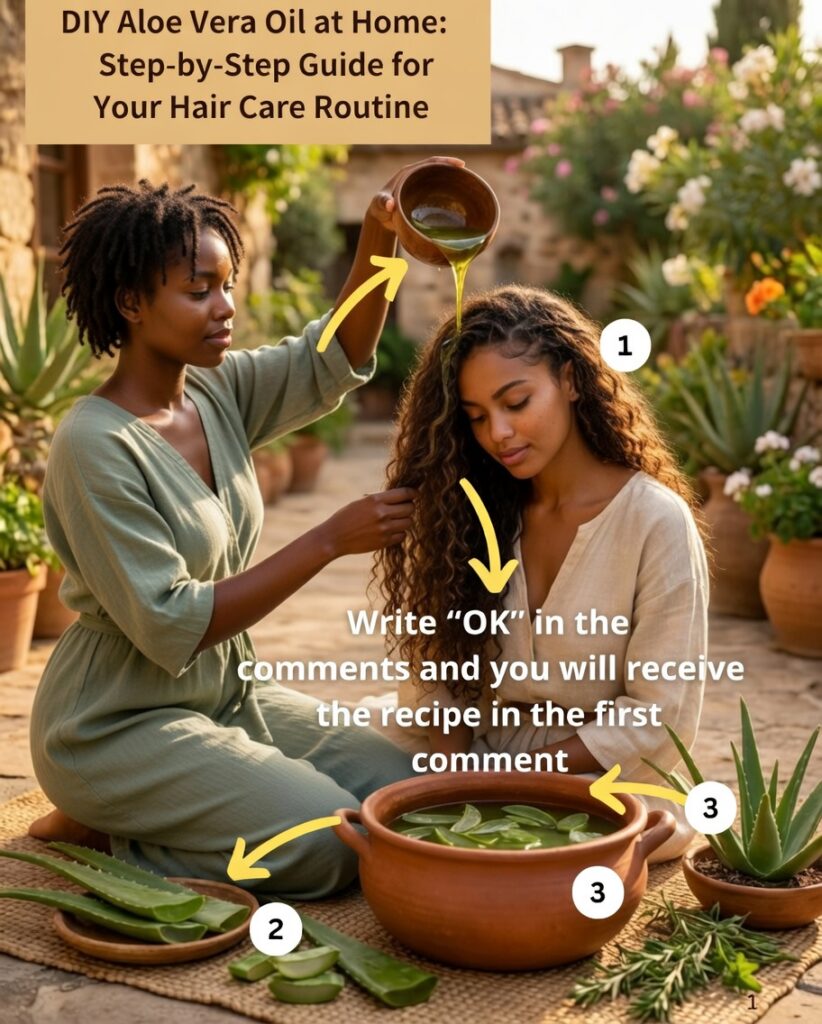
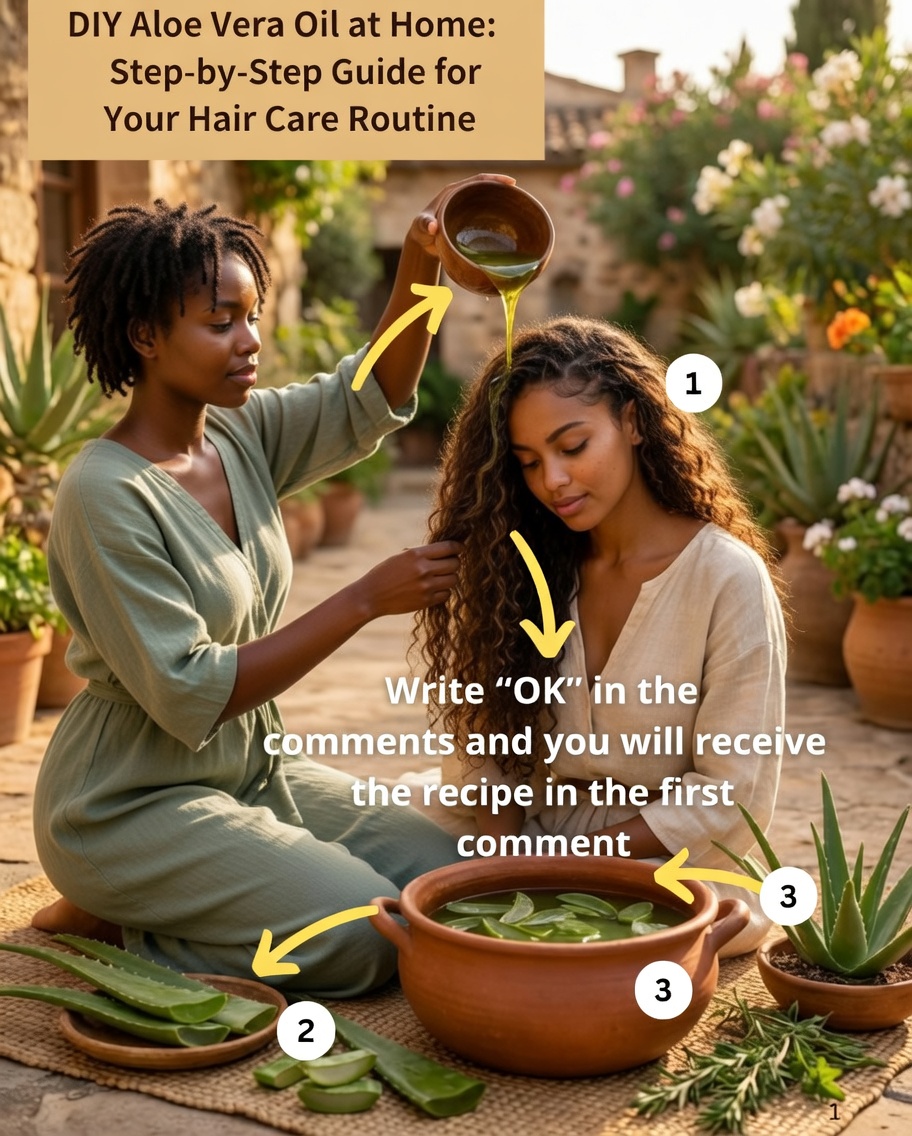
Step-by-Step: How to Make Aloe Vera Hair Oil
1. Prepare the Aloe Vera
- Cut one large aloe vera leaf (or two smaller ones) from the plant
- Rinse the leaf well to remove any dirt
- Trim away the thorny edges on both sides
- Slice the leaf into pieces or scoop out the transparent gel inside
2. Warm the Oil
- Pour your chosen carrier oil into a small saucepan
- Heat on low, making sure it does not boil
3. Infuse the Aloe
- Add the aloe pieces or gel to the warm oil
- Let the mixture simmer gently for about 15–25 minutes
- Stir occasionally to prevent sticking
A soft crackling sound is normal—that’s just moisture from the aloe evaporating.
4. Cool and Strain
- Remove the pan from the heat and allow the mixture to cool
- Strain through a fine mesh strainer or cheesecloth
- Press or squeeze the aloe to extract as much infused oil as possible
5. Store the Oil
- Transfer the oil into a dark glass bottle or jar
- Store away from direct sunlight and heat
- Use within 2–3 months for best freshness
How to Use Aloe Vera Hair Oil
- Always do a patch test on a small area of skin before first use
- Warm a few drops of the oil between your palms
- Gently massage into the scalp and distribute through the lengths of your hair
To boost the benefits, you can mix in:
- Castor oil (for extra richness)
- Rosemary essential oil (commonly used in scalp massages)
Application Ideas
1. Pre-Shampoo Treatment
- Apply generously to dry hair and scalp
- Leave on for 30–60 minutes, or overnight if desired
- Shampoo and condition as usual
2. Scalp Massage Between Washes
- Use a few drops on the fingertips
- Massage into the scalp to nourish and refresh
- Avoid using too much to prevent greasiness
3. Leave-In for Dry Ends
- Rub a tiny amount between your hands
- Smooth over mid-lengths and ends
- Ideal to tame frizz and add shine
Potential Benefits of Aloe Vera Hair Oil
With consistent use, this DIY hair oil may help:
- Hydrate and soften dry hair
- Soothe and comfort a dry or irritated scalp
- Add natural shine and reduce dullness
- Serve as a base for other homemade hair treatments
Common Mistakes to Avoid
To get the best results, try not to:
- Use high heat, which can burn the aloe and damage the oil
- Skip the straining step, which can leave residue in the hair
- Use very old or wilted aloe leaves, which are less potent
Variations to Try
You can adapt this recipe depending on your hair type:
- Coconut oil – Great for thick, coarse, or very dry hair
- Jojoba oil – Lighter option, good for fine or easily weighed-down hair
- Essential oils – Lavender, rosemary, tea tree, or peppermint can be added for extra benefits and fragrance (always dilute well)
Storage and Shelf Life
- Typical shelf life: 2–3 months when stored in a cool, dark place
- Adding a few drops of vitamin E oil may help slow down oxidation and slightly extend freshness
Conclusion
Making your own aloe vera hair oil is a simple, budget-friendly way to care for your hair using natural ingredients. It’s easy to customize, gentle on most hair types, and can become a powerful addition to your weekly routine.
Give it a try this weekend—your hair (and your wallet) may notice the difference.
FAQ
When will I start seeing results?
Most people notice changes such as softer, shinier hair after about 2–4 weeks of regular use.
Is aloe vera hair oil safe for colored or dyed hair?
Yes, it can generally be used on color-treated hair. However, always perform a patch test and a small strand test first to be sure it suits your hair and scalp.
Do I need any special equipment?
No. A basic saucepan and a fine strainer (or cheesecloth) are enough to prepare this oil at home.
Disclaimer
This guide is for informational purposes only and is not a substitute for professional medical or dermatological advice. If you have known allergies, sensitive skin, scalp conditions, or any medical concerns, consult a healthcare or skin-care professional before using new products or ingredients.