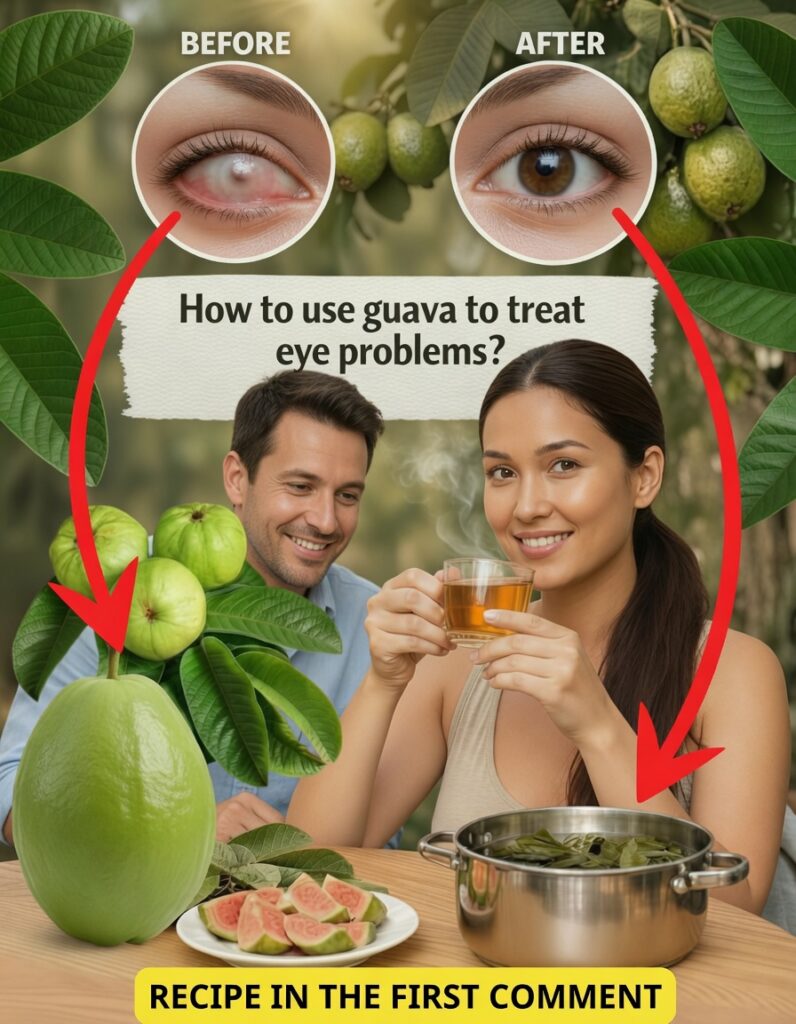
Guava and Eye Health: Can This Tropical Fruit Help Your Eyes?
Guava is a delicious tropical fruit loaded with vitamins and minerals. Many people enjoy it for its taste and overall health benefits, but fewer know it is also being promoted as a natural ally for eye care.
Recently, a natural method using guava—especially its leaves—as part of an eye-care routine has become more popular. This raises an important question: is it truly effective and safe?
In this guide, you’ll learn how guava is thought to support eye health, how some people use it indirectly for eye care, what science currently says, and which precautions you should absolutely follow.
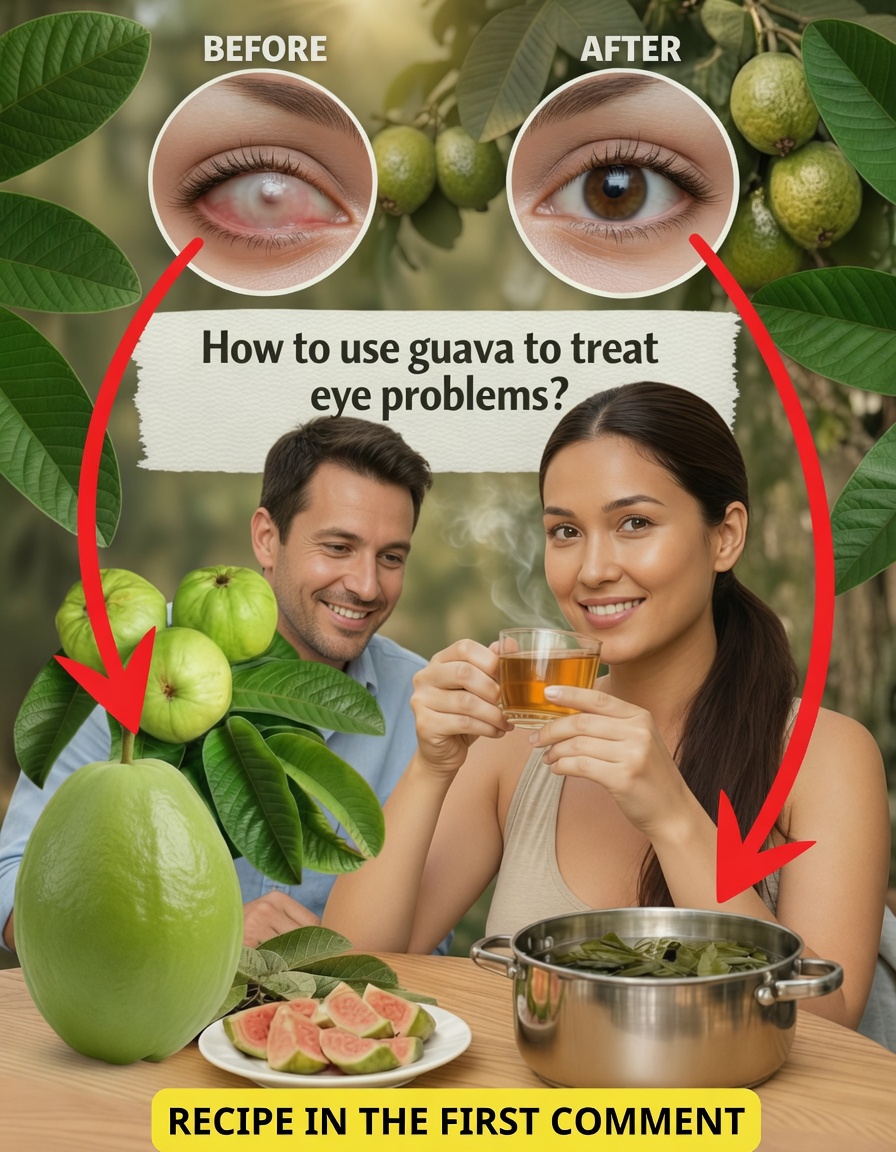
Why Guava Might Support Eye Health
Guava is packed with nutrients that play a role in maintaining healthy vision, including:
- Vitamin A
- Vitamin C
- Antioxidants
- Natural anti-inflammatory compounds
These elements can help protect eye cells from damage, support overall eye function, and may contribute to long-term eye health when guava is included as part of a balanced diet.
Potential Benefits of Guava for the Eyes
While most benefits are linked to eating guava rather than applying it directly, the nutrients it contains are associated with several eye-health advantages.
-
Protection against oxidative damage
Guava is rich in antioxidants, which help neutralize free radicals. These unstable molecules can damage cells in the eyes and negatively affect vision over time. -
Support for retinal health
Vitamin A is essential for normal vision and the proper functioning of the retina, the light-sensitive layer at the back of the eye. -
Possible relief of mild inflammation
Compounds with anti-inflammatory properties in guava leaves may help soothe minor external irritation when used correctly and indirectly (never inside the eye). -
Stronger immune defense
The high vitamin C content in guava supports the immune system, which can help the body defend itself against infections that may also affect the eyes.
How People Use Guava for Eye Care (Indirectly)
Important: guava or guava leaf preparations should never be placed directly into the eyes without medical supervision.
A commonly shared home method involves the indirect external use of guava leaves:
- Wash the guava leaves (or fruit) thoroughly.
- Prepare an herbal infusion using the leaves in hot water.
- Allow the infusion to cool down completely to room temperature.
- Soak clean cotton pads in the cooled liquid.
- Place the pads gently on closed eyelids as a compress.
This is meant to be used only around the eyes, on the skin of the eyelids, and never as eye drops.
Safety Precautions and Risks
Even natural remedies can cause problems if used incorrectly. With guava-based eye care, keep these precautions in mind:
- ❌ Do not put guava juice, leaf extract, or infusion directly into the eyes.
- ❌ It may cause irritation or allergic reactions in sensitive individuals.
- ❌ Avoid using it if you have any active eye infection or serious eye condition.
- ❌ Always seek advice from a doctor or eye-care professional before trying any home remedy.
If you experience redness, pain, burning, or blurred vision, stop using the remedy immediately and consult a healthcare provider.
Does Guava Really Improve Vision?
Despite the nutrients guava contains, there is not enough scientific evidence to prove that applying guava or guava leaf preparations around the eyes directly improves vision or treats eye diseases.
However, eating guava regularly as part of a healthy diet can support overall eye health thanks to its vitamins, antioxidants, and anti-inflammatory compounds. The benefits come primarily from nutrition, not from topical application.
Safer Alternatives to Care for Your Eyes
To maintain good eye health in a safe and tested way, consider the following habits:
-
Eat a diet rich in vitamin A and other eye-friendly nutrients
Include foods such as carrots, leafy greens, eggs, sweet potatoes, guava, and other colorful fruits and vegetables. -
Stay well hydrated
Adequate water intake helps keep your eyes and tear film healthy. -
Use artificial tears if needed
Over-the-counter lubricating eye drops can relieve dry, tired, or irritated eyes. Choose preservative-free options if used frequently. -
Schedule regular eye exams
See an ophthalmologist or optometrist regularly to detect and manage vision problems or eye diseases early.
Conclusion
Guava is a nutritious fruit that can be a valuable part of a balanced diet and may indirectly support eye health through its vitamin A, vitamin C, antioxidants, and anti-inflammatory components.
However, using guava directly for eye care should be approached with caution. It must never replace professional medical treatment, and no guava-based preparation should be placed inside the eyes without expert guidance. For safe and effective eye care, rely on proven methods, healthy lifestyle habits, and regular consultations with eye-care professionals.