Blanching Almonds: A Simple Technique That Upgrades Flavor, Texture, and Presentation
Almonds are a popular, nutrient-rich ingredient found in kitchens around the world. One quick step can make them even more useful: blanching almonds, which removes the thin brown skin. This easy method helps you achieve a cleaner look, a smoother texture, and a milder, sweeter almond flavor—perfect for both everyday cooking and special-occasion baking.
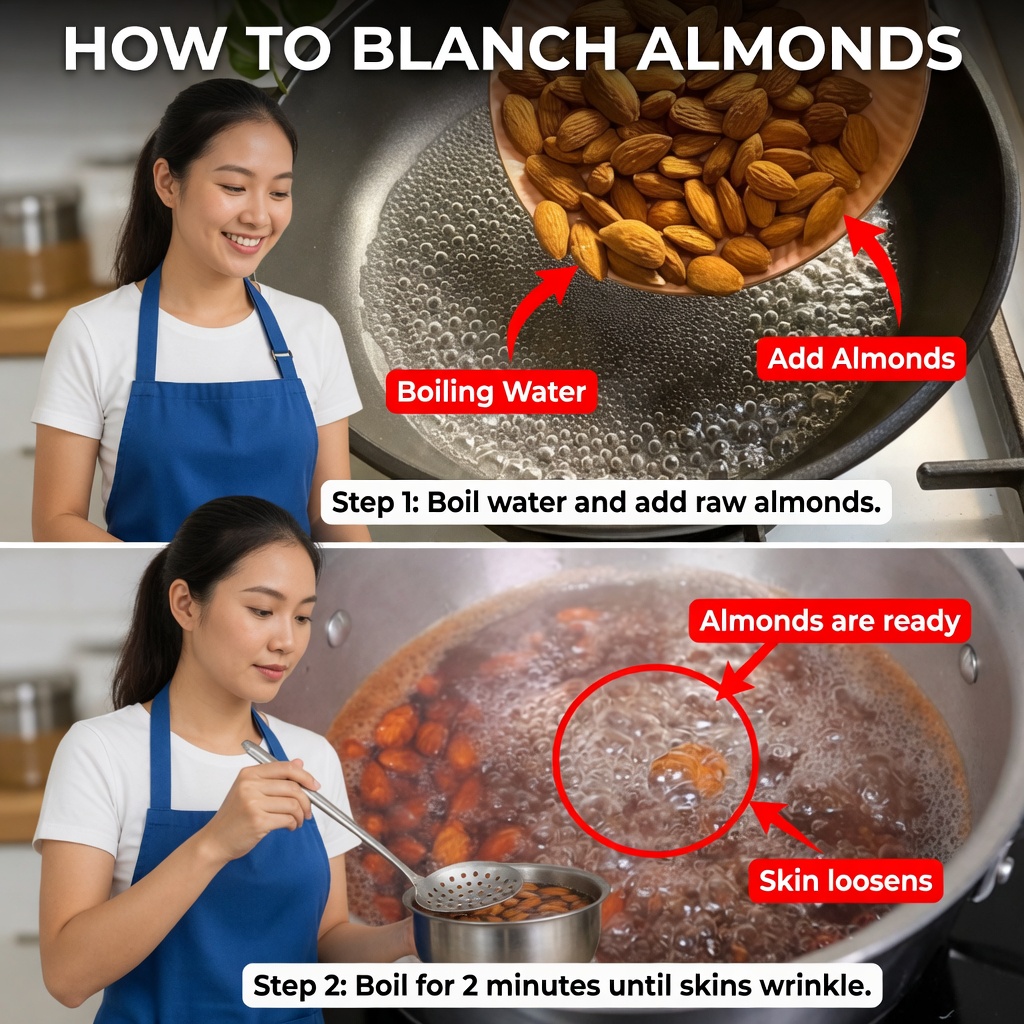
What Does It Mean to Blanch Almonds?
Blanching is a straightforward process: you briefly boil raw almonds, then cool them quickly. This loosens the skins so they slide off easily. Once peeled, the almonds become smooth and creamy in texture, making them ideal for recipes where appearance and silkiness matter.
Key Benefits of Blanched Almonds
1. Smoother Texture and a Cleaner Look
Without the skins, almonds look bright and polished—great for garnishing cakes, salads, and savory dishes. Blanched almonds also grind more evenly, helping you make fine almond flour or a smoother almond paste.
2. A Milder, Sweeter Taste
Almond skins can carry a slightly bitter edge. Removing them lets the almond’s natural sweetness stand out, which can noticeably improve delicate desserts and drinks.
3. Easier on Digestion
Almond skins contain tannins, which may bother some people’s stomachs. Blanching can make almonds feel lighter and more digestible for sensitive eaters.
4. Best for Ultra-Smooth Recipes
If a recipe depends on a creamy finish, blanched almonds are often the better choice. They’re especially useful for:
- Marzipan
- Almond butter
- Homemade almond milk
- Silky sauces and purees
5. More Professional Presentation
From sliced almonds on plated desserts to whole nuts topping pastries, blanched almonds offer a refined appearance that makes dishes look more elegant and intentional.
How to Blanch Almonds at Home (Step-by-Step)
What You’ll Need
- Raw almonds
- Boiling water
- A bowl of ice water
- A strainer (or colander)
Instructions
- Boil the water: Bring a pot of water to a rolling boil.
- Blanch the almonds: Add the almonds and boil for about 1 minute.
- Cool immediately: Drain, then transfer the almonds straight into ice water for 1 minute.
- Slip off the skins: Gently squeeze each almond—its skin should slide off easily.
- Dry thoroughly: Spread the almonds on a clean towel or baking sheet until completely dry.
Popular Global Uses for Blanched Almonds
Mediterranean Cooking
Blanched almonds are used in sweet and savory classics, including:
- Baklava and almond-filled pastries
- Spain’s romesco sauce
Indian Cuisine
They’re a staple in rich dishes and festive sweets, such as:
- Creamy gravies and kormas
- Badam halwa
- Almond garnishes for biryanis
French Baking
Many French pastries rely on blanched almonds for smoothness and structure:
- Frangipane filling
- Macarons
Middle Eastern Desserts and Spreads
Blanched almonds often appear in:
- Almond-based dips and spreads
- Confections such as nougat
How to Store Blanched Almonds
- Refrigerator: Keep in an airtight container for up to 2 weeks
- Freezer: Store for up to 3 months (airtight container recommended)
Why This Almond Blanching Hack Is Worth Trying
Blanching almonds is a small effort with big results: better flavor, smoother texture, and more recipe options. Whether you bake often, love experimenting with global cuisines, or simply want cleaner-looking garnishes, blanched almonds are a smart addition to your kitchen routine.
Pro tip: For extra-silky almond milk, creamy sauces, and bakery-style presentation, start with blanched almonds—you’ll notice the difference right away.