Are You Really Getting the Right Amount of Protein?
Loading up on protein shakes, bars, and “high-protein” snacks because everyone says more protein is better—for health, for weight loss, for muscle? You’re not alone. Around the world, people are chasing high-protein everything.
But does more protein automatically mean better health and a leaner body? Or is the protein craze hiding some important truths?
Drawing on the work of Dr. Brad Stanfield, this guide unpacks what the science actually says about protein intake—and what the food industry would rather you overlook.
Key Takeaways
- Official protein recommendations are likely on the low side, but “the more, the better” is not true.
- Benefits like muscle gain, fullness, and calorie burn level off after a certain protein intake.
- Older adults usually need more protein than younger adults—but evidence doesn’t support extreme intakes.
- Very high protein diets may pose risks, especially for kidney health and certain cancers.
- Protein source matters: animal and plant proteins affect the body differently.
- Many “high-protein” ultra-processed products are marketed as healthy but are often poor-quality foods.
- Whole, minimally processed foods are the best way to meet your protein needs.
1. Are Current Protein Recommendations Too Low?
Most health authorities still suggest about 0.8 grams of protein per kilogram of body weight per day for adults.
For a 70 kg (154 lb) person, that works out to around 56 grams of protein daily.
However, many modern researchers consider this level the bare minimum to prevent deficiency—not the optimal amount for:
- Maintaining and building muscle
- Supporting healthy aging
- Fueling an active lifestyle
A growing number of experts now recommend roughly 1.2–1.6 grams of protein per kilogram of body weight for most adults. That’s about 50% higher than traditional guidelines and seems more appropriate if you want to preserve muscle and function as you age.
2. Why Protein Benefits Have a Limit
Protein does a lot of good things for your body:
- Helps build and maintain muscle tissue
- Increases feelings of fullness and may reduce overall calorie intake
- Requires more energy to digest compared to fats and carbohydrates (a higher “thermic effect”)
But there is a ceiling. Large studies show that:
- Muscle and strength gains tend to plateau around 1.3–1.6 g/kg/day
- Weight loss advantages also level off around this range
Eating beyond this point doesn’t appear to create extra benefits for muscle or fat loss—your body simply doesn’t use all that additional protein, and you literally excrete the excess.
More protein beyond the effective range usually means more cost, more calories, and no extra results.
3. Protein Needs in Older Adults: More, But Within Reason
After about age 65, the body becomes less efficient at using protein to maintain muscle. This is one reason why older adults are at higher risk for muscle loss and frailty.
Because of this, many international guidelines recommend:
- Around 1.0–1.2 g of protein per kilogram of body weight per day for older adults
However, when researchers tested high-protein diets in older people, the results weren’t as dramatic as some might expect:
- Many participants were already eating enough protein
- Pushing intake even higher often did not add extra muscle or strength
Based on current evidence, a practical target for most older adults seems to be around 1.2 g/kg/day—not the very high levels promoted by some fitness influencers.
The key isn’t extreme protein intake; it’s getting enough protein consistently, combined with resistance exercise to stimulate muscle.
4. Can Too Much Protein Harm Your Kidneys or Raise Cancer Risk?
Kidney Health
High-protein diets have long raised concerns among doctors, particularly for kidney function. Here’s why:
- When you eat protein, your kidneys must filter the waste products created from protein metabolism.
- In healthy people with normal kidney function, moderate increases in protein are usually tolerated.
- In people with existing kidney disease—even early or mild—high protein intake can place extra strain on already compromised kidneys.
If you know or suspect you have kidney issues, you should discuss protein targets with your doctor or a dietitian before increasing your intake.
Cancer Risk
Some research suggests that very high intakes of animal protein in adults under 65 are associated with increased cancer risk. One possible mechanism is:
- Excessive animal protein can activate growth-related pathways in the body, such as mTOR and IGF-1.
- Chronic overstimulation of these pathways may encourage cell growth and division, potentially increasing cancer risk.
Interestingly:
- Plant-based proteins do not seem to carry the same risk profile.
- For adults over 65, adequate protein (including some animal protein) becomes protective—helping maintain muscle mass, body weight, and resilience, which may reduce illness and mortality.
Bottom line: Protein intake that is too low is harmful, but extremely high animal-protein diets may not be benign either. The type of protein and your age both matter.
5. Animal vs Plant Protein: Why the Source Matters
Protein is not just protein. Where it comes from changes how it affects your health.
Animal Protein
Sources include:
- Meat (beef, pork, lamb, poultry)
- Dairy (milk, cheese, yogurt)
- Eggs
Pros:
- Complete amino acid profile
- Easy to reach protein targets
Cons (especially in high amounts):
- Often higher in saturated fat and cholesterol
- May strongly activate growth pathways (like mTOR) linked with some chronic diseases
- Associated in some studies with higher cancer and cardiovascular risk when consumed in large quantities
Plant Protein
Sources include:
- Beans and lentils
- Chickpeas and peas
- Soy products (tofu, tempeh, edamame)
- Nuts and seeds
Pros:
- Often linked with lower risk of heart disease, diabetes, and some cancers
- Provide fiber, antioxidants, and a variety of vitamins and minerals
- Tend to support healthier body weight and gut health
Cons:
- Some single plants are incomplete sources of amino acids—but a varied plant-based diet easily covers all essential amino acids.
For most people, a balanced approach works best: moderate amounts of animal protein if you enjoy it, plus plenty of plant-based sources.
6. The Problem with “High-Protein” Ultra-Processed Foods
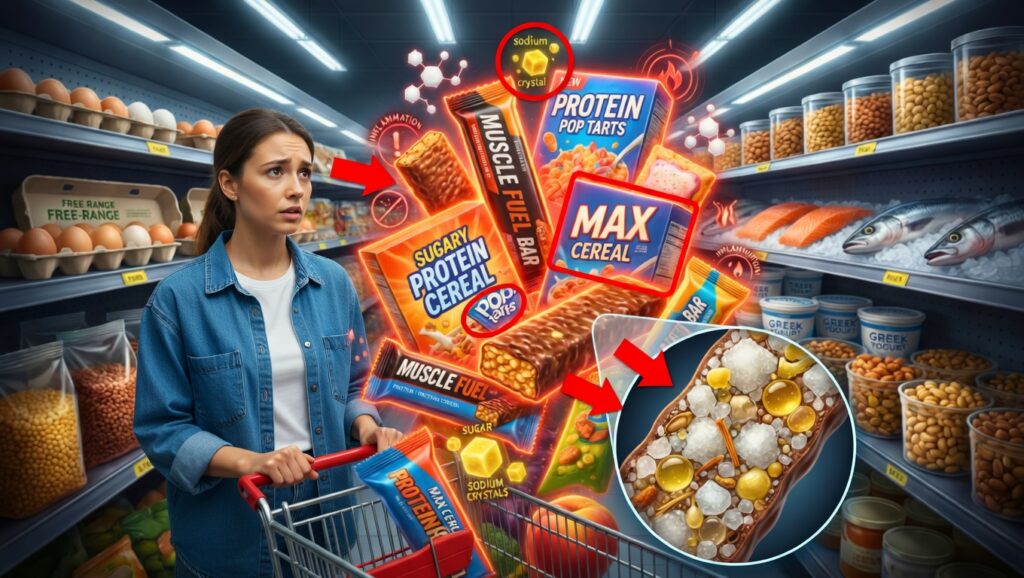
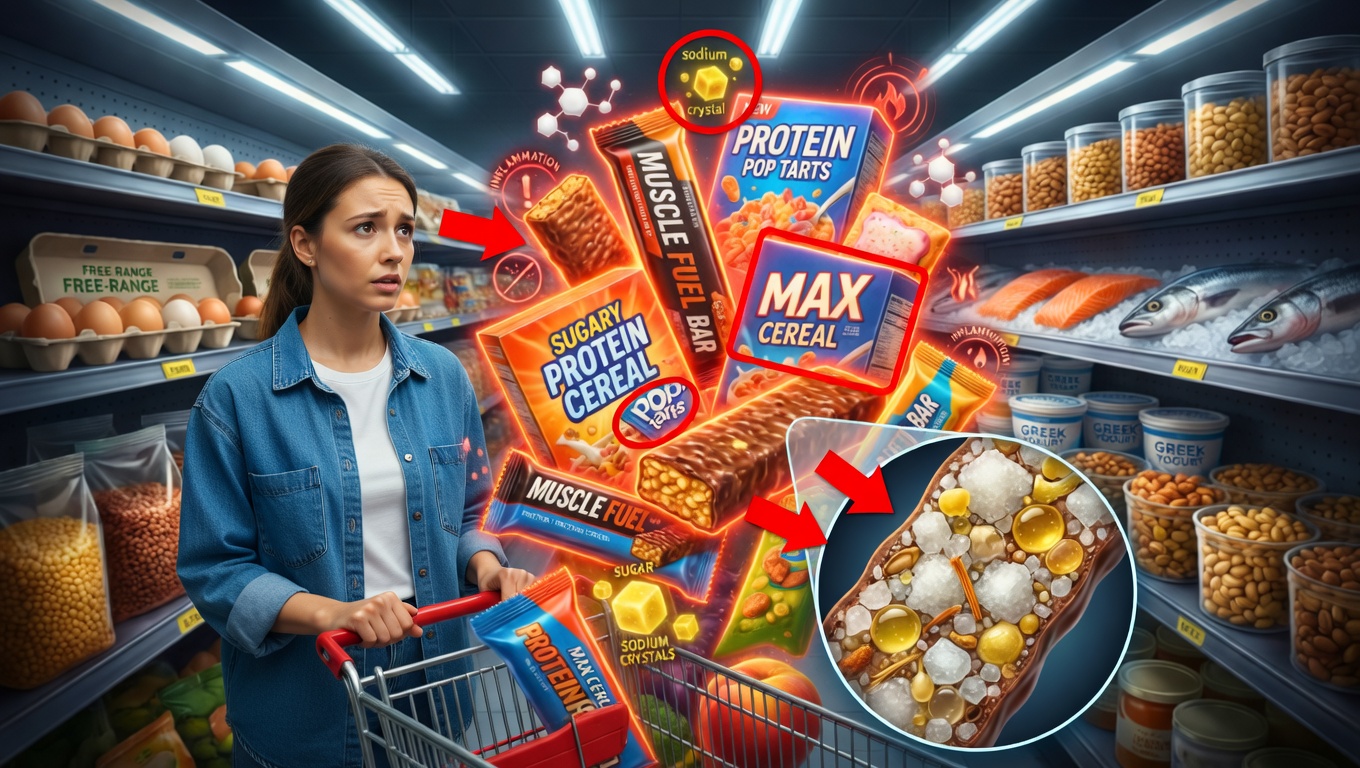
Supermarket shelves are full of products shouting “HIGH PROTEIN!” on the label: cookies, chips, cereals, candy bars, yogurts, and more.
But when researchers analyzed these items, they found a worrying pattern:
- Over 90% of “high-protein” packaged foods were less healthy than their more basic counterparts.
Common issues:
- High in added sugars or refined starches
- High in saturated fats or cheap oils
- High in sodium
- Packed with artificial sweeteners, flavors, and additives
- Low in fiber and beneficial plant compounds
Examples:
- Protein candy bars: Extra protein added, but still packed with saturated fat, salt, and processed ingredients.
- Protein cereals: Slightly more protein per serving, but often loaded with sugar and refined grains.
- Protein sweet rolls or pastries: May cut added sugar but replace it with sugar substitutes, preservatives, and sodium, with very little actual whole food content.
These products frequently trade on a health halo: people see “protein” and assume “healthy,” even when the overall nutritional quality is poor.
7. Whole Food Protein vs Supplements: Which Is Better?
For most people, you do not need special supplements or expensive bars to get enough protein. Whole foods offer far more than just protein grams.
Examples of nutrient-rich protein sources:
- Eggs
- Fish and seafood
- Plain yogurt or kefir
- Beans, lentils, and chickpeas
- Tofu and tempeh
- Nuts and seeds (like almonds, walnuts, chia seeds)
Consider just one example:
- A small handful of almonds provides roughly 6 grams of protein and almost 4 grams of fiber, along with healthy fats, magnesium, and vitamin E—far more nutritional value than a typical protein bar.
When Might Protein Powder Help?
Protein powders can be useful for:
- Athletes or very active individuals needing extra protein
- People with poor appetite or limited food access
- Short-term convenience, such as post-workout or during travel
However, they should ideally supplement a good diet, not replace meals. Relying heavily on powders and bars means you miss out on:
- Fiber
- Phytochemicals (beneficial plant compounds)
- The diverse nutrients found in whole foods
How Much Protein Should You Actually Eat?
For most healthy adults, a reasonable evidence-based target is:
- About 1.2 grams of protein per kilogram of ideal body weight per day
To estimate:
- Use an online “ideal body weight” calculator based on your height and sex.
- Multiply that number (in kg) by 1.2 to get a daily protein goal in grams.
Examples:
- Ideal body weight 60 kg → ~72 g protein/day
- Ideal body weight 70 kg → ~84 g protein/day
This range seems to support muscle maintenance, healthy aging, and satiety without pushing into the potentially risky territory of very high protein intakes—especially from animal sources.
If you have kidney disease or any serious medical condition:
- Talk with your doctor or a registered dietitian before increasing protein, as your needs may be lower or more individualized.
Forget the Hype—Focus on Real Nutrition
The food industry has figured out that “high-protein” sells. But a protein label doesn’t magically turn junk food into health food.
You’ll support your long-term health far more by:
- Prioritizing minimally processed sources: beans, lentils, nuts, seeds, eggs, fish, yogurt, and modest amounts of lean meats
- Mixing animal and plant protein, with a strong emphasis on plants
- Avoiding dependence on protein-branded ultra-processed snacks and sweets
- Using protein powders only when truly helpful, not as your main protein source
Protein is essential—but more isn’t always better, and the source matters just as much as the amount. Not every product marketed as “high-protein” is designed with your health in mind. Many are crafted to boost profit, not well-being.
For stronger bodies and better health, build your diet around whole foods and let protein work for you—not for the processed snack industry.
Source: Insights adapted from Dr. Brad Stanfield