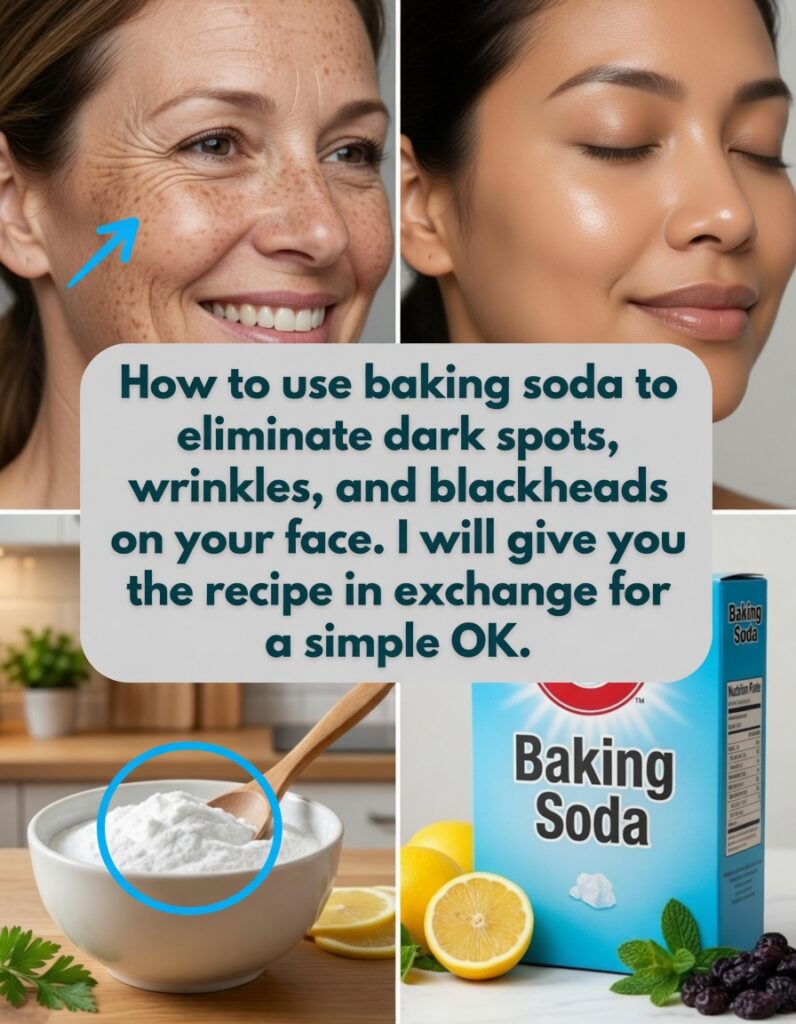
Baking Soda on Your Face: Benefits, Risks and How to Use It Safely
Baking soda is a staple in many homes, not just for cleaning and cooking, but also as a DIY beauty ingredient. Some people turn to it as a “natural” option in their facial skincare routine, especially when dealing with dark spots, fine lines or dark circles.
However, while social media is full of tips promising smoother, brighter skin overnight, using baking soda on your face is not as harmless as it might seem. Because it is alkaline (its pH is around 8–9) and your skin is naturally slightly acidic (pH 4.5–5.5), it can disturb the skin’s protective balance. Dermatology experts warn that this can lead to dryness, irritation and increased sensitivity.
Instead of miracle claims, this guide focuses on realistic, careful use. We’ll look at how some people incorporate baking soda into their routine in a measured way, always paying attention to how their skin reacts.
In the sections below, you’ll find a clear, practical overview of using baking soda in facial care, especially as a mild exfoliant and neutralizing agent. At the end, you’ll also find an extra tip that many people use to boost their everyday glow.
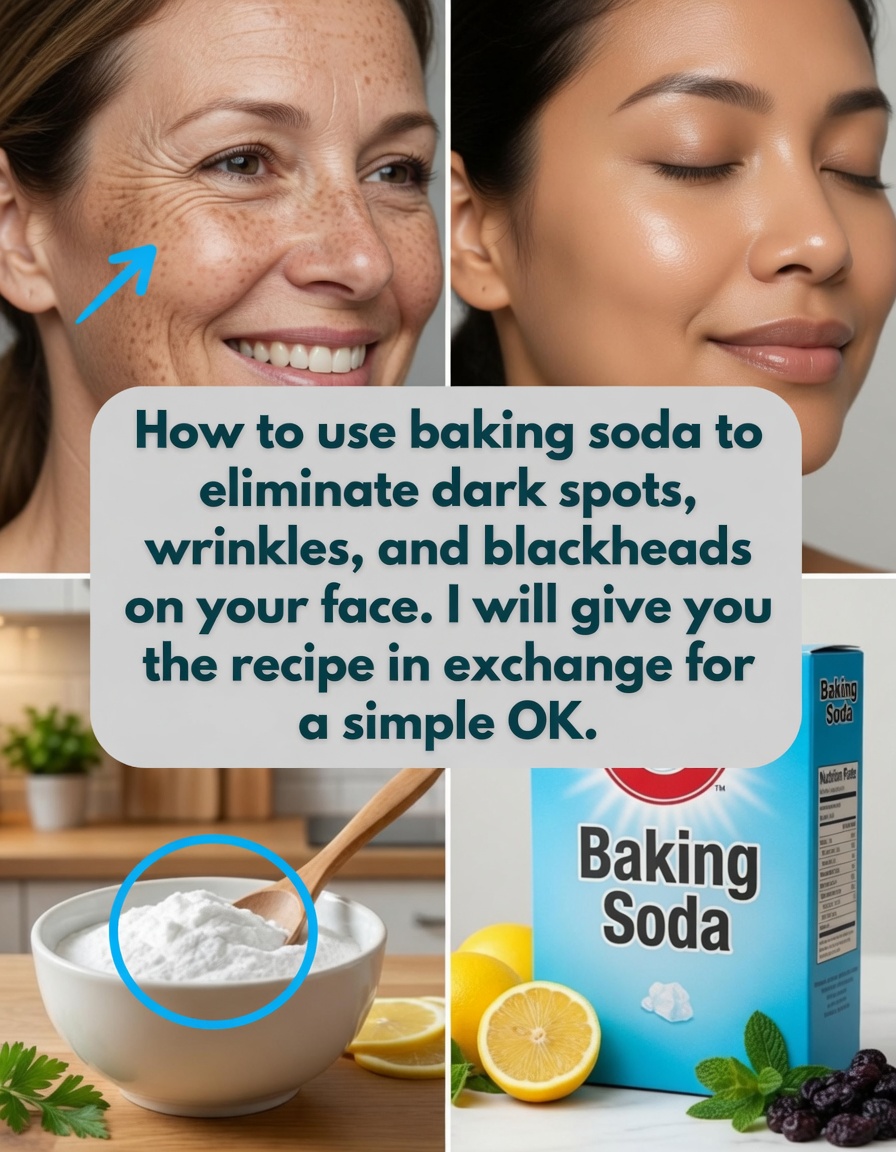
What Does Baking Soda Actually Do on the Skin?
Baking soda (sodium bicarbonate) is a fine powder that works as a physical exfoliant because of its tiny particles. Mixed with water or a moisturizing ingredient, it can help remove dead skin cells from the surface, which may leave the skin feeling smoother and looking more radiant for a short time.
Some dermatology sources mention that baking soda has mild neutralizing properties and can temporarily balance excess surface acidity, especially in oily or blemish-prone skin. That’s why it often appears in DIY exfoliation recipes aimed at refining skin texture.
But it’s crucial to understand its limits:
- It does not reach deep skin layers.
- It does not change melanin production.
- It does not fill in or repair wrinkles.
Its action is superficial and temporary. Reliable research also points out that overuse can weaken the skin barrier, leading to more problems than benefits.
Potential Benefits (Reported by Users)
Some people who tolerate baking soda well on their skin mention these possible advantages:
- Gentle exfoliation for non-sensitive skin types.
- A feeling of a deep cleanse and a smoother texture right after use.
- Low cost and easy availability in almost any supermarket.
- Can be made more tolerable when combined with hydrating natural ingredients.
Remember: these are anecdotal experiences, not guaranteed results.
Important Risks and Precautions (Don’t Skip These)
Every skin is different, and many dermatologists are cautious with baking soda on the face. Its high pH means it can:
- Cause dryness, tightness or flakiness.
- Trigger irritation, redness or itching.
- Increase sun sensitivity.
- Worsen conditions such as rosacea, eczema or generally sensitive skin.
Avoid using baking soda on:
- Open wounds
- Inflamed acne
- Very delicate, reactive or damaged skin
Always perform a patch test before trying it on your face:
- Apply a small amount of the mixture on your inner forearm.
- Leave it for 24 hours.
- If you notice redness, burning, itching or any irritation, do not use it on your face.
How to Use Baking Soda on the Face Safely at Home
If you still want to try baking soda, do it rarely and gently: at most once a week, and less often if your skin is sensitive. Below are popular DIY recipes used by people who handle it with care.
1. Basic Recipe: Mild Exfoliating Paste (for Smoother Texture)
- Mix 1 teaspoon of baking soda with 2–3 teaspoons of water (or milk/another gentle hydrating liquid) until you get a creamy paste.
- Cleanse your face first with your usual face wash and pat dry.
- Apply the paste with very light circular motions, avoiding the eye and lip areas.
- Massage for 1–2 minutes maximum (do not scrub harshly).
- Rinse thoroughly with lukewarm water.
- Gently pat your face dry and immediately apply:
- Your regular moisturizer, and
- Sunscreen if it’s daytime.
2. Honey Variation (for Normal to Dry Skin)
- Mix 1 teaspoon of baking soda with 1 tablespoon of pure honey (known for its hydrating and soothing properties).
- Apply on clean skin using gentle circular motions.
- Leave it on for 3–5 minutes.
- Rinse well with lukewarm water and follow with moisturizer.
3. Coconut Oil or Plant Oil Variation (for Extra Nourishment)
- Combine 1 teaspoon of baking soda with 1 teaspoon of virgin coconut oil or another non-irritating vegetable oil.
- This can feel more comfortable on dry skin, but use it sparingly:
- Coconut oil can be comedogenic for some people, meaning it may clog pores and cause breakouts.
- Apply lightly, massage for about 1 minute, then rinse thoroughly and cleanse if your skin feels oily.
Quick Comparison: Baking Soda vs. Recommended Exfoliants
Many dermatologists prefer gentle chemical exfoliants (like AHAs and BHAs) over DIY scrubs. Here’s a simplified comparison:
| Aspect | Homemade Baking Soda Scrub | Gentle Chemical Exfoliants (AHA/BHA) |
|---|---|---|
| Cost | Very low | Moderate to high |
| Type of exfoliation | Physical (abrasive particles) | Chemical (dissolves dead skin cells) |
| Irritation risk | High if overused or misused | Lower when chosen for your skin type |
| Recommended frequency | 1× per week or less | Often 2–3× per week, depending on product |
| Scientific evidence | Limited, mostly anecdotal | Extensive dermatological research |
If you struggle with persistent issues (acne, hyperpigmentation, wrinkles), dermatologist-approved exfoliants generally have more predictable results and a better safety profile than baking soda.
Frequently Asked Questions (FAQ)
Does baking soda permanently lighten dark spots?
No. There is no strong scientific evidence that baking soda permanently fades hyperpigmentation. It may make the skin look a bit brighter right after use by removing surface dead cells, but for stubborn dark spots, it’s best to consult a dermatologist and consider treatments like:
- Vitamin C serums
- Azelaic acid
- Niacinamide
- Professional peels or lasers
Is baking soda good for wrinkles and fine lines?
Baking soda may make skin feel smoother briefly because of exfoliation, but:
- It does not boost collagen.
- It does not repair or reduce wrinkles in a lasting way.
For fine lines, ingredients such as retinol, retinoids, peptides and hyaluronic acid are much more effective and better supported by research.
Can I use baking soda on dark circles or under-eye bags?
Avoid it. The skin around the eyes is extremely thin and sensitive, and baking soda is too aggressive for this area. Instead, consider:
- Cold compresses to reduce puffiness.
- Eye creams or serums with caffeine, niacinamide or hyaluronic acid.
- Good sleep, hydration and sun protection to improve the overall eye area.
Final Tip: Listen to Your Skin
Baking soda can act as a very occasional, superficial exfoliant for people whose skin is not sensitive and who use it cautiously. It is not a cure-all for spots, wrinkles or dark circles, and overdoing it may damage your skin barrier.
If you want everyday glow and long-term results, focus on:
- Gentle cleansing
- Daily sunscreen
- Consistent hydration
- Proven active ingredients (vitamin C, retinoids, AHAs/BHAs, niacinamide, etc.)
Use baking soda, if at all, as an infrequent extra, not as the foundation of your skincare routine.