Sleep Better: Why Some People Put a Bar of Soap in Bed for Restless Legs
A restful night is key to waking up energized and staying productive. Yet for many people, sleep is interrupted by an uncomfortable urge to move the legs—especially in the evening or at bedtime. This is often linked to restless legs syndrome (RLS), a condition that can seriously reduce sleep quality. One popular home remedy you may have heard about is surprisingly simple: placing a bar of soap under the sheets. Here’s what RLS is, why it happens, and how this soap trick may help.
What Is Restless Legs Syndrome (RLS)?
Restless legs syndrome, also called Willis–Ekbom disease, is a neurological disorder that creates a strong, hard-to-resist need to move the legs. In everyday terms, it’s sometimes described as “leg impatience” because the discomfort eases only when you move.
Common Symptoms of Restless Legs Syndrome
RLS symptoms typically appear when you’re resting or lying still, especially while trying to fall asleep. Many people describe unpleasant sensations in the lower limbs, such as:
- Tingling or “pins and needles”
- Itching or crawling feelings under the skin
- Prickling sensations
- A feeling similar to small electric shocks
Because these sensations are uncomfortable, people often feel compelled to stretch, shift, or move their legs to get relief.
In more severe (and less common) cases, RLS may contribute to:
- Insomnia
- Daytime sleepiness
- Ongoing fatigue that affects daily life
What Causes Restless Legs Syndrome?
RLS can have several triggers and contributing factors. Common causes include:
- Genetics: If RLS runs in your family, you may be more likely to develop it.
- Underlying health conditions: Certain illnesses may be associated with RLS, including diabetes, kidney failure, and some neurological disorders.
- Nutrient deficiencies: Low levels of dopamine, or deficiencies in iron (with or without anemia) and vitamin B9 (folate) may play a role.
- Pregnancy: Some pregnant women experience RLS, particularly in the third trimester.
- Medications: Certain drugs—such as some antidepressants and antipsychotics—may increase the likelihood of symptoms.
The Soap-in-Bed Trick: Why People Try It
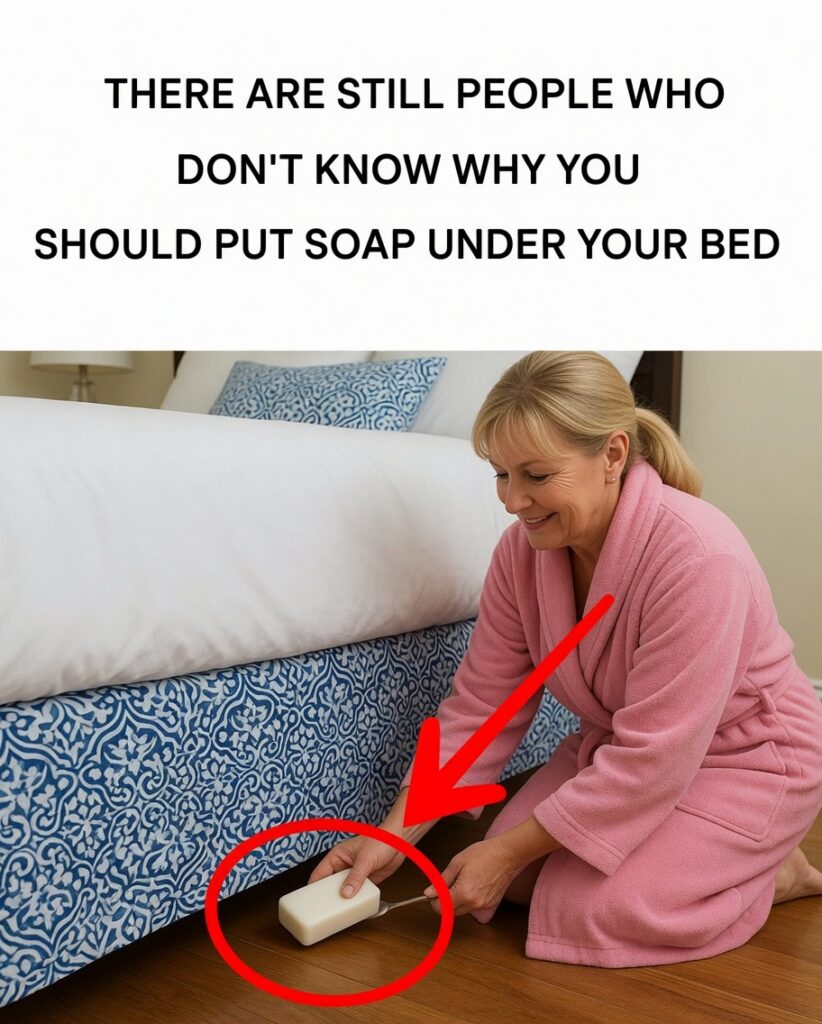
Alongside strategies like massages and warm baths, some people place a bar of soap under their sheets to reduce nighttime leg discomfort.
Supporters of this home remedy believe soap may help because it contains magnesium, a mineral often associated with muscle relaxation. Others choose lavender-scented soap to add a calming aroma that may make bedtime feel more soothing.
This tip gained popularity after being mentioned by Dr. Mehmet Öz on The Dr. Oz Show in the United States, and it was also discussed on the talk show The Doctors. During a Twitter poll shared by Dr. Jim Sears, 42% of respondents said they used the soap trick successfully to ease leg discomfort and cramps.
Important Note About Effectiveness
This method may reduce symptoms, but it does not cure restless legs syndrome. Also, there is no strong scientific proof that soap under the sheets works—support for it is mainly anecdotal. Still, some people find it worth trying to see if it helps them sleep more comfortably.
Other Ways to Relieve Restless Legs at Night
If you’re looking for additional options, there are other approaches that may help calm the legs before bed.
Try a Warm Bath with Epsom Salt
Dr. Jacob Teitelbaum, an internist who focuses on RLS, recommends a warm bath with two cups of Epsom salt. Epsom salt contains magnesium, which may support muscle relaxation and reduce discomfort.
Adjust Evening Food Choices
Dr. Teitelbaum also suggests:
- Choosing protein-rich foods in the evening
- Avoiding sugary foods before bedtime
The goal is to support stable blood sugar, since fluctuations may worsen restless legs symptoms.
Don’t Confuse RLS with Night Cramps
Restless legs syndrome is not the same as nocturnal leg cramps. Cramps are typically:
- Sudden
- Painful
- Felt as a muscle spasm in the calf, foot, or leg
A cramp often passes in seconds, though soreness can last longer. Common ways to relieve cramps include:
- Stretching the affected muscle
- Staying well hydrated, which may help reduce cramp frequency
If your symptoms are persistent, disruptive, or worsening, it may be helpful to discuss them with a healthcare professional to explore causes and appropriate solutions.