Recharge Your Energy: Mitochondria, Spermidine, and Smarter Recovery
If your energy seems to be slipping, your workouts feel harder, and your recovery is slower—even though you’re eating well and staying active—the problem may not be your willpower or your nutrition. The real issue could lie inside your cells, in the tiny “power plants” called mitochondria.
This guide explains why cellular energy declines with age, how a compound called spermidine supports mitochondrial health, and how to combine it with habits like fasting and time-restricted eating to improve energy, recovery, and healthy aging—without turning your life upside down.
Key Takeaways
- Declining energy often stems from dysfunctional mitochondria, not from lack of calories or effort.
- Your body’s internal cleanup of damaged mitochondria—called mitophagy—slows as you age, leading to fatigue, brain fog, and poor recovery.
- Spermidine helps support mitophagy and mitochondrial efficiency, which can indirectly enhance energy and longevity.
- Timing is important: combining fasting or time-restricted eating with spermidine may amplify the benefits.
- Cleanup is only half the process—you also need adequate protein and nutrients to rebuild stronger, healthier cells.
1. The Hidden Mitochondrial Issue Draining Your Energy
If you’re already doing the “right things”—working out, eating clean, maybe even fasting—but still feel like your energy tank empties too fast, it’s worth zooming in on your mitochondria.
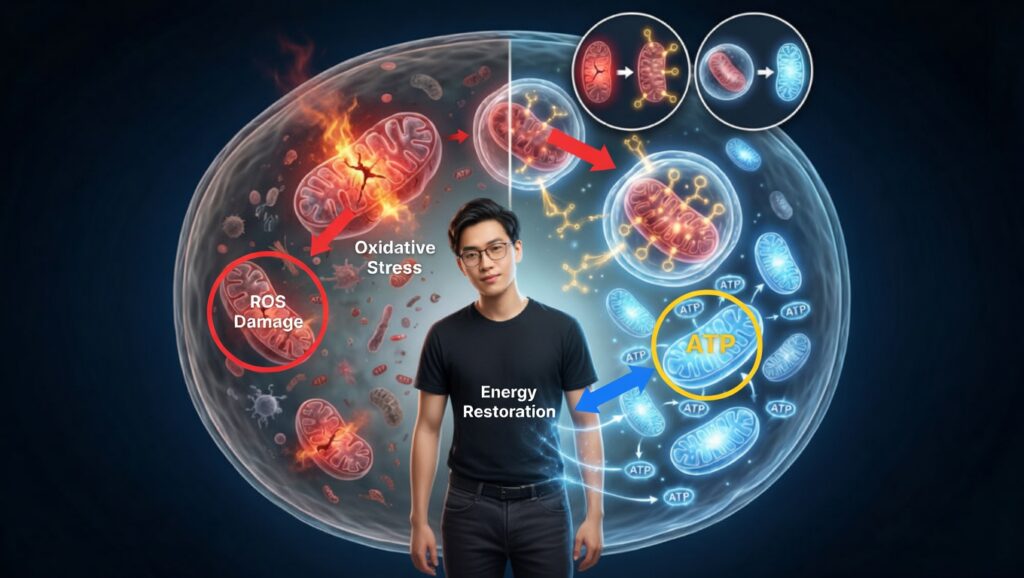
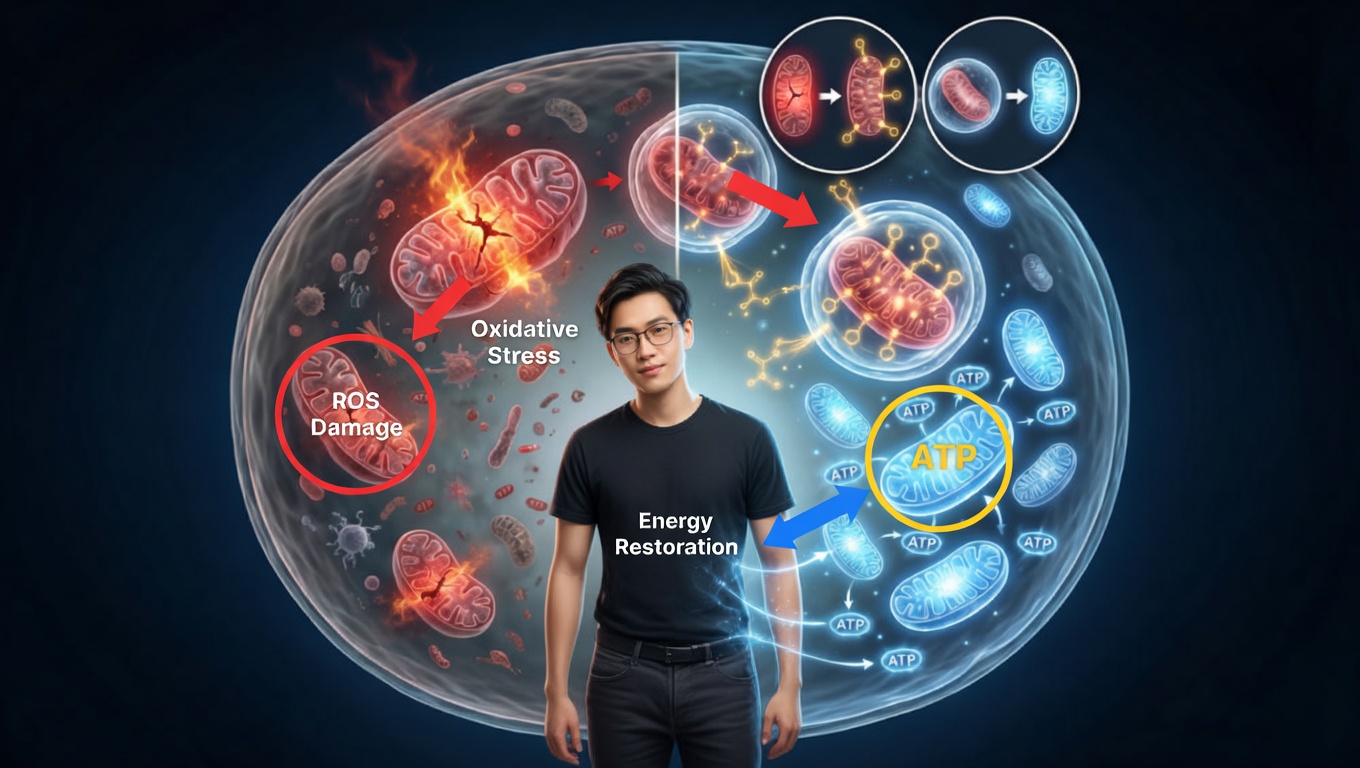
As we get older, these cellular engines don’t just slow down; they start to malfunction:
- They generate more waste and oxidative stress.
- They produce less usable energy (ATP).
- Instead of being repaired or replaced, many old mitochondria linger and clutter up your cells.
Think of it like running your life on a collection of outdated, leaky power plants. They’re still on, but they’re inefficient and polluting the system.
2. Why Your Cellular Cleanup Crew Starts Falling Behind
Your body isn’t defenseless. It has a built-in cleanup mechanism designed to find and recycle damaged mitochondria. This process is called mitophagy—essentially, targeted cellular housekeeping focused on mitochondria.
When you’re young and metabolically healthy:
- Cells efficiently identify and tag damaged mitochondria.
- These faulty mitochondria are broken down and recycled.
- New, efficient mitochondria take their place.
With aging, chronic stress, poor sleep, or constant overfeeding, this system slows down. When mitophagy gets sluggish, worn-out mitochondria pile up, which can:
- Drag down your energy levels
- Impair mental clarity
- Slow exercise recovery and performance
3. Spermidine: A Powerful Ally for Longevity and Energy
This is where spermidine enters the picture. Often discussed as a “longevity” supplement, its main value is how it supports your body’s natural cleanup systems—especially mitophagy.
What spermidine does:
- Promotes the recognition and removal of damaged mitochondria
- Helps prevent dysfunctional mitochondria from hogging resources and generating excess cellular waste
- Supports the renewal of healthier, more efficient mitochondrial networks
Spermidine doesn’t act like caffeine or sugar—it doesn’t “give” you energy directly. Instead, it helps your cells use the energy from food more efficiently. Many people report:
- More stable, sustained energy
- Better exercise recovery
- Sharper focus and mental clarity
All of this comes without the jittery, overstimulated feeling associated with stimulants.
4. Mitophagy in Plain English: How Cellular Cleanup Works
To understand mitophagy, picture a system that identifies broken machinery, tags it, and sends it to the recycling bin. Two important proteins orchestrate this process:
- PINK1: Acts like a sensor and highlighter. It accumulates on damaged mitochondria.
- Parkin: Responds to PINK1’s signal, tags those damaged mitochondria, and directs them to be dismantled and recycled.
Spermidine has been shown to enhance the activity of both PINK1 and Parkin. In everyday terms, it makes your internal cleanup crew:
- Spot damaged mitochondria faster
- Remove cellular “dead weight” more effectively
The result is a cellular environment where healthy mitochondria can thrive, boosting overall energy production.
5. Why Timing Matters: Aligning Spermidine with Fasting
Mitophagy doesn’t run at the same speed all day. It’s especially active when your body is in a fasted, low-insulin state—often:
- Overnight
- Early in the day before your first meal
- During periods of time-restricted eating or longer fasts
Constant snacking or late-night eating blunts these natural cleanup cycles.
To get more out of spermidine, you can:
- Practice fasting or time-restricted eating (e.g., an 8-hour eating window)
- Take spermidine toward the end of your fasting period, just before your first meal
This “stacking” of signals—fasting plus spermidine—may enhance mitophagy and mitochondrial renewal more than either strategy alone.
6. The Deep Mechanism: Acetylation and Mitochondrial Performance
Beneath the surface, another process influences how well your mitochondria function: protein acetylation.
Inside mitochondria, proteins must stay in a relatively “clean” state to work properly. Over time, especially with aging or chronic overnutrition:
- Enzymes like EP300 add acetyl groups to mitochondrial proteins.
- This excess acetylation makes mitochondria run less efficiently, like an engine gummed up with sludge.
Spermidine helps by inhibiting EP300, which:
- Reduces the buildup of unnecessary acetyl groups
- Keeps mitochondrial proteins in a more functional state
- Leads to cleaner, more efficient energy production
Better-functioning mitochondria support improved cellular health, lower inflammation, and higher energy output across your entire body.
7. Fasting and Spermidine: Partners, Not Substitutes
A common question: “If I take spermidine, do I still need to fast?” The answer: they work best together.
Research in simple organisms like yeast and worms shows:
- Fasting and caloric restriction extend lifespan and enhance cellular renewal.
- When spermidine production is blocked, many of these benefits disappear.
This suggests that spermidine is a key amplifier of fasting benefits—but not a replacement for them. Fasting triggers powerful biological programs (including mitophagy) that spermidine helps support and optimize. For best results:
- Use spermidine to enhance fasting, not to avoid it.
8. After Cleanup Comes Rebuilding: Don’t Skip the Refeed
Clearing out old, damaged mitochondria is only the first phase. Once the “junk” is removed, your body needs high-quality building blocks to create better replacements.
That means:
- Eating nutrient-dense meals after your fasting or mitophagy window
- Prioritizing adequate protein to support muscle and mitochondrial rebuilding
- Including vitamins, minerals, and healthy fats to fuel cellular repair
If you only restrict (fast) and never properly refeed, you may end up under-fueled and run down, missing out on the regeneration you’re aiming for. Think in terms of a two-step cycle:
- Clean (fasting + spermidine + mitophagy)
- Rebuild (refeeding with quality nutrition)
Both are essential for better energy and resilience.
9. Consistency Beats Extremes: How to Apply This in Real Life
You don’t need extreme protocols or complicated “biohacks” to benefit. What matters most is consistency:
- Practice regular fasting or time-restricted eating that fits your lifestyle.
- Consider spermidine-rich foods (like aged cheese, mushrooms, legumes) or a spermidine supplement if appropriate.
- Break your fast with high-quality protein and whole foods, not junk.
Small, sustainable habits done daily will transform your mitochondrial health far more effectively than sporadic, intense experiments.
10. The Fundamentals Still Come First
All of this works best when the basics are in place. Spermidine and mitochondrial cleanup are additions, not replacements, for foundational health habits:
- Sleep: adequate, high-quality rest
- Movement: regular exercise and physical activity
- Nutrition: a mostly whole-food, minimally processed diet
- Stress management: tools to keep chronic stress in check
When these pillars are solid, supporting mitophagy and mitochondrial function becomes the next logical step—helping your healthy choices compound over time.
Conclusion: Restore Your Cellular Power, One Day at a Time
If your energy, recovery, or mental sharpness isn’t what it used to be, the answer may not be “more fuel” but less friction inside your cells.
By:
- Supporting your mitochondria
- Encouraging mitophagy via fasting and time-restricted eating
- Utilizing spermidine as a strategic booster
- Refueling intelligently with protein and nutrients
you allow your body to reset, repair, and recharge at the cellular level.
Make these steps part of your daily rhythm, and you’re likely to feel a gradual but real shift—better energy, clearer thinking, and stronger resilience—not just in the short term, but for years ahead.
Source: Thomas DeLauer